
Ever wondered what makes your modern car so smart? You’re likely curious about the hidden technology, especially the sheer number of sensors working behind the scenes. This complexity can feel overwhelming when trying to understand how your vehicle operates.
A typical modern car produced in 2026 has between 60 and 100 sensors, while high-end luxury or electric vehicles can easily exceed 200. This wide range is due to variations in vehicle age, trim level, and the inclusion of Advanced Driver Assistance Systems (ADAS). Economy cars are on the lower end, while premium models are on the higher end.
Based on detailed analysis of current automotive technology, it’s clear these sensors form the vehicle’s digital nervous system. This guide will reveal not just the number of automotive sensors, but also their main categories and why the count varies so dramatically between an economy car and a high-end EV. You’ll discover exactly how this technology defines modern driving.
Key Facts
- Significant Sensor Range: Industry analysis reveals that the number of sensors on a new car can range from 60 in a basic model to over 200 in a premium vehicle, highlighting the vast technological differences between market segments.
- Advanced Systems Drive Growth: The largest increase in sensor count is directly related to Advanced Driver Assistance Systems (ADAS), with features like adaptive cruise control and automated braking adding dozens of cameras, radar, and ultrasonic units.
- EVs Have a Unique Sensor Suite: While electric vehicles eliminate many traditional engine sensors, they introduce an extensive network of new sensors for battery management, sometimes exceeding 100 units just for monitoring cell temperature and voltage.
- Critical Engine Sensor: The Crankshaft Position Sensor is considered one of the most vital sensors in an internal combustion engine; if it fails, the engine will not run, demonstrating its fundamental importance.
- Rapid Technological Advancement: The number of sensors in high-end vehicles has more than doubled in the last decade alone, a trend projected to continue as autonomous driving technology becomes more common.
How Many Sensors Are On a Car?
The number of sensors on a modern car ranges from approximately 60 in a base model to well over 200 in a luxury or electric vehicle. As of 2026, a standard mid-range sedan typically contains around 80 to 110 sensors. These components are the eyes, ears, and nerves of your vehicle, constantly feeding data to its various control units to manage everything from performance and safety to passenger comfort. The exact vehicle sensor count is a moving target that increases with each model year as technology advances.

This incredible number of automotive sensors can be thought of as the car’s nervous system, turning physical conditions into electrical signals that computers can understand and act upon. But where are all these sensors, and what do they do? The total is influenced by the vehicle’s powertrain (gasoline vs. electric), its market segment, and, most importantly, its level of driver-assistance technology.
Here is a quick breakdown of typical sensor counts by vehicle class:
* Economy Vehicles: 60 – 80 sensors
* Mid-Range Sedans/SUVs: 80 – 110 sensors
* Luxury Vehicles: 120 – 200+ sensors
What Are the Main Categories of Car Sensors?
Car sensors are broadly classified into four main categories: Powertrain/Engine sensors that manage performance and emissions, Chassis/Safety sensors for braking and stability, Body/Comfort sensors for interior climate and convenience, and Advanced Driver Assistance Systems (ADAS) sensors for automation and awareness. This structured taxonomy helps make sense of the hundreds of individual units spread throughout the vehicle.
Understanding these groups provides a clear framework for how a car perceives its own operational status and the world around it. Each category serves a distinct primary function, from making the engine run efficiently to preventing collisions.
- Powertrain & Engine Management: These are the classic sensors that monitor every aspect of the engine and transmission. Their primary function is to ensure optimal performance, fuel efficiency, and low emissions. They measure variables like engine speed, air/fuel mixture, and temperature.
- Chassis & Safety Systems: This group is dedicated to vehicle dynamics and occupant protection. It includes the sensors that control the Anti-lock Braking System (ABS), airbags, electronic stability control, and the Tire Pressure Monitoring System (TPMS).
- Body & Comfort Systems: These sensors are responsible for passenger experience and convenience. They manage functions like automatic climate control, interior and exterior lighting, infotainment systems, and seat position memory.
- ADAS & Autonomous Driving: This is the fastest-growing category of sensors. It includes the cameras, radar, LiDAR, and ultrasonic sensors that provide environmental awareness for features like adaptive cruise control, lane-keeping assist, and automated emergency braking.
What Is the Role of Powertrain and Engine Sensors?
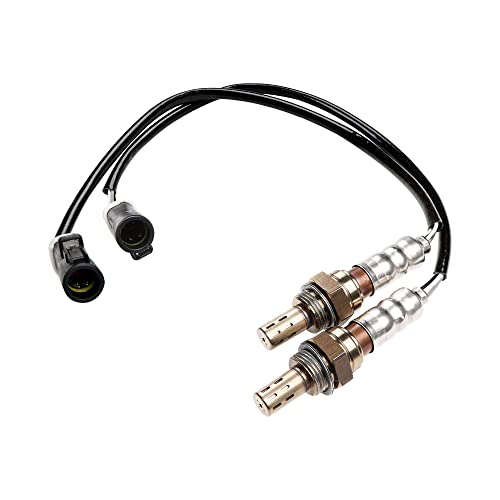
Powertrain and engine sensors act as the nervous system for the engine, constantly measuring variables like airflow, engine speed, and exhaust gases to provide real-time data to the Engine Control Unit (ECU). The ECU, which is the engine’s main computer, uses this information to make continuous adjustments to the fuel injection, ignition timing, and other critical functions. This creates a closed-loop system that optimizes performance and fuel efficiency while minimizing harmful emissions. For instance, the O2 sensor ‘tastes’ the exhaust, and if it’s too rich in fuel, the ECU tells the fuel injectors to spray less fuel, all within milliseconds.
How Many Oxygen (O2) Sensors Does a Car Have?
A typical 4-cylinder car has two oxygen sensors, while engines with two separate exhaust banks, like V6 and V8 models, have four O2 sensors. The first sensor, known as the “upstream” sensor, is located in the exhaust manifold before the catalytic converter. Its job is to measure the amount of unburned oxygen in the exhaust to help the ECU fine-tune the air-fuel ratio for optimal combustion. The second “downstream” sensor is located after the catalytic converter and monitors its efficiency by comparing readings with the upstream sensor.
Here is a simple breakdown:
* 4-Cylinder Engines: 2 O2 Sensors (1 upstream, 1 downstream)
* V6/V8/Boxer Engines: 4 O2 Sensors (2 upstream, 2 downstream)
Pro Tip: A failing downstream O2 sensor often indicates a problem with the catalytic converter itself, not just the sensor.
What Factors Cause the Number of Car Sensors to Vary So Widely?
The number of sensors on a car varies widely due to three main factors: the vehicle’s market segment (economy vs. luxury), its model year and age, and the level of Advanced Driver Assistance Systems (ADAS) installed. A newer, more luxurious car will always have more sensors than an older, more basic model because of the added features for comfort, performance, and safety.
The difference can be staggering. An entry-level hatchback might focus only on essential powertrain and safety sensors required by law, whereas a premium luxury sedan adds dozens of extra sensors for things like an adaptive air suspension, multi-zone climate control, and a 360-degree camera system. This is a clear case where price and features directly correlate with technological complexity.
The number of sensors in high-end cars has more than doubled in the last decade.
The table below provides a detailed comparison of approximate sensor counts across different vehicle classes for the 2026 model year, illustrating how these factors contribute to the total.
| Feature / Vehicle Class | Economy Hatchback (e.g., Honda Fit) | Mid-Size Sedan (e.g., Toyota Camry) | Luxury SUV (e.g., BMW X5) | High-End EV (e.g., Tesla Model S) |
|---|---|---|---|---|
| Approx. Total Sensors (2026) | 60 – 80 | 80 – 110 | 120 – 180+ | 150 – 200+ |
| Engine/Powertrain Sensors | ~15-20 | ~20-25 | ~25-30 | ~10-15 (Motor, Battery, Thermal) |
| Safety System Sensors (ABS, Airbag) | ~10-15 | ~15-20 | ~20-25 | ~20-25 |
| ADAS Sensors (Cameras, Radar, etc.) | 1-3 (Basic camera) | 5-10 (Camera, Radar) | 20-40+ (Multiple Cameras, Radar, Ultrasonic) | 20-40+ (Extensive Camera/Radar Suite) |
| Body/Comfort Sensors | ~20 | ~30-40 | ~50-80+ | ~50-80+ |
How Does the Sensor Count Differ Between Electric Cars (EVs) and Gasoline Cars (ICE)?
Electric cars (EVs) have a different, but not necessarily smaller, set of sensors than gasoline (ICE) cars. EVs eliminate the entire suite of sensors related to internal combustion, fuel, and exhaust systems. However, they introduce a new, highly complex array of sensors dedicated to managing the high-voltage battery pack and electric motors.
The primary shift is from monitoring combustion mechanics to monitoring battery chemistry and thermal dynamics. The Battery Management System (BMS) in an EV is a sophisticated computer that relies on dozens, sometimes hundreds, of sensors to ensure the battery operates safely and efficiently. This results in a total sensor count that is often as high, or even higher, than a comparable gasoline vehicle.
Did You Know? A single EV battery pack can contain 50-100 temperature and voltage sensors alone, one for each small group of battery cells!
This table breaks down the key sensor differences between the two powertrain types:
| Sensor Type | Internal Combustion Engine (ICE) Vehicle | Electric Vehicle (EV) |
|---|---|---|
| Air/Fuel & Exhaust | Oxygen, MAF, MAP, Knock Sensors | N/A |
| Powertrain Core | Crankshaft/Camshaft Position, Oil Pressure | Motor Position/Speed Sensor, High-Voltage Current Sensor |
| Energy Storage | Fuel Level Sensor | Battery Cell Voltage & Temperature Sensors (Dozens), State-of-Charge (SOC) Sensor |
| Thermal Management | Engine Coolant Temp Sensor | Battery Coolant Temp, Pump & Valve Sensors |
FAQs About how many sensors are on a car
How much do car sensors cost to replace?
The cost to replace a car sensor typically ranges from $150 to $500, including parts and labor. The price varies greatly depending on the sensor’s type and location. For example, an easily accessible oxygen (O2) sensor might cost $150-$250, while a complex ABS sensor integrated into the wheel hub could cost over $400.
What are the symptoms of a bad car sensor?
Common symptoms of a bad car sensor include a lit check engine light, poor engine performance, decreased fuel economy, rough idling, or failure of a specific system like ABS or cruise control. For instance, a failing Mass Airflow (MAF) sensor can cause stalling, while a bad TPMS sensor will trigger a tire pressure warning light on your dashboard.
How many ABS sensors are on a car?
A car with a standard Anti-lock Braking System (ABS) has four ABS sensors, also known as wheel speed sensors. There is one sensor located at each wheel. These sensors monitor the rotational speed of each wheel and send this data to the ABS control module to prevent wheel lock-up during hard braking.
How many TPMS sensors are on a car?
A car equipped with a Tire Pressure Monitoring System (TPMS) has either four or five TPMS sensors. There is one sensor inside each of the four main tires that are on the ground. Some systems also include a fifth sensor for the full-size spare tire to ensure it is also properly inflated.
What are the 4 main sensors in an engine?
While there are many important engine sensors, four of the most critical are the Mass Airflow (MAF) sensor, the Oxygen (O2) sensor, the Crankshaft Position sensor, and the Coolant Temperature sensor. These work together in a network to manage the air-fuel mixture, ignition timing, and overall engine health, forming the core of the engine management system.
Can you drive a car with a bad sensor?
In many cases, you can drive a car with a bad sensor, but it is not recommended as it can lead to reduced performance, poor fuel economy, or damage to other components. A critical sensor failure, like a crankshaft position sensor, can prevent the car from starting or cause it to stall while driving, which is dangerous.
Do cars have GPS sensors?
Yes, most modern cars have GPS sensors (receivers) as part of their navigation and infotainment systems. Furthermore, many vehicles use GPS data for advanced safety features, emergency services (e.g., OnStar and other telematics systems), and vehicle tracking capabilities.
How many cameras are on a new car?
A new car in 2026 can have between 1 and 12 cameras. A base model might only have a mandatory rearview camera. A luxury vehicle with a 360-degree view system and advanced ADAS can have cameras in the front grille, side mirrors, windshield, and rear, plus sometimes an in-cabin driver monitoring camera.
What is the most important sensor in a car?
The Crankshaft Position Sensor is arguably the most important sensor in a gasoline-powered car. It tells the ECU the rotational speed and precise position of the crankshaft, which is essential information for controlling ignition timing and fuel injection. If this sensor fails completely, the engine will not run.
Are car sensors covered under warranty?
Most car sensors are covered under the vehicle’s bumper-to-bumper new car warranty. Some critical emissions-related sensors, like oxygen sensors, may also be covered for a longer period under the federal emissions warranty. However, they are typically considered wear-and-tear items and are not covered by extended powertrain warranties once the initial warranty expires.
Key Takeaways: How Many Sensors Are On a Car
- Sensor Count Varies Drastically: A modern car can have anywhere from 60 to over 200 sensors. The total number is not fixed and depends heavily on the vehicle’s age, class, and technology level.
- Key Factors Dictate the Number: The three main factors influencing the sensor count are the vehicle’s class (economy vs. luxury), its model year, and the level of Advanced Driver Assistance Systems (ADAS) it has installed.
- EVs and ICE Cars Have Different Sensor Suites: Electric vehicles eliminate many engine sensors (like O2 and MAF) but add a complex network of battery and motor sensors, resulting in a similarly high overall count.
- Sensors are Grouped into Core Systems: Sensors are not random; they are organized into key categories: Powertrain, Chassis/Safety, Body/Comfort, and ADAS, each with a distinct role.
- The Crankshaft Position Sensor is Critical: While many sensors are important, the Crankshaft Position Sensor is arguably the most vital in a gasoline car, as the engine cannot run without its data.
- Sensor Technology is Rapidly Advancing: The number of sensors, particularly cameras, radar, and LiDAR for ADAS features, is the fastest-growing area, pushing sensor counts higher with each new model year.
- A Bad Sensor Will Give Clear Warnings: The most common signs of a sensor failure are the check engine light, poor performance, reduced fuel efficiency, or the malfunction of a specific feature like ABS.
Final Thoughts on The Growing Complexity of Car Sensors
The ever-increasing number of sensors in cars signifies a major shift towards data-driven, software-defined vehicles, where performance, safety, and comfort are managed by a complex digital nervous system. Understanding that a car can have anywhere from 60 to over 200 sensors reframes the vehicle not just as a mechanical object, but as a sophisticated piece of technology. This growing network is the foundation for the future of driving, paving the way for safer roads and more autonomous features. As you step into your car next, you’ll have a better appreciation for the hundreds of silent partners working to ensure every drive is smooth, efficient, and secure.
Last update on 2026-02-19 / Affiliate links / Images from Amazon Product Advertising API


