
Wondering how many thermostats your car really has? It’s a common point of confusion because the straightforward answer isn’t always the complete one, especially with modern vehicles.
Most cars are equipped with a single thermostat that regulates the engine’s coolant temperature to maintain optimal operating conditions. However, an increasing number of modern vehicles, particularly those with complex engine designs or specific performance goals, may feature dual thermostat systems.
Based on analysis of current automotive engineering standards, this guide will clarify the one-vs-two thermostat mystery. You will discover exactly why some cars need a more complex setup and how to identify what’s in your vehicle.
Key Facts
- The General Rule: The vast majority of cars on the road have only one engine cooling thermostat, demonstrating a long-standing and effective design.
- The Modern Exception: An increasing number of vehicles, particularly from manufacturers like Nissan, BMW, and GM, use dual thermostat systems to optimize thermal management for fuel efficiency and emissions.
- Core Function: A thermostat’s primary job is to regulate engine temperature by controlling coolant flow, ensuring the engine warms up quickly and doesn’t overheat.
- Failure Symptoms: A bad thermostat typically fails either “stuck open” (causing the engine to run cold) or “stuck closed” (causing rapid overheating), according to verified repair data.
- Efficiency Gains: Dual thermostat systems allow for more precise temperature control across different parts of the engine, leading to improved fuel economy and reduced harmful emissions.
How Many Thermostats Does a Car Have?
Most cars have one thermostat, but many modern or performance vehicles can have two for optimized thermal management. This automotive thermostat is a critical component in your vehicle’s cooling system. The number of thermostats in a car varies depending on the engine design and its specific cooling requirements. While a single thermostat system has been the standard for decades, the push for greater fuel efficiency and lower emissions has led engineers to adopt more complex dual thermostat systems in many contemporary engines.

The primary entity here is the automotive thermostat, a valve that controls the flow of engine coolant. In a simple system, one thermostat manages the entire engine’s temperature. It opens and closes to either keep coolant within the engine block to warm it up or send it to the radiator to cool down.
In contrast, dual thermostat systems provide more granular control. For example, one thermostat might manage the temperature of the engine block while a second one independently regulates the cylinder head. This allows each part to operate at its most efficient temperature, a strategy that enhances overall engine performance and longevity. This guide will delve into the specifics of both single and dual thermostat setups, helping you understand the “why” behind the design.
What Does a Car Thermostat Do?
A car thermostat’s main function is to regulate engine temperature by controlling the flow of coolant. It remains closed when the engine is cold, allowing the engine to warm up rapidly. Once the engine reaches its optimal operating temperature (typically 180-220°F), the thermostat opens to allow coolant to circulate to the radiator for cooling, preventing overheating. This simple device acts like a gatekeeper for your engine’s cooling system.
The mechanism is elegantly simple yet effective. Inside the car thermostat is a small cylinder filled with a wax pellet. As the engine coolant heats up, the wax melts and expands. This expansion pushes a piston that overcomes a spring, opening the valve and allowing coolant to flow. As the coolant cools, the wax contracts, and the spring closes the valve. This cycle continuously repeats to maintain the engine temperature within the narrow range specified by OEM specifications.
Maintaining the correct engine operating temperature is crucial for several reasons:
* Performance: Engines are designed to run most efficiently within a specific temperature window.
* Fuel Economy: A properly warmed engine burns fuel more completely, improving your gas mileage.
* Longevity: Preventing overheating protects critical engine components like the head gasket from damage, while avoiding running too cold reduces internal wear.
* Emissions: Modern emission control systems, like the catalytic converter, function correctly only at optimal operating temperatures.
Why Do Some Cars Have Two Thermostats?
Cars may feature two thermostats to manage engine temperatures more precisely, often allowing the engine block and cylinder head to operate at different ideal temperatures. This sophisticated control optimizes fuel efficiency during warm-up, reduces harmful emissions, and can enhance engine performance by maintaining tighter thermal regulation under varied loads and speeds, a strategy crucial for modern emissions standards. Based on automotive engineering standards, this design represents an evolution in thermal efficiency optimization.
The primary reason for a dual thermostat system is to create separate cooling circuits that can be controlled independently. For instance, the engine block might be kept slightly cooler to improve volumetric efficiency and reduce the risk of engine knock, while the cylinder head is run slightly hotter to ensure more complete fuel combustion and reduce hydrocarbon emissions. This level of control is impossible with a single thermostat managing the entire engine.
Here are the key engineering benefits that drive the adoption of dual thermostat systems:
* Enhanced Fuel Efficiency: By allowing the engine to warm up faster in a more controlled manner, the vehicle enters its most efficient operating state sooner.
* Reduced Emissions: Precise temperature control is a cornerstone of modern emission reduction strategy. It ensures the catalytic converter reaches its effective temperature quickly and helps reduce the formation of harmful pollutants like NOx.
* Improved Performance and Durability: Targeted cooling prevents hot spots in critical areas like the cylinder head, enhancing engine durability, especially in high-output or turbocharged engines.
* Optimized for All Conditions: Dual systems, often managed by the Engine Control Unit (ECU), can adjust cooling strategy based on driving conditions, whether you are idling in traffic or cruising on the highway.
How Does a Dual Thermostat System Work?
Dual thermostat systems often employ two thermostats with different opening temperatures to optimize coolant flow to separate engine zones. The primary thermostat might regulate the engine block to a lower temperature for efficiency, while the secondary manages the cylinder head at a slightly higher temperature for emissions reduction, working in concert to achieve precise thermal management. This allows for a practice known as coolant circuit bifurcation, where coolant flow dynamics are finely tuned.
In a typical setup, the system operates in stages:
* Cold Start: Both thermostats are closed, restricting coolant flow to allow the engine to warm up as quickly as possible. A small bypass circuit may still allow for minimal circulation.
* Initial Warm-Up: The primary thermostat, which often has a lower opening temperature, opens first. This begins circulation through the main cooling circuit, managing the overall engine block temperature.
* Full Operation: The secondary thermostat, with a higher opening temperature, opens to provide additional cooling to a specific area, like the cylinder head, or to increase overall flow under high load or high ambient temperature conditions.
This coordinated effort, often monitored and controlled by the Engine Control Unit (ECU), ensures that every part of the engine operates within its ideal temperature range, something a single thermostat system cannot achieve with such precision.
Which Car Models Commonly Use Dual Thermostat Systems?
Many modern vehicles from manufacturers like Nissan, BMW, Mercedes-Benz, and some General Motors applications incorporate dual thermostat systems. For example, the Nissan 2.5L QR25DE engine often uses two thermostats, as do various BMW V8 engines (e.g., N63/S63) and certain Audi and Volkswagen models, primarily to enhance efficiency and emissions control. This information is supported by verified repair data and official parts diagrams.
Providing a definitive list is challenging as it constantly evolves, but here are some well-known examples where dual thermostat systems are commonly found:
| Car Make/Model (Example) | Engine Type (Example) | Common Reason for Dual Thermostat |
|---|---|---|
| Nissan Altima/Sentra (2007+) | 2.5L QR25DE I4 | Optimized cylinder head/block cooling |
| BMW (Various models) | N63/S63 V8, N54 I6 | Enhanced thermal management for performance/emissions |
| General Motors (Select models) | LS Series V8 (specific versions) | Targeted cooling for specific loads/temperatures |
| Mercedes-Benz (Select models) | M276 V6, M278 V8 | Efficiency, rapid warm-up, emissions compliance |
If you suspect your car might have a dual thermostat system, the best course of action is to consult your vehicle’s service manual or check with a certified technician who can reference the official parts diagram for your specific make and model.
Where Is The Car Thermostat Located?
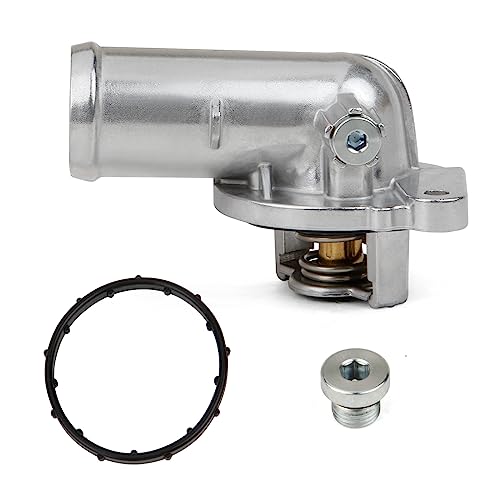
The car thermostat is commonly found inside a housing positioned on the engine where the upper or lower radiator hose attaches, particularly near the intake manifold or cylinder head. Its exact location varies significantly by vehicle make, model, and engine configuration; consulting an OEM service manual is always recommended for precise identification. The thermostat is almost never a standalone part but is contained within this dedicated thermostat housing.
To find it, you can often follow the large-diameter coolant hoses. One of the easiest methods is to trace the upper radiator hose from the radiator back to the engine. The point where it connects to the engine is a very common location for the thermostat housing. It typically looks like a metal or plastic dome held on by two or three bolts.
Here are a few common locations:
* At the Engine End of the Upper Radiator Hose: This is the most frequent placement on many four-cylinder and V6 engines.
* At the Engine End of the Lower Radiator Hose: Less common, but found on certain engine designs.
* Integrated into the Intake Manifold: On some engines, the housing is part of the intake manifold assembly.
* On the Cylinder Head: Directly bolted to the cylinder head to precisely control its temperature.
In dual thermostat systems, the two thermostats will be in separate locations, each controlling its own part of the cooling system. This makes consulting a service manual even more critical for accurate identification and service.
What Are The Symptoms Of a Bad Car Thermostat?
Symptoms of a bad car thermostat depend on whether it’s stuck open or closed. A thermostat stuck closed causes rapid engine overheating, steam from under the hood, and a rapidly climbing temperature gauge. Conversely, a thermostat stuck open leads to a slow-to-warm-up engine, constantly cold operation, poor heater performance, and decreased fuel economy. Recognizing which way it has failed is key to proper diagnosis.
Here is a breakdown of the symptoms for each failure mode:
Symptoms of a Thermostat Stuck Closed:
* ✅ Engine Overheating: The temperature gauge will climb into the red zone, often very quickly after starting the engine.
* ✅ Steam or Coolant Boiling Over: You might see steam coming from the engine bay or notice coolant bubbling in the reservoir as it boils from trapped heat.
* ✅ Poor Engine Performance: The engine may run rough or lose power as it gets too hot.
* ✅ Cool Radiator Hoses: The hose leading from the thermostat to the radiator may feel cool, as hot coolant is not being allowed to pass.
Symptoms of a Thermostat Stuck Open:
* ❌ Engine Running Cold: The temperature gauge takes a very long time to reach its normal position, or may never get there at all.
* ❌ Poor Heater Performance: Because the engine isn’t reaching its full operating temperature, the heater will blow lukewarm or cold air.
* ❌ Decreased Fuel Economy: An engine running too cold is inefficient and will burn more fuel than necessary.
* ❌ Check Engine Light: On modern cars, the ECU can detect that the engine is not warming up in the expected timeframe and trigger a check engine light.
If you notice any of these symptoms, it’s crucial to have your cooling system inspected by an ASE certified mechanic to prevent further engine damage.
How Do You Replace a Car Thermostat?
To replace a car thermostat, first safely drain a portion of the coolant, then locate and unbolt the thermostat housing, usually at the end of a radiator hose. Carefully remove the old thermostat and gasket, ensuring all debris is cleaned. Install the new thermostat with a fresh gasket, reattach the housing, refill the coolant, and meticulously bleed the cooling system to remove air pockets, which is crucial for proper operation.
For DIY-inclined owners, this is often a manageable task. Here is a general step-by-step guide, but always consult your specific vehicle’s service manual.
- Safety First: Ensure the engine is completely cool before starting. Never open a hot cooling system.
- Drain the Coolant: Place a drain pan under the radiator and open the petcock to drain enough coolant so the level is below the thermostat housing. You don’t always need to drain the entire system.
- Access the Housing: Remove any components blocking access to the thermostat housing. Follow the upper or lower radiator hose to the engine to locate it.
- Remove the Housing: Loosen and remove the bolts holding the thermostat housing in place. A gentle tap may be needed to break the seal.
- Remove Old Thermostat and Gasket: Note the orientation of the old thermostat before removing it. Pull it out and then scrape off all old gasket material from both the housing and the engine mounting surface. This step is critical for a good seal.
- Install New Thermostat and Gasket: Place the new thermostat in the correct orientation (the spring side usually goes toward the engine). Apply a new gasket, sometimes with a thin layer of sealant if required by the manufacturer.
- Reassemble: Bolt the housing back in place, tightening the bolts to the proper torque specified in your service manual. Do not overtighten. Reconnect the hose.
- Refill and Bleed: Refill the cooling system with the correct type of antifreeze. Then, you must bleed the cooling system to remove all trapped air. This may involve running the engine with the heater on and the radiator cap off, or using a dedicated bleeder valve until no more air bubbles emerge. An air pocket can cause overheating even with a new thermostat.
How Do You Choose The Right Thermostat for Your Car?
Choosing the right thermostat necessitates matching your vehicle’s Original Equipment Manufacturer (OEM) specified opening temperature, typically found in your owner’s manual or service guide. Opt for a reputable brand—either OEM or a high-quality aftermarket equivalent—to ensure reliability. Consider features like fail-safe designs for added engine protection, and always replace the thermostat housing gasket.
Deviating from the factory temperature rating is generally not recommended for a daily driven vehicle. An engine’s computer is calibrated for a specific operating temperature, and changing it can negatively affect fuel economy, emissions, and even performance. For example, using a lower temperature thermostat (e.g., 180°F instead of 195°F) will not necessarily make your engine run better and can prevent it from reaching its optimal efficiency range.
Here is a comparison of your main options:
| Feature/Aspect | OEM Thermostat | Quality Aftermarket | Performance Thermostat |
|---|---|---|---|
| Temperature Rating | Factory specified | Factory specified (or alternative) | Lower than factory (e.g., 160°F) |
| Quality/Reliability | Highest assurance | Good, reputable brands | Varies, check reviews |
| Cost | Higher | Moderate | Moderate to High |
| Warranty Compliance | Typically yes | Check terms | May void warranty |
| Intended Use | Standard replacement | Standard replacement | Specific tuning/racing applications |
The bottom line is to always prioritize the OEM-specified temperature. When it comes to the part itself, an OEM part from the dealer is a safe bet. However, many reputable aftermarket brands offer high-quality alternatives that meet or exceed OEM specifications, often at a lower cost.
FAQs About how many thermostats does a car have
Can a Car Run Without a Thermostat?
A car technically can run without a thermostat, but it is highly inadvisable and can cause significant engine damage over time. Without a thermostat, the engine will run too cold, preventing it from reaching its optimal operating temperature. This leads to poor fuel economy, increased engine wear, higher emissions, and reduced heater performance, as the coolant continuously circulates through the radiator.
What Temperature Does a Car Thermostat Open?
Most conventional car thermostats are designed to open at temperatures between 180°F (82°C) and 195°F (91°C), with specific OEM designs varying slightly. This temperature is precisely engineered to allow the engine to warm up quickly and then maintain an optimal operating temperature for efficiency and performance. Dual thermostat systems may have different opening temperatures for each thermostat.
How Long Does a Car Thermostat Last?
A car thermostat generally lasts for a very long time, often throughout the lifespan of the vehicle (100,000 miles or more), but they can fail sooner due to wear or manufacturing defects. Factors like coolant quality and regular maintenance can influence its longevity. It’s often recommended to replace the thermostat as part of a major cooling system overhaul, such as when replacing a water pump.
Can a Bad Thermostat Cause Overheating?
Yes, a bad thermostat is a very common cause of engine overheating. If the thermostat gets stuck in the closed position, it prevents coolant from circulating to the radiator to be cooled, trapping hot coolant in the engine block and causing temperatures to rise rapidly, potentially leading to severe engine damage.
Do Diesel Engines Have Two Thermostats?
Some modern diesel engines can indeed have two thermostats, similar to advanced gasoline engines, for optimized thermal management and emissions control. Diesel engines also benefit from precise temperature regulation to achieve optimal combustion efficiency and to manage the high thermal loads associated with their operation.
Is it Bad to Have Two Thermostats?
No, having two thermostats is not inherently bad; rather, it’s an advanced engineering solution designed to optimize engine performance, fuel economy, and emissions. For vehicles designed with a dual thermostat system, this configuration allows for more precise temperature control across different engine components and varying operating conditions, enhancing overall thermal management.
How Much Does it Cost to Replace a Car Thermostat?
The cost to replace a car thermostat typically ranges from $150 to $400, including parts and labor. The price can vary significantly depending on the vehicle’s make and model, the accessibility of the thermostat (some are more labor-intensive to reach), and whether you use OEM or aftermarket parts. Dual thermostat systems may incur higher costs for parts and labor.
How Do You Know if My Thermostat is Stuck Open?
You can identify a thermostat stuck open if your engine takes an unusually long time to reach normal operating temperature, or if the temperature gauge consistently reads below normal, especially in colder weather. Other signs include poor heater performance and potentially decreased fuel economy, as the engine struggles to warm up sufficiently.
How to Bleed Air After Changing Thermostat?
After changing a thermostat, bleeding air from the cooling system is crucial to prevent overheating and ensure proper coolant circulation. This typically involves filling the coolant reservoir, running the engine with the heater on high, and allowing air bubbles to escape through the radiator cap or a dedicated bleed screw until no more bubbles appear, topping off coolant as needed.
Does the AC System Affect the Engine Thermostat?
While the AC system doesn’t directly control the engine thermostat, its operation significantly impacts the overall engine cooling load. When the AC is running, it adds heat to the condenser (located in front of the radiator), requiring the engine’s cooling system, and thus the thermostat, to work harder to maintain optimal engine temperature.
Key Takeaways: Car Thermostat Summary
- Number of Thermostats Varies – While most older vehicles use a single thermostat, many modern cars, especially those with complex engine designs or performance goals, feature dual thermostat systems for enhanced thermal management.
- Thermostat’s Core Function – A car thermostat acts as a temperature-sensitive valve, regulating coolant flow to maintain the engine’s optimal operating temperature for efficiency, performance, and longevity.
- Dual Thermostat Benefits – Engines with two thermostats achieve more precise temperature control across different zones (e.g., cylinder head vs. engine block), optimizing fuel efficiency, reducing emissions, and improving performance.
- Location Variability – Thermostats are typically located in a housing on the engine block, cylinder head, or intake manifold, often where a radiator hose connects. Exact placement varies greatly by vehicle make and model.
- Common Failure Symptoms – A thermostat stuck closed causes rapid engine overheating, while one stuck open leads to slow warm-up, an engine running cold, and poor heater performance. Both can cause significant issues and require prompt attention.
- Replacement Considerations – When replacing a thermostat, it’s crucial to match the OEM-specified opening temperature, use a quality replacement part (OEM or reputable aftermarket), and meticulously bleed the cooling system of air.
- Consult Specific Resources – For precise information on your vehicle’s thermostat configuration or replacement, always refer to your car’s service manual or consult an ASE certified mechanic to ensure compliance with “OEM specifications.”
Final Thoughts on How Many Thermostats Does a Car Have
The question of “how many thermostats does a car have” reveals a fascinating aspect of modern automotive engineering. While the fundamental role of the thermostat—to precisely regulate engine temperature—remains constant, the methods have evolved. Gone are the days when a simple “one-size-fits-all” answer sufficed; today’s engines often employ sophisticated dual thermostat systems to meet demanding standards for fuel efficiency, emissions, and performance.
Understanding whether your vehicle has one or two thermostats, and how each functions, is crucial for both routine maintenance and effective troubleshooting. Whether you’re a DIY enthusiast or seeking professional assistance, recognizing the symptoms of a failing thermostat and selecting the correct replacement are paramount to safeguarding your engine’s health and ensuring its longevity. Always remember to prioritize “OEM specifications” and, when in doubt, consult a qualified mechanic to ensure proper diagnosis and repair. By staying informed about your car’s cooling system, you empower yourself to make better decisions for its care and performance.
Last update on 2026-04-15 / Affiliate links / Images from Amazon Product Advertising API


![Nilight 12 Pod Rock Lights Review: Worth It? [year]](https://i0.wp.com/carxplorer.com/wp-content/uploads/2026/04/Nilight-12-Pod-Rock-Lights-Review-Worth-It-year-scaled-1.webp?resize=60%2C60&ssl=1 "Nilight 12 Pod Rock Lights Review: Worth It? [year] 12")