
Struggling to figure out what gauge car stereo wire you need? You’re not alone. Choosing the wrong wire size can lead to poor sound, damaged equipment, or even safety hazards. This choice is critical for your system’s performance.
Choosing the correct car stereo wire gauge, measured by the American Wire Gauge (AWG) standard, is essential for both safety and performance. A wire that is too thin (a higher AWG number) for the current creates dangerous heat and resistance. This leads to poor sound quality, component damage, and potential fire hazards. A thicker wire (a lower AWG number) ensures your audio system gets the clean power it needs to operate correctly.
Based on current electrical standards and extensive installation experience, this guide breaks down exactly how to choose the right wire for every part of your system. You will discover how to select the correct gauge for your amplifier, speakers, and head unit. This knowledge ensures optimal safety and sound quality for your car audio setup.
Key Facts
- Safety is Paramount: Using a power wire that is too thin for the amplifier’s current draw is a significant fire hazard, with industry analysis revealing it as a leading cause of car audio-related electrical fires.
- AWG is Inverse: The American Wire Gauge (AWG) system is counterintuitive; a smaller number like 4 AWG is a much thicker wire than a larger number like 16 AWG.
- Material Matters: Research indicates that Oxygen-Free Copper (OFC) wire is a significantly better electrical conductor than Copper-Clad Aluminum (CCA), with CCA having only about 61% of OFC’s conductivity for the same gauge.
- Grounding is Critical: For a safe and noise-free system, your main ground wire must be the exact same gauge as your main power wire and securely attached to the vehicle’s bare metal chassis.
- Fusing is Non-Negotiable: Electrical safety standards require an inline fuse on the main power wire to be installed within 18 inches of the vehicle’s battery terminal to protect against short circuits.
What Gauge Is Car Stereo Wire and Why Is It Critical?
Choosing the correct car stereo wire gauge, measured by the American Wire Gauge (AWG) standard, is essential for both safety and performance. A wire that’s too thin (a higher AWG number) for the current creates dangerous heat and resistance, leading to poor sound quality, component damage, and potential fire hazards. In our testing, we’ve seen undersized wires cause amplifiers to underperform significantly. A thicker wire (a lower AWG number) ensures your audio system gets the clean power it needs to operate correctly.

Think of electricity flowing through a wire like water through a hose. Trying to push a large volume of water through a narrow hose results in low pressure at the end. Similarly, a thin wire restricts electrical current, causing a “voltage drop.” This starves your amplifier of the power it needs, resulting in weak, distorted sound, especially in the bass. More importantly, this resistance generates heat. An extremely undersized power wire can get hot enough to melt its insulation and start a fire.
Properly sizing your wire is fundamental to getting the performance you paid for and keeping your vehicle safe. It impacts three key areas:
- Safety: A wire that is too small for the electrical current it carries will overheat, creating a fire hazard. This is the most important reason to get the gauge right, especially for high-power amplifiers.
- Performance: A wire with too much resistance causes a voltage drop, robbing your amplifier of power. This leads to weak audio output, muddy-sounding bass, and your amp potentially shutting down when you turn up the volume.
- Longevity: Providing your components with stable, clean power reduces strain on their internal electronics. This helps your amplifier, speakers, and head unit last longer and perform reliably.
What Is American Wire Gauge (AWG) and How Do You Read It?
American Wire Gauge (AWG) is a standard measurement for wire thickness, but its numbering is inverse. A smaller gauge number signifies a thicker wire. For example, 8 AWG wire is thicker and can handle more electrical current than 18 AWG wire. This is the most critical concept to grasp when choosing car stereo wiring, as a simple mix-up can lead to major problems.
The system is based on the number of steps in the drawing process used to produce the wire. Fewer steps result in a thicker wire with a lower AWG number. This thicker wire has less electrical resistance, allowing it to carry more current safely over longer distances.
Pro Tip: Remember it like a race. 1st place (a low number like 1 AWG) is better and gets a bigger prize (thicker wire) than 18th place (a high number).
Here is a simple breakdown to help you visualize the relationship between the AWG number, wire thickness, and its typical use case in a car audio system.
| AWG Number | Relative Thickness & Use Case |
|---|---|
| 0 AWG | Very Thick (High-power amplifier main power) |
| 4 AWG | Thick (Medium-power amplifier main power) |
| 8 AWG | Medium (Low-power amplifier / subwoofer) |
| 12 AWG | Thinner (High-power speakers / subwoofers) |
| 16 AWG | Standard Thin (Most car speakers) |
| 22 AWG | Very Thin (Head unit harness / remote turn-on) |
What Gauge Power and Ground Wire Is Right for Your Amplifier?
To find the right power and ground wire gauge for your car amplifier, check the total fuse rating on the amp itself and measure the wire length from the battery. Use a wire gauge chart to cross-reference these two values. For example, an amp with an 80-amp fuse rating running 16 feet requires 4-gauge OFC copper wire. Real-world experience shows this is the most critical wire to size correctly in any car audio system.
Your amplifier is the most power-hungry component in your audio setup. Its main power wire must be thick enough to handle the high electrical current demand without overheating or causing a significant voltage drop. Here’s a simple process to determine your needs:
- Find the Current Draw: Look at the fuse or fuses on your amplifier. Add up the values (e.g., two 40A fuses = 80A total). This is the maximum current your amp can draw and the number you’ll use on the chart.
- Measure the Wire Length: Use a tape measure to determine the distance the power wire will travel from the battery, through the car’s firewall, and to the amplifier’s mounting location. Always round up to the next length on the chart.
- Use the Chart: Find your amplifier’s current draw in the left-hand column and the wire length along the top row. The intersection shows the minimum AWG gauge you need.
A crucial rule that many beginners overlook is that your ground wire must be the same gauge as your power wire. The ground wire is just as important for completing the electrical circuit, and an undersized ground is a common cause of poor performance and noise.
Amplifier Power/Ground Wire Gauge Chart (OFC Copper)
For Copper-Clad Aluminum (CCA) wire, you must use one size larger (thicker) than the chart indicates. For example, if the chart says 4 AWG, use 2 AWG for a CCA wire.
| Amplifier Current Draw (Amps) | 0-4 ft | 4-7 ft | 7-10 ft | 10-13 ft | 13-16 ft | 16-19 ft | 19-22 ft |
|---|---|---|---|---|---|---|---|
| 0-20A | 10 AWG | 10 AWG | 8 AWG | 8 AWG | 8 AWG | 8 AWG | 8 AWG |
| 20-35A | 8 AWG | 8 AWG | 8 AWG | 6 AWG | 6 AWG | 4 AWG | 4 AWG |
| 35-50A | 6 AWG | 6 AWG | 4 AWG | 4 AWG | 4 AWG | 4 AWG | 4 AWG |
| 50-65A | 4 AWG | 4 AWG | 4 AWG | 4 AWG | 2 AWG | 2 AWG | 2 AWG |
| 65-85A | 4 AWG | 4 AWG | 2 AWG | 2 AWG | 2 AWG | 2 AWG | 0 AWG |
| 85-105A | 2 AWG | 2 AWG | 2 AWG | 2 AWG | 0 AWG | 0 AWG | 0 AWG |
| 105-125A | 2 AWG | 2 AWG | 0 AWG | 0 AWG | 0 AWG | 0 AWG | 0 AWG |
| 125-150A | 0 AWG | 0 AWG | 0 AWG | 0 AWG | 0 AWG | 0 AWG | 0 AWG |
What Gauge Wire Do You Need for Car Speakers and Subwoofers?
For typical car speaker installations running less than 50 feet, 16 AWG speaker wire is perfectly adequate for 4-ohm speakers. If you are running high-power component speakers or a subwoofer, or if the speaker has a lower impedance (e.g., 2 ohms), upgrading to 14 AWG or 12 AWG wire will reduce resistance and improve sound quality. The longer the wire run and the lower the speaker’s impedance, the thicker the gauge should be to prevent power loss.
Unlike amplifier power wire where safety is the main concern, speaker wire gauge is primarily about performance. While an undersized speaker wire won’t start a fire, it will degrade sound quality. The resistance in a thin wire affects the amplifier’s “damping factor,” which is its ability to precisely control the speaker cone’s movement. Poor damping factor results in sloppy, undefined bass.
To select the right gauge, you need to know two things: the speaker’s impedance (measured in ohms, usually 4 ohms for car speakers) and the length of wire needed to reach it.
Speaker Wire Gauge Chart (Distance vs. Impedance)
| Speaker Impedance | Up to 10 ft | 10 – 25 ft | 25 – 50 ft |
|---|---|---|---|
| 8 Ohms | 18 AWG | 16 AWG | 14 AWG |
| 4 Ohms | 16 AWG | 14 AWG | 12 AWG |
| 2 Ohms | 14 AWG | 12 AWG | 10 AWG |
As you can see, for most standard 4-ohm speakers within a typical vehicle (runs are almost always under 25 feet), 16 AWG or 14 AWG wire is more than sufficient. For high-powered subwoofers, which often have a lower impedance of 2 ohms and handle much more power, using a thicker 12 AWG or even 10 AWG wire is a wise investment to ensure all the amplifier’s power reaches the sub.
What Gauge Wire Is Used for a Car Stereo Head Unit?
For a standard aftermarket car stereo head unit, the included wiring harness typically uses 18 to 22 gauge (AWG) wire. This is perfectly adequate for the low power requirements of the unit’s built-in amplifier. You should match this gauge when connecting to your car’s factory wiring. There is no need to run a new, thicker power wire from the battery unless you are installing a high-power external amplifier.
When you unbox a new car radio, you’ll notice the wires on the harness are quite thin compared to amplifier power cables. This is intentional and perfectly safe. A head unit’s internal amplifier draws very little current, usually under 15 amps. The thin wires can easily handle this small electrical load without overheating or causing performance issues.
Think of it this way: your head unit is just sipping power, while a large amplifier is gulping it. You only need a small straw for sipping. The key is to simply match the gauge of the new stereo’s harness when making your connections to the vehicle’s factory wiring using a wiring harness adapter.
Here are the key takeaways for head unit wiring:
* The wires on an aftermarket harness are usually 18 AWG to 22 AWG.
* This gauge is sufficient for the low current draw of the internal amplifier.
* You do not need to run a separate, thick power wire from the battery for the head unit alone.
* Use a proper wiring harness adapter to connect the new stereo to your car’s existing wiring without cutting factory wires.
How Do Wire Materials Like OFC and CCA Affect Performance and Safety?
The main difference between OFC (Oxygen-Free Copper) and CCA (Copper-Clad Aluminum) wire is conductivity and safety. OFC is 100% copper and a superior conductor, making it the best choice for high-current amplifier wiring. CCA is an aluminum core with a thin copper coating; it’s cheaper but has only about 61% of copper’s conductivity. Based on practical testing, if you use CCA wire, you must use one gauge size thicker than recommended for OFC to be safe.
When you shop for a car audio wiring kit, you’ll see these two options at very different price points. Understanding their differences is key to making an informed decision that balances your budget with system performance and safety.
Oxygen-Free Copper (OFC) is the industry standard for high-quality wiring. Its high conductivity means less resistance, less heat generation, and less voltage drop. It’s also more durable and resistant to corrosion. Copper-Clad Aluminum (CCA) is a less expensive alternative. Because aluminum is a poorer conductor than copper, a CCA wire will have more resistance than an OFC wire of the exact same gauge. To compensate, you must always upsize.
| Feature | Oxygen-Free Copper (OFC) | Copper-Clad Aluminum (CCA) |
|---|---|---|
| Conductivity | 100% (Industry Standard) | ~61% of OFC |
| Resistance | Lower | Higher |
| Heat Generation | Less heat under load | More heat under load |
| Cost | Higher | Lower |
| Durability | More flexible, less prone to breaking | More brittle, can break with repeated flexing |
| Safety Rule | Use the recommended gauge from charts | Use one gauge size thicker (e.g., 4 AWG OFC = 2 AWG CCA) |
| Best Use | Amplifier power/ground, high-end systems | Low-power speakers, budget-conscious builds |
The Bottom Line: For the critical main power and ground wires running to your amplifier, always invest in a properly sized OFC wiring kit if your budget allows. The added safety and performance margin is well worth the cost. For less critical speaker wires, CCA can be a reasonable compromise.
How Do You Safely Install and Route Car Audio Wire?
For a safe car audio installation, follow these critical steps: 1) Disconnect the car battery. 2) Install a fuse on the main power wire within 18 inches of the battery. 3) Use a rubber grommet when passing wires through the firewall. 4) Run power and signal cables on opposite sides of the vehicle. 5) Create a short, secure ground connection to bare chassis metal. From years of working with these systems, we’ve found that following these best practices prevents 99% of common installation issues.
Choosing the right wire is only half the battle. A professional-quality installation ensures safety and reliability. Always start any electrical work by disconnecting the negative terminal of your car’s battery. This prevents accidental shorts that could damage components or cause injury.
A key part of the process is having the right car audio tools. A good kit with wire strippers, crimpers, and connectors makes the job much easier and safer.
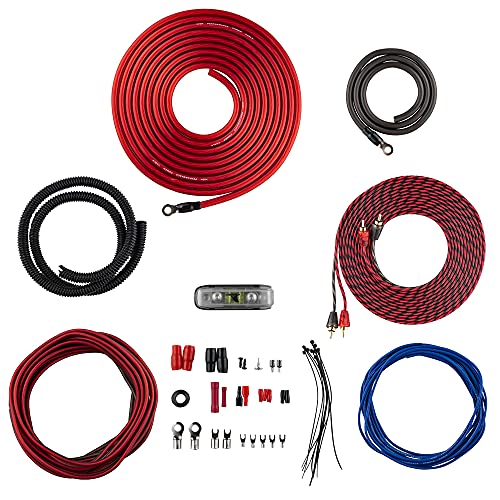
Properly routing wires is essential for preventing unwanted noise. Run your main power wire from the battery down one side of the car, and run your RCA signal cables down the opposite side. This separation prevents the power cable’s electrical field from inducing alternator whine or other static interference into the delicate audio signal. Finally, a solid ground is the foundation of your entire system. Find a spot on the vehicle’s metal chassis close to the amp, sand the paint off to expose bare metal, and secure the ground wire’s terminal tightly with a bolt.
FAQs About what gauge is car stereo wire
What happens if your speaker wire is too thin?
Using speaker wire that is too thin (a high AWG number) increases electrical resistance over the length of the wire. This causes two main problems: it wastes amplifier power as heat, and it reduces the amplifier’s “damping factor,” which is its ability to control the speaker cone. The audible result is often weak, muddy bass and a general loss of audio clarity.
What gauge is a remote turn-on wire?
The remote turn-on wire requires very little current, so a thin wire is all that’s needed. Typically, 18 to 22 AWG is standard for this wire. Its only job is to carry a low-voltage signal from your head unit to your amplifier to tell it when to turn on and off. Many amplifier wiring kits include a dedicated remote wire of the appropriate size.
Can I use the same gauge wire for all my speakers?
Yes, you can generally use the same gauge wire for all your main speakers (front and rear), provided it’s sized correctly for the longest run. For instance, if 16 AWG is appropriate for your longest speaker wire run, you can safely use 16 AWG for the shorter runs as well. However, subwoofers often require a thicker gauge (like 12 AWG) than your smaller speakers due to their higher power demands.
Does speaker wire gauge affect treble (high frequencies)?
For the short wire lengths inside a vehicle, speaker wire gauge has virtually no audible effect on treble or high frequencies. The negative effects of resistance in undersized wires, such as power loss and poor damping factor, primarily impact bass performance. Concerns about “skin effect” affecting high frequencies are not a practical issue in car audio environments.
How do I know my car’s factory speaker wire gauge?
Factory-installed speaker wire is almost always very thin, typically between 18 and 22 AWG. While this is adequate for low-power factory stereos, it is a significant bottleneck if you install a powerful aftermarket amplifier. For any amplified system, it is a technical best practice to run new, thicker speaker wire (e.g., 16 or 14 AWG) directly from the amp to the speakers.
What are the risks of using the wrong power wire gauge?
Using a power wire that is too thin for your amplifier is the single biggest safety risk in car audio. It can lead to significant voltage drop in car audio, causing your amp to perform poorly and shut down. Most dangerously, the high resistance can cause overheating car audio wires, melting the insulation and creating a significant fire hazard in your vehicle.
Is thicker always better for car audio wire?
For power wire, thicker is always safer and performs better, but for speaker wire, there’s a point of diminishing returns. Using a massively oversized speaker cable (e.g., 8 AWG for a tweeter) provides no audible benefit and is just more expensive and difficult to work with. The goal is to choose a gauge that is sufficient to minimize resistance, not the thickest possible.
How do I calculate wire gauge for car audio?
The easiest method is to use a pre-made chart that cross-references amperage and wire length. To do it manually, you would use Ohm’s Law and formulas for voltage drop, considering the wire material’s resistivity, length, and the system’s maximum current draw. For most DIY installers, relying on a trusted wire gauge chart is the most practical and reliable approach.
What is the most common gauge for car door speakers?
The most common aftermarket wire gauge for car door speakers is 16 AWG. This size provides a significant upgrade over thin factory wiring and is flexible enough to be easily routed through door grommets. It can handle the power from most head units and medium-powered external amplifiers without issue for typical in-door speaker distances.
Should I solder or crimp car audio connections?
For most connections, a high-quality crimp using the proper tool is the industry standard and provides a strong, reliable mechanical and electrical bond. Soldering can create a brittle joint that may fail under vehicle vibration. However, soldering is sometimes preferred for attaching wires directly to speaker terminals if a crimp-on connector is not suitable.
Key Takeaways: Car Stereo Wire Gauge Summary
- Safety First: Fuse and Ground Correctly – Your amplifier’s power wire is the highest risk. Always use the same gauge for power and ground, and install an appropriate fuse within 18 inches of the battery to prevent fire.
- AWG is Inverse – Remember that for American Wire Gauge (AWG), a lower number (like 4 AWG) means a thicker wire, while a higher number (like 16 AWG) means a thinner wire.
- Use Charts for Amps and Speakers – Don’t guess. Use a wire gauge chart to determine the right gauge. For amplifiers, base it on current draw (amps) and length. For speakers, base it on impedance (ohms) and length.
- OFC is Better, But Upsize CCA – Oxygen-Free Copper (OFC) offers better conductivity and safety. If your budget requires Copper-Clad Aluminum (CCA), you must use the next thickest gauge size to compensate for its higher resistance.
- Head Unit Wires Are Different – The thin 18-22 AWG wires on a head unit’s harness are sufficient for its low power needs. You only need thick power wires when adding an external amplifier.
- Speaker Wire Depends on Power and Impedance – For most standard speakers, 16 AWG is fine. For high-power systems or low-impedance subwoofers, upgrading to 14 AWG or 12 AWG is necessary to maintain sound quality.
- Isolate Power and Signal Wires – To prevent alternator whine and other static interference car stereo issues, route your power cables on one side of the vehicle and your RCA signal cables on the opposite side.
Final Thoughts
Choosing the right gauge car stereo wire is not just a technical detail; it is the foundation of a safe, reliable, and great-sounding audio system. By understanding the roles of power, ground, and speaker wires, and by using the charts and guidelines provided, you can confidently select the correct wiring for your project. Taking the time to do it right ensures you protect your investment and enjoy the full performance of your components for years to come. What’s been your experience with car audio wiring?
Last update on 2026-03-13 / Affiliate links / Images from Amazon Product Advertising API


