Ever wondered how to tell if your car has ABS? You’re not alone. Many drivers are unsure about this critical safety feature, especially when buying a used car or driving an older model.
The easiest way to tell if your car has ABS is to check your dashboard when you first turn the key; a warning light labeled “ABS” should illuminate briefly as part of a system self-check. Other reliable methods include looking for an ABS control module under the hood, checking the owner’s manual, or using a VIN decoder. This system is a key part of your vehicle’s braking technology.
Based on an analysis of current automotive safety regulations and manufacturer data, this guide provides simple, step-by-step checks anyone can perform. You’ll discover exactly how to verify the Anti-lock Braking System in your vehicle, understand what it does, and know what to do if you see a warning light.
Key Facts
- Standard on Modern Cars: The National Highway Traffic Safety Administration (NHTSA) has mandated ABS on all new passenger vehicles sold in the U.S. since September 1, 2013, though most manufacturers included it as a standard feature long before this date.
- Steering Control is the Primary Benefit: The main purpose of ABS is to prevent wheel lock-up, which allows the driver to maintain steering control during an emergency stop, a fact highlighted by numerous automotive safety studies.
- Warning Light Indicates a Fault: If the ABS warning light stays on, it signals that the anti-lock function is disabled, with industry data showing that a faulty wheel speed sensor is one of the most common causes.
- Normal Activation Has Clear Signs: When ABS engages, drivers will feel a rapid pulsing in the brake pedal and may hear a buzzing sound, which is the system modulating brake pressure automatically.
- Foundation for Other Tech: ABS is the foundational technology that enables other critical safety systems like Electronic Stability Control (ESC) and Traction Control Systems (TCS) to function.
How Can You Tell If Your Car Has ABS?
The simplest way to tell if your car has an Anti-lock Braking System (ABS) is to observe your dashboard during startup, but you can also perform a physical inspection or check official documentation. Understanding these methods is a crucial step in knowing your vehicle’s safety capabilities. As a foundational piece of modern automotive safety regulations, ABS plays a vital role in helping you maintain control during an emergency stop. Knowing for sure if your car is equipped with this feature gives you peace of mind and a better understanding of how it will behave under hard braking.

This guide walks you through the easy checks that any car owner can perform to confirm the presence of this system. We will cover the three most reliable methods to check for ABS, ensuring you have a definitive answer. These methods include:
- Dashboard Light Check
- Physical Component Inspection
- Owner’s Manual and VIN Verification
What Is the Easiest Way to Check for an ABS Light on Your Dashboard?
The dashboard light check is the fastest and most straightforward method to confirm if your car has ABS. This visual test requires no tools and takes only a few seconds to perform. The ABS warning light [an amber or orange light with “ABS” in the center] is designed to illuminate briefly every time you start your car as part of a routine system self-diagnosis.
Here’s how to perform the check correctly:
- Get in your car and close the door, but do not start the engine yet.
- Insert the key and turn the ignition to the “On” or “Run” position. This is the last click before the engine actually cranks.
- Carefully watch the entire instrument panel. All the warning lights, including the oil, battery, and check engine lights, should light up.
- Look for an amber-colored light that says “ABS.” It should illuminate for about 2 to 4 seconds and then turn off.
If you see the light come on and then go out, you have successfully confirmed your vehicle is equipped with an Anti-lock Braking System and that the indicator bulb is working correctly.
What If the ABS Light Doesn’t Turn On at All?
If the ABS light does not illuminate at all during startup, it could mean your car does not have ABS or that there’s a problem with the light itself. A missing light is a common point of confusion, but there are a few logical explanations. Don’t worry; the next steps in this guide will help you find a definitive answer.
Here are the most common reasons the light might not appear:
- No ABS System: The most straightforward reason is that your vehicle was not manufactured with an Anti-lock Braking System. This is common in older or more basic car models.
- Burnt-out Bulb: Just like any other bulb, the one that illuminates the ABS symbol on the dashboard can burn out over time.
- Tampering or Electrical Issue: In some cases, particularly with used cars, a previous owner may have intentionally removed the bulb to hide an existing ABS fault. It could also indicate a deeper electrical issue, such as a faulty ABS module or a disconnected wire.
If the light doesn’t come on, you should proceed to a physical inspection to be certain.
How Can You Visually Inspect Your Car for ABS Components?
A physical inspection to find the actual hardware is a definitive way to confirm if your car has an ABS system. Even if you’re not a mechanic, you can learn to spot the key components. The two primary parts you can look for are the ABS control module, which is the brain of the system, and the wheel speed sensors, which are its eyes.
How Do You Locate the ABS Control Module?
To locate the ABS control module [a key component of the anti-lock braking system], open the hood and scan the engine bay for a small metal block with several pipes connected to it. From years of working with various vehicle brake systems, we know this component is usually easy to spot once you know its key features. It’s often located near the master cylinder and brake fluid reservoir.
Look for these specific identifiers:
- A Metal Block: The module is typically a cube-shaped aluminum block, roughly the size of a fist.
- Multiple Brake Lines: You will see a cluster of 5 to 6 hard metal brake lines running into and out of it. These lines look like small metal straws.
- A Large Electrical Connector: Attached to the block will be a large plastic wiring harness connector with many small wires. This is what connects the module to the car’s computer and sensors.
Where to Find the Wheel Speed Sensors?
You can also confirm ABS by spotting the wheel speed sensors [devices that monitor wheel rotation]. These are found behind each wheel. While you might need to turn the steering wheel to one side to get a good view of a front wheel, the sensor wire is a clear giveaway.
Look behind one of the front wheels for a thin electrical wire running down from the car’s frame toward the center of the wheel assembly (the wheel hub). This wire leads to the wheel speed sensor, which reads the rotational speed of the wheel. If you see this wire, your car is equipped with ABS.
What Are Other Reliable Methods to Confirm Your Car Has ABS?
Beyond visual checks, the most authoritative ways to confirm if your car has ABS are by consulting the owner’s manual or by using the Vehicle Identification Number (VIN). These methods rely on official documentation and provide definitive proof, which is especially useful when considering a used car purchase.
Check the Owner’s Manual
The owner’s manual is the manufacturer’s official guide to your specific vehicle and will state clearly if ABS is included. This is often the most overlooked yet simplest check.
- Find your car owner’s manual.
- Look in the index at the back for terms like “ABS,” “Anti-lock Brakes,” or “Braking System.”
- Go to the indicated pages. If the manual contains a section describing the ABS, its function, and the dashboard warning light, your car is equipped with it.
Use the Vehicle Identification Number (VIN)
Your car’s VIN is a unique 17-digit code that contains all the details about its manufacturing, including factory-installed features. Using a free online VIN decoder service is a powerful way to get a complete equipment list.
- Locate your VIN. It’s typically found on a small plate on the driver’s side of the dashboard (visible through the windshield) or on a sticker in the driver’s side door jamb.
- Visit an online VIN decoder website. The NHTSA offers a free decoder that is highly reliable.
- Enter the 17-digit VIN.
- The results will show a detailed list of your car’s original equipment. Look for “Anti-lock Braking System” or “4-Wheel ABS” in the safety or braking features section.
What Is an Anti-lock Braking System (ABS) and Why Is It Important?
An Anti-lock Braking System (ABS) is an active safety feature that prevents your car’s wheels from locking up and skidding during hard braking. Its importance lies in its ability to let you maintain steering control in an emergency situation. When you slam on the brakes in a car without ABS, the wheels can stop rotating completely, causing the tires to skid across the pavement and making it impossible to steer away from an obstacle.
The ABS system prevents this from happening. It uses wheel speed sensors to detect if a wheel is about to lock up. If it is, the system’s hydraulic modulator automatically and rapidly “pumps” the brake on that wheel—far faster than any human could. This action keeps the wheel turning just enough to maintain traction with the road.
The key benefits of ABS include:
- Maintains Steering Control: This is the most critical benefit. It allows you to steer around an obstacle while braking heavily.
- Reduces Skidding: By preventing wheel lock-up, ABS significantly reduces the chance of an uncontrollable skid, especially on wet or slippery surfaces.
- Optimizes Stopping Distance: While not always shorter, ABS helps achieve the shortest possible stopping distance on most surfaces by maintaining optimal tire grip.
What Should You Do If Your Car’s ABS Warning Light Stays On?
If your ABS warning light stays on while driving, it means the system has detected a fault and has been disabled, but your standard brakes should still work. This is a critical issue to address for your safety. While it’s not an immediate emergency that requires you to pull over, you should have it inspected by a certified mechanic as soon as possible.
Is it Safe to Drive?
Yes, it is generally safe to drive the car to a repair shop, but you must do so with caution. When the ABS light is on, your car’s brake system reverts to its conventional, non-ABS function. This means your brakes will still stop the car, but the wheels can lock up during a sudden, hard stop, just like in a car without ABS. Your emergency braking capability is significantly reduced.
What are Common Causes?
An illuminated ABS warning light can be triggered by several issues, ranging from simple to complex. Based on real-world implementation and diagnostic data, the most frequent causes are:
- Faulty Wheel Speed Sensor: This is the most common culprit. A sensor can become dirty, damaged, or the wiring can fail, preventing it from sending a correct signal.
- Low Brake Fluid: The ABS module shares brake fluid with the main braking system. If the fluid level in the master cylinder is too low, it can trigger the light.
- Bad ABS Module: The electronic control unit or the hydraulic pump within the ABS module itself can fail, which is often a more expensive repair.
- Blown Fuse or Relay: A simple blown fuse connected to the ABS system can also cause it to deactivate and turn on the warning light.
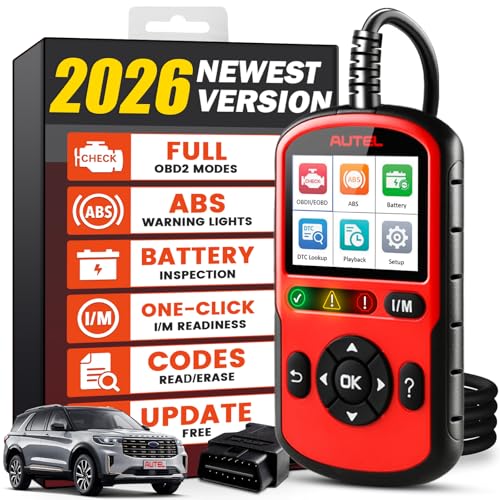
A mechanic will use an OBD2 scanner capable of reading ABS codes to diagnose the exact problem.
FAQs About how to tell if your car has abs
Do all modern cars have ABS?
Yes, virtually all modern cars have an Anti-lock Braking System (ABS) as standard equipment. In many countries, including the United States, regulations have mandated ABS on all new passenger vehicles for many years. For example, ABS has been required on all new cars sold in the U.S. since September 1, 2013, though most manufacturers made it standard long before that.
What is the difference between ABS and regular brakes?
The key difference is that ABS prevents wheels from locking up, while regular brakes can lock the wheels during a hard stop. When wheels lock, the car skids and you lose steering control. ABS automatically and rapidly pumps the brakes to keep the wheels turning just enough to maintain traction, allowing you to steer around obstacles while braking hard.
Does having ABS mean my car will stop faster?
Not necessarily; the primary benefit of ABS is maintaining steering control, not always shorter stopping distances. On dry pavement, stopping distances are often similar. However, on some loose surfaces like gravel or snow, a non-ABS car might stop slightly shorter because a wedge of the surface material builds up in front of the locked tire. ABS is designed for control, which is the most critical factor in collision avoidance.
Can I add ABS to a car that doesn’t have it?
No, realistically you cannot add an ABS system to a car that was not originally equipped with one. Retrofitting an ABS system is prohibitively complex and expensive. It would require installing not just the hydraulic modulator and pump, but also wheel speed sensors at every wheel, a new electronic control unit (ECU), and extensive new wiring and programming.
Do older cars have ABS?
Some older cars do have ABS, but it was typically an optional extra on higher-end models before becoming standard. The feature began appearing on luxury cars in the 1970s and became more common throughout the 1980s and 1990s. If you have a car from this era, it is especially important to use the verification methods in this guide rather than assuming it has ABS.
What does it feel like when ABS activates?
When ABS activates during hard braking, you will feel a rapid pulsing or vibrating sensation in the brake pedal. You may also hear a buzzing or grinding noise from the front of the car. This is the system quickly applying and releasing brake pressure and is completely normal. Do not lift your foot off the brake; maintain firm pressure and steer as needed.
Is ABS the same as Traction Control (TCS)?
No, they are different systems that often work together. ABS prevents wheels from locking during braking. A Traction Control System (TCS) prevents wheels from spinning during acceleration. Both systems use the same wheel speed sensors to monitor wheel rotation, but they serve opposite functions to maintain traction.
How can I tell if a used car has ABS before buying?
Use the dashboard light check during your test drive. When you turn the key to the “On” position, look for the “ABS” light to illuminate briefly and then turn off. You can also ask the seller for the owner’s manual or use the car’s VIN to run a vehicle history report or use a VIN decoder, which will list the factory-installed features.
Why would my ABS light come on and then go off?
An intermittent ABS light often points to a failing wheel speed sensor or a poor electrical connection. The sensor might be dirty, damaged, or the wiring might be loose, causing it to send an erratic signal to the control module. While the system may work intermittently, you should have it diagnosed by a mechanic to find the root cause.
Is it expensive to fix an ABS problem?
The cost to fix an ABS problem can vary widely depending on the cause. A common issue like a faulty wheel speed sensor is relatively inexpensive to repair. However, if the main ABS control module has failed, the repair can be much more expensive. A professional diagnosis is needed to determine the exact cost.
Key Takeaways: How to Tell if Your Car Has ABS Summary
- Dashboard Light is the Easiest Check: The simplest way to confirm ABS is to turn your ignition to the “On” position and look for the “ABS” warning light to illuminate for 2-4 seconds.
- Physical Inspection Provides Proof: If the light check is inconclusive, you can visually confirm by finding the ABS module (a metal block under the hood with many brake lines) and wheel speed sensor wires leading to each wheel.
- Documentation is Definitive: For 100% certainty, check your car’s owner’s manual in the safety or braking section, or use an online VIN decoder to get a list of all factory-installed features.
- ABS Means Control, Not Always Shorter Stops: The primary and most critical benefit of an anti-lock braking system is that it prevents wheel lock-up, allowing you to maintain steering control during an emergency stop.
- An “On” ABS Light Means Caution: If the ABS light stays on, your regular brakes will still work, but the anti-lock safety feature is disabled. It is crucial to have the system diagnosed by a professional as soon as possible.
- Normal ABS Activation Feels and Sounds Different: A rapid pulsing in the brake pedal and a grinding or buzzing sound are normal when ABS is active. Do not lift your foot; maintain firm pressure and steer.
- ABS is a Foundational Safety System: ABS is a key component that enables other modern safety features like Traction Control (TCS) and Electronic Stability Control (ESC) to function.
Final Thoughts on Verifying Your Car’s ABS
Knowing how to tell if your car has ABS is a simple yet vital piece of knowledge for any responsible driver. It moves beyond just operating a vehicle to truly understanding its core safety systems. By using the straightforward dashboard light check, performing a quick visual inspection, or consulting your vehicle’s official documentation, you can gain certainty and confidence. This understanding empowers you to know how your car will respond in an emergency, ensuring you can use its features to their full potential to keep yourself and others safe on the road.
Last update on 2026-04-24 / Affiliate links / Images from Amazon Product Advertising API