
Nothing ruins the brilliant, mirror-like finish of a clean car faster than a constellation of ugly water spots. These stubborn blemishes can make a freshly washed vehicle look dirty and, if left untreated, can cause permanent damage to your paint. The key to restoring that perfect shine is knowing exactly what you’re up against and using the right method for the job.
To remove water stains from a car, you must first identify the spot type. For fresh surface spots, use a vinegar solution or clay bar. For spots etched into the paint, a polishing compound is required to level the clear coat and erase the stain.
This guide cuts through the confusion, providing a step-by-step pro-level playbook to help you diagnose and eliminate every type of water spot. Leveraging a deep analysis of proven detailing techniques, we’ll unpack the simple DIY solutions and advanced methods that will help you effectively how to remove water stains from a car, restoring your vehicle’s flawless finish and protecting it from future damage.
Key Facts
- Primary Cause Identified: The vast majority of water spots are caused by mineral deposits, primarily calcium and magnesium, that are left behind when hard water evaporates from your car’s surface.
- Damage Can Be Permanent: If water spots, especially from acid rain, are not removed promptly, they can etch into the car’s clear coat, creating permanent craters that require abrasive polishing to remove.
- Start with the Safest Method: Detailing professionals always recommend starting with the least aggressive removal method, such as a proper car wash or a vinegar solution, before escalating to more abrasive techniques.
- Vinegar is a Dissolver, Not Just a Cleaner: A 50/50 solution of white vinegar and distilled water works because the mild acid effectively dissolves the alkaline mineral deposits, but it will also strip any existing wax or sealant.
- Prevention is Protection: Applying a protective layer like a quality wax, sealant, or ceramic coating is the most effective way to prevent water spots, as it creates a hydrophobic barrier that stops water from clinging to the surface.
First, Know Your Enemy: Understanding the 3 Types of Water Spots
Water spots are mineral deposits left after water evaporates. They are categorized into three types: Type I (surface minerals), Type II (etched into the paint), and Type III (faded spots on single-stage paint). Identifying the correct type is the first step to safe removal. Before you can learn how to remove water stains from a car, you must perform the pro diagnosis step. Identifying the correct type of spot is crucial for choosing an effective, non-damaging removal method. Look closely at your car’s finish. Do you see spots sitting on top of the paint, or have they started to etch into it?

/How-to-remove-water-stains-from-your-car-5077585_color_rev-fecd6453bd6c477f96925da6a2610a2d.png)
This simple diagnosis will guide you to the right solution.
| Spot Type | Appearance | Cause | Severity |
|---|---|---|---|
| Type I | Light, chalky deposits sitting on the paint surface. | Minerals (calcium, magnesium) left from evaporated hard water or tap water. | Mild |
| Type II | Small craters or etchings that feel indented in the clear coat. | Acid rain or corrosive water left to dwell, eating into the paint. | Severe |
| Type III | Faded or dull-looking patches, often on older single-stage paints. | Water pooling and staining the paint over time. | Moderate |
Step 1: The First Response for Fresh Water Spots (The Two-Bucket Wash)
For fresh water spots, a proper two-bucket wash with a pH-neutral shampoo is the first and least aggressive removal method. The most critical step is to dry the vehicle immediately and thoroughly with microfiber towels to prevent new spots from forming. If you’ve just noticed some light water spots on your car after washing or a light rain, don’t panic. Often, a proper and careful wash is all you need to remove these fresh Type I deposits before they have a chance to bond to the paint.

The key is technique. Rushing the process or working in the wrong conditions can actually make the problem of water spots on your car worse.
Pro Tip: “The single biggest mistake is washing in direct sun. Always work in the shade to give yourself time to dry the car completely before new spots form.”
Here’s the correct procedure:
- Cool the Vehicle: Make sure your car’s surface is cool to the touch and out of direct sunlight. This is critical because a hot surface will cause water to evaporate too quickly, creating new water spots.
- Use Two Buckets: Fill one bucket with your pH-neutral car wash shampoo and water, and a second bucket with plain rinse water. This method prevents you from reapplying dirt and grit back onto the car, which can cause scratches.
- Rinse Top-Down: Rinse the entire vehicle from the top down to remove loose debris. Wash with your soapy mitt, also working from top to bottom, rinsing the mitt frequently in the plain water bucket before reloading it with soap.
- Dry Immediately: This is the most important step. As soon as you’re done rinsing, immediately dry the entire vehicle using high-quality, absorbent microfiber towels. Don’t let any water air-dry on the surface.
Step 2: DIY Solutions for Stubborn Surface Spots (Type I)
For stubborn surface spots, a 50/50 mix of white vinegar and distilled water can dissolve mineral deposits. Alternatively, a paste of baking soda and water can act as a gentle abrasive to lift the spots. If a standard wash didn’t remove the mineral deposits, it’s time to step up to a simple and effective DIY solution. Both white vinegar and baking soda are excellent at tackling stubborn Type I spots that have bonded to the surface. Think of the vinegar solution like a descaler for your coffee pot—it uses mild acid to dissolve the same minerals that are stuck to your car’s paint.
Method A: The White Vinegar & Water Solution
Mix equal parts white vinegar and distilled water, spray on the spots, let it dwell for a few minutes, then gently wipe and rinse thoroughly. Always re-apply wax or sealant afterward. This method uses the mild acidity of vinegar to break down and dissolve the alkaline mineral deposits that make up hard water spots. It’s a highly effective way how to remove water stains from a car yourself.
- Recipe:
- 1 part plain white vinegar
- 1 part distilled water (using distilled water prevents adding more minerals to the surface)
- Process:
- Prepare: Mix the vinegar and distilled water in a clean spray bottle.
- Spray: Lightly spray the solution directly onto the water-spotted area.
- Dwell: Let the solution sit on the surface for 1-2 minutes to allow the acid to work on the minerals. Don’t let it dry.
- Wipe: Gently wipe the area with a clean, soft microfiber towel.
- Rinse & Dry: Thoroughly rinse the area with clean water to neutralize the vinegar, then dry it completely with another microfiber towel.
Pro Tip: “For very stubborn spots, soak a microfiber towel in the solution and lay it over the area for a minute or two to let the acid work.”
Caution: Vinegar is acidic and will strip any wax or sealant from your paint. You must apply a new layer of protection after using this method. Avoid using this solution on chrome or bare aluminum surfaces as it can cause corrosion.
Method B: The Gentle Baking Soda Paste
Create a paste of 3 parts baking soda to 1 part water, apply it to the spots, rub gently in a circular motion, let it sit for 15 minutes, and then rinse completely. If you prefer a non-acidic approach, a baking soda paste works as a very fine, gentle abrasive to scrub away the mineral deposits without harming your clear coat.
- Process:
- Create Paste: In a small bowl, mix about 3 parts baking soda to 1 part water until you have a thick paste.
- Apply Gently: Using a clean microfiber cloth, apply the paste to the water spots. Gently rub the area in a small circular motion with light pressure.
- Let Sit: Allow the paste to sit on the spots for about 15 minutes.
- Rinse & Dry: Rinse the area thoroughly with clean water to remove all baking soda residue, then dry the surface completely.
Step 3: Advanced Removal for Bonded Contaminants
If DIY methods fail, use a detailing clay bar to physically lift bonded mineral deposits or a dedicated chemical water spot remover to dissolve them. Always follow these methods with a new layer of wax or sealant. When you have water spots on your car that won’t come off with washing or simple DIY solutions, it means the mineral deposits have strongly bonded to the paint surface. At this stage, you need to escalate to specialized detailing products designed for this exact problem.
Quick Fact: “A properly clayed surface should feel as smooth as glass. If you can still feel grit, the contaminants aren’t fully removed.”

Here’s a comparison of the two main advanced methods:
| Feature | Detailing Clay Bar | Dedicated Water Spot Remover |
|---|---|---|
| Best For | Bonded surface contaminants, mineral deposits, light overspray. | Stubborn, widespread mineral deposits. |
| How It Works | Mechanical Abrasive: Physically sheers off and lifts contaminants. | Chemical Reaction: Mild acids dissolve and neutralize mineral deposits. |
| Effort Level | Medium: Requires lubrication and physical effort. | Low: Apply, wait briefly, wipe off. |
| Key Precaution | Must use lubricant; dropping the clay means you must discard it. | Must follow instructions; work in small sections and neutralize. |
Method A: Using a Detailing Clay Bar
After washing, lubricate a small area and gently glide the clay bar over the surface with light pressure to lift embedded minerals. Knead the clay often to expose a clean surface. A clay bar is a detailing staple that safely removes contaminants that are stuck on top of your paint, including the minerals from hard water spots.
- Wash Car: The car must be thoroughly washed and dried first.
- Lubricate Surface: Working in a small, 2×2 foot section, spray a generous amount of clay lubricant onto the surface. You cannot over-lubricate.
- Glide Clay Bar: Flatten a piece of the clay bar into a patty. Gently glide it back and forth over the lubricated area with very light pressure. You will feel it “grab” at first and then glide smoothly as it picks up the contaminants.
- Knead Clay: Frequently check the clay surface. When it looks dirty, fold it in on itself and knead it to expose a clean, fresh surface. If you drop the clay on the ground, throw it away.
- Final Wipe & Dry: After a section feels perfectly smooth, wipe away the excess lubricant with a clean microfiber towel and move to the next section. A final wash or rinse is recommended afterward.
Method B: Applying a Dedicated Water Spot Remover
Apply a dedicated chemical remover to a microfiber applicator, work it into a small 2×2 foot section for under 30 seconds, then immediately wipe the area clean to neutralize the chemical reaction. Commercial water spot removers use a balanced formula of mild acids and surfactants to quickly break down mineral deposits without being overly harsh. Following the manufacturer’s instructions is critical for safety and effectiveness.
- Work in a cool, shaded area on a clean surface.
- Apply a small amount of the product to a microfiber applicator, not directly to the paint.
- Gently work the product into a small 2×2 foot section for no more than 30 seconds.
- Immediately wipe the area with a damp microfiber towel to neutralize the chemical and remove the residue.
- Follow up with a dry towel to ensure the surface is completely clean and dry.
Warning: Always follow the product’s specific instructions. Some strong water spot removers can damage ceramic coatings or other paint protection. Exercise extreme caution when using them on glass, as the acidic ingredients can etch the glass if left on for too long.
Step 4: The Final Resort for Etched Water Spots (Type II & III)
For spots etched into the paint’s clear coat, removal requires an abrasive compound or polish to level the surface. Always perform a test spot in an inconspicuous area first and follow up with a protective wax or sealant. For severe etching, consult a professional detailer. If you’ve tried everything and can still see the outlines of water spots, it’s likely they are no longer on your paint, but in it. These are Type II etchings, and they require paint correction. The goal is to carefully remove a microscopic layer of the clear coat to level the surface, effectively erasing the etched-in spot.
Always perform a ‘test spot’ first! Before polishing a visible area like your hood or roof, test your product and technique on a small, inconspicuous area (like a lower door panel) to ensure you are comfortable with the process and satisfied with the results.
This is an advanced technique. If you’re not comfortable with abrasive polishing, it is highly recommended to seek help from a professional detailer to avoid causing further damage.
- The Process: Start with the car being completely clean, dry, and decontaminated (clayed).
- Product Choice: Choose the least aggressive product first. A fine polish has less abrasive power than a heavy compound.
- Application: Apply a small amount of polish to a foam or microfiber applicator pad. Work it into a small section using moderate pressure and overlapping motions (either by hand or with a machine polisher).
- Removal: Work the product until it begins to turn clear, then immediately wipe away the residue with a clean microfiber towel before it dries.
- Protect: After correcting the paint, it is completely bare. You must apply a layer of wax, sealant, or ceramic coating to protect the newly polished surface.
The Best Offense is a Good Defense: How to Prevent Water Spots on Your Car
To prevent water spots, always dry your car thoroughly after washing, apply a quality wax, sealant, or ceramic coating to create a hydrophobic barrier, and avoid parking near sprinklers or washing in direct sunlight. The absolute best way how to remove water stains from a car is to never let them form in the first place. A few key habits and one crucial protective step can save you hours of work. What’s your current car protection? If the answer is ‘nothing,’ that’s the first and most important thing to change to prevent future water spots.
- Apply Protection: This is the most critical step. A layer of wax, a paint sealant, or a ceramic coating creates a protective, hydrophobic barrier on your paint. Water will bead up and roll off easily instead of sitting flat and evaporating. Ceramic coatings are especially effective because they create an extremely durable, low-friction surface that minerals find very difficult to bond to.
- Dry Immediately: Never let your car air-dry after a wash or after it rains. Use a plush microfiber drying towel or an electric car dryer to remove all water from the surface before the sun has a chance to evaporate it.
- Choose Your Parking Spot Wisely: The number one cause of severe water spotting is parking next to sprinkler systems, which often use hard, untreated well water. Avoid these spots at all costs.
- Wash in the Shade: Always wash and dry your car out of direct sunlight. This slows down evaporation and gives you more time to dry the car properly.
- Consider a Water Filter: If you live in an area with very hard water, using an in-line de-ionizing (DI) filter for your final rinse will remove all minerals, making it impossible for water spots to form.
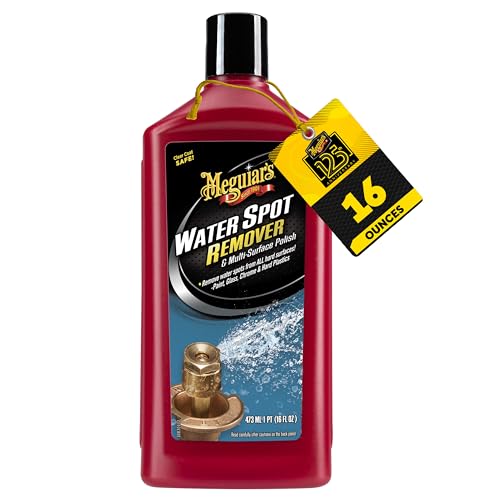
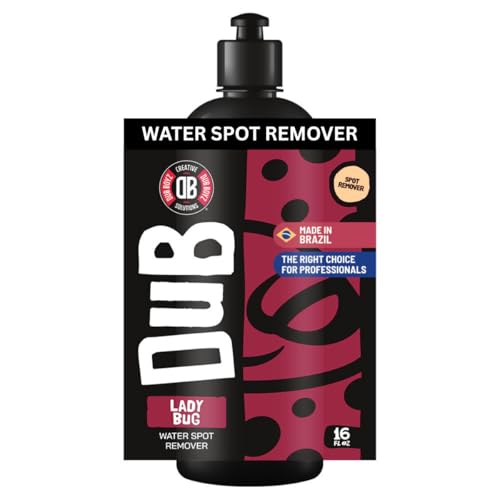
To make these tasks easier and ensure you have the right tools, consider investing in a complete detailing kit. For your convenience, here are some of the top-rated car water spot remover kits available.


FAQs About how to remove water stains from a car
Can old water stains be removed from a car?
Yes, old water stains can be removed, but if they have etched into the clear coat (Type II spots), they will require more aggressive methods like polishing or compounding to level the paint surface. Surface-level stains can often be removed with vinegar or a clay bar, regardless of age.
Does WD-40 remove water spots on car paint?
Yes, for very light mineral deposits, WD-40 can help remove water spots. Its oil-based formula can break down and lift light mineral buildup. Spray a small amount onto a microfiber cloth, wipe the area, and then buff it dry with a clean cloth. It is less effective on more stubborn or etched spots.
What is the best way to remove hard water spots from car windows?
The methods for glass are similar to paint, but you must be cautious.
* Start with a 50/50 vinegar and distilled water solution, as it’s very effective on glass.
* If that fails, a detailing clay bar is safe and effective to use on glass with proper lubrication.
* For very stubborn spots, use a dedicated water spot remover formulated for glass, but follow instructions carefully to avoid accidentally etching the glass surface.
Will a magic eraser remove hard water stains on my car?
It is not recommended. You should not use a magic eraser to remove water spots from car paint. A magic eraser is a form of micro-abrasive melamine foam. It acts like extremely fine sandpaper and can create thousands of tiny scratches in your car’s clear coat, dulling the finish and causing more damage than it fixes.
Final Summary: Your Spot-Free Finish Awaits
Learning how to remove water stains from a car is a process of escalation. By correctly identifying the type of spot you’re dealing with and always starting with the least aggressive method, you can safely restore your vehicle’s shine without causing unnecessary damage. From a simple wash to advanced polishing, there is a solution for every level of water spot contamination.
Here are the most critical takeaways to remember:
- Diagnose First: Determine if your spots are on top of the paint (Type I) or etched into it (Type II) before you begin.
- Start Simple: Always begin with a proper two-bucket wash or a 50/50 vinegar solution before moving to stronger chemicals or abrasives.
- Protection is Prevention: The single best way to fight water spots is to apply a quality wax, sealant, or ceramic coating to make your paint hydrophobic.
- Dry, Dry, Dry: Never let water air-dry on your car. Thoroughly drying your vehicle after any exposure to water is your best line of daily defense.
Take these pro methods and confidently restore your car’s brilliant shine
Last update on 2026-03-29 / Affiliate links / Images from Amazon Product Advertising API

![Dubai Luxury Cars: Ultimate Guide for Buying & Renting [year]](https://i0.wp.com/carxplorer.com/wp-content/uploads/2026/03/Dubai-Luxury-Cars-Ultimate-Guide-for-Buying-Renting-year-1.jpg?resize=60%2C60&ssl=1 "Dubai Luxury Cars: Ultimate Guide for Buying & Renting [year] 10")
![9 Old Luxury Cars: Cheap, Reliable & Built to Last [year]](https://i0.wp.com/carxplorer.com/wp-content/uploads/2026/03/9-Old-Luxury-Cars-Cheap-Reliable-Built-to-Last-year-1.jpg?resize=60%2C60&ssl=1 "9 Old Luxury Cars: Cheap, Reliable & Built to Last [year] 12")

![Luxury Cars White: 9 Elegant Designs & Top Models for [year]](https://i0.wp.com/carxplorer.com/wp-content/uploads/2026/03/Luxury-Cars-White-9-Elegant-Designs-Top-Models-for-year-1.jpg?resize=60%2C60&ssl=1 "Luxury Cars White: 9 Elegant Designs & Top Models for [year] 16")
![Blue Luxury Cars: 11 Stunning Models & Shades in [year]](https://i0.wp.com/carxplorer.com/wp-content/uploads/2026/03/Blue-Luxury-Cars-11-Stunning-Models-Shades-in-year-1.jpg?resize=60%2C60&ssl=1 "Blue Luxury Cars: 11 Stunning Models & Shades in [year] 18")