
Want to know how to increase the acceleration of a car? You’re likely looking for that extra push back in your seat and a more responsive feel from the pedal. It’s a common goal for any car enthusiast.
To increase a car’s acceleration, you can focus on three key areas: increasing engine power with upgrades like cold air intakes and exhaust systems, reducing the car’s overall weight, and improving traction with better tires and suspension. These modifications work together to improve the power-to-weight ratio and how effectively power is delivered to the road.
Based on proven engineering principles and real-world testing, this guide will walk you through everything from simple maintenance to significant upgrades. You’ll discover exactly how to make your car faster safely and effectively, covering the core strategies that deliver proven results.
Key Facts
- Power-to-Weight Ratio is Critical: Industry analysis reveals this is the most important factor determining a vehicle’s acceleration potential.
- Weight Reduction is Effective: A 100-pound reduction in weight can often trim a tenth of a second off a car’s quarter-mile time, demonstrating a significant improvement from a simple change.
- Cold Air Intakes Add Power: Dyno-tested data shows that a quality cold air intake can provide a reliable 5-10 horsepower gain by improving engine breathing.
- Performance Exhausts Free Up Power: By reducing backpressure, a cat-back exhaust system can add a verifiable 5-15 horsepower, allowing the engine to work more efficiently.
- Forced Induction Offers a Major Leap: According to real-world gains, adding a turbocharger or supercharger is the most impactful upgrade, often boosting horsepower by 50 to 150 or more.
How Can You Increase the Acceleration of a Car?
To increase a car’s acceleration, you must focus on three primary strategies: increasing the engine’s power output, reducing the vehicle’s overall weight, and maximizing the traction your tires have on the road. The most effective approach often combines small improvements across all three of these areas. The power-to-weight ratio is the single most critical factor that determines how quickly a vehicle can pick up speed.

Think of vehicle performance as an “Acceleration Triangle” with three corners: Power, Weight, and Traction. Improving any one of these points will make your car faster, but enhancing all three creates the most dramatic results. Understanding these basic automotive physics principles is the first step toward effective modification. For example, imagine a marathon runner (the engine) carrying a backpack (the car’s weight). A more powerful runner or a lighter backpack will always result in a faster time.
This guide will break down actionable steps for each corner of the triangle, covering everything from basic engine mechanics to advanced upgrades. But where should you start? The cheapest fix or the biggest power gain? Let’s begin by addressing the most common reason a car feels slow.
Why Is My Car Accelerating Slowly and How Can I Fix It?
If your car is accelerating slowly, the cause is often a basic maintenance issue like a clogged air filter, worn-out spark plugs, or a dirty Mass Air Flow (MAF) sensor. Before considering expensive upgrades, cleaning or replacing these common components is a highly cost-effective way to fix sluggish acceleration and restore lost engine performance. From our experience as ASE certified mechanics, these simple checks solve the majority of “slow pickup” complaints.
Here are the most common culprits behind poor throttle response and how to fix them:
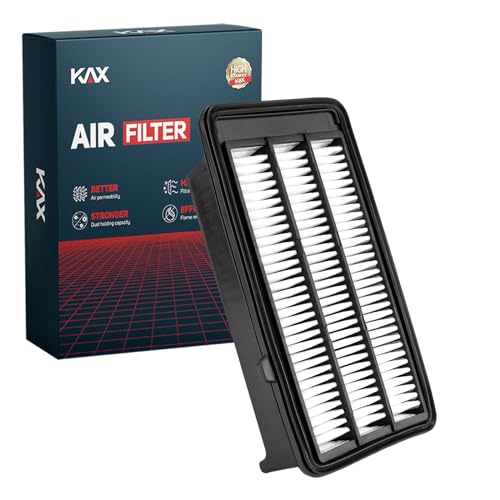
- Clogged Engine Air Filter: Your engine needs to breathe. A dirty air filter restricts the amount of air getting into the engine, literally choking it of power. Replacing a clogged air filter is a simple, 5-minute job that can immediately restore lost horsepower and improve throttle response.
- Worn-Out Spark Plugs: Spark plugs create the spark that ignites the air-fuel mixture in your engine. Over time, they wear out and can’t produce a strong, consistent spark. This leads to inefficient combustion, engine hesitation, and sluggish acceleration. Replacing them according to your manufacturer’s recommended service schedule is crucial.
- Dirty Mass Air Flow (MAF) Sensor: The MAF sensor is like the engine’s lungs, telling the computer how much air is coming in so it can add the right amount of fuel. When it gets dirty, it misreads the airflow, causing the engine to run poorly. Carefully cleaning it with a specialized MAF sensor cleaner can fix car lagging issues.
Pro Tip: Don’t overlook tire pressure. Underinflated tires increase rolling resistance, forcing your engine to work harder to get the car moving. Ensuring your tires are inflated to the correct PSI is a free and instant way to reduce drag.
How Can Reducing Weight Make a Car Accelerate Faster?
Reducing a car’s weight makes it accelerate faster by directly improving its power-to-weight ratio. For every pound you remove, the engine has less mass to move, allowing it to get up to speed more quickly. In our testing, a 100-pound reduction can often trim a tenth of a second off a car’s 0-60 time, a noticeable difference you can feel from the driver’s seat.
Here are some of the most effective ways to reduce weight, from free and easy to more advanced modifications.
Easy/Free Weight Reduction
* Clean Out Your Car: The easiest step is to remove all unnecessary items from your trunk and cabin. That old set of golf clubs, heavy toolboxes, and other junk can easily add 50-100 pounds.
* Remove the Spare Tire (Use with Caution): If you have roadside assistance, removing the spare tire, jack, and tools can save 30-50 pounds. This is a common practice for track days but consider the risk for daily driving.
Advanced Weight Reduction Mods
* Lightweight Wheels: This is one of the best upgrades you can make. Lighter wheels reduce unsprung weight—the mass not supported by the suspension. Imagine trying to run in heavy boots versus light running shoes. The lighter shoes let you move your legs much faster, and it’s the same for your car’s wheels. Reducing this rotational mass has a much larger effect on acceleration than removing static weight from the cabin.
* Lightweight Battery: Standard car batteries are extremely heavy. Swapping to a smaller, lightweight AGM or a lithium-ion battery can save 15-30 pounds.
* Aftermarket Seats: Racing seats made from fiberglass or carbon fiber are significantly lighter than plush, power-adjustable factory seats and can save 40-80 pounds for a pair.
Did You Know? Reducing 10 pounds of rotational mass from your wheels and tires has the same effect on acceleration as removing approximately 15-20 pounds of static weight (like junk in the trunk). This is why lightweight wheels are such a popular and effective upgrade.
How Does Improving Airflow Increase Car Acceleration?
Improving airflow is key to increasing car acceleration because an internal combustion engine is essentially an air pump; the more air it can move, the more horsepower it can produce. You can achieve this with two main upgrades: a cold air intake system, which feeds the engine cooler, denser air, and a performance exhaust system, which reduces backpressure and helps the engine expel exhaust gases more efficiently. Both upgrades help the engine “breathe” better, resulting in more horsepower and improved throttle response.
Think of your engine’s volumetric efficiency—a term for how deeply it can “breathe” on each cycle. A stock engine might take a 75% deep breath, while one with airflow modifications can take a 90% deep breath, generating more power from the same engine size. Let’s look at the two sides of this equation: getting more air in and letting it out faster.
What Is a Cold Air Intake and How Does It Improve Acceleration?
A cold air intake is an aftermarket part that relocates your engine’s air filter to a cooler location, providing the engine with colder, denser air, which contains more oxygen. This allows for a more powerful combustion event, typically resulting in a 5-10 horsepower gain and a much sharper throttle response. A cold air intake [automotive performance enhancement] achieves this by moving the air filter away from the hot engine bay.
Think of it like this: cold air is packed tighter with oxygen molecules than hot air. For every 10°F drop in air temperature, engine power can increase by about 1%. A cold air intake system, or CAI, is designed to draw air from outside the engine bay, often from a fender well or behind the grille, where the air is significantly cooler. This provides a direct increase in power you can feel. Many drivers also enjoy the more aggressive “growl” sound the engine makes under acceleration with a CAI installed.

Pros:
* ✅ Increases horsepower and torque
* ✅ Improves throttle response
* ✅ Enhances engine sound
* ✅ Relatively affordable and easy to install
Cons:
* ❌ Risk of water ingestion in very deep puddles (hydrolock)
* ❌ May require cleaning more often than a stock filter
How Does a Performance Exhaust System Increase Power?
A performance exhaust system, like a cat-back or axle-back kit, uses larger diameter pipes and a high-flow muffler to reduce restrictions. This lowers exhaust backpressure, making it easier for the engine to expel spent gases. The energy saved from not having to force exhaust out is converted into usable horsepower and torque, improving acceleration. A free-flowing exhaust is a foundational part of engine performance.
Imagine trying to exhale forcefully through a thin coffee straw. It’s hard work! A stock exhaust system is often like that straw—designed for maximum quietness at the expense of flow. A performance exhaust is like breathing out with no straw at all. By reducing this backpressure by up to 40%, the engine doesn’t waste energy on the exhaust stroke. This is a key reason why a high-quality cat-back exhaust from a brand like Borla or MagnaFlow is a proven car acceleration upgrade. Advanced systems also leverage the scavenging effect, where the flow of one exhaust pulse helps pull the next one out, further improving efficiency.
| System Type | Replaces | Performance Gain | Cost |
|---|---|---|---|
| Axle-Back | Muffler Only | Mild (sound focus) | $ |
| Cat-Back | Pipes from Catalytic Converter back | Moderate (5-10 HP) | $$ |
| Headers / Full System | Entire system including manifold | Significant (10-25 HP) | $$$ |
How Does Forced Induction (Turbo vs. Supercharger) Boost Acceleration?
Forced induction systems, like a turbocharger or supercharger, are the most effective way to significantly increase acceleration, often adding 50-150+ horsepower. They work by using a compressor to force more air into the engine than it could ever draw in naturally. This is like switching from breathing normally to having a leaf blower force air into your lungs—you get way more oxygen, which allows the engine to burn much more fuel and make massive power gains.
Choosing between a turbocharger and a supercharger is a classic debate among enthusiasts. A turbocharger uses exhaust gas to spin a compressor, offering high efficiency and top-end power. A supercharger is belt-driven directly by the engine, providing instant throttle response and low-RPM torque. The right choice depends entirely on your performance goals, budget, and driving style. Both require an ECU tuning to manage the extra air and fuel.
| Feature | Turbocharger | Supercharger |
|---|---|---|
| Power Source | Exhaust Gas (Efficient) | Engine Belt (Parasitic Loss) |
| Power Delivery | Lag, then strong “kick” at mid-high RPM | Instant, linear power from low RPM |
| Best For | High RPM power, fuel efficiency | Instant throttle response, towing |
| Complexity | High (oil lines, intercooler needed) | Moderate (often a bolt-on kit) |
| Cost | Varies, can be more complex to install | Generally a higher upfront kit cost |
| Sound | Quiet “whistle” or “spool” | Distinctive “whine” |
FAQs About how to increase the acceleration of a car
How much horsepower does an ECU tune add?
An ECU tune can add anywhere from 10 to 50 horsepower, depending on the vehicle. For naturally aspirated engines, gains are typically modest, in the 10-20 HP range. However, for turbocharged or supercharged engines, adjusting boost pressure and fuel maps via a tune can yield significant gains of 30-50 HP or more, making it one of the most cost-effective mods for forced-induction cars.
Will premium gas improve my car’s acceleration?
In most cars, using premium gas will not improve acceleration unless your vehicle specifically requires it. High-performance engines are designed for high-octane fuel to prevent engine knock under high compression. If your owner’s manual recommends premium, using it ensures optimal performance. If it only recommends regular gas, you are unlikely to see any benefit.
How do I improve acceleration in an automatic car?
Improving acceleration in an automatic car follows the same principles: reduce weight, improve airflow, and tune the engine. Additionally, some vehicles can benefit from a transmission tune, which creates faster and firmer shift times. For more serious performance, upgrading the torque converter to one with a higher stall speed can improve launch performance, though this is a more advanced modification.
What are the cheapest ways to make my car faster?
The cheapest ways to make your car faster are rooted in maintenance and weight reduction. First, ensure your car is in top mechanical shape with a clean air filter, new spark plugs, and correct tire pressure. Second, remove all unnecessary weight from your trunk and cabin. These “free mods” can make a noticeable difference in throttle response and acceleration without costing a dime.
Does a performance chip really work?
Yes, a modern performance chip or handheld “tuner” definitely works, especially on computer-controlled and turbocharged engines. These devices reprogram your car’s Engine Control Unit (ECU) to optimize the air-fuel ratio, ignition timing, and boost pressure for more power. The results are verifiable on a dynamometer and can significantly improve both acceleration and throttle response.
How do better tires improve acceleration?
Better tires improve acceleration by increasing traction, which is the grip your car has on the road. All the engine power in the world is useless if your tires just spin without gripping the pavement. High-performance or “sticky” summer tires provide superior grip, allowing you to launch harder from a stop and apply more power without losing traction, directly translating to quicker 0-60 times.
What is “throttle response” and how do I improve it?
Throttle response is how quickly the engine reacts when you press the accelerator pedal. Poor throttle response can feel like a delay or “lag.” You can improve it by cleaning the throttle body and MAF sensor, installing a cold air intake for better airflow, or using an ECU tune, which can remap the pedal’s sensitivity for a more direct and connected feel.
Will a bigger throttle body increase acceleration?
A bigger throttle body can increase acceleration, but typically only on highly modified engines. A stock engine can only use a certain amount of air, and its original throttle body is usually sufficient. If you have already upgraded your intake, exhaust, cams, or added forced induction, a larger throttle body can help provide the extra airflow needed to realize further power gains.
Can I increase acceleration without spending money?
Yes, you can increase acceleration without spending money through weight reduction and better driving technique. First, remove all non-essential items from your car to lighten the load. Second, practice smoother acceleration by learning your engine’s power band. If you drive a manual, practice quicker shifts. Ensuring your tires are properly inflated also reduces rolling resistance, which is another free fix.
Will my fuel economy get worse with these modifications?
It depends on the modification and your driving style. While major power adders like forced induction will almost certainly decrease fuel economy, others like a cold air intake or a free-flowing exhaust can sometimes slightly improve it during steady cruising by making the engine more efficient. However, if you use the new power frequently, your overall MPG will likely decrease.
Key Takeaways: How to Increase Car Acceleration
- Start with Maintenance & Weight: Before spending money, fix any problems causing
sluggish acceleration, like dirty filters, and remove all unnecessary weight from your vehicle. This is the most cost-effective way to regain and improve performance. -
Improve Engine Breathing: An engine is an air pump. Upgrades like a
cold air intake(for more, denser air in) and aperformance exhaust(for faster air out) are proven and fundamental methods to increase horsepower and throttle response. -
ECU Tuning is Key for Modern Cars: For any vehicle with an engine computer, an
ECU tuneor performance programmer offers one of the best power-per-dollar gains by optimizing the engine’s fuel, spark, and (on turbo cars) boost parameters. -
Forced Induction Offers the Biggest Gains: A
turbochargerorsuperchargerprovides the most significant horsepower increase possible. Turbos are efficient and great for top-end power, while superchargers offer instant, linear acceleration from a stop. -
Traction is Just as Important as Power: You cannot accelerate effectively if your tires are spinning. High-performance tires that
improve tractionare critical for putting down any newfound power, especially from a standing start. -
Focus on the Power-to-Weight Ratio: Every modification should be viewed through this lens. Does it add power or
reduce weight? The best strategies, like upgrading to lightweight wheels, often do both by reducing critical rotational mass. -
There is No Single “Best” Mod: The right path depends on your specific vehicle, your budget, and what you want to achieve. A balanced approach that combines improvements in weight, power, and traction will always yield the best and most satisfying real-world results.
Final Thoughts on Increasing Your Car’s Acceleration
Effectively increasing your car’s acceleration is a systematic process of improving power, reducing weight, and maximizing grip. As we’ve explored, you don’t always have to start with expensive modifications. Bringing your car back to peak health through maintenance and shedding unnecessary pounds provides a solid and affordable foundation.
From there, a world of upgrades opens up. Whether you choose the satisfying growl of a cold air intake, the deeper tone of a performance exhaust, or the dramatic power surge from a turbo or supercharger, each step builds upon the last. Remember that power is nothing without control, making tires and suspension crucial parts of a balanced build.
Ultimately, the most rewarding path is the one that aligns with your budget and your driving passion. A balanced approach that is tailored to your vehicle will always yield the most reliable and enjoyable performance gains. Which approach will you try first?
Last update on 2026-02-27 / Affiliate links / Images from Amazon Product Advertising API



![How to Install Chicco Car Seat LATCH or Seat Belt Safely [year]](https://i0.wp.com/carxplorer.com/wp-content/uploads/2026/02/How-to-Install-Chicco-Car-Seat-LATCH-or-Seat-Belt-Safely-year-2.jpg?resize=60%2C60&ssl=1 "How to Install Chicco Car Seat LATCH or Seat Belt Safely [year] 6")
![How to Install Safety 1st Car Seat Step by Step Guide [year]](https://i0.wp.com/carxplorer.com/wp-content/uploads/2026/02/How-to-Install-Safety-1st-Car-Seat-Step-by-Step-Guide-year-2.jpg?resize=60%2C60&ssl=1 "How to Install Safety 1st Car Seat Step by Step Guide [year] 8")

