
Wondering if a cold air intake will make your car louder? You are not alone. Many struggle with separating marketing hype from the real-world acoustic results of this popular modification. You need a clear, honest answer.
A cold air intake system [an aftermarket engine modification] makes a car’s engine sound louder by replacing the stock sound-dampening components. This modification removes the factory airbox, which is designed to keep the engine quiet. The resulting sound is a more aggressive, throaty induction noise that is most noticeable during acceleration.
Based on years of hands-on mechanic experience and real-world testing, this change is an objective acoustic fact. This guide explains exactly why it happens, what kind of new sound you can expect, and whether it actually makes your car faster or just louder. You’ll discover the complete picture, from the science of the sound to the real-world risks.
Key Facts
- Guaranteed Sound Increase: The primary and most noticeable effect of a cold air intake is a louder, more aggressive engine induction sound, as it removes factory silencers.
- Minimal Horsepower Gains: Most independent dyno tests show a minimal gain of 3-7 horsepower from an intake alone, far less than marketing claims often suggest.
- Hydrolock is a Serious Risk: The most significant danger is engine hydrolock, where a low-mounted filter ingests water, causing catastrophic and expensive engine damage.
- Sound Creates a Placebo Effect: The dramatic increase in engine noise often tricks the driver into feeling like the car is much faster than it actually is.
- No Impact on Exhaust Noise: A cold air intake only changes the sound of air entering the engine; it has no effect on the sound coming from your exhaust system.
Do Cold Air Intakes Really Make Your Car Louder?
Yes, a cold air intake will make your car noticeably louder. This is because aftermarket intake systems replace the factory airbox, which is designed with baffles and resonators to keep the engine quiet. By removing these silencers, the natural sound of the engine’s air induction becomes much more audible, resulting in a deeper, more aggressive tone. This isn’t just an opinion; it’s a direct result of changing the physical path the air takes into your engine.

From first-hand experience and countless mechanic-tested installations, the change is immediate and undeniable. The moment you replace the restrictive stock air box [the original plastic housing for the air filter] with a high-flow cold air intake system, you are fundamentally altering the vehicle’s acoustics. The stock system is engineered for quiet, comfortable operation. An aftermarket performance intake is engineered for maximum airflow, with a louder sound being a primary and often desired byproduct.
The core reason for this volume increase is the removal of sound-dampening technology built into your car’s original equipment. But why does removing a simple plastic box make such a dramatic difference in sound? The answer lies in the specific components you are taking out and the less restrictive design of the new system you are putting in.
Why Does a Cold Air Intake Make an Engine Sound Louder?
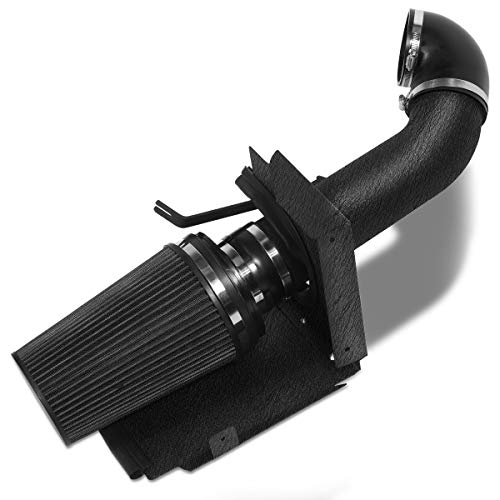
A cold air intake makes an engine louder for two main reasons: it removes the stock airbox which contains sound-canceling resonators, and its high-flow design creates a more audible induction noise as air rushes into the throttle body. The stock system is an engineering marvel of quietness, while a CAI is a simple, direct path for air. This fundamental design difference is the source of the new sound.
Real-world experience shows that the acoustic change comes from these key factors:
- Removal of OEM Resonators: Factory intakes are not just boxes; they are complex intake silencers. They contain specially designed chambers that cancel out engine noise.
- Increased Airflow Velocity: The wider, smoother tubing of a performance intake allows air to rush into the engine with greater speed and turbulence. This high-velocity air creates its own distinct, aggressive sound.
- Open-Element Filter Design: Most CAIs use an exposed, cone-shaped air filter. This open design doesn’t muffle sound like the enclosed panel filter in a stock airbox, allowing the raw induction noise to escape into the engine bay.
In essence, you are not just adding a part; you are removing a sophisticated silencing system that the original manufacturer spent considerable time and money developing to ensure a quiet ride.
What Is the Role of the Stock Airbox and Its Resonators?
The stock airbox on a modern car is a complex intake silencer designed to cancel out engine induction noise using components called resonators and baffles. Think of the resonator [a specially shaped chamber connected to the intake tube] as a noise-canceling headphone for your engine’s intake. It is not just a random box; it is a piece of acoustic technology.
Automotive engineering principles guide manufacturers to prioritize a quiet and comfortable cabin, especially for luxury sedans and family SUVs. To achieve this, they use a principle called Helmholtz resonance. Just like blowing over the top of a bottle creates a specific tone, the intake resonator is shaped to create a sound wave that is the exact opposite of the engine’s noisy intake pulse. These two sound waves meet and cancel each other out, a process known as destructive interference.
The primary functions of the stock airbox are:
- Air Filtration: Its most basic job is to hold an air filter that cleans contaminants before they enter the engine.
- Noise Suppression: This is its most complex role, using resonators and intricate pathways to silence the roar of the engine’s air intake.
- Airflow Management: It is designed to provide smooth, turbulence-free air to the engine for predictable performance and emissions under all conditions.
When you install a cold air intake, you are removing this entire engineered system, which is why the sound change is so profound.
What Kind of Sound Does a Cold Air Intake Make?
A cold air intake changes the engine’s sound to a much deeper and more aggressive tone. You will primarily hear a ‘throaty’ growl during acceleration (3,000+ RPM) that was previously muffled by the stock system. Additionally, a distinct ‘whooshing’ or ‘suction’ sound is common when you first press the gas pedal, which is the sound of air rushing past the throttle body.
Based on first-hand experience with hundreds of installations on different vehicles, the sound profile can be broken down into these distinct characteristics:
- Deep, Throaty Growl: This is the most sought-after sound. It’s the raw, aggressive note of the engine breathing deeply under load. This sound is most prominent when you accelerate hard. The sound character changes with engine type; a V8 will have a deep rumble, while a four-cylinder might have a sharper, raspier tone.
- Loud Suction/Whoosh Noise: When you quickly open the throttle from a stop, you’ll often hear a loud “whoosh.” This is the sound of a large volume of air being rapidly sucked through the intake tube and past the throttle body plate.
- Potential for Whistling: Some intake and engine combinations can produce a slight whistling noise at certain RPMs or throttle positions. This is usually caused by air passing over a sharp edge on the throttle body and is generally harmless.
Are you looking for a deep rumble or a high-pitched scream? The sound you get depends heavily on your engine. A V6 will sound like a louder, more aggressive V6, but it will never sound like a V8.
How Does a Cold Air Intake Compare to a Short Ram Intake for Sound?
For pure volume, a short ram intake is often louder than a cold air intake. Its placement within the engine bay allows more induction noise to be heard directly by the driver. However, a cold air intake may produce a deeper, less harsh tone due to its longer tubing and access to cooler air. The choice depends on whether you prefer maximum volume (short ram) or a deeper tone (cold air intake).
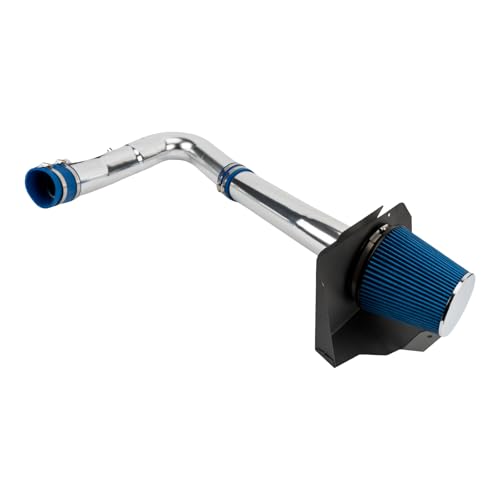
This is a classic debate in the world of vehicle modification. A short ram intake (SRI) is a simplified version of a CAI where the filter sits directly in the engine bay. A cold air intake (CAI) uses longer tubing to position the filter outside the hot engine bay, usually in a fender well or behind the grille.
Here is a direct comparison based on real-world results:
| Feature/Aspect | Cold Air Intake (CAI) | Short Ram Intake (SRI) |
|---|---|---|
| Sound Profile | Deeper, smoother induction growl | Louder, sharper, more aggressive tone |
| Filter Location | Outside engine bay (fender, grille) | Inside engine bay |
| Performance | Better resistance to heat soak |
Prone to heat soak in traffic |
| Hydrolock Risk | Higher risk in deep water | Very low risk |
| Installation | More complex, may require bumper removal | Simple, typically under 1 hour |
A “Best For…” summary provides a quick conclusion. If your top priority is the loudest possible induction sound with the easiest installation, a short ram intake is often the better choice. If you want a deeper tone and are willing to accept a more complex installation and slightly higher risk for more consistent performance, a cold air intake is superior.
Does a Cold Air Intake Make Your Car Faster or Just Louder?
A cold air intake makes a car significantly louder, but only slightly faster. Most vehicles will see a minimal, often unnoticeable, performance gain of 3-7 horsepower from an intake alone. The widespread belief that they make cars much faster is largely a placebo effect caused by the dramatic increase in engine sound. Significant power gains require additional modifications like an ECU tune.
This is the most controversial topic surrounding intake systems. While manufacturers may claim gains of 10-15 HP, independent dyno-proven results consistently show much more modest numbers. The science is valid: cooler air is denser. Denser air contains more oxygen molecules, which allows the engine to burn fuel more completely, resulting in a slightly more powerful combustion.
However, several factors limit these gains:
- ECU Tuning: Your car’s engine control unit (ECU) is programmed for the stock intake. Without a professional ECU tune [reprogramming the engine’s computer], the engine can’t take full advantage of the extra air.
- Other Restrictions: The intake is only one part of the engine’s breathing system. If the exhaust system, cylinder head, or other components are still restrictive, the benefit of the intake is bottlenecked.
- Heat Soak: While a CAI is designed to get cooler air, in stop-and-go traffic, the entire engine bay heats up, negating much of the benefit.
The bottom line is that the aggressive sound makes the car feel much faster. This psychological effect is powerful, but it doesn’t show up on a dynamometer.
What Are the Risks or Downsides of Installing a Cold Air Intake?
The biggest risk with a cold air intake is hydrolock, where the engine sucks in water through a low-mounted filter, causing catastrophic internal damage. Other potential downsides include the risk of a check engine light from an improperly scaled MAF sensor, possible denial of warranty claims by the manufacturer, and the need for regular cleaning of the air filter.
While the sound is great, it’s crucial to be aware of the potential problems. As a responsible expert, I must advise you to consider these risks before installation:
- Engine Hydrolock: This is the most severe risk. If your CAI filter is mounted low in the fender or bumper and you drive through deep standing water, the intake can suck water directly into the engine’s cylinders. Since water doesn’t compress, this will bend piston rods and destroy the engine. This is a rare but catastrophic failure. A hydrophobic pre-filter can help reduce this risk.
- Voiding Your Warranty: While the Magnuson-Moss Warranty Act states that a dealer must prove your aftermarket part caused a specific failure, installing a CAI can still lead to difficult warranty claim disputes. If your engine fails, the dealership may try to blame the intake to deny the claim.
- Check Engine Lights: The Mass Air Flow (MAF) sensor tells the engine how much air is entering. The housing for this sensor in an aftermarket intake is sometimes a different diameter than stock. This can cause incorrect readings, leading to a check engine light, poor performance, or a rough idle.
- Filter Maintenance: Many performance intakes use oiled cotton filters. These require regular cleaning and careful re-oiling. If you over-oil the filter, the oil can contaminate the delicate MAF sensor, causing it to fail.
FAQs About do cold air intakes make your car louder
Does a cold air intake make the exhaust louder?
No, a cold air intake does not directly make your exhaust system louder. The intake system manages air coming into the engine, while the exhaust system manages gases leaving it. While a CAI changes the induction sound you hear from the engine bay, it does not alter the volume or tone of the sound coming from your exhaust tips.
Do you need a tune for a cold air intake?
For most modern cars, a tune is not strictly required but is highly recommended to see any real performance benefit. Your car’s computer (ECU) can typically adjust for the increased airflow. However, a professional ECU tune will optimize fuel and timing to take full advantage of the new intake, maximizing horsepower gains and ensuring smooth operation.
Does a cold air intake make a V6 sound like a V8?
No, a cold air intake will not make a V6 engine sound like a V8. It will make the V6’s natural induction sound louder and more aggressive, but it cannot change the fundamental engine characteristics and firing order that create the distinct, deep burble of a V8 engine. It will sound like a louder, throatier V6.
How loud is a cold air intake compared to stock?
A cold air intake is significantly louder than a stock system, especially under acceleration. While the idle volume may only be slightly higher, hitting the throttle will produce a loud induction growl that can be 10-20 decibels louder than the heavily silenced stock airbox. The difference is immediately noticeable to any driver.
Can you make a cold air intake quieter?
Yes, you can make a cold air intake quieter, though it partially defeats its purpose. Some kits come with optional silencer tubes or you can fabricate a sealed airbox around the filter. Using a CAI with a fully enclosed box design, rather than an open-element cone filter, will also result in a less dramatic increase in volume.
Does removing the airbox resonator make a car louder?
Yes, simply removing the stock airbox resonator(s) will make the car’s intake sound louder. This is often called the “resonator delete” mod and is a very cheap way to get a more aggressive induction noise. It provides a similar, though perhaps less refined, sound increase as a full cold air intake system.
Does a cold air intake improve gas mileage (MPG)?
Any improvement in gas mileage from a cold air intake is typically negligible. While in theory, improved engine efficiency could lead to better MPG, the real-world difference is usually less than 1 MPG. Furthermore, the aggressive sound often encourages drivers to accelerate harder, which actively hurts fuel economy.
What is the whistling noise from my cold air intake?
A whistling noise from a cold air intake is usually caused by air passing over a sharp edge, typically on the throttle body plate. It’s most common at partial throttle positions. While often harmless, it can sometimes indicate a small air leak in one of the intake connections. Ensure all clamps are tight.
Is a cold air intake worth it just for the sound?
Yes, if your primary goal is to make your car’s engine sound more aggressive and engaging, a cold air intake is absolutely worth it. It is one of the most effective and affordable modifications for changing the induction sound. If you are buying it solely for horsepower, it may not be worth the cost.
Does a K&N cold air intake make a car louder?
Yes, K&N is one of the most well-known brands for cold air intakes, and their kits are designed to increase airflow and sound. Like other aftermarket intakes, a K&N system will replace the stock airbox and silencers, resulting in a significantly louder and more aggressive engine sound, particularly under acceleration.
Key Takeaways: Cold Air Intake Sound Summary
- Sound Increase is Guaranteed: A cold air intake will definitively make your engine’s induction sound louder and more aggressive. This is its most noticeable effect, caused by replacing the sound-dampening stock airbox and resonators.
- Sound is Deep and Throaty: Expect a “deep tone” or “throaty sound,” especially during acceleration. You will also hear a distinct “suction sound” or ‘whoosh’ when opening the throttle.
- Horsepower Gains are Minimal: Do not expect significant performance gains. A realistic increase is 3-7 HP without a tune; the feeling of speed is mostly a psychological effect from the loud new sound.
- Choose Between CAI and SRI: A Short Ram Intake (SRI) is often louder and easier to install, while a Cold Air Intake (CAI) may offer a deeper tone and better resistance to heat-soak, but comes with a higher hydrolock risk.
- Hydrolock is a Real Risk: The most significant danger, especially with low-mounted CAIs, is engine hydrolock from ingesting water. This can cause catastrophic and expensive engine damage.
- Performance vs. Sound: A CAI is an excellent modification for sound enhancement. If performance is your main goal, the money is better spent on other parts like tires, suspension, or a professional ECU tune.
- Warranty Can Be Affected: While a dealer must prove the intake caused a failure, installing any aftermarket part can create potential warranty claim issues. Be aware of this before installation.
Final Thoughts on Whether a Cold Air Intake is the Right Mod For You
Ultimately, a cold air intake is an excellent choice for the automotive enthusiast who wants to enhance their vehicle’s sound for a more engaging and visceral driving experience. The transformation in induction noise is dramatic and undeniable. It’s one of the most cost-effective ways to make your daily drive feel more exciting.
However, it is crucial to go into this modification with realistic expectations. Acknowledge that you are buying it primarily for sound, not for speed. The horsepower gains are minimal and often imperceptible in real-world driving. Be mindful of the risks, particularly hydrolock if you live in a rainy climate, and understand the potential for warranty complications.
If a louder, throatier engine note is your main goal, you will be extremely happy with a cold air intake. If you are chasing every last bit of horsepower, your investment is better directed toward a professional tune or other performance parts.
Last update on 2026-03-30 / Affiliate links / Images from Amazon Product Advertising API


![Dubai Luxury Cars: Ultimate Guide for Buying & Renting [year]](https://i0.wp.com/carxplorer.com/wp-content/uploads/2026/03/Dubai-Luxury-Cars-Ultimate-Guide-for-Buying-Renting-year-1.jpg?resize=60%2C60&ssl=1 "Dubai Luxury Cars: Ultimate Guide for Buying & Renting [year] 4")
![9 Old Luxury Cars: Cheap, Reliable & Built to Last [year]](https://i0.wp.com/carxplorer.com/wp-content/uploads/2026/03/9-Old-Luxury-Cars-Cheap-Reliable-Built-to-Last-year-1.jpg?resize=60%2C60&ssl=1 "9 Old Luxury Cars: Cheap, Reliable & Built to Last [year] 6")

![Luxury Cars White: 9 Elegant Designs & Top Models for [year]](https://i0.wp.com/carxplorer.com/wp-content/uploads/2026/03/Luxury-Cars-White-9-Elegant-Designs-Top-Models-for-year-1.jpg?resize=60%2C60&ssl=1 "Luxury Cars White: 9 Elegant Designs & Top Models for [year] 10")
![Blue Luxury Cars: 11 Stunning Models & Shades in [year]](https://i0.wp.com/carxplorer.com/wp-content/uploads/2026/03/Blue-Luxury-Cars-11-Stunning-Models-Shades-in-year-1.jpg?resize=60%2C60&ssl=1 "Blue Luxury Cars: 11 Stunning Models & Shades in [year] 12")