Wondering how thick car sheet metal is for your repair or restoration project? You’re not alone; choosing the wrong thickness can make welding difficult and compromise the final result. Getting this detail right is critical for a professional finish.
The thickness of car sheet metal varies by the vehicle’s age and the specific panel, but typically ranges from 18 to 22 gauge. Classic cars (pre-1980s) often use thicker 18 gauge (1.2mm or 0.0478″) steel for body panels. In contrast, modern cars use thinner 20 to 22 gauge (0.9mm – 0.7mm or 0.0359″ – 0.0299″) high-strength steel to save weight.
Based on an analysis of current industry standards and OEM specifications updated for 2026, this guide provides the exact measurements you need. You’ll discover the precise differences in gauge, millimeters, and inches for various car panels. This reveals why thickness is crucial for everything from welding settings to overall vehicle safety.
Key Facts
- Gauge is Inverted: A lower gauge number signifies thicker, stronger metal. For instance, 18 gauge steel is thicker than 22 gauge steel.
- Classic vs. Modern: Classic cars generally feature thicker 18 gauge (1.2mm) mild steel panels, while modern cars use thinner but stronger 20-22 gauge (0.9-0.7mm) high-strength steel.
- Location Matters: Structural parts like frame rails are the thickest (12-16 gauge), while cosmetic panels like door skins are the thinnest (20-22 gauge).
- Welding Impact: Metal thickness dictates welder settings. Thin metal requires lower heat to prevent burn-through, whereas thick metal needs more heat for proper penetration.
- Measurement is Key: Accurate measurement requires using a digital caliper or gauge tool on clean, bare metal, as paint and rust can significantly alter readings.
How Thick Is Car Sheet Metal? A Complete Guide to Gauge, MM, and Inches
The thickness of automotive sheet metal depends heavily on the car’s age and the panel’s function, but most modern body panels are between 20 and 22 gauge (about 0.9mm to 0.7mm). Structural components like frame rails are much thicker for strength, often 12 to 16 gauge. The key is understanding the gauge system, where the number has an inverse relationship to thickness—a lower gauge number means a thicker and stronger sheet of metal. This distinction is critical for sourcing the right material for a repair.

The variation in thickness is a result of evolving manufacturing processes and car safety ratings. Engineers select specific thicknesses to balance weight, cost, formability, and, most importantly, structural integrity. To provide a clear reference, here is a breakdown of common automotive steel gauges according to the Manufacturers’ Standard Gauge for Sheet Steel.
| Gauge (ga) | Thickness (Inches) | Thickness (Millimeters) | Typical Automotive Use Case |
|---|---|---|---|
| 16 Gauge | 0.0598″ | 1.52mm | Heavy-duty structural parts, frame rails, custom chassis work. |
| 18 Gauge | 0.0478″ | 1.21mm | Classic car body panels (fenders, doors), floor pans. |
| 20 Gauge | 0.0359″ | 0.91mm | Modern car body panels, patch panels, trunk floors. |
| 22 Gauge | 0.0299″ | 0.76mm | Modern car non-structural panels (door skins, roof skins). |
| 24 Gauge | 0.0239″ | 0.61mm | Very lightweight non-structural panels, race car applications. |
What Is the Difference in Thickness Between Classic and Modern Cars?
The primary difference is that classic cars used thicker, heavier mild steel, whereas modern cars use thinner, lighter, and stronger advanced steels. This change was driven by the need for better fuel economy and advanced safety engineering. While many believe older cars are more robust due to their weight, modern vehicles achieve superior safety through intelligent design and material science.
From our real-world experience in restoration, the difference is immediately noticeable when you handle the panels. A fender from a 1960s vehicle feels substantially more rigid and heavy than its modern counterpart.
Here’s a direct comparison:
- Classic Cars (1940s-1970s): These vehicles were typically built with 18 gauge (1.2mm) mild steel for most body panels. This metal was relatively soft, easy to shape, and simple to weld with the technology of the time. However, it made the cars incredibly heavy, impacting performance and fuel consumption.
- Modern Cars (1980s-Present): These vehicles utilize thinner 20 to 22 gauge (0.9mm to 0.7mm) steel. This is possible due to the use of High-Strength Steel (HSS) and Advanced High-Strength Steel (AHSS). These modern alloys are significantly stronger than old mild steel, allowing manufacturers to reduce vehicle weight for better fuel economy while engineering sophisticated crumple zones for improved car safety ratings.
Classic Car Myth: A common belief is that the thicker metal on classic cars makes them safer. In reality, that rigid, thick metal transfers impact energy directly to the occupants. Modern cars with thinner, high-strength steel and engineered crumple zones are designed to deform and absorb that energy, offering far greater protection.
How Does Thickness Vary Across Different Car Panels?
Car sheet metal thickness is not uniform; it varies significantly based on whether a panel is structural or purely cosmetic. Engineers assign different gauges across the vehicle to create a strong, protective safety cell for occupants while saving weight in non-critical areas. Understanding this distinction is vital for any repair.
Here’s a breakdown of panel types and their typical thickness:
- The Car’s Skeleton (Structural Panels): These are the thickest and strongest parts, designed to provide rigidity and passenger safety during an impact. They form the core chassis and safety cage.
- Examples: Frame rails, floor pans, rocker panels, A/B/C pillars.
- Typical Thickness: 16-18 Gauge (1.5mm – 1.2mm).
- The Car’s Armor (Semi-Structural Panels): These panels contribute to the car’s overall structure but also serve a cosmetic function. They are often the first line of defense in a collision.
- Examples: Fenders, quarter panels, doors (inner structure).
- Typical Thickness: 18-20 Gauge (1.2mm – 0.9mm).
- The Car’s Skin (Cosmetic/Non-Structural Panels): These panels primarily define the vehicle’s shape and are not designed to bear significant loads. They are made from thinner steel to reduce weight and be more easily formed into complex shapes.
- Examples: Outer door skins, hoods, roofs, trunk lids.
- Typical Thickness: 20-22 Gauge (0.9mm – 0.7mm).
Pro Tip: When replacing a rusted floor pan on an older vehicle, many fabricators choose to use one gauge thicker than the original (e.g., upgrading from 20 gauge to 18 gauge). This can provide extra rigidity and makes the welding process more forgiving by helping to prevent burn-through.
How Do You Accurately Measure Sheet Metal Thickness?
To get an accurate measurement, you must use a precision tool on a clean, bare metal surface. This is a critical step because even a thin layer of paint or rust can throw off your reading, potentially causing you to select the wrong material or use incorrect welder settings. Based on practical implementation, this preparation is the most common step beginners overlook.
Here is the simple, three-step process for getting a reliable measurement:
- Prepare the Surface. Find a hidden or damaged area of the panel and use a grinder or sander to clean a small spot down to shiny, bare metal. You must remove all layers of paint, primer, body filler, and corrosion.
- Use a Digital Caliper. A digital caliper is the best tool for this job. Clamp its jaws firmly onto the prepared bare metal. It will give you a precise decimal reading in either inches or millimeters, which you can then compare to a gauge chart.
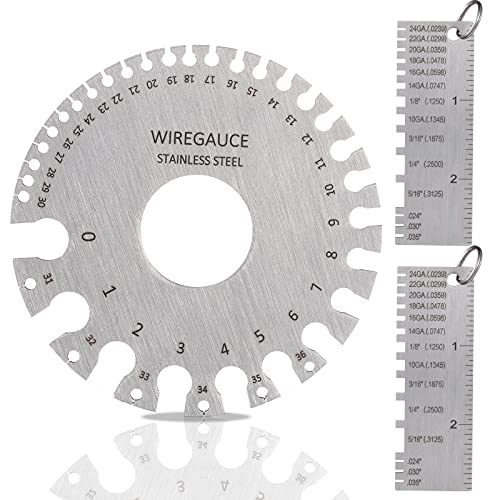
- Use a Sheet Metal Gauge Tool. If you don’t have calipers, a sheet metal gauge tool (or gauge wheel) is a great alternative. This tool has labeled slots for each gauge. Slide these slots over the edge of the bare metal until you find the one that fits perfectly without being too loose or tight. The label on that slot is your gauge.
Common Mistake: Measuring over paint or primer. A typical layer of automotive paint can be 0.005 inches thick. This is enough to make you misread a 20 gauge (0.0359″) panel as a thicker 18 gauge (0.0478″) panel, leading to significant welding issues.

How Does Metal Thickness Impact Welding and Fabrication?
Metal thickness is the single most important factor that dictates your welding and fabrication strategy. Thinner metal is highly sensitive to heat and prone to warping and burn-through, while thicker metal requires more energy for proper penetration. From years of working with different materials, we’ve found that understanding this relationship is the key to producing clean, strong welds without damaging the panel.
How to Prevent Burn-Through
To avoid melting holes in thin metal, you need to use lower heat and faster techniques. This involves using a smaller diameter MIG wire (like 0.023″), lowering the amperage on your welder, and moving more quickly across the seam.
How to Minimize Warping
Warping is caused by excessive heat building up in the panel. The best way to manage this is with a “stitch” or “skip” welding technique. Instead of running one long bead, you create a series of short (1-inch) welds in different locations around the panel, allowing each area to cool before you weld near it again.
Here is a comparison of how you should approach different metal thicknesses:
| Feature | Thin Metal (20-22 Gauge) | Thicker Metal (16-18 Gauge) |
|---|---|---|
| Primary Challenge | Warping & Burn-through | Lack of Penetration |
| MIG Wire Size | 0.023″ or 0.024″ | 0.030″ |
| Amperage Setting | Lower (e.g., 30-75 Amps) | Higher (e.g., 50-130 Amps) |
| Travel Speed | Faster, to avoid concentrating heat | Slower, to allow the weld pool to form and penetrate |
| Technique | Stitch welds, skip welding to manage heat | Continuous bead is possible, but tacks are still recommended |
| Shaping | Easier to form and bend; prone to unwanted stretching. | Requires more force; more stable during shaping. |
FAQs About how thick is car sheet metal
What gauge is car floor pan metal?
Typically, car floor pans are made from 18 or 20 gauge steel. Classic cars often used 18 gauge (1.2mm) for its durability. Modern vehicles may use slightly thinner 20 gauge (0.9mm), often with stamped ribs and contours to add rigidity without adding weight. When making repairs, many fabricators choose 18 gauge for its strength and ease of welding.
Is truck sheet metal thicker than car sheet metal?
Yes, truck sheet metal, especially in the bed and structural areas, is generally thicker than car panels. A truck bed might use 16 gauge (1.5mm) or even thicker steel to withstand impacts and heavy loads. Car body panels prioritize weight savings and are often 20 or 22 gauge, making truck panels significantly more robust.
What gauge are aftermarket replacement panels?
Most aftermarket replacement panels are manufactured from 20 gauge steel. This is a common and cost-effective thickness that balances workability and durability for repairs on modern cars. However, for classic car restoration, some premium suppliers offer panels in the original, thicker 18 gauge, so it’s important to check the specifications before purchasing.
Why does thickness matter for safety if newer cars are thinner?
Safety now comes from material science and engineering design, not just raw thickness. Modern cars use Advanced High-Strength Steel (AHSS) that is thinner but stronger than the mild steel on older cars. This allows engineers to design specific “crumple zones” that absorb impact energy, protecting the passenger cabin more effectively than thick, rigid metal would.
Can I use a thicker gauge metal for a repair?
Yes, and it’s a common practice, especially for floor pans and rocker panels. Using a slightly thicker gauge (e.g., 18 gauge to patch a 20 gauge panel) can make welding easier as the new metal absorbs more heat, reducing the risk of burn-through on the thinner original panel. However, for cosmetic panels, it can create panel gap and alignment issues.
How thick is a car’s frame?
A car’s frame or unibody structural components are the thickest steel on the vehicle, typically ranging from 12 to 16 gauge (2.6mm to 1.5mm). These parts, like frame rails and A/B pillars, are engineered for maximum strength and form the safety cell around the occupants, requiring much greater thickness than outer body panels.
Is 20 gauge steel thick enough for car body work?
Yes, 20 gauge (0.9mm) steel is an excellent choice for most modern auto body repairs. It is the standard thickness for many OEM and aftermarket panels, offering a good balance of strength and formability. It is suitable for patch panels, fenders, and quarter panels where structural loads are not the primary concern.
What is the difference between 18 gauge and 20 gauge steel?
18 gauge steel is thicker and stronger than 20 gauge steel. 18 gauge measures 0.0478 inches (1.21mm), while 20 gauge is thinner at 0.0359 inches (0.91mm). This difference is significant in auto body work; 18 gauge offers more rigidity and is common on older cars, while 20 gauge is lighter and more common today.
Does aluminum need to be thicker than steel for a body panel?
Yes, to achieve the same level of strength and stiffness, an aluminum panel generally needs to be about 1.5 times thicker than a steel one. This is why an aluminum hood might be 1.2mm thick, while a steel equivalent for another car could be just 0.8mm. The weight savings still make aluminum a desirable choice despite the increased thickness.
How thick is the sheet metal on a race car?
Race car sheet metal is often extremely thin, sometimes as thin as 24 gauge (0.6mm). In motorsports, weight reduction is the absolute priority. Non-structural bodywork is made from the thinnest possible material to save every ounce. Structural integrity comes from the tube-frame chassis or carbon fiber monocoque, not the outer skin.
Key Takeaways: How Thick is Car Sheet Metal?
- The “Right” Thickness Depends on Age and Panel: There is no single answer. Classic cars (pre-1980s) typically use thicker 18 gauge (1.2mm) steel, while modern cars use thinner 20-22 gauge (0.9-0.7mm) steel.
-
Structural vs. Cosmetic is Key: Structural parts like frame rails and floor pans are thickest (16-18 gauge) for safety and strength. Cosmetic parts like door skins are thinnest (20-22 gauge) to save weight.
-
Gauge is Inverted: Remember that a lower gauge number means thicker metal. 16 gauge is significantly thicker and stronger than 22 gauge.
-
Measure on Bare Metal: Always measure thickness with calipers or a gauge tool on a surface that has been cleaned of all paint, primer, and rust for an accurate reading.
-
Thickness Directly Impacts Welding: Thinner metal (<20 gauge) requires less heat, smaller MIG wire (0.023″), and faster techniques to prevent warping and burn-through. Thicker metal (>18 gauge) needs more heat and larger wire (0.030″) for proper penetration.
-
Modern Cars are Thinner but Safer: Advancements in high-strength steel and engineering (like crumple zones) mean modern, thinner cars protect occupants more effectively during a crash than older, thicker cars.
-
Choose Repair Metal Wisely: For modern car repairs, 20 gauge is a safe bet for most panels. For classic cars, aim for 18 gauge to match the original durability. Using a slightly thicker patch panel is a common technique to make welding easier.
Final Thoughts on Car Sheet Metal
Understanding the nuances of car sheet metal thickness empowers you to tackle any auto body project with confidence. It’s not just a number; it’s a critical piece of information that connects vehicle history, safety engineering, and the practical hands-on work of welding and fabrication. By identifying the correct gauge for your specific vehicle and panel, you can select the right materials and set up your tools for a successful and durable repair. Now you’re equipped with the knowledge to move forward on your project, ensuring your work is not only clean but also structurally sound.
Last update on 2026-04-12 / Affiliate links / Images from Amazon Product Advertising API