
Wondering how hard it is to paint a car? You’ve seen the quick videos where a car goes from faded to flawless in minutes, but the reality is far more complex. This is a massive project, and you need to know what you’re getting into before you start.
Painting a car is considered very hard for beginners, but not for the reasons most people think. The actual spraying is a skill that can be learned; the true difficulty lies in the 90% of the project that is meticulous, physical, and time-consuming prep work. This includes stripping, sanding, body filling, and creating a dust-free environment, which is where most DIY jobs fail.
Based on hands-on experience with numerous automotive refinishing projects, the rule is simple: painting is 10% art and 90% labor. This guide uses proven DIY methods to give you a brutally honest look at the difficulty, tools, and steps required for a complete paint job, helping you decide if this challenge is right for you.
Key Facts
- Prep Work Dominance: The preparation phase, including sanding and bodywork, accounts for approximately 90% of the total labor in a car paint job, demonstrating where the real difficulty lies.
- Time Commitment: A DIY paint job is a significant time investment, with industry analysis showing it can take anywhere from 80 to 150+ hours for a beginner to complete from start to finish.
- Environmental Impact: The quality of the final finish is critically dependent on a dust-free, well-ventilated space with controlled temperature and humidity, a factor that is extremely challenging to achieve in a home garage.
- Cost Savings vs. Risk: While a DIY job can save thousands compared to a professional respray, the risk of a poor finish that lowers resale value is high without meticulous attention to every step.
- Safety is Non-Negotiable: Automotive paints contain harmful isocyanates and VOCs, making a high-quality respirator mask and excellent ventilation an absolute requirement to prevent serious, long-term health issues.
How Hard Is It to Paint a Car, Really? A Realistic Assessment
Let’s be clear: this is one of the most challenging DIY projects you can undertake, but it is achievable with the right mindset and preparation. The difficulty of painting a car yourself doesn’t come from the act of spraying. The true challenge is the incredibly labor-intensive and meticulous prep work required to get a smooth, durable finish. From hands-on experience, the reality is 90% of the labor is in the prep work.

Think of it less like an art project and more like an extreme deep cleaning and restoration. Every single hour spent sanding, cleaning, and masking pays off tenfold in the final result. Rushing any part of the surface preparation guarantees a flawed finish. You will spend days, not hours, getting the body of the car perfectly smooth before you even think about mixing paint.
This guide is a beginner’s guide to painting that provides a realistic assessment. We will walk through the proven DIY methods that can lead to a professional finish at home. The process is long and physically demanding, but the pride of seeing a glossy, new finish you applied yourself is immense.
The quality of your paint job is decided before you ever open a can of paint.
What Makes Car Painting So Difficult? The 90/10 Rule
The difficulty in car painting comes from three key areas: 1. Immense Prep Work: Hours of sanding, filling, and smoothing the surface until it’s perfect. 2. Controlled Environment: Preventing dust, debris, and humidity from ruining the wet paint. 3. Technical Application: Mastering spray gun control, paint mixing ratios, and flash times to avoid runs and orange peel.
Most beginners focus only on the third point, the spraying, but professionals know the first two are what truly separate a garage job from a factory-like quality finish. Let’s break down each of these challenges.
Why is Meticulous Prep Work 90% of the Job?
The prep work is the foundation of your paint job. Any imperfection you can feel with your fingertip, like a tiny scratch or low spot, will look ten times worse under a glossy clear coat. This stage is not glamorous; it’s dusty, physical, and requires immense patience.
The preparation phase of a car paint job involves multiple stages:
1. Stripping/Sanding: The first step is to either strip the old, failing paint or thoroughly scuff the existing finish so the new primer can stick. This often involves a dual-action sander and coarse 180-grit sandpaper.
2. Body Repair: This is where you fix every single dent, ding, and rust spot. It involves applying body filler, waiting for it to cure, and then Block Sanding it perfectly smooth and level with the panel. This step alone can take dozens of hours.
3. Priming: Once the bodywork is perfect, you apply several coats of a high-build primer-surfacer. This protects the bare metal and fills in tiny scratches, providing a uniform, sandable base.
4. Final Sanding: After the primer cures, you will Block Sand the entire car again, this time with a finer 400-600 grit sandpaper. This step is critical for ensuring the entire vehicle is perfectly flat and smooth.
Pro Tip: Run your bare hand (inside a clean glove) over the panel after sanding. Your fingertips are more sensitive than your eyes and can detect low spots or high spots you can’t see.
Why Is a Controlled Environment So Critical?
A controlled environment is critical for car painting because airborne contaminants will embed in the wet paint, ruining the finish. Your home garage is actively working against you, filled with dust, insects, and fluctuating temperatures.
Here are the main environmental enemies:
* Dust & Debris: A single airborne dust particle landing in your fresh clear coat will create a “dust nib”—a tiny, hard bump that must be painstakingly wet-sanded and polished out later. Sources include concrete floors, clothing lint, and nearby dirt.
* Temperature: Automotive paint is designed to cure within a specific temperature range, typically 65-80°F (18-27°C). If it’s too cold, the paint won’t cure correctly. If it’s too hot, the top layer can dry too fast, trapping solvents underneath and causing “solvent pop” blisters.
* Humidity: High humidity can cause the clear coat to cure with a milky or cloudy appearance, a defect that is difficult to fix.
* Poor Ventilation: This is a major health hazard. Automotive paints contain harmful Volatile Organic Compounds (VOCs) and isocyanates that require a constant flow of fresh air and a professional-grade respirator to handle safely.
Safety First: Never spray automotive paint without a full-face respirator equipped with organic vapor cartridges. Isocyanates in clear coat hardeners are extremely toxic and can cause permanent respiratory damage.
What Are Your Options? DIY vs. Professional vs. Vinyl Wrap
Before you commit to hundreds of hours of sanding, it’s wise to understand all your options. As of 2026, the choice between a DIY paint job, a professional respray, and a vinyl wrap comes down to a trade-off between cost, time, and quality.
| Feature | DIY Paint Job | Professional Paint Job | Vinyl Wrap |
|---|---|---|---|
| Estimated Cost | $700 – $2,000+ (tools & materials) | $3,500 – $10,000+ | $2,500 – $6,000+ |
| Time Commitment | Very High (80-150+ hours) | Low (drop off & pick up) | Medium (2-5 days for pro install) |
| Difficulty Level | Very High | None for owner | N/A (professional install) |
| Finish Quality | Variable (beginner to good) | Excellent / Flawless | Excellent (but not paint) |
| Durability | 3-7 years (depends on prep/materials) | 10+ years (factory-like) | 4-7 years |
| Reversibility | No (Permanent) | No (Permanent) | Yes (removable) |
The Bottom Line: If your top priority is the lowest possible cost, and you have ample time and patience, a DIY automotive refinishing project is viable. For a guaranteed perfect finish with maximum durability that enhances resale value, a professional paint job is the only answer. For a non-permanent color change that also protects your original paint, a vinyl wrap is an excellent and increasingly popular alternative.
What Equipment and Materials Do You Need for a DIY Paint Job?
To paint a car, you will need major equipment including an air compressor, an HVLP spray gun, and a dual-action sander, along with essential safety gear and consumable materials. The upfront cost of tools is significant, so factor this into your budget when comparing against a professional job.
Here is a comprehensive checklist, categorized by function.
- 🛡️ Safety Gear (Non-Negotiable)
- Full-Face Respirator: With organic vapor/P100 cartridges to protect from isocyanates.
- Safety Goggles/Glasses: To protect your eyes from splashes and overspray.
- Nitrile Gloves: To protect your skin from chemicals.
- Paint Suit: To keep dust off your clothes and paint off your skin.
- 🔨 Preparation Tools
- Air Compressor: A 20-gallon tank or larger is recommended to keep up with air tools.
- Dual-Action (DA) Sander: Essential for stripping old paint and feathering edges.
- Sanding Blocks: Various sizes for block sanding flat and curved panels.
- Sandpaper: A wide assortment of grits (e.g., 80, 180, 320, 400, 600, 1500, 2000).
- Body Filler and Spreaders: For repairing dents and dings.
- Masking Tape and Paper: For masking off windows, trim, and lights.
- Grease & Wax Remover: For cleaning panels before painting.
- Tack Cloths: For removing final dust specks right before spraying.
- 🔥 Painting Equipment
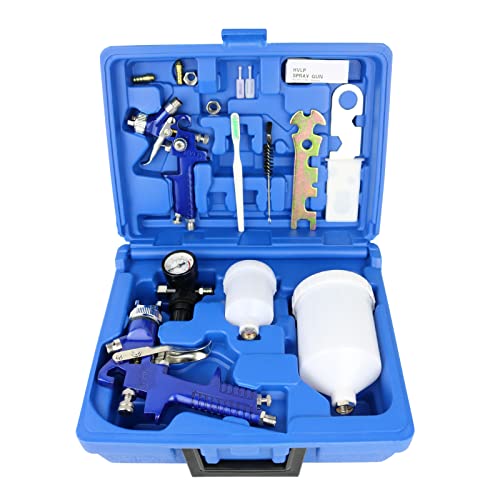
- HVLP Spray Gun: A quality High-Volume, Low-Pressure gun is critical. A gun with a 1.3-1.4mm tip is ideal for base and clear coats, while a separate gun with a 2.0mm+ tip is best for thick primers.
- Air Hose & Fittings
- In-line Air Filter/Dryer: To remove water and oil from the compressor air.
- Paint Mixing Cups & Stir Sticks
- 🎨 Paint Materials
- Epoxy or Etch Primer: To protect bare metal from rust.
- High-Build Primer-Surfacer: To fill small imperfections and create a sandable base.
- Base Coat: The actual color paint for your car.
- Clear Coat: The top protective layer that provides gloss and UV resistance.
- Reducer (paint thinner) & Activator (hardener): Specific to the paint system you choose.
- Polishing Compound & Finishing Polish: For the final buffing stage.
How Do You Paint a Car? A 7-Step Guide for a Professional Finish at Home
The process of painting a car involves seven main stages: 1. Workspace and vehicle disassembly. 2. Stripping, repairing, and initial sanding. 3. Masking all areas not to be painted. 4. Applying primer and final sanding. 5. Spraying the base (color) coat. 6. Spraying the clear coat. 7. Wet sanding and polishing the final finish (cut and buff).
This step-by-step guide covers the complete paint job process. Follow each step meticulously.
Step 1: Prepare the Space and Car
Before any sanding begins, prepare your workspace and vehicle.
* Workspace: Clean your garage from top to bottom. Consider hanging plastic sheeting to create a makeshift paint booth. Wet the floor to keep dust down. Ensure you have bright, even lighting.
* Disassembly: Remove everything you can from the car: bumpers, headlights, taillights, door handles, trim, and emblems. It is always better to remove a part than to mask it.
Step 2: Strip, Repair, and Sand
This is the most labor-intensive part.
* Use a DA sander with 80-180 grit paper to remove old, failing paint or to scuff the entire vehicle.
* Identify and repair all dents using body filler. Apply thin layers and sand them smooth with a sanding block.
* Once all repairs are done, sand the entire car with 180-grit then 320-grit paper to create a uniform surface.
Step 3: Mask Off the Vehicle
Anything you couldn’t remove must be masked perfectly.
* Use automotive-grade masking tape and paper to cover all glass, remaining trim, wheels, and the engine bay.
* Take your time. A single spot of overspray on a window or rubber seal is very difficult to remove.
Step 4: Apply Primer and Final Sand
Now you create the perfect canvas for your color.
* Wipe the entire car down with grease and wax remover. Go over it with a tack cloth.
* Spray 2-3 even coats of high-build primer-surfacer over the entire car.
* Let the primer cure completely (check the manufacturer’s instructions).
* Block sand the entire car with 400-grit sandpaper until it is perfectly flat and smooth. This removes any “orange peel” texture in the primer.
Step 5: Spray the Base Coat (Color)
This is where you finally see some color!
* Clean the car again with grease and wax remover and a tack cloth.
* Mix your base coat paint according to the manufacturer’s ratio.
* Spray 2-4 coats of color, waiting the recommended “flash-off time” (usually 10-15 minutes) between each coat.
* Maintain a 6-8 inch distance from the panel and overlap each pass by 50%.
Step 6: Spray the Clear Coat (Gloss)
This is the protective layer that creates the shine.
* After the final base coat has flashed off, mix your clear coat.
* Apply 2-3 wet coats of clear. This is the step most prone to runs, so keep the gun moving at a steady pace.
* Let the clear coat cure for at least 24 hours (or as directed) before touching it.
Step 7: Wet Sand and Polish (Cut and Buff)
This final, optional step is what creates a mirror-like finish.
* After the clear coat has fully cured (often several days), wet sand the entire car with 1500-grit, then 2000-grit sandpaper to remove any orange peel or dust nibs. The surface will look dull and hazy.
* Using a buffing wheel and polishing compound, buff the entire car to bring back the shine.
* Finish with a final machine polish to remove any swirl marks.
FAQs About how hard is it to paint a car
Can I paint my car in my garage?
Yes, you can paint a car in a home garage, but it requires extensive preparation. You must turn it into a clean, dust-free environment by covering walls with plastic sheeting, wetting the floor to trap dust, and ensuring you have excellent ventilation and lighting.
How long does it take to paint a car?
A beginner should budget at least 80-150 hours for a complete paint job. The vast majority of this time (around 90%) is spent on preparation like sanding, bodywork, and masking. The actual spraying of paint and clear coat only takes a few hours.
Is it cheaper to paint or wrap a car?
A DIY paint job is almost always cheaper in terms of material cost ($700-$2,000) than a professional vinyl wrap ($2,500+). However, a professional wrap is cheaper than a professional paint job ($3,500+). The true cost of DIY paint includes the value of your time and the risk of a poor outcome.
How many coats of clear coat do I need?
Most professionals recommend applying 2 to 3 wet coats of clear coat. Two coats are often sufficient for good protection and gloss. A third coat can provide extra depth and more material to work with if you plan on doing extensive wet sanding and buffing.
Can you paint over old car paint?
Yes, you can paint over old car paint, but only if the existing paint is in good, stable condition. You must thoroughly clean the surface and then scuff it with 400-600 grit sandpaper or a scuff pad. This creates a mechanical bond for the new paint to adhere to. If the old paint is peeling or cracking, it must be stripped down to a stable layer.
Final Thoughts
Painting a car is less a test of artistic talent and more a test of endurance and meticulous attention to detail. It is an extremely difficult project for a beginner, but the difficulty is manageable if you respect the process.
Here are the most important takeaways:
* ✅ Preparation is Everything: 90% of your time and effort will be spent sanding, cleaning, and masking. This is the part of the job that determines the quality of the finish.
* ✅ Your Workspace is Critical: A clean, dust-free, and well-ventilated space is not a luxury; it is a requirement. Fighting dust and debris is one of the biggest challenges of a home paint job.
* ✅ Safety is Not Optional: Automotive paints are hazardous. A proper respirator, gloves, and ventilation are essential to protect your health.
* ✅ It’s a Marathon, Not a Sprint: Rushing any step will lead to visible flaws. You must have the patience to see the project through over weeks, not days.
If you are a person who enjoys process-driven work and has the patience to spend 80+ hours on a single project, painting your own car can be one of the most rewarding DIY experiences imaginable.
Last update on 2026-03-04 / Affiliate links / Images from Amazon Product Advertising API


