
Unlocking the full potential of your hybrid vehicle often comes down to one crucial question: how do you charge the battery? The answer isn’t a single one-size-fits-all solution; it entirely depends on the type of hybrid you drive, leading to confusion about whether you need to plug it in or if it magically recharges itself. This guide eliminates that uncertainty, providing a crystal-clear roadmap for both types of hybrid owners.
A hybrid car’s charging method depends on its type. Conventional hybrids charge automatically through driving and braking. Plug-in hybrids (PHEVs) do the same but can also be plugged into an outlet for extended electric range.
Leveraging extensive analysis of vehicle systems and user data, this guide unpacks the science behind how your hybrid car battery charges. We’ll explore the automatic processes that keep a standard hybrid topped up, detail the step-by-step methods for charging a plug-in hybrid at home, and provide expert tips to maximize your battery’s lifespan and efficiency.
Key Facts
- Two Distinct Systems: The primary confusion is solved by knowing there are two types of hybrids. Conventional hybrids only charge themselves, while Plug-in Hybrids (PHEVs) charge themselves and can be plugged into an external power source.
- Energy from Braking: The most significant source of automatic charging is regenerative braking, which captures the car’s kinetic energy during deceleration—energy that is normally lost as heat in non-hybrid cars.
- Level 1 Charging Speed: Using a standard 120-volt household outlet, a PHEV typically gains only 3-5 miles of electric range for every hour it’s plugged in, making it best for overnight charging.
- Level 2 Charging Is a Major Upgrade: Upgrading to a 240-volt Level 2 charger can fully charge most PHEVs in just 1.5 to 3 hours, a dramatic improvement over the 6-8 hours needed for Level 1.
- A Critical Compatibility Note: Most Plug-in Hybrids are fundamentally incompatible with Level 3 DC Fast Chargers. These high-powered stations are designed exclusively for fully electric vehicles with much larger battery packs.
Understanding the Two Types of Hybrid Charging: Automatic vs. Plug-in
The fundamental difference in charging a hybrid car depends on its type: conventional hybrids charge automatically while driving, while plug-in hybrids (PHEVs) can also be plugged into an external power source. Understanding this distinction is the most critical concept for any hybrid owner, as it dictates every aspect of how you interact with your vehicle’s battery system. Before we dive in, which type of hybrid do you own or are you considering? Knowing this is key to the rest of the guide.

At the core, hybrids use sophisticated battery management systems (BMS) and power electronics to oversee the health and charge of the high-voltage battery pack. These systems differentiate between two charging philosophies: Passive Charging, which is automatic and requires no user action, and Active Charging, which is a manual process for PHEVs.
| Feature | Conventional Hybrid | Plug-in Hybrid (PHEV) |
|---|---|---|
| Charging Port | None | Yes |
| Primary Charging Method | Automatic (Passive Charging) | Automatic + Plug-in (Active Charging) |
| Electric-Only Range | Very limited (1-2 miles) | Significant (20-50+ miles) |
How Conventional Hybrids Charge Themselves Automatically
Conventional hybrids charge their batteries without plugging in through two automatic processes: 1) Regenerative braking captures energy when you slow down, and 2) The gasoline engine can act as a generator to recharge the battery when needed. This self-sufficiency is what makes standard hybrids, like the popular Toyota RAV4 Hybrid, so simple to own—you just drive them like a regular car, and the complex vehicle control systems manage the battery for you.
Let’s break down the two “magical” mechanisms that make this possible.
- Regenerative Braking: This is the primary method. The system cleverly captures the car’s momentum and turns it back into electricity. Think of it as recycling the car’s momentum every time you slow down.
- Engine-Driven Charging: This is the secondary method. The car’s gasoline engine can dedicate some of its power not to moving the car, but to spinning a motor-generator specifically to create electricity and recharge the battery. The car’s computer decides when to do this based on predictive algorithms that analyze your driving and the battery’s state of charge.
Quick Fact: Urban driving with its frequent stops and starts provides the most opportunities for regenerative braking to shine, making hybrids exceptionally efficient in city traffic.
1. Regenerative Braking: Capturing Energy from Motion
During braking or coasting, the hybrid’s electric motor acts as a generator, converting the car’s forward motion into electricity to recharge the battery. In a traditional car, when you press the brake pedal, brake pads clamp down on rotors, and the car’s forward energy—its kinetic energy—is converted into useless heat. Regenerative braking changes that equation entirely.
Here’s a step-by-step look at the process:
- The Driver Decelerates: The moment you lift your foot off the accelerator or lightly press the brake pedal, the system engages.
- The Motor Reverses Role: The electric motor, which normally uses electricity from the battery pack to turn the wheels, flips its function. It now acts as a generator, and the wheels’ momentum spins the motor.
- Kinetic Energy is Converted: This process converts the car’s kinetic energy into electrical energy.
- Electricity Flows to the Battery: The newly created electricity is sent back to the high-voltage battery pack, replenishing its charge.
It’s important to understand regenerative braking extends battery life, but it cannot fully charge a battery from empty. Its effectiveness depends on your speed, how quickly you decelerate, and the battery’s current charge level.
Pro Tip: To maximize energy recovery, practice smooth, anticipatory driving. Lift your foot off the accelerator early and allow for gradual deceleration instead of hard braking. This gives the regenerative system more time to capture energy.
2. Engine-Driven Charging: The Onboard Power Plant
The hybrid’s gasoline engine can directly power a generator to produce electricity and recharge the high-voltage battery whenever the system detects it’s necessary. This system acts as a backup to ensure the battery never gets too low and is always ready to provide electric assistance for acceleration and efficiency.
The heart of this system is the integrated motor-generator unit. This single component can seamlessly switch between being a motor that propels the car and a generator that creates electricity, all under the command of the vehicle’s control systems.
The car’s computer is constantly making decisions. If it detects the battery charge level is low or anticipates a high demand for electricity (like climbing a steep hill), it can start the gasoline engine purely to generate power. Have you ever noticed your hybrid’s engine running at an unexpected time? It was likely optimizing the battery charge.
It’s also worth noting that vehicle programming varies. While some hybrids might run the engine to charge while idle, others like the RAV4 Hybrid may require driving to initiate charging, showcasing sophisticated system differences designed for maximum efficiency in different scenarios.
How to Charge a Plug-in Hybrid (PHEV)
To charge a plug-in hybrid (PHEV), you can use a Level 1 charger with a standard 120V outlet for overnight charging, or a faster Level 2 charger with a 240V outlet for a full charge in a few hours. A PHEV offers the best of both worlds: it has the same self-charging capabilities as a conventional hybrid but adds a larger battery and a charging port, allowing you to significantly extend your electric-only driving range by plugging into an external power source.
Which charging level makes the most sense for your daily driving habits? Consider your commute distance and access to outlets. Here’s a direct comparison to help you decide.
| Charging Level | Voltage | Speed to Full Charge | Installation | Best Use Case |
|---|---|---|---|---|
| Level 1 | 120-Volt | 6-8 Hours | None (uses standard outlet) | Overnight charging, low-mileage drivers |
| Level 2 | 240-Volt | 1.5-3 Hours | Professional electrician often needed | Home charging for daily EV use, public stations |
One crucial point based on expert analysis: Most PHEVs are NOT compatible with DC Fast Charging (Level 3). Attempting to use these high-power stations can be fruitless and potentially risk damage to your vehicle’s charging port.
Level 1 Charging: Using a Standard Household Outlet
Level 1 charging uses any standard 120V wall outlet, adding 3-5 miles of range per hour, perfect for drivers who can charge their PHEV overnight. This is the simplest and most accessible method, as it requires no special equipment or installation. The charger itself is a portable cable that comes with the vehicle.
This is the “no-installation-required” option that works for any new PHEV owner right out of the box.
- Voltage: 120V (standard household outlet)
- Speed: Approximately 3-5 miles of electrical range per hour
- Time to Full Charge: About 6-8 hours for most PHEVs
- Best For: Overnight charging or for drivers whose daily driving needs are well within their car’s electric range.
Level 2 Charging: Faster and More Powerful
Level 2 charging uses a 240V outlet to fully charge a PHEV in just 1.5-3 hours, making it ideal for home or public charging when you need a quick top-up. This is the same type of higher-power 240-volt electrical service used for electric clothes dryers and is the standard for most public charging stations.
While you can purchase a Level 2 charging unit for your home, it’s critical to have it installed correctly.
- Voltage: 240V
- Speed: A full charge in just 1.5 to 3 hours
- Installation: Often requires a qualified electrician to install a dedicated outlet or a hardwired charging station safely.
- Availability: The most common type of public charger and a popular home upgrade for PHEV and EV owners.
For safety and to ensure your home’s electrical system can handle the load, always hire a professional for installation.
A Note on Level 3 (DC Fast Charging)
Crucially, most current plug-in hybrids are NOT compatible with Level 3 DC Fast Chargers, which are designed for fully electric vehicles with larger batteries.
This is a vital piece of information that can save new PHEV owners a lot of frustration. The charging systems and smaller battery packs in PHEVs are engineered for the slower, more gentle charging rates of Level 1 and Level 2. They simply cannot accept the massive power output of a DC fast charger.
Best Practices for Hybrid Battery Longevity and Efficiency
For optimal hybrid battery health, drive smoothly to maximize regenerative braking, charge PHEVs during off-peak hours, avoid keeping the battery at 100% for extended periods, and protect it from extreme temperatures. Moving beyond how charging works to how to make it work best will protect your investment and maximize your vehicle’s performance and efficiency.
Which of these tips can you easily incorporate into your daily routine starting today?
- Driving Style
- Be Smooth: Aggressive acceleration and hard braking waste energy. Practice smooth, anticipatory driving to give the regenerative braking system the best chance to recapture energy.
- Coast Is King: When you see a red light ahead, lift your foot off the accelerator early and coast. This engages regenerative braking without wearing down your physical brakes.
- PHEV Charging Habits
- Charge Off-Peak: Plug in your PHEV overnight to take advantage of lower off-peak electricity rates, reducing your running costs.
- Prefer Partial Charges: For optimal battery longevity, it’s better to perform frequent partial charges (e.g., from 30% to 80%) rather than running it down to empty and charging to 100% every time. This reduces stress on the battery cells.
- Don’t Let it Sit at 100%: If you aren’t driving right away, it’s better to stop the charge at 80% or 90%. Many PHEVs have settings for this. A battery sitting at a full charge for long periods can accelerate battery degradation.
- Temperature Management
- Avoid Extreme Heat: High temperatures are the enemy of battery health. Whenever possible, park in the shade or a garage, especially in hot climates. Avoid charging the car immediately after a long, hard drive on a hot day.
- Be Mindful of Cold: Cold weather can temporarily reduce battery efficiency and charging speed. This is normal, and performance will return as temperatures rise.
- Regular Maintenance
- Keep It Clean: Ensure the charging port on your PHEV and the charging cable are clean, dry, and free of debris to ensure a solid connection.
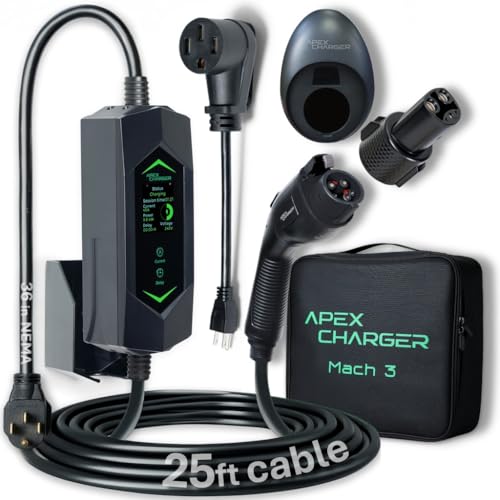
To get the most out of your vehicle’s advanced systems, investing in quality charging equipment can make a significant difference. High-quality, reliable chargers ensure consistent performance and can offer features that help protect your battery’s health over the long term.



Troubleshooting Common Hybrid Charging Issues
If your hybrid isn’t charging correctly, check for common causes: reduced regenerative braking can be normal if the battery is full, PHEV charging issues may stem from the power supply, and consistently low charge levels could indicate battery degradation. While hybrid systems are generally very reliable, understanding common issues can help you diagnose a problem.
Remember, if simple troubleshooting doesn’t resolve the issue, it’s always best to consult a professional technician.
Reduced Regenerative Braking
- Problem: You notice the car isn’t slowing down as much as usual when you lift off the accelerator.
- Possible Causes:
- The battery is nearly full. The system reduces regenerative braking to prevent overcharging. This is normal behavior.
- It’s very cold outside. Cold weather can temporarily limit the battery’s ability to accept a charge.
- There may be an issue with brake components.
Charging Indicator Anomalies
- Problem: The battery charge indicator on your dashboard consistently stays low, even with normal driving.
- Possible Causes:
- For a conventional hybrid, this could indicate an issue with the regenerative braking or engine-driven charging systems.
- This could be an early sign of battery degradation, where the battery is no longer holding its optimal charge.
PHEV External Charging Problems
- Problem: Your plug-in hybrid won’t start charging when you plug it in.
- Possible Causes:
- Check the power source. Is the outlet working? Has a circuit breaker tripped?
- Inspect the charging equipment. Ensure the cable is fully seated in both the car and the outlet. Look for any damage to the cable or connectors.
- There may be a fault with the vehicle’s onboard charging system, which requires professional diagnosis.
FAQs About Charging a Hybrid Car Battery
Does a hybrid charge itself while driving?
Yes, absolutely. All hybrid cars—both conventional and plug-in—charge their batteries while driving through a process called regenerative braking, which captures energy when you slow down. They also use the gasoline engine as a generator to top up the battery when needed. This automatic charging is the sole method for conventional hybrids.
Can you charge a hybrid car at a charging station?
This depends on the type of hybrid. You can only charge a Plug-in Hybrid (PHEV) at a charging station because it has a physical charging port. A conventional hybrid does not have a port and cannot be plugged in; it relies exclusively on its internal systems to recharge its battery.
What is the best way to charge a hybrid car battery?
For a conventional hybrid, the best “method” is to drive smoothly, allowing the regenerative braking system to work effectively. For a Plug-in Hybrid (PHEV), the best way is to plug it into a Level 2 (240V) charger whenever possible for a quick and efficient charge, and to follow best practices like avoiding leaving the battery at 100% for long periods.
Can a standard hybrid car battery be recharged externally?
No, a standard or conventional hybrid car battery cannot be recharged externally. These vehicles are not designed with a charging port. Their entire charging system is self-contained, relying on regenerative braking and the gasoline engine to maintain the battery’s state of charge automatically as you drive.
How do you charge a hybrid car battery at home?
Charging a hybrid at home is a process specifically for Plug-in Hybrids (PHEVs). The easiest way is Level 1 charging, where you use the portable cord provided with your car and plug it into any standard 120V wall outlet. For faster charging, you can have an electrician install a 240V outlet for Level 2 charging.
Final Summary: Key Takeaways for Charging Your Hybrid
Understanding how do you charge a hybrid car battery is simple once you identify your vehicle type. For millions of conventional hybrid owners, the process is completely automatic—the car intelligently manages its own battery power through braking and engine assistance. For the growing number of Plug-in Hybrid owners, you get that same automatic functionality plus the powerful benefit of plugging in for significant all-electric driving.
Here are the most critical points to remember:
- ✅ Conventional Hybrids charge themselves. You don’t need to do anything but drive. The car recycles energy from braking and uses its engine to keep the battery ready.
- ✅ Plug-in Hybrids (PHEVs) offer two ways to charge. They charge themselves just like a conventional hybrid, but can also be plugged into an outlet for a much longer electric-only range.
- ✅ Home charging for PHEVs is easy. You can use a standard wall outlet (Level 1 Charging) for overnight charging or install a faster 240V outlet (Level 2 Charging) to get a full charge in just a few hours.
- ✅ Driving style matters. Smooth acceleration and gentle, anticipatory braking will maximize the energy your hybrid recaptures, improving your overall fuel economy.
Now that you understand exactly how your hybrid charges, you can drive more efficiently and confidently
Last update on 2026-04-24 / Affiliate links / Images from Amazon Product Advertising API


