
A car accident in a busy store parking lot or a quiet private driveway can be just as confusing and stressful as one on a public highway. Many drivers are unsure if their policy even applies, wondering: does car insurance cover accidents on private property? The uncertainty about fault, police involvement, and the claims process only adds to the anxiety. This guide provides the definitive answers you need, breaking down exactly how your coverage works, what complicating factors to watch for, and the precise steps to take to protect yourself.
Yes, car insurance policies generally cover accidents on private property just as they would on public roads, with the specific coverage depending on your policy details like liability, collision, and comprehensive. The core principle is that your auto insurance follows the vehicle and the driver, not the type of road you are on.
Leveraging extensive analysis of insurance principles and common claim scenarios, this guide unpacks the critical insights needed to effectively navigate a private property accident. We will explore the different types of coverage that come into play, the unique challenges you might face, and a step-by-step action plan to ensure a smooth claims process.
Your auto insurance follows you, not the road. Whether it’s a public highway or a private parking lot, your policy is generally in effect.
But what kind of coverage actually pays for the damages? Let’s break it down.
How Your Insurance Coverage Works for Private Property Incidents
Understanding which part of your auto insurance policy applies is the first step to navigating a claim for an incident on private property. Whether you backed into a pole or were involved in a collision with another vehicle, three primary types of coverage come into play: Liability, Collision, and Comprehensive. Each serves a distinct purpose in covering damages and injuries.

Your specific protection depends on which of these optional and mandatory coverages you have. A key factor in any claim will be your deductible, which is the amount you pay out of pocket before your insurance coverage begins. This is balanced against your premium, the regular payment you make to keep your policy active.
The table below provides a clear comparison of how these coverages function in private property scenarios.
| Coverage Type | What It Covers on Private Property | Who Is Covered | Example Incident |
|---|---|---|---|
| Liability | Damage to another person’s vehicle or property, and their medical bills. | The other party (drivers, passengers, pedestrians) when you are at fault. | You accidentally back into another car while leaving a parking space. |
| Collision | Damage to your own vehicle resulting from a crash with another car or a stationary object. | Your own vehicle, regardless of who is at fault. | You misjudge a turn in a parking garage and hit a concrete pillar. |
| Comprehensive | Damage to your own vehicle from non-collision events. | Your own vehicle. | A heavy tree branch falls on your car during a storm while it’s parked in your driveway. |
Pro Tip: Remember, collision and comprehensive coverages are optional. Check your policy declarations page now to see what protection you actually have.
Liability Coverage: Protecting Others
Liability insurance is the foundation of any auto policy and is mandatory in most states. Its purpose is straightforward: to cover the costs of damages and injuries you cause to others when you are legally responsible—or “at fault”—for an accident. This principle holds true whether the incident occurs on a public street or private land like a shopping center parking lot.
Quick Fact: Liability insurance is about financial responsibility for the damage you cause, not for your own car.
If you are deemed at fault for an accident on private property, your liability coverage will typically pay for:
- Other driver’s vehicle repairs: The cost to fix the damage to the other car or property involved.
- Other driver’s medical bills: Expenses related to injuries the other driver or their passengers sustain.
- Injuries to pedestrians: Medical costs for any non-occupant you may have injured.
- Legal fees: If the other party sues you as a result of the accident.
Your liability insurance is crucial as it pays for the other party’s vehicle damage and injuries if you are deemed at fault in a private property accident.
Collision & Comprehensive: Protecting Your Own Vehicle
While liability coverage protects you from claims made by others, collision and comprehensive coverage are designed to protect your own vehicle. These are typically optional unless you are leasing or financing your car. They become essential when you need to repair or replace your car after an incident on private property.
Collision Coverage
This coverage pays for repairs to your vehicle after it’s damaged in a crash. It applies regardless of who is at fault and covers incidents involving another vehicle or a stationary object—an immobile item like a fence, building, light pole, or parking barrier.
Common private property scenarios covered by collision insurance include:
* Backing into another parked car.
* Hitting a shopping cart corral or a protective pole.
* Misjudging a turn and scraping your car against a garage wall.
* A “fender bender” in a fast-food drive-thru lane.
Comprehensive Coverage
Also known as “other than collision” coverage, this protects your vehicle from a wide range of non-crash-related events. Private properties like parking garages and large lots can expose your vehicle to unique risks that comprehensive insurance is designed to cover.
Typical private property incidents handled by comprehensive coverage include:
* A tree branch falling on your car in a parking lot.
* Vandalism or a keyed car in a parking garage.
* Theft of your vehicle from a private driveway.
* Damage from hail or flooding while parked at a private residence.
Consider the environment where you regularly park. Does it have large trees or high rates of theft? That can help you decide if comprehensive coverage is worth it.
Key Factors That Complicate Private Property Claims
While your insurance policy generally applies on private property, filing a claim and determining fault can be significantly more complex than for an accident on a public road. Several unique factors contribute to this difficulty, turning what seems like a simple fender bender into a challenging situation.
If the police don’t file a report, how do you prove what happened? The burden of proof shifts more heavily onto you. Here are the main challenges you might face.
- Determining Fault is More Difficult
On public roads, traffic laws (like stop signs, traffic lights, and right-of-way rules) make it relatively easy to assign fault. Private properties, such as parking lots, often lack clear, legally enforceable traffic controls. This ambiguity makes it harder for insurance adjusters to determine who was negligent.Insurers must rely heavily on other evidence like witness statements, photos of the scene, and the location of vehicle damage. Without clear traffic laws to cite, fault can become a matter of one driver’s word against another’s.
- Police May Not Respond or File a Report
In many jurisdictions, police departments will not dispatch an officer to a minor, non-injury accident on private property. Even if they do respond, they may simply facilitate the exchange of information and decline to write an official police report, viewing it as a civil matter between drivers and their insurers.The absence of a police report removes a critical piece of objective evidence that insurance companies use to process claims. This requires you to be even more diligent in gathering your own evidence at the scene.
- Potential Liability of the Property Owner
In some cases, the owner of the private property could be held partially or fully liable for an accident. This occurs if the incident was caused by negligence in maintaining the property. This introduces another layer of complexity, as a claim might be filed against the property owner’s liability insurance policy.Examples of property owner negligence include unmarked hazards, potholes, poor lighting that reduces visibility, or a poorly designed traffic flow that encourages collisions. Proving this negligence, however, can be a significant legal hurdle.
- Application of State Negligence Laws
How fault is assigned is governed by state laws, such as comparative negligence or contributory negligence. In a comparative negligence state, you can recover damages even if you are partially at fault, though your compensation is reduced by your percentage of fault. In stricter contributory negligence states, you may be barred from recovering any damages if you are found to be even 1% at fault. These laws are applied to private property accidents and can dramatically affect the outcome of your claim.
What to Do After a Car Accident on Private Property: A Step-by-Step Guide
The moments after an accident are disorienting, but the actions you take can significantly impact the outcome of your insurance claim. Staying calm and following a clear procedure is crucial, especially given the complexities of incidents on private property. This step-by-step guide provides an actionable checklist to protect your interests.
Pro Tip: Use your phone’s video function to do a slow walk-around of the scene, narrating what you see. This can capture details you might miss in photos.
- Prioritize Safety & Check for Injuries
Your first responsibility is to the well-being of everyone involved.- Check on all drivers and passengers. Ask if anyone is hurt.
- Call 911 immediately if there are any injuries, no matter how minor they may seem.
- If the vehicles are in a dangerous position (e.g., blocking an entrance), move them to a safe spot on the property if possible.
- Contact the Police
Even if the police may not file an official report, it is still wise to call them. Their presence can help keep the situation calm, and an officer can formally document the information exchange. If a report is filed, it becomes invaluable evidence. -
Document Everything Extensively
With the potential absence of a police report, your own documentation becomes the most critical evidence for your claim.- Take wide shots of the area, showing the layout of the parking lot, driveway, or private road.
- Photograph damage to all vehicles from multiple angles, both close-up and from a distance.
- Capture any relevant property conditions, such as potholes, poor lighting, faded lane markings, or obstructed signs that may have contributed to the accident.
- Take photos of the other driver’s license plate, insurance card, and driver’s license.

- Exchange Information
Politely exchange the following information with the other driver(s). Do not admit fault or apologize for the accident.- Full Name and Contact Information
- Insurance Company and Policy Number
- Driver’s License Number
- Vehicle Make, Model, and License Plate Number
- Look for Witnesses and Security Cameras
Independent accounts can be decisive in determining fault.- Ask anyone who saw the accident for their name and phone number.
- Look for nearby security cameras on buildings or poles. Make a note of their location and ask the property manager how you can obtain the footage.
- Report the Accident to Your Insurance Company
Notify your insurer about the accident as soon as possible, even if you believe you are not at fault or the damage is minor. Provide them with all the information and documentation you have gathered. Delaying your report can complicate or even jeopardize your claim.
https://www.youtube.com/watch?v=fkCNI9mpNBU
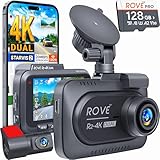
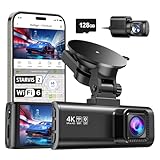
Having the right equipment on hand can make documenting an accident scene much easier and provide crucial evidence for your claim. A high-quality dash cam, for instance, can automatically record the events leading up to a collision, taking the guesswork out of determining fault.




FAQs About Car Insurance and Private Property Accidents
Navigating the aftermath of an accident on private property often leads to very specific and urgent questions. Here are clear, direct answers to some of the most common concerns drivers have.
What happens if there’s no police report for an accident on private property?
If there is no police report, the responsibility to gather evidence falls entirely on you and the other driver. You must rely on photos, videos, witness statements, and any available security footage to support your insurance claim. Your insurance company’s adjuster will use this evidence to investigate the incident and determine fault.
Can you be charged with hit and run on private property?
Yes. Hit-and-run laws apply to both public roads and private property that is accessible to the public, such as shopping mall parking lots or apartment complex garages. Leaving the scene of an accident without exchanging information or rendering aid is a serious offense and can lead to criminal charges, regardless of where it occurred.
Who is liable if my car is damaged by a poorly maintained driveway or parking lot?
In this situation, the property owner could be held liable under the principle of premises liability. If you can prove that your vehicle was damaged due to the owner’s negligence—such as failing to repair a large pothole or remove a known hazard—you may be able to file a claim against their property liability insurance for the damages.
Can I file a claim if I hit a stationary object like a pole or fence in a parking lot?
Yes. This is a classic example of a single-vehicle accident that is covered by collision insurance. If you have this optional coverage on your policy, you can file a claim to have your vehicle repaired. You will be responsible for paying your collision deductible, and the incident will be considered an at-fault accident.
Will my insurance premiums go up after a private property claim?
It’s possible. An insurance premium increase depends on who was at fault, the severity of the claim, your driving record, and your insurance provider’s policies. An at-fault accident, whether on public or private property, is more likely to result in a rate increase at your next policy renewal than a not-at-fault claim.
Final Summary: Key Takeaways for Private Property Accidents
To put it simply, does car insurance cover accidents on private property? The answer is a definitive yes. Your policy is designed to protect you wherever you drive. However, the path from incident to resolution is often complicated by unique challenges not found on public roads. Proving fault can be difficult, police may not get involved, and the condition of the property itself can play a role.
By understanding how your specific coverages work and being prepared to act decisively after an accident, you can navigate the claims process with confidence.
Here are the most critical points to remember:
- Your Coverage Follows You: Liability, collision, and comprehensive insurance apply on private property just as they do on public highways.
- Fault is Not Always Clear-Cut: Without official traffic signals and police reports, determining fault relies heavily on the evidence you and your insurer can gather.
- Documentation is Your Best Friend: Thoroughly documenting the scene with photos, videos, and witness information is the single most important action you can take to protect your claim.
- Know Your Policy: Understanding the difference between liability, collision, and comprehensive coverage is essential to knowing what is and isn’t covered.
Your best defense is a good offense. Take five minutes today to review your insurance policy so you know exactly what you’re covered for before an accident happens. This knowledge, combined with the steps outlined in this guide, will empower you to handle any private property incident effectively.
Last update on 2026-04-27 / Affiliate links / Images from Amazon Product Advertising API


