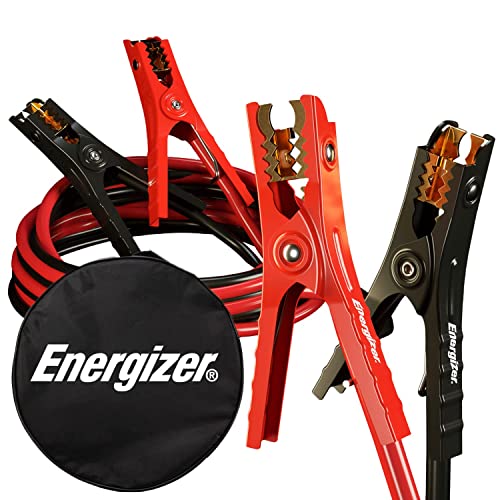
Wondering if jumper cables come with a new car? You’re not alone in asking this question. Many drivers assume this essential emergency tool is included with a vehicle purchase.
No, new cars do not come with jumper cables as standard equipment. Manufacturers largely stopped including them due to cost-saving measures and the increasing sensitivity of modern vehicle electronics. You will almost always need to buy a jumper cable set or a portable jump starter separately.
Based on analysis of current manufacturer guidelines and automotive safety standards, this guide explains why this is the case. You’ll discover how to safely use booster cables, what features to look for when buying a set, and how they compare to modern alternatives.
Key Facts
- Universal Exclusion: New cars almost universally do not come with jumper cables as standard equipment from the manufacturer; they are considered an aftermarket accessory.
- Risk to Electronics: Improper jump-starting is a primary reason for their exclusion, as it can cause voltage spikes that damage sensitive computer systems (ECUs) in modern cars.
- Gauge is Critical: The most important feature of a jumper cable is its wire gauge. A lower number (like 4-gauge) means a thicker, more powerful cable capable of starting larger engines.
- Safety Protocol: Connecting cables in the wrong order can cause a short circuit, leading to alternator damage, melted cables, or even a battery explosion.
- Modern Alternatives: Portable jump starters are a popular alternative that don’t require a second vehicle, though they must be kept charged to be effective.
Do Jumper Cables Come With a Car?
The direct answer is no; new cars almost universally do not come with jumper cables as standard equipment from the manufacturer. While some dealerships might offer an emergency kit that includes a set as a bonus or an add-on purchase, jumper cables are considered an aftermarket accessory. You are typically expected to purchase them yourself to complete your vehicle’s roadside emergency essentials. This has been the industry standard for many years.

If you check your vehicle owner manual, you will likely find instructions on how to safely jump-start your car but no mention of included emergency car cables. The space for the spare tire and jack is often the only dedicated area for emergency tools provided by the factory. This policy shift leaves the responsibility of acquiring a quality jumper cable set or a portable jump starter squarely on the vehicle owner. But why is this the case? The reasons involve cost, liability, and the evolution of automotive technology.
Why Don’t New Cars Come with Jumper Cables Anymore?
Manufacturers no longer include jumper cables primarily due to the significant risk of owners damaging sensitive modern vehicle electronics through improper use. Beyond that, cost-cutting and reducing legal liability are also key factors. This practice became standard as cars evolved from simple machines to complex computers on wheels.
Here are the three main reasons in detail:
- 💥 Risk to Modern Electronics: Today’s cars are filled with sensitive electronic components, including the main Engine Control Unit (ECU), entertainment systems, and safety sensors, all connected through a complex network like the CAN bus system. Improperly jump-starting a car—for example, by reversing the cable connections—can create a voltage spike. This surge can fry these delicate computer systems, leading to repairs that can cost thousands of dollars.
- 💼 Cost-Saving Measures: For a car manufacturer producing millions of vehicles, omitting an item that costs even $10-$20 can result in tens of millions of dollars in savings. Since jumper cables are not essential for the car’s daily operation, they are one of the first items to be cut from the standard equipment list to keep the vehicle’s sticker price more competitive.
- 📜 Legal Liability: Providing jumper cables could imply a recommendation for their use by untrained individuals. If a user connects the cables incorrectly and causes an injury (like a battery explosion from a spark igniting hydrogen gas) or significant vehicle damage, the manufacturer could face potential liability claims. By not including them, they shift the responsibility for safe usage to the owner and the cable manufacturer.
Did You Know? A single instance of connecting jumper cables in reverse polarity (positive to negative) can be enough to instantly destroy a car’s ECU. Expert mechanic advice consistently highlights this as a common and costly mistake made by well-intentioned but untrained drivers.
How Do You Safely Jump-Start a Car with Jumper Cables?
To safely jump-start a car, you must connect the jumper cables in a specific order to prevent sparks near the battery and protect the electronics of both vehicles. This process requires a donor vehicle with a good 12v battery and careful attention to detail. Based on automotive safety standards, following these steps precisely is the best way to avoid injury or expensive damage.
Always wear safety glasses and gloves if available. Ensure the cables are not frayed or damaged.
- Preparation: Park the donor vehicle close to the recipient vehicle (the one with the dead battery) so the cables can reach, but do not let the vehicles touch. Turn off the ignitions of both cars and engage their parking brakes.
- Connect Red to Dead (+): Attach one of the red (positive) clamps to the POSITIVE (+) terminal of the dead battery. The terminal is usually marked with “POS” or a “+” sign and is often larger than the negative terminal.
- Connect Red to Good (+): Attach the other red (positive) clamp to the POSITIVE (+) terminal of the good battery on the donor vehicle.
- Connect Black to Good (-): Attach one of the black (negative) clamps to the NEGATIVE (-) terminal of the good battery. This terminal is marked with “NEG” or a “-” sign.
- Connect Black to Ground (The Final, Critical Step): Attach the final black (negative) clamp to an unpainted metal surface on the engine block or frame of the dead car. This is called a ground point.
- Why this matters: This step is crucial. Connecting the final clamp away from the battery prevents any potential spark from igniting the flammable hydrogen gas that a car battery can emit.
- Start and Charge: Start the engine of the working donor vehicle and let it run for 2-3 minutes. This will pass a surface charge to the dead battery.
- Start the Dead Car: Try to start the car with the dead battery. If it doesn’t start, let the donor vehicle run for a few more minutes before trying again.
- Disconnect in Reverse: Once the car is running, remove the cables in the exact reverse order you connected them: Black from the ground, Black from the good battery, Red from the good battery, and finally, Red from the formerly dead battery.
What Are the Key Features to Look for When Buying Jumper Cables?
When buying jumper cables, the most important features to consider are the wire gauge, length, wire material, and clamp quality. Choosing the right set ensures it will work effectively and safely when you need it most. Prioritizing quality over price is a wise investment for this critical piece of emergency equipment.
Wire Gauge (Thickness)
This is the most critical factor. The gauge measures the thickness of the wire; counter-intuitively, a lower gauge number means a thicker, more powerful cable. A thicker wire has less resistance and can carry more electrical current (amperage), which is essential for starting an engine.
- Thin Cables (8-10 Gauge): May struggle to start anything larger than a small compact car and can overheat.
- Thick Cables (4-6 Gauge): Are considered heavy-duty and are much more effective for mid-size cars, SUVs, and trucks.
From years of working with different vehicles, expert mechanics almost always recommend a 4-gauge cable as the best all-around choice for reliability and power.
Jumper Cable Gauge Guide
| Cable Gauge | Best For | Amperage (Approx.) |
|---|---|---|
| 8 Gauge | Small compact cars (Minimal use) | ~200A |
| 6 Gauge | 4-cyl and 6-cyl cars | ~400A |
| 4 Gauge | V8 cars, SUVs, Trucks | ~600A |
| 2 Gauge | Large trucks, Diesel engines | ~800A+ |
Length
A longer cable provides more flexibility. If your car is in an awkward parking spot, a short cable might not reach the donor vehicle.
- 10-12 feet: Can be inconveniently short.
- 16-20 feet: Considered the ideal length for most passenger vehicles, offering great reach without being too bulky.
- 25+ feet: Offers maximum reach but can experience some voltage drop over the length if the cable is not a low enough gauge.
Wire Material
The material inside the insulation matters. 100% copper wires offer the best conductivity and durability. Many cheaper cables use Copper-Clad Aluminum (CCA), which is less efficient, more brittle, and cannot handle as much current as pure copper. Always look for “100% Copper” on the packaging.
Clamp Quality
The clamps are where the connection happens. Look for heavy-duty clamps with strong springs that create a tight grip on the battery terminals. The teeth should be sharp and able to bite into any corrosion on the terminal. Well-insulated handles are also a key safety feature.

How Do Jumper Cables Compare to Portable Jump Starters?
Jumper cables are a traditional, reliable tool that requires a second vehicle, while portable jump starters are a self-contained, convenient modern alternative. Choosing between them depends on your budget, typical driving environment, and personal preference for convenience versus simplicity. Both are effective solutions for a dead battery.
The main difference is that jumper cables transfer power directly from one car’s battery to another. A portable jump starter (also called a jump box or lithium pack) uses its own internal battery to provide the power, allowing you to start your car without any assistance.
Here is a direct comparison:
| Feature | Jumper Cables | Portable Jump Starter |
|---|---|---|
| Dependency | Requires a second car | Self-contained; no help needed |
| Cost | Less expensive ($20-$50) | More expensive ($70-$200) |
| Convenience | Can be bulky; need to position cars | Compact; can use anywhere |
| Reliability | Extremely reliable; no internal parts to fail | Must be kept charged to work |
| Safety | Higher risk of user error | Often have built-in safety features |
Who should buy which?
- ✅ Jumper Cables are a great choice if you prioritize reliability and low cost. If you often travel with others or are in an area where another car is usually nearby, their foolproof design (with no internal battery to fail or maintain) is a significant advantage.
- ✅ A Portable Jump Starter is ideal for those who value convenience and self-sufficiency. If you are a solo commuter or frequently park in isolated locations, the ability to start your car on your own, anytime, is worth the higher cost and the need to periodically recharge the unit.
FAQs About do jumper cables come with a car
What happens if you connect jumper cables in the wrong order?
Connecting jumper cables incorrectly can cause serious damage and safety risks. Reversing the polarity (positive to negative) creates a short circuit. This can fry your car’s computer (ECU), damage the alternator, melt cable insulation, and potentially cause the battery to explode due to sparking that ignites hydrogen gas. Always follow the correct connection sequence.
Can you use jumper cables on any car, including hybrids and EVs?
You can use them on most gasoline cars, but be extremely cautious with hybrids and never use them to jump-start another car from an EV. Hybrids have complex electrical systems, and you should always consult your owner’s manual first. An EV’s high-voltage system is not designed for this; attempting to use it as a donor car can cause catastrophic damage.
Does the color of the jumper cables matter?
Yes, the colors are a critical safety standard for identifying polarity. Red is always for the POSITIVE (+) terminal, and Black is for the NEGATIVE (-) terminal. Mixing them up is dangerous and can cause the issues described above. Always double-check that you are connecting red to positive and black to a negative or ground point.
How long do jumper cables need to be?
A length of 16 to 20 feet is ideal for most situations. This provides enough slack to connect cars that can’t be parked perfectly nose-to-nose, such as when one is pulled head-first into a parking spot. Shorter cables (10-12 feet) can work but are often inconvenient, while cables longer than 25 feet may suffer from some power loss.
What’s more important, the length or the gauge of the cable?
The gauge is far more important than the length. A thick, low-gauge cable can transfer power effectively even if it’s long. In contrast, a thin, high-gauge cable will struggle to deliver enough current to start an engine, especially if it’s long, and can even overheat and melt. Always prioritize a lower gauge (thicker wire) first when buying.
Can jumper cables damage my car’s computer?
Yes, they absolutely can if used improperly. The biggest risk is a voltage spike created by a poor connection, connecting or disconnecting cables while a car is running, or reversing polarity. This electrical surge can overload and destroy sensitive electronics like your ECU, radio, and navigation systems, leading to very expensive repairs.
How do I know where the ground point is on a car?
A ground point is any solid, unpainted piece of metal attached to the car’s frame or engine block. Look for a sturdy metal bracket, a strut tower bolt, or a designated grounding post away from the battery and any moving parts like belts or fans. Avoid connecting to the carburetor, fuel lines, or any painted or plastic surfaces.
Is it safe to buy cheap jumper cables?
It is generally not recommended to buy the cheapest jumper cables available. Cheap cables often use a high-gauge (thin) wire made of inferior aluminum (CCA) instead of copper and have flimsy clamps with weak springs. They may fail to start your car, overheat and melt during use, or break easily, making them unreliable when you need them most.
How should I store my jumper cables?
Jumper cables should be stored in a dry place, neatly coiled, and preferably in a carrying case. This prevents them from getting tangled with other items in your trunk, protects the clamp teeth and springs from damage, and keeps them from being exposed to moisture that could cause corrosion and lead to a poor connection.
Do I need jumper cables if I have roadside assistance like AAA?
It’s still a very good idea to have your own jumper cables or a portable starter. Roadside assistance can sometimes have long wait times, especially during bad weather, in remote areas, or during peak hours. Being able to solve the problem yourself in minutes, or get a quick jump from a passing motorist, provides a crucial layer of self-reliance and safety.
Key Takeaways: Jumper Cables and Your Car
- Cars Don’t Come With Them: New vehicles do not include jumper cables as standard equipment; you must purchase them as an essential part of your roadside emergency kit.
- Safety Is Paramount: The connection order (Red to Dead+, Red to Good+, Black to Good-, Black to Ground) is critical to prevent sparks, battery explosions, and damage to your car’s sensitive electronics.
- Gauge Over Length: When buying, prioritize a lower wire gauge (thicker wire), like 4-gauge, over length. A thick wire ensures enough power can be transferred safely, especially for larger engines.
- Know Your Ground: The final connection should always be to a solid, unpainted metal ground point on the dead car’s engine block, away from the battery, to prevent sparks.
- Modern Alternatives Exist: Portable jump starters offer incredible convenience and safety as they don’t require a second car, but you must keep them charged for them to be reliable.
- Risk to Electronics is Real: Improper jump-starting can create voltage spikes that can destroy your car’s computer (ECU) and other electronics, leading to repairs costing thousands.
Final Thoughts on Jumper Cables
Understanding that jumper cables are not included with new cars is the first step toward responsible vehicle ownership. This simple but powerful tool is a bridge between a dead battery and getting back on the road. While the convenience of a portable jump starter is undeniable, a set of high-quality, low-gauge jumper cables remains one of the most reliable and cost-effective pieces of emergency equipment you can own.
Investing in a proper set and learning the correct, safe procedure to use them empowers you with self-reliance. It transforms a potentially stressful, day-ruining event into a minor, manageable inconvenience. Whether you choose traditional cables or a modern jump starter, ensuring you have one in your trunk is a decision you will never regret.
Last update on 2026-04-12 / Affiliate links / Images from Amazon Product Advertising API