
Tempted to pour cheaper car oil into your motorcycle? You’re not alone, as many riders wonder if it’s a safe way to save money. The bottles look similar, but this shortcut carries significant risks for your engine.
Using car oil in a motorcycle is not recommended because it can cause severe damage to the wet clutch and transmission. Most automotive oils contain friction-reducing additives that make a motorcycle’s clutch slip, leading to poor performance and accelerated wear. Motorcycle-specific oil is formulated to prevent this.
Based on official manufacturer guidelines and established engineering standards, this guide explains exactly why these two lubricants are not interchangeable. You will discover the critical differences in engine design, the science behind oil additives, and how to choose the right oil to protect your investment, ensuring a long and healthy life for your bike’s engine.
Key Facts
- The Core Conflict is the Wet Clutch: Most car oils contain friction modifiers to improve fuel economy. These additives cause the wet clutch plates in most motorcycles to slip, leading to accelerated wear and eventual failure.
- Motorcycle Oil Performs Three Jobs: Unlike car oil, which only lubricates the engine, motorcycle oil must lubricate the engine, cool the clutch, and protect the transmission gears from extreme pressure in a shared system.
- The JASO MA Standard is Your Guarantee: The Japanese Automotive Standards Organization (JASO) MA or MA2 certification on a bottle of oil guarantees it is safe for wet clutches. “Energy Conserving” car oils will almost never have this rating.
- Risks Go Beyond the Clutch: Standard car oils lack the required shear stability to protect motorcycle transmission gears. This can lead to the oil breaking down, causing pitting and potential gear failure over time.
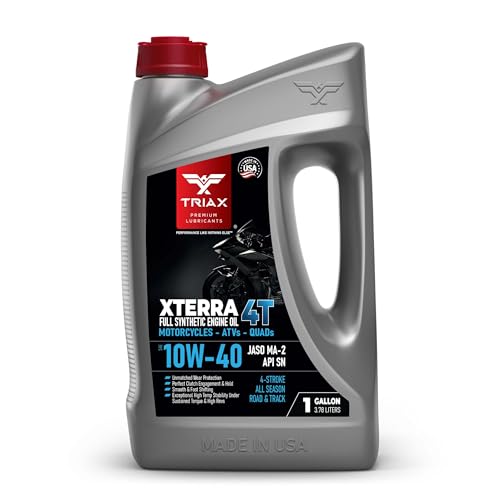
- Some Alternatives Are Safe: Certain heavy-duty diesel oils (like Shell Rotella T6) are often JASO MA/MA2 certified, lack friction modifiers, and are a popular, cost-effective alternative for many motorcycles.
Can You Use Car Oil in a Motorcycle? The Short and Long Answer
The short answer is no, you should not use car oil in a modern motorcycle with a wet clutch. The primary reason is that most passenger car motor oils, especially those labeled “Energy Conserving,” contain special friction-reducing additives. These additives are great for a car’s fuel economy but can be catastrophic for a motorcycle’s clutch, causing it to slip, wear out prematurely, and potentially damage your transmission.

While both oil types start from similar base stocks, their final formulations are engineered for vastly different environments. A car engine’s oil only has one job: to lubricate the engine. A motorcycle’s oil, however, is a multi-tasking workhorse. It has to handle the high-revving engine, protect the transmission gears, and allow the wet clutch to function properly, all from the same pool of oil. But what makes them so mechanically different? It all starts with a concept called the “shared sump.”
This guide will break down the fundamental reasons why using the correct, motorcycle-specific oil is critical. We will explore:
* The difference between a motorcycle’s shared sump and a car’s separate systems.
* What friction modifiers are and why they are the main enemy of your clutch.
* The specific certifications (like JASO MA) you must look for.
* The real-world consequences of using the wrong oil.
Why Is Motorcycle Oil Different From Car Oil?
Motorcycle oil is fundamentally different from car oil because most motorcycles utilize a shared sump system. This design means a single oil is responsible for lubricating three separate components: the engine, the transmission, and the wet clutch. Car oil is only formulated for one of these jobs—engine lubrication. A car has a separate system with dedicated automatic transmission fluid for its gears and clutch packs.
From an engineering perspective, motorcycle oil must achieve a delicate balance that car oil doesn’t have to consider. It needs to be slick enough to protect engine components from wear but also allow for enough friction for the clutch plates to grip and transfer power without slipping.
Here are the three critical jobs motorcycle oil must perform simultaneously:
* Engine Lubrication: Like car oil, it must protect pistons, cylinders, and bearings from friction and heat in a high-revving environment.
* Transmission Protection: It must withstand the extreme pressure and shearing forces created by meshing transmission gears. This requires high “shear stability,” an oil’s ability to resist being torn apart.
* Wet Clutch Operation: The oil must cool the clutch plates and allow them to engage smoothly and firmly. It cannot be “too slippery,” or the clutch will fail to lock up.
Did You Know? Some motorcycles, particularly certain models from BMW, Moto Guzzi, and Ducati, use a “dry clutch” system, similar to a manual transmission car. In these specific cases, the engine oil is separate from the transmission fluid. For these bikes, using a high-quality synthetic car oil in the engine may be acceptable, but you must always consult your owner’s manual first.
What Are Friction Modifiers and Why Are They Bad for a Wet Clutch?
Friction modifiers are microscopic, slippery chemical compounds, like molybdenum disulfide, added to modern car oils to reduce internal engine friction and improve fuel efficiency (MPG). They are the primary reason you cannot use “Energy Conserving” car oil in a wet-clutch motorcycle. While these additives help a car’s engine parts glide past each other with less resistance, they are disastrous for a clutch system that relies on friction to work.
A motorcycle’s wet clutch is composed of a series of alternating friction plates and steel plates. When you release the clutch lever, these plates are squeezed together. The friction between them allows them to lock up, transferring power from the engine to the transmission.
Here’s the problem: friction modifiers create a slippery film on the surface of these plates. Imagine trying to clap your hands together after covering them in grease; they’ll just slide past each other. That’s exactly what friction modifiers do to your clutch plates. They prevent the plates from generating the necessary friction to grip firmly, resulting in clutch slippage, poor acceleration, and excessive heat buildup that can quickly destroy the clutch.
💡 Pro Tip: Look for the “API Service” donut and starburst logo on a bottle of car oil. If it says “Energy Conserving” or “Resource Conserving,” it contains friction modifiers and should never be used in a wet-clutch motorcycle.
What Happens If You Use Car Oil in a Motorcycle?
Using car oil in your motorcycle can set off a chain reaction of mechanical failures, starting with poor performance and ending with expensive repairs. The symptoms might not appear instantly, but damage is occurring with every mile. Based on extensive engine failure analysis, the consequences range from inconvenient to catastrophic.
Here are the most common outcomes of using the wrong oil:
- ✆ Clutch Slippage: This is often the first and most noticeable symptom. When you try to accelerate hard, you’ll hear the engine RPMs rise, but the bike won’t speed up accordingly. This is the clutch failing to transfer power because the friction modifiers are making it slip.
- 🔧 Glazed or Burnt Clutch Plates: Continuous slippage generates immense heat, which can “glaze” or burn the friction material on the clutch plates. Once this happens, the plates are permanently ruined and must be replaced.
- ⚙️ Accelerated Gear and Transmission Wear: Car oil is not designed with the same shear stability as motorcycle oil. The immense pressure between motorcycle transmission gears literally tears the oil molecules apart, reducing its viscosity. This thinned-out oil can no longer properly cushion the gears, leading to pitting, chipping, and eventual gear failure.
- 🌡 Engine Overheating and Wear: Because car oil breaks down faster under the higher temperatures and RPMs of a motorcycle engine, its protective qualities diminish. This can lead to increased engine wear and potential overheating.
⚠ WARNING: The Cost of a Shortcut
The few dollars you might save by using car oil are insignificant compared to the potential repair costs. Replacing a burnt-out motorcycle clutch can cost anywhere from $500 to over $1,000 in parts and labor. A damaged transmission is even more expensive, often requiring a complete engine teardown. In our experience, many riders first notice a major problem when trying to accelerate onto a highway, a dangerous place to lose power.
What Is the JASO Standard and Why Does It Matter?
The JASO (Japanese Automotive Standards Organization) standard is a performance classification specifically for motorcycle oils. It is the single most important certification to look for when buying oil for your bike. It guarantees that the oil is formulated correctly for the unique demands of a motorcycle engine, particularly one with a wet clutch.
While the American Petroleum Institute (API) provides ratings for car oils (like API SN or SP), these do not test for wet clutch compatibility. JASO created its own standard to fill this critical gap. Understanding the JASO ratings empowers you to choose the right oil with confidence. The key is to look for the official JASO logo on the back of the bottle.
Here is a breakdown of the common JASO 4-stroke oil standards:
| Standard | Intended Use | Wet Clutch Safe? | Friction Level |
|---|---|---|---|
| JASO MA | General 4-stroke motorcycles | Yes ✅ | Standard |
| JASO MA2 | Modern / High-performance motorcycles | Yes ✅ | Higher |
| JASO MB | Scooters with automatic (CVT) transmissions | No ❌ | Low (contains friction modifiers) |
| API SN/SP | Passenger Cars | No (if “Energy Conserving”) ❌ | Varies / Often Low |
As you can see, JASO MA and JASO MA2 are the certifications that ensure an oil is free of friction modifiers and safe for your wet clutch. MA2 simply indicates a higher friction performance, which is often preferred for modern sportbikes to prevent any chance of slip under high torque. Conversely, JASO MB is a low-friction oil, essentially the motorcycle equivalent of an “Energy Conserving” car oil, designed specifically for scooters that don’t have a wet clutch.
What About Using Diesel Oil Like Shell Rotella T6?
Yes, in many cases you can safely use a heavy-duty diesel engine oil like Shell Rotella T6 in your motorcycle, provided you verify it has the correct JASO certification on the bottle. This has become a popular and well-regarded practice in the motorcycle community for several reasons, moving beyond a simple “tips” into a proven alternative.
The reason this works is that heavy-duty diesel engines, like motorcycle engines, operate under high stress and cannot have friction modifiers that might interfere with certain components. As a result, diesel oils are formulated for durability and high shear stability. As of 2026, the popular Shell Rotella T6 5W-40 full synthetic oil is certified as JASO MA and MA2, making it perfectly safe for wet clutches.
Here’s a look at the pros and cons of using a certified diesel oil:
Pros:
* 💰 Cost-Effective: Diesel oil is often significantly cheaper per gallon than motorcycle-specific synthetic oils.
* 🔨 JASO MA/MA2 Certified: The certification is the ultimate proof of wet clutch compatibility.
* 🛠 High Durability: These oils contain robust detergent and anti-wear additive packages (like high levels of Zinc/ZDDP) designed to handle extreme stress and heat.
Cons:
* Not Specifically Formulated: While it meets the minimum standard, its additive package isn’t tailored for the ultra-high RPMs of some sportbike engines in the way a dedicated motorcycle oil is.
* Formulations Can Change: Manufacturers can alter their formulas. It is crucial to check the bottle for the JASO MA/MA2 certification every time you buy.
For most cruisers, touring bikes, and standard motorcycles, a JASO-certified diesel oil is an excellent and economical choice.
FAQs About can you use car oil in a motorcycle
Can I use car oil in an emergency?
In a true emergency, using the correct viscosity car oil that is NOT labeled “Energy Conserving” is better than running the engine with low or no oil. However, this should be considered a temporary fix only. You should drain the car oil and replace it with proper JASO MA/MA2 motorcycle oil as soon as possible to prevent long-term clutch and transmission wear.
Is it okay to use car oil in a scooter?
It depends on the scooter; for many, yes, it is okay. Most modern scooters use a CVT (Continuously Variable Transmission) and do not have a wet clutch that shares engine oil. For these models, a high-quality car oil of the correct viscosity is often acceptable. In fact, the JASO MB standard is a low-friction oil designed for this purpose. Always check your owner’s manual.
What about motorcycles with a dry clutch?
If your motorcycle has a dry clutch, you have more flexibility with oil choices. Dry clutch motorcycles, like many from BMW, Moto Guzzi, and Ducati, have separate oil for the engine and transmission, just like a car. In this case, a high-quality synthetic car oil of the correct viscosity is often a suitable choice for the engine, but you must still use the specified fluid for the gearbox.
Can I use 10W-40 car oil in my motorcycle if the bike calls for 10W-40?
No, you should not, even if the viscosity matches. The numbers (e.g., 10W-40) only describe the oil’s thickness at different temperatures, not its critical additive package. A 10W-40 “Energy Conserving” car oil will contain friction modifiers that harm a wet clutch, whereas a 10W-40 motorcycle oil is specifically formulated with the correct frictional properties for it.
Does using synthetic car oil make it any safer for a motorcycle?
No, the base oil type (synthetic vs. conventional) does not change the core problem. A full synthetic car oil will still contain friction modifiers if it is labeled “Energy Conserving.” While synthetic oil offers better stability at extreme temperatures, the presence of friction modifiers remains the primary reason to avoid it in a wet clutch motorcycle.
Will car oil damage motorcycle transmission gears?
Yes, it can over time due to its lower shear stability. Motorcycle transmissions exert immense pressure that can physically tear oil molecules apart. Motorcycle oils contain special “extreme pressure” additives to resist this shearing force. Standard car oils lack this robustness and can thin out quickly, leading to inadequate lubrication and accelerated gear wear.
Can I mix car oil and motorcycle oil?
This is strongly discouraged as it compromises protection. While the oils will mix, you are diluting the specialized additive package of the motorcycle oil. This introduces a level of friction modifiers into the system, which can degrade clutch performance and reduce the oil’s shear stability, leaving your transmission less protected. Always use 100% of the correct oil type.
Why is motorcycle oil so much more expensive?
Motorcycle oil costs more due to its specialized, small-batch formulation and robust additive package. It’s engineered to perform three demanding jobs at once (engine, clutch, and gears), requiring more expensive additives. The lower production volume compared to the massive passenger car market also contributes to a higher cost per quart.
Can you use a car oil filter on a motorcycle?
This is extremely risky and not recommended. Even if a car oil filter has the same thread size and gasket, its internal specifications are likely different. This includes the bypass valve pressure setting and the filtration efficiency. Using the wrong filter can lead to incorrect oil pressure or unfiltered oil circulating in your engine, causing severe damage.
What does the “Energy Conserving” label on car oil mean?
The “Energy Conserving” or “Resource Conserving” starburst logo is the clearest sign that an oil contains friction modifiers to improve fuel economy in cars. This label is your definitive warning that the oil is NOT suitable for a wet-clutch motorcycle. If you see this symbol, do not put the oil in your bike.
Final Thoughts
Ultimately, using car oil in a modern, wet-clutch motorcycle is a gamble that simply isn’t worth the minor cost savings. Your motorcycle’s engine is a sophisticated piece of engineering where the engine, clutch, and transmission all depend on a single, specialized fluid to function correctly. The correct JASO MA or MA2 certified motorcycle oil is specifically engineered to protect all three of these critical, and expensive, components.
Choosing the right oil is one of the easiest and most important things you can do to ensure the longevity and reliability of your motorcycle. Think of it as cheap insurance for your engine. By understanding the “why” behind the different formulations, you are now empowered to make the best choice for your machine every time you perform an oil change. Ride safe, and give your engine the protection it deserves.
Last update on 2026-03-29 / Affiliate links / Images from Amazon Product Advertising API


![Dubai Luxury Cars: Ultimate Guide for Buying & Renting [year]](https://i0.wp.com/carxplorer.com/wp-content/uploads/2026/03/Dubai-Luxury-Cars-Ultimate-Guide-for-Buying-Renting-year-1.jpg?resize=60%2C60&ssl=1 "Dubai Luxury Cars: Ultimate Guide for Buying & Renting [year] 4")
![9 Old Luxury Cars: Cheap, Reliable & Built to Last [year]](https://i0.wp.com/carxplorer.com/wp-content/uploads/2026/03/9-Old-Luxury-Cars-Cheap-Reliable-Built-to-Last-year-1.jpg?resize=60%2C60&ssl=1 "9 Old Luxury Cars: Cheap, Reliable & Built to Last [year] 6")

![Luxury Cars White: 9 Elegant Designs & Top Models for [year]](https://i0.wp.com/carxplorer.com/wp-content/uploads/2026/03/Luxury-Cars-White-9-Elegant-Designs-Top-Models-for-year-1.jpg?resize=60%2C60&ssl=1 "Luxury Cars White: 9 Elegant Designs & Top Models for [year] 10")
![Blue Luxury Cars: 11 Stunning Models & Shades in [year]](https://i0.wp.com/carxplorer.com/wp-content/uploads/2026/03/Blue-Luxury-Cars-11-Stunning-Models-Shades-in-year-1.jpg?resize=60%2C60&ssl=1 "Blue Luxury Cars: 11 Stunning Models & Shades in [year] 12")