
Wondering if that leftover car oil can be used for your lawn mower? You’re not alone; many people face this exact question when it’s time for mower maintenance, hoping to save a trip to the store.
In an emergency, you can use car oil in a 4-stroke lawn mower, but only if it matches the manufacturer’s recommended viscosity, such as SAE 30. However, long-term use is not advised because automotive oils lack the specific additives needed to protect hot-running, air-cooled mower engines.
Based on an analysis of current manufacturer guidelines and engineering standards, this guide will explain the critical differences. You’ll discover exactly why using the right small engine oil is essential for engine longevity and how to choose the correct one every time.
Key Facts
- Engine Temperature is Key: Lawn mower engines are air-cooled and run significantly hotter than liquid-cooled car engines, requiring oil with superior high-heat stability.
- Additive Differences Matter: Modern car oils have reduced levels of zinc (ZDDP), an anti-wear additive, to protect catalytic converters. Mower engines rely on higher zinc levels to prevent wear, as detailed by small engine experts.
- Viscosity Mismatch Causes Damage: Using an oil that’s too thin (like 5W-20 car oil) in an engine designed for thicker SAE 30 can lead to rapid oil consumption and catastrophic lubrication failure.
- Warranty Invalidation is a Risk: Using a non-specified motor oil, including most car oils, can void your lawn mower’s manufacturer warranty, turning a simple oil change into a costly mistake.
- The Manual is the Ultimate Source: Industry analysis reveals that the owner’s manual is the most reliable source for the correct oil type, viscosity grade, and API service rating for your specific mower.
Can You Use Car Oil For a Lawn Mower?
The short answer is yes, but with major caveats. In an emergency, you can temporarily use a regular motor oil in your 4-stroke lawn mower engine. The most critical factor is that the car oil’s viscosity grade must match the recommendation in your mower’s owner’s manual, which is often a single-grade oil like SAE 30. However, this should only be a short-term fix to finish a job, not a regular practice. Expert advice consistently points toward using oil specifically formulated for small, air-cooled engines.

The core issue lies in the different operating environments of a car engine versus a lawn mower engine. A car uses a liquid-cooling system with a radiator to maintain a stable temperature. Your lawn mower relies on air flowing over cooling fins, leading to much higher and more volatile operating temperatures. Automotive oils are not engineered to handle this extreme heat and can break down, a concept known as thermal breakdown, leading to poor lubrication.
Think of it as a temporary patch rather than a permanent solution. While a single use is unlikely to cause immediate engine seizure, repeated use of car engine oil will almost certainly shorten the life of your mower. But what exactly makes these oils different, and what are the real risks involved in using the wrong one? Understanding these differences is key to protecting your investment.
What Is the Main Difference Between Car Oil and Lawn Mower Oil?
The primary difference is their formulation for the engine’s cooling system and temperature. Car oil is for cooler, liquid-cooled engines and has lower levels of zinc (ZDDP) anti-wear additives. Lawn mower oil is designed for hotter, air-cooled engines and contains a higher concentration of these additives to resist high-heat thermal breakdown and prevent engine wear.
The fundamental distinction comes down to two key areas: the cooling environment and the specific additive package mixed into the base oil.
Air-Cooled vs. Liquid-Cooled Engines
Your car’s engine operates within a very stable and relatively cool temperature range, thanks to its radiator and liquid coolant. A lawn mower engine is air-cooled, meaning it gets much hotter, and its temperature can fluctuate wildly depending on the outdoor temperature and how hard it’s working. This extreme heat can shear, or break down, the molecules in an oil, causing it to lose its protective viscosity. Lawn mower oil contains special additives that act like sunscreen for your engine, helping it resist this high-heat degradation.
The Critical Role of Oil Additives
Modern car oils have seen a reduction in certain additives, particularly Zinc Dialkyldithiophosphate (ZDDP), a powerful anti-wear agent. While great for protecting engine parts, zinc can damage a car’s catalytic converter over time. Since your lawn mower doesn’t have a catalytic converter, it can safely use oil with higher zinc levels, which provides crucial protection for metal-on-metal parts under extreme heat and pressure.
This table breaks down the key distinctions:
| Feature | Car Oil (for Liquid-Cooled Engines) | Lawn Mower Oil (for Air-Cooled Engines) |
|---|---|---|
| Primary Design | Cooler, consistent operating temperatures. | Hotter, variable operating temperatures. |
| Viscosity Type | Typically Multigrade (e.g., 5W-30) for wide temperature ranges. | Often Monograde (e.g., SAE 30) for summer use; multigrade available. |
| Detergent Level | High, to handle byproducts of combustion and keep engine clean. | Specifically formulated; may be lower to prevent ash buildup in simple engines. |
| Zinc (ZDDP) Additives | Lower levels to protect automotive catalytic converters. | Higher levels for superior anti-wear protection on metal parts at high heat. |
| Heat Resistance | Good, but can experience thermal breakdown at extreme temps. | Excellent; formulated with additives to resist high-heat oil degradation and volatility. |
What Are the Risks of Using the Wrong Oil in a Mower Engine?
Using the wrong oil, especially most car oils, in a lawn mower can lead to engine overheating, increased oil consumption, and significant internal wear due to insufficient anti-wear additives. In a worst-case scenario, this can cause catastrophic engine seizure and will almost certainly void your manufacturer’s warranty. The convenience is not worth the costly risk.
Let’s break down the specific chain of events that can occur when an engine isn’t properly protected.
- Engine Overheating: Automotive oil isn’t designed for the extreme temperatures of an air-cooled engine. It can experience thermal breakdown, losing its ability to lubricate effectively. This increased friction generates even more heat, creating a vicious cycle that can cause the engine to overheat.
- Increased Wear and Tear: As explained, car oils have lower levels of zinc (ZDDP). This additive creates a protective film on critical components like the camshaft and pistons. Without it, metal-on-metal contact increases dramatically, leading to premature and accelerated wear on your engine’s internal parts.
- Higher Oil Consumption: When an oil gets too hot, it thins out and becomes more volatile, causing it to burn away more easily. If you notice you’re having to top off your mower’s oil frequently, it could be a sign that you’re using an oil that can’t handle the heat.
- Engine Seizure: This is the catastrophic failure every owner fears. It occurs when a lack of proper lubrication causes so much friction and heat that the piston literally welds itself to the cylinder wall. The engine stops dead and is often damaged beyond affordable repair.
- Voided Warranty: Nearly all manufacturer warranties are contingent on using fluids that meet their specifications. If your engine fails and the manufacturer determines you used an unapproved oil type, your warranty claim will likely be denied, leaving you to cover the full cost of repairs.
Which Oil Viscosity Should You Use in a Lawn Mower (SAE 30 vs. 10W-30)?
For most lawn mowers in temperatures above 40°F (5°C), a monograde SAE 30 oil is the standard recommendation, providing stable, thick protection. A multigrade 10W-30 oil performs better in colder weather and is a good all-season choice if your owner’s manual approves it. Think of viscosity as the oil’s thickness; the number indicates how it flows at different temperatures.
What is SAE 30?
SAE 30 is a “monograde” oil, meaning it has one single viscosity rating. It’s designed to provide excellent protection at normal operating temperatures. Because it doesn’t contain the viscosity-modifying polymers found in multigrade oils, it can be more stable and shear-resistant in hot, simple air-cooled engines.
- When to use SAE 30: This is the go-to choice for most push and riding mowers during the main mowing season (spring, summer, and fall) when temperatures are consistently warm.
What is 10W-30?
10W-30 is a “multigrade” oil. The “10W” stands for its viscosity in winter (“W”) or cold conditions, while the “30” is its viscosity at operating temperature. This oil is thinner when cold, allowing it to lubricate the engine faster during startup, but it thickens to provide proper protection once the engine is hot.
- When to use 10W-30: This is a great choice if you live in a climate with wide temperature swings or if you mow in the early spring or late fall when mornings are chilly. Some manufacturers recommend it as a universal choice.
Ultimately, your owner’s manual is the final authority. It will contain a chart showing the recommended oil viscosities for the temperature ranges in your area.
How Do You Choose the Right Oil For Your Specific Lawn Mower?
To choose the right lawn mower oil, first consult your owner’s manual for the recommended viscosity (e.g., SAE 30) and API service rating (e.g., SJ or higher). If the manual is lost, look for oil specifically labeled “for 4-Cycle Engines” or “Small Engine Oil” from a reputable brand that matches these common specifications.
Following a clear, step-by-step process ensures you get the right product every time and keep your engine protected. This hierarchy of authority will never steer you wrong.
- Check the Owner’s Manual: This is your bible. It is the number one, undisputed source of truth. It will tell you the exact viscosity (like SAE 30 or 10W-30) and the required API (American Petroleum Institute) service classification your engine needs.
- Identify Your Climate and Temperature: Based on the manual’s recommendations, choose the right viscosity for your operating temperatures. For most of the US during mowing season, SAE 30 is the standard. If you have cold starts, 10W-30 might be better if approved.
- Look for the API Service Rating: On the back of the oil bottle, you will find a circular symbol often called the API “donut.” This seal certifies the oil’s performance standards. Your manual will specify a rating like “API SJ or higher.” This means you can use SJ, SL, SM, or any subsequent rating.
- Choose a “Small Engine” Formulation: When in doubt, always grab a bottle that is explicitly marketed as “4-Cycle Engine Oil” or “Lawn Mower Oil.” This ensures it has the correct additive package designed for hot, air-cooled engines.

If you no longer have your manual, check the website of the engine manufacturer (such as Briggs & Stratton, Kohler, or Honda) for their official recommendations. Following this process demonstrates the highest level of care for your equipment.
FAQs About can you use car oil for a lawn mower
Can I use 5W-30 synthetic car oil in my lawn mower?
In most cases, you should not. While synthetic 5W-30 offers excellent protection, its viscosity may be too thin for a hot-running air-cooled engine designed for SAE 30. This can lead to increased oil consumption and wear. However, some modern mower engines do approve synthetic multigrade oils, so you must check your owner’s manual.
What happens if you accidentally put 2-stroke oil in a 4-stroke mower?
You should drain the oil and fuel immediately without starting the engine. 2-stroke oil is meant to be mixed with gasoline and lacks the lubricating properties and additives needed for a 4-stroke engine’s crankcase. Running the engine with it will cause rapid, severe engine damage due to a lack of proper lubrication.
Is there a difference between 4-cycle oil and car motor oil?
Yes, there is a significant difference. While both are for 4-stroke/4-cycle engines, “4-cycle oil” is specifically formulated for hot, air-cooled small engines (like mowers) with higher levels of anti-wear additives. Car motor oil is designed for cooler, water-cooled automotive engines and has a different additive package to protect components not found in a mower.
How often should you change lawn mower oil?
Most manufacturers recommend changing the oil once per year or after every 25 to 50 hours of use. It is best practice to change it at the beginning of the mowing season as part of your annual tune-up. If you mow in very dusty or dirty conditions, you may need to change it more frequently.
Can you use diesel engine oil (like Rotella) in a lawn mower?
This is a common “mechanic’s trick,” but it is not officially recommended unless your manual says so. Diesel oils have a robust additive package and high detergency, but they are formulated for a different type of engine. While it might work, using a specifically formulated small engine oil is always the safest bet to avoid potential issues.
What if I don’t know what oil the previous owner used?
It does not matter what was used before; you should use what the manufacturer recommends now. If you are unsure, a high-quality SAE 30 or 10W-30 small engine oil from a reputable brand is a safe starting point for most 4-stroke push or riding mowers. Always follow the proper fill procedure.
Can I mix synthetic and conventional oil in my lawn mower?
Yes, you can mix them if necessary, but it is not ideal. When you mix synthetic and conventional oil, the resulting mixture loses the superior performance benefits of the full synthetic. It is better to stick with one type, but mixing them in a pinch will not harm the engine.
Will using car oil void my lawn mower’s warranty?
Yes, it most likely will. Virtually all manufacturer warranties require the use of oil that meets their specific requirements for viscosity and API service rating. Using an unapproved oil like most automotive oils gives the manufacturer grounds to deny a warranty claim for any engine-related failures.
What is non-detergent oil and should I use it?
You should almost never use non-detergent oil in a modern lawn mower engine. Non-detergent oils lack the additives that clean the engine and suspend dirt particles. Using it will lead to harmful sludge and carbon buildup. This type of oil is only for very old, pre-1950s engines that do not have oil filters.
How much oil does a typical push mower take?
Most push mowers take between 15 and 20 ounces (about 0.5 quarts or 450-600ml) of oil. However, this varies by model. Never guess; after draining the old oil, add about half the expected amount, then slowly add more, checking the dipstick frequently until it reaches the “Full” mark.
Key Takeaways: Using Car Oil in a Lawn Mower
After reviewing the expert advice and manufacturer standards, the choice becomes clear. While a quick fix is tempting, prioritizing your engine’s health will save you money and frustration in the long run. Here are the most important points to remember.
- Your Manual is the Ultimate Authority – Always check your lawn mower’s owner’s manual first. It specifies the exact oil viscosity (e.g., SAE 30) and API rating your engine needs to operate safely.
- Car Oil is a Risky Short-Term Fix – In an emergency, using car oil with the exact same viscosity is possible, but it is not a long-term solution. The risk of damage outweighs the convenience.
- Air-Cooled Engines Run Hotter – Lawn mower engines are typically air-cooled and run much hotter than liquid-cooled car engines. They require oil specifically formulated with additives to resist thermal breakdown and protect against wear at these higher temperatures.
- Key Additives are Different – Mower oil contains higher levels of zinc (ZDDP) for wear protection, which has been reduced in modern car oils. Using car oil can lead to premature engine wear.
- Viscosity Matters Most – Using the wrong viscosity (e.g., thin 5W-20 instead of SAE 30) is more dangerous than using the right viscosity of the wrong type. The wrong weight can cause immediate lubrication failure.
- When in Doubt, Use Small Engine Oil – If you’ve lost your manual, a high-quality oil labeled “For 4-Cycle Engines” or “Small Engine Oil” in an SAE 30 or 10W-30 grade is your safest choice.
- Using the Wrong Oil Can Void Your Warranty – Using a non-specified oil is one of the easiest ways for a manufacturer to deny an engine-related warranty claim, turning a cheap shortcut into a costly mistake.
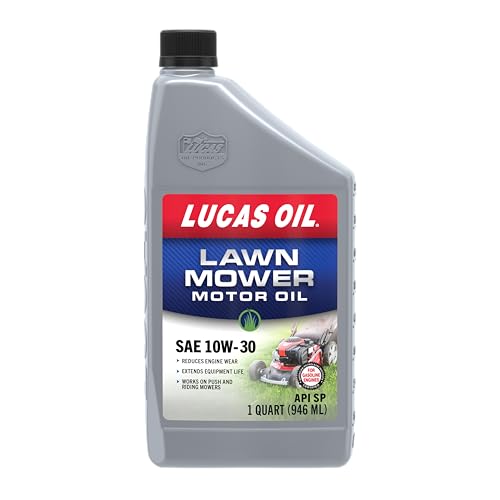
Last update on 2026-04-04 / Affiliate links / Images from Amazon Product Advertising API


![Dubai Luxury Cars: Ultimate Guide for Buying & Renting [year]](https://i0.wp.com/carxplorer.com/wp-content/uploads/2026/03/Dubai-Luxury-Cars-Ultimate-Guide-for-Buying-Renting-year-1.jpg?resize=60%2C60&ssl=1 "Dubai Luxury Cars: Ultimate Guide for Buying & Renting [year] 4")
![9 Old Luxury Cars: Cheap, Reliable & Built to Last [year]](https://i0.wp.com/carxplorer.com/wp-content/uploads/2026/03/9-Old-Luxury-Cars-Cheap-Reliable-Built-to-Last-year-1.jpg?resize=60%2C60&ssl=1 "9 Old Luxury Cars: Cheap, Reliable & Built to Last [year] 6")

![Luxury Cars White: 9 Elegant Designs & Top Models for [year]](https://i0.wp.com/carxplorer.com/wp-content/uploads/2026/03/Luxury-Cars-White-9-Elegant-Designs-Top-Models-for-year-1.jpg?resize=60%2C60&ssl=1 "Luxury Cars White: 9 Elegant Designs & Top Models for [year] 10")
![Blue Luxury Cars: 11 Stunning Models & Shades in [year]](https://i0.wp.com/carxplorer.com/wp-content/uploads/2026/03/Blue-Luxury-Cars-11-Stunning-Models-Shades-in-year-1.jpg?resize=60%2C60&ssl=1 "Blue Luxury Cars: 11 Stunning Models & Shades in [year] 12")