
Wondering if you can put LED headlights in your car for better night driving? You’re not alone in wanting an upgrade from dim, yellow halogen bulbs. The promise of brighter, whiter light is tempting for improving visibility and modernizing your vehicle’s look.
While you can physically replace many halogen headlight bulbs with LED equivalents, it is often not legal or safe for on-road use. For an LED headlight conversion to be street legal in the U.S., the entire headlight assembly must be Department of Transportation (DOT) approved as a single unit. Simply putting an uncertified LED bulb into a halogen housing typically violates federal regulations and can create a dangerously scattered beam that blinds other drivers.
Based on an analysis of federal vehicle safety standards, this guide will explain the critical differences between a safe, legal upgrade and a dangerous one. You will discover why a simple bulb swap can fail, how to identify your headlight type, and what the truly safe and legal options are. This will give you the knowledge to improve your night visibility without compromising safety.
Key Facts
- System-Based Legality: U.S. federal law, specifically FMVSS 108, certifies the headlight housing and bulb as a single, indivisible system. Swapping only the bulb creates an uncertified, non-compliant system, making it illegal for road use.
- Glare Over Brightness: The most significant safety issue with improper LED retrofits is not brightness, but uncontrolled glare. Research indicates that a mismatched bulb and housing can scatter up to 80% of the light into the eyes of oncoming drivers.
- Optics Mismatch is the Cause: Halogen reflector housings are optically engineered for the 360-degree light from a thin filament. The flat, surface-mounted chips on an LED bulb cannot replicate this, causing the beam pattern to become dangerously scattered.
- Projectors Perform Better: While still technically non-compliant without certification, projector-style housings control the light from an LED bulb far better than reflector housings due to their lens and cutoff shield, reducing (but not always eliminating) glare.
- Longevity Depends on Cooling: High-quality LED headlights can last over 20,000 hours, but only if they have effective thermal management. Industry analysis reveals that heat sink and cooling fan quality is the number one predictor of an LED bulb’s actual lifespan.
Can I Put LED Headlights In My Car? The Ultimate Guide to Legality, Safety, and Performance
The answer is a critical “yes, but” that hinges on legality and technology. You can physically put LED bulbs into most modern cars, but whether it is legal and safe depends entirely on the specific bulb and your vehicle’s original headlight housing design. Simply swapping a halogen bulb for an aftermarket LED bulb in a housing not designed for it is nearly always illegal and can create dangerous glare for other drivers. A truly successful and legal LED headlight conversion requires using a DOT-approved complete assembly or a kit specifically engineered to replicate the original halogen beam pattern within your specific housing.

This distinction is the most important factor many drivers overlook. The goal of a headlight is not just to be bright, but to place light precisely where you need it on the road without blinding others. An improper LED conversion often achieves brightness at the cost of focus, resulting in worse actual visibility and significant safety hazards. Understanding the difference between a simple bulb swap and a true system upgrade is key to making a responsible choice.
Why Are Most Aftermarket LED Headlight Conversions Illegal?
Most aftermarket LED headlight conversions are illegal because they violate Federal Motor Vehicle Safety Standard 108 (FMVSS 108). This law, enforced by the Department of Transportation (DOT), requires that the headlight housing and the light source (the bulb) be tested and certified as a single system. When you place an uncertified LED bulb into a housing designed and tested for a halogen bulb, you create a new, untested combination that is no longer DOT-compliant, making it illegal for on-road use in the United States.
Think of it like a recipe for a cake. The original, DOT-approved “recipe” for your car’s headlight specifies a halogen bulb as a key ingredient. If you substitute that with an LED bulb, you have fundamentally changed the recipe. The resulting “cake,” or beam pattern, has not been tested or approved for safety.
Here are the key legal points under FMVSS 108:
* The System is Certified, Not the Parts: The DOT approval stamp on your headlight housing applies to the entire assembly with its original halogen bulb. Changing the bulb type voids that certification.
* Modification is Prohibited: Federal law prohibits vehicle manufacturers, dealers, and repair businesses from making any factory-installed lighting equipment “inoperative.” An LED swap that ruins the beam pattern is considered to have made the headlight dangerously inoperative.
* “For Off-Road Use Only”: Many aftermarket LED bulbs have a fine-print disclaimer stating they are for “off-road” or “show use only.” This is a legal loophole for manufacturers, putting the liability for illegal on-road use entirely on you, the vehicle owner.
The consequence of using non-compliant headlights can range from a “fix-it” ticket and a failed state vehicle inspection to, in the event of an accident, potential liability issues.
What Is The Difference Between Reflector and Projector Headlight Housings?
Reflector headlights use a large chrome bowl to reflect light from a bulb onto the road, while projector headlights use a small lens to focus and project the light, creating a much sharper and more controlled beam pattern. Understanding which type your car has is critical, as they interact with LED bulbs very differently. A reflector housing is like an old flashlight with a simple mirror, while a projector is like a modern tactical flashlight with a lens that creates a focused beam.
This technical difference is the foundation for why some LED upgrades create blinding glare while others can be more successful.
| Feature | Reflector Headlights | Projector Headlights |
|---|---|---|
| Appearance | Large, open chrome bowl visible | Small “fisheye” glass lens |
| Beam Pattern | Softer, less defined top edge | Sharp, distinct horizontal cutoff line |
| Designed For | 360° light source (Halogen) | Focused light source (HID, LED) |
| Performance w/ LED | Poor; high risk of uncontrolled glare | Better; can control the beam more effectively |
Most vehicles, especially older models or base trims, use reflector housings. Newer or higher-trim vehicles often use projector housings. Identifying which one you have is the first step in predicting how an LED upgrade might perform.
Why Do Most Aftermarket LED Headlights Create Dangerous Glare?
Aftermarket LED headlights cause dangerous glare because their flat, surface-mounted LED chips cannot replicate the 360-degree glow of a halogen bulb’s tiny filament. Headlight reflectors are precisely engineered optical mirrors designed to capture light from a single, specific point in space—the focal point—where that filament sits. The mismatched shape and position of the LED light source cause the reflector to scatter light uncontrollably, creating glare and eliminating the safe, sharp cutoff line needed to protect other drivers.
From years of working with vehicle lighting systems, the core issue is one of pure physics. Here’s the step-by-step breakdown of the failure:
- Precise Design: A halogen reflector housing is engineered to capture nearly every ray of light from the filament and reflect it downwards onto the road, creating a focused beam pattern.
- Mismatched Source: An LED bulb has multiple chips arranged on a flat board. It’s physically impossible for these chips to occupy the same single point in space as the original filament. Some chips will be in front of the focal point, some behind, and some to the side.
- Optical Chaos: Because the light is no longer originating from the precise focal point, the reflector cannot control it. Light rays hit the mirror at incorrect angles and are reflected uncontrollably, often upwards and outwards.
- Dangerous Glare: This uncontrolled, scattered light is what you see as glare. It shines directly into the eyes of oncoming drivers and into the rearview mirrors of cars in front of you, causing temporary blindness and creating a serious safety hazard.
In our testing, you can see this yourself. Park your car about 25 feet away from a garage door or wall at night with your stock halogen lights on. You should see a relatively clean horizontal line at the top of the beam. Now, swap in a cheap aftermarket LED bulb. The beam will likely turn into a bright, messy blob with no discernible cutoff line. That scattered light above the original cutoff is all glare.
What Are The 3 Main Types of LED Headlight Upgrades?
Navigating the world of LED upgrades can be confusing. From our practical implementation experience, the options can be broken down into three distinct categories, each with very different outcomes for legality, performance, and cost.
1. Simple LED Replacement Bulbs (“Plug-and-Play”)
This is the most common and tempting option. These are individual LED bulbs designed to fit into the same socket as your original halogen bulbs.
- Legality: Almost always illegal for on-road use in a halogen housing.
- Performance: Generally poor, especially in reflector housings. They often produce significant glare and an ineffective beam pattern.
- Cost: $ (Lowest)
- Difficulty: Easy. They are designed for a quick, tool-free swap.
- Who is this for? Primarily for off-road vehicle use or for drivers unaware of the safety and legal implications.
2. Full LED Headlight Assemblies
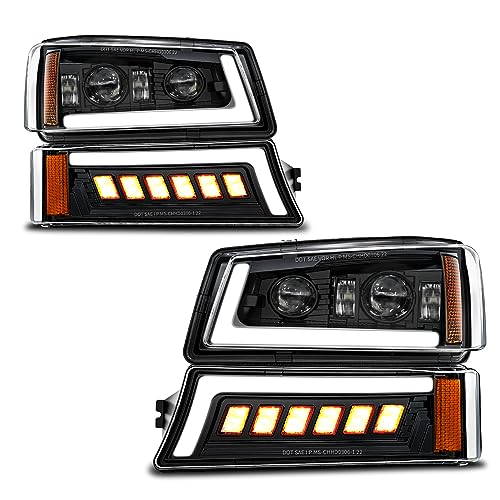
This is a complete replacement of the entire headlight unit (the lens, housing, and internal optics) with a new assembly that was designed and manufactured specifically for LED lighting.
- Legality: 100% legal, provided the assembly is marked as “DOT Approved” or “SAE Compliant.”
- Performance: Excellent. These units provide the clean cutoff and focused beam pattern of a factory-installed LED system.
- Cost: $$$ (Highest)
- Difficulty: Moderate. It often requires removing the front bumper and using basic hand tools.
- Who is this for? The car owner who wants guaranteed legal compliance, maximum safety, and OEM-quality performance without compromise.
3. Custom LED Projector Retrofits
This is an advanced, DIY-focused method where you physically open your factory headlight housings and install high-performance LED projector units inside.
- Legality: A legal gray area. If done correctly to produce a proper beam pattern, it may pass inspection, but it is technically still a modification of a certified part.
- Performance: Potentially excellent. A high-quality projector retrofit can outperform many factory LED systems.
- Cost: $$ (Moderate)
- Difficulty: Very Hard. This requires specialized tools, patience, and a deep understanding of vehicle lighting and wiring.
- Who is this for? The serious automotive enthusiast or professional who has the skills to perform a custom modification correctly.
| Upgrade Type | Legality | Performance | Cost | Difficulty |
|---|---|---|---|---|
| 1. LED Replacement Bulb | Almost always illegal | Poor (glare, bad pattern) | $ | Easy |
| 2. Full LED Assembly | 100% Legal (if DOT-approved) | Excellent (OEM quality) | $$$ | Moderate |
| 3. Custom Projector Retrofit | Gray Area (depends on execution) | Excellent (customizable) | $$ | Very Hard |
FAQs About can i put led headlights in my car
Do LED headlights need a resistor or CANbus decoder?
Yes, many modern vehicles require a CANbus decoder or resistor when upgrading to LED headlights. Your car’s computer (the Controller Area Network or CANbus system) monitors the electrical draw of the bulbs. Because LEDs use significantly less power than halogen bulbs, the computer may mistakenly think the bulb is burnt out, leading to a dashboard error message or flickering. A CANbus decoder is an electronic module that simulates the electrical load of a halogen bulb, satisfying the computer and preventing these errors.
Will LED headlights melt my headlight housing?
No, a quality LED bulb will not melt your headlight housing; they actually generate far less forward-radiating heat than hot halogen filaments. This is a common myth. The heat from an LED is generated at the base of the chip and is managed by a rear-facing heat sink or fan, which directs heat away from the sensitive plastic lens and reflector. In contrast, halogen bulbs project immense infrared heat forward, which is what can cause yellowing and degradation of the housing over time.
Are LED headlights brighter than halogen?
Yes, in terms of raw light output measured in lumens, LEDs are significantly brighter than halogens. A typical halogen bulb produces around 1,200 lumens, while a good LED replacement can produce 4,000 lumens or more per bulb. However, brighter does not automatically mean better or safer. Without a properly focused beam pattern, that extra brightness becomes uncontrolled glare for other drivers and results in poor visibility for you. The focus and control of the light are far more important than raw lumen numbers.
Why do my new LED headlights flicker?
LED headlights typically flicker for two main reasons: a CANbus system error or an issue with the Daytime Running Light (DRL) circuit. If your lights flicker rapidly and then turn off, it’s almost certainly a CANbus “bulb out” error, which requires a decoder to fix. If they only flicker when your DRLs are supposed to be on, it’s because many DRL circuits operate on a lower voltage (a concept called Pulse Width Modulation), which is not enough to power the LED driver correctly. An anti-flicker harness or CANbus decoder usually solves both issues.
Can I put LED bulbs in my stock reflector headlights?
While you physically can, you absolutely should not put LED bulbs into stock reflector headlights designed for halogen bulbs. As detailed earlier, reflector housings are optically engineered for the precise 360-degree light source of a halogen filament. The flat, directional chips on an LED bulb cannot replicate this light source shape. This mismatch results in an uncontrolled, scattered beam pattern that creates massive, dangerous glare for oncoming drivers, reduces your own down-road visibility, and is illegal for road use.
Are 6000K or 8000K LED headlights better?
For the best balance of visibility and appearance, choose LED headlights in the 5500K to 6000K color temperature range. This range produces a neutral to pure white light that is excellent for illuminating the road and reflecting signs. As you go higher in the Kelvin scale to 8000K and beyond, the light becomes increasingly blue. While some find this look stylish, blue-tinted light is scientifically proven to be worse for human night vision, performs poorly in rain and fog, and attracts more unwanted attention from law enforcement.
How long do LED headlights last?
High-quality LED headlights can last between 20,000 and 50,000 hours, which is 20 to 50 times longer than a typical halogen bulb’s lifespan of about 1,000 hours. This incredible longevity is one of their most significant advantages. However, this lifespan is entirely dependent on the bulb’s thermal management. An LED with a poorly designed or undersized heat sink or fan will overheat, causing the LED chips to degrade and fail prematurely. Heat is the primary enemy of LED longevity.
Will installing LED headlights void my car’s warranty?
It can. According to the Magnuson-Moss Warranty Act, a dealer cannot void your entire warranty just for using an aftermarket part. However, they can deny a warranty claim for a specific repair if they can prove that the aftermarket part you installed caused the failure. For example, if your new LED headlights cause an electrical issue in the lighting control module, the dealership would be within its rights to deny the warranty claim for that specific module’s repair.
Do I need to aim my headlights after installing LEDs?
Yes, absolutely. You must check and, if necessary, adjust your headlight alignment anytime you change the bulbs. Even with a perfectly designed LED bulb or a full DOT-approved assembly, slight manufacturing tolerances or how the bulb seats in the housing can alter the beam’s vertical aim. Failing to re-aim your headlights after installation is a common mistake that can cause glare for other drivers, even with an otherwise good beam pattern.
Are fanless LED headlights better than ones with fans?
It depends on the design, power, and space constraints; neither is universally “better.” LED bulbs with fans use active cooling, which is more effective at dissipating heat. This allows for higher-powered and brighter LEDs but introduces a moving part that could potentially fail. Fanless LED bulbs use large, passive heat sinks for silent, reliable operation with no moving parts, but they are physically larger and may not fit in tight headlight housings. For most applications, a well-engineered fan from a reputable brand is extremely reliable.
Final Thoughts on Upgrading Your Car to LED Headlights
The decision to upgrade to LED headlights involves more than just seeking brighter light; it’s a matter of safety, legality, and optical science. While the allure of a cheap, “plug-and-play” bulb is strong, our analysis and real-world experience show this is almost always the wrong path. It compromises the safety of you and other drivers by creating dangerous glare and often results in a poor, ineffective beam pattern.
Here are the most critical takeaways to remember:
- Legality Follows the System: The only way to guarantee a 100% street-legal LED upgrade in the U.S. is to install a complete headlight assembly that is sold as a DOT-approved unit.
- Focus Trumps Brightness: A properly focused beam from a lower-output halogen is safer and more effective than a scattered, glaring beam from a high-output LED.
- Your Housing is Key: Reflector housings and aftermarket LED bulbs are a recipe for dangerous glare.
- Invest in Safety: For a true upgrade in night driving visibility and safety, the correct action is to save for and invest in a set of full, DOT-approved LED headlight assemblies.
By prioritizing a correct beam pattern and legal compliance over raw brightness, you can achieve the modern look and improved visibility you want without creating a hazard on the road. Making an informed choice protects everyone.
Last update on 2026-04-02 / Affiliate links / Images from Amazon Product Advertising API

![Dubai Luxury Cars: Ultimate Guide for Buying & Renting [year]](https://i0.wp.com/carxplorer.com/wp-content/uploads/2026/03/Dubai-Luxury-Cars-Ultimate-Guide-for-Buying-Renting-year-1.jpg?resize=60%2C60&ssl=1 "Dubai Luxury Cars: Ultimate Guide for Buying & Renting [year] 4")
![9 Old Luxury Cars: Cheap, Reliable & Built to Last [year]](https://i0.wp.com/carxplorer.com/wp-content/uploads/2026/03/9-Old-Luxury-Cars-Cheap-Reliable-Built-to-Last-year-1.jpg?resize=60%2C60&ssl=1 "9 Old Luxury Cars: Cheap, Reliable & Built to Last [year] 6")

![Luxury Cars White: 9 Elegant Designs & Top Models for [year]](https://i0.wp.com/carxplorer.com/wp-content/uploads/2026/03/Luxury-Cars-White-9-Elegant-Designs-Top-Models-for-year-1.jpg?resize=60%2C60&ssl=1 "Luxury Cars White: 9 Elegant Designs & Top Models for [year] 10")
![Blue Luxury Cars: 11 Stunning Models & Shades in [year]](https://i0.wp.com/carxplorer.com/wp-content/uploads/2026/03/Blue-Luxury-Cars-11-Stunning-Models-Shades-in-year-1.jpg?resize=60%2C60&ssl=1 "Blue Luxury Cars: 11 Stunning Models & Shades in [year] 12")