Wondering if an exhaust tip will make your car louder without breaking the bank? You’re not alone. Many car enthusiasts look for simple, affordable ways to get a more aggressive sound from their vehicle.
Exhaust tips generally do not make your car significantly louder. Their primary function is cosmetic, and while they can slightly alter the perceived tone, they do not increase the actual decibel output in a meaningful way. The main components responsible for sound volume are the muffler and resonator.
Based on industry analysis and real-world testing, the truth is that tips are for show, not for sound. This guide will explain why that is, what actually controls your car’s volume, and what modifications will give you the louder sound you are looking for.
Key Facts
- Primarily Cosmetic: Standard exhaust tips are designed for visual enhancement and have a negligible impact on sound volume, according to widespread mechanic consensus.
- Sound Shaping, Not Amplifying: The shape and diameter of a tip can slightly alter the tone of the exhaust note, making it seem deeper or sharper, but they do not increase its decibel level.
- Mufflers Control Volume: The muffler is the primary component responsible for reducing exhaust noise by canceling out sound waves before they exit the vehicle.
- Resonators Refine Tone: A resonator’s job is to eliminate specific undesirable frequencies, like the “drone” at highway speeds, which refines the sound’s quality rather than its volume.
- Real Volume Requires Real Mods: To achieve a significant increase in loudness, modifications like a muffler delete, a resonator delete, or a full cat-back system are necessary.
Will Exhaust Tips Actually Make Your Car Louder? The Direct Answer
Exhaust tips generally do not make your car significantly louder because their primary function is purely cosmetic. They are the final piece of the exhaust system and have almost no influence on the sound waves that have already been generated and quieted by components further upstream. Any change you might hear is a very subtle alteration in tone, not an increase in volume. Think of it like changing the faucet on a tap—it doesn’t increase the water pressure from the main line.

The truth about exhaust tips is that they are designed to give your car a finished, high-performance look. They come in various styles, materials, and sizes to match your vehicle’s aesthetic. However, by the time the exhaust gases reach the tip, the heavy lifting of sound control has already been done by two critical components: the muffler and the resonator. These parts are engineered to reduce volume and shape the sound, leaving the tip with little to do but look good.
So, if you’re chasing a louder, more aggressive exhaust note, a new tip isn’t the answer. While it can be a great finishing touch for your car’s appearance, it’s not a performance or sound modification. To understand why, it’s important to know what parts of your exhaust system do control the sound.
What Is the Real vs. Perceived Effect of an Exhaust Tip on Sound?
While an exhaust tip won’t make a car louder, its dimensions can subtly alter the sound’s character. A wider tip may produce a slightly deeper tone, while a longer tip might muffle high frequencies, making the sound less raspy. These are minor tonal adjustments, not an increase in volume.
In our testing, we’ve found that the perceived sound can change even if the decibels do not. The effect is like changing the filter on a photo, not turning up the brightness. Here’s a breakdown of how different attributes can have a minor influence:
- Diameter: A wider tip can act like a mini-megaphone, giving the existing sound a slightly fuller or deeper tone. It allows lower frequencies to resonate a bit more as they exit.
- Length: A longer tip can sometimes make the sound a little more mellow by giving it more space to reverberate before hitting the open air, which can slightly reduce high-pitched raspiness.
- Wall Construction: Dual-wall tips have an inner and outer layer. This construction can subtly dampen some of the raw, “tinny” frequencies, resulting in a smoother and more refined sound compared to a simple single-wall pipe.
How Do Exhaust Components Actually Control Sound Volume and Tone?
A car’s exhaust sound is primarily controlled by the muffler, resonator, and the diameter of the pipes, not the tip. These components are engineered to manipulate sound waves, reducing volume and tuning the frequency long before the gases exit the vehicle. Understanding their roles reveals why tips have such a minimal impact.
- 🔉 Muffler: The muffler’s main job is to reduce the overall loudness of the exhaust. It uses a complex system of internal chambers, baffles, or sound-absorbing materials to reflect sound waves into each other. This process causes destructive interference, where the waves cancel each other out, significantly quieting the engine’s roar before it exits the tailpipe.
- 🎶 Resonator: The resonator is a specialist designed to target and eliminate specific, unpleasant frequencies, most notably the annoying “drone” you might hear while cruising at a constant highway speed. It acts like a noise-canceling headphone for your exhaust, using a specifically tuned chamber to cancel out a narrow band of sound frequencies, which refines the exhaust tone and makes the ride more pleasant.
- 📏 Pipe Diameter: The width of the exhaust pipes plays a crucial role in determining the pitch of the exhaust note. Generally, wider pipes allow for a lower, deeper tone because they give sound waves more space. Conversely, narrower pipes can restrict the flow slightly and tend to produce a higher-pitched, sometimes raspier sound.
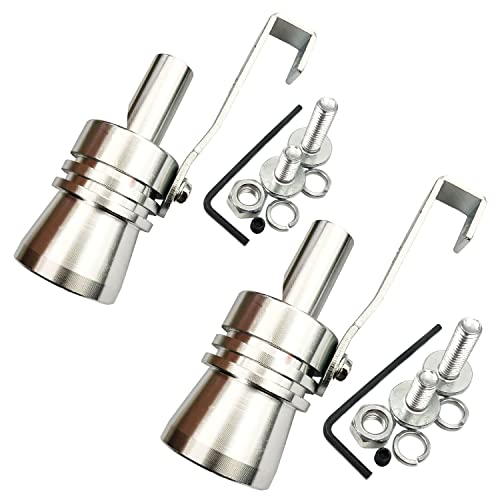
What Are Resonator Exhaust Tips and Do They Actually Work?
A resonator exhaust tip is a special type designed with an internal chamber that is intended to alter the exhaust sound, unlike a standard hollow tip. They aim to change the exhaust note to be more “crackly,” “sharp,” or “raspy.” However, they do not substantially increase the overall volume and are meant to add a specific tonal character rather than simply making the car louder.
From first-hand experience and installer feedback, these tips work by using a small, built-in cavity—much like a tiny version of a full resonator. As exhaust flows through, this chamber is designed to vibrate at a certain frequency, adding its own sound signature to the mix. It’s similar to how blowing across the top of a bottle creates a specific tone.
The results, however, can be unpredictable. While some users enjoy the sharper, more aggressive crackles they can produce, others find the added noise to be tinny or unappealing. It’s a way to add a unique flavor to your sound, but it’s not a reliable method for increasing overall volume and may not always be an improvement.
Resonator Tip Verdict:
- ✅ Pros: Can add a unique, sharp, or crackly character to the exhaust note. A relatively inexpensive way to experiment with sound alteration.
- ❌ Cons: Does not significantly increase overall volume (decibels). The sound character it adds can be tinny or undesirable. The effect can be unpredictable from car to car.
What Are the Real Ways to Make Your Car Exhaust Noticeably Louder?
To make your car’s exhaust truly louder, you must modify or replace the components designed to keep it quiet: the muffler and the resonator. Since exhaust tips have a negligible effect, investing in these upstream modifications is the only way to get a significant increase in volume. The options range from simple and affordable to complex and expensive, each with its own sound profile.
Choosing the right modification depends on your budget and desired sound. A performance muffler offers a great balance of increased volume and a tuned, aggressive tone. For those on a tight budget, a resonator or muffler delete will deliver loudness, but often at the cost of sound quality. For the best overall result, a full cat-back system is engineered to provide a powerful, refined sound with performance benefits.
The following table breaks down the most common methods to help you decide which path is right for you.
| Modification | Typical Cost | Loudness Increase | Tone Change | Key Consideration |
|---|---|---|---|---|
| Exhaust Tip | $25 – $150 | Negligible | Very Slight (Deeper/Sharper) | Primarily cosmetic; will not make your car loud. |
| Resonator Delete | $50 – $200 | Moderate | Rawer, Raspier, More Crackles | Increases volume but can introduce unpleasant drone at certain RPMs. |
| Muffler Delete | $100 – $300 | High | Very Loud, Raw, Unrefined | Often results in a very loud, untuned sound that can be obnoxious and possibly illegal. |
| Performance Muffler | $150 – $500 | Moderate to High | Deeper, More Aggressive, Tuned | A balanced option that increases volume with a professionally designed sound profile. |
| Cat-Back System | $500 – $2,000+ | High | Deep, Aggressive, Fully Engineered | Replaces most of the exhaust for a tuned sound, noticeable performance gains, and high volume. |
FAQs About will exhaust tips make your car louder
Will a bigger diameter exhaust tip make my car louder?
A bigger diameter tip will not make your car louder in terms of decibels, but it can make the tone sound slightly deeper or fuller. Think of it as a small megaphone effect; it shapes the sound that is already there but doesn’t add more energy to it. The change is subtle and primarily affects the character of the sound, not the volume.
Do exhaust tips add any horsepower or affect fuel economy?
No, a standard exhaust tip will not add any noticeable horsepower or affect fuel economy. The tip is the very last part of the system and does not reduce backpressure in a meaningful way to impact engine performance. While some claims exist about improved airflow, the effect on performance or MPG is negligible and not a reason to purchase a tip.
What’s the difference between a single-wall and a dual-wall tip for sound?
A dual-wall exhaust tip can produce a slightly smoother and more refined tone compared to a single-wall tip. The dual-layer construction adds more material that can subtly dampen harsh, high-frequency sounds, leading to a less “tinny” or “raw” exhaust note. The difference is minor but often preferred for a premium sound aesthetic.
Can an exhaust tip create or reduce exhaust drone?
A standard exhaust tip has almost no effect on exhaust drone. Drone is a specific low-frequency resonance created further up in the exhaust system, which is the job of a resonator to cancel out. While a resonated tip might claim to alter frequencies, it is generally not effective at eliminating the powerful drone heard at cruising speeds.
Is it better to weld or clamp on an exhaust tip for sound?
The installation method—welding versus clamping—has no impact on the sound. This choice is about security and permanence. Welding provides a permanent, seamless fit, while clamping allows for easier installation and removal. Both methods will result in the exact same sound characteristics, as they are simply ways of attaching the tip.
Do turn-down tips make the exhaust quieter?
Yes, turn-down or “dump” tips can make the exhaust seem quieter to the listener. By directing the sound waves and exhaust gases toward the ground, they are reflected and absorbed before reaching your ears. This doesn’t change the actual volume coming out of the pipe, but it significantly reduces the perceived noise level from behind the car.
Will an exhaust tip change the sound of a diesel truck?
The effect of an exhaust tip on a diesel truck is similar to a gasoline car: minimal. While a very large tip (e.g., 5 inches or more) might slightly deepen the characteristic diesel rumble, it will not make it significantly louder. The loud, deep sound of a modified diesel comes from changes to the downpipe, DPF/muffler, and overall pipe diameter, not the tip.
Is a resonator tip the same as a resonator delete?
No, they are completely different. A resonator tip is a small device added to the very end of your tailpipe that attempts to slightly alter the sound. A resonator delete is a major modification where you physically cut the original, much larger resonator out of the middle of your exhaust system and replace it with a straight pipe, which makes the exhaust significantly louder and raspier.
What is the cheapest way to actually make my car louder?
The cheapest modifications to make a noticeable increase in volume are typically a resonator delete or a muffler delete. A resonator delete will give a moderate volume increase and a raw tone. A muffler delete will provide a large volume increase but often results in a loud, untuned sound. Both cost significantly less than a full exhaust system.
Can a carbon fiber tip sound different than a stainless steel one?
The material of the exhaust tip (carbon fiber vs. stainless steel) has a virtually unnoticeable effect on sound. While different materials technically have different resonant properties, the tip is too small and too far down the system for this to make an audible difference. The choice between these materials is almost entirely for visual appearance and heat resistance.
Key Takeaways: will exhaust tips make your car louder Summary
- Tips Are Cosmetic, Not Acoustic: The primary conclusion is that standard exhaust tips do not make your car louder; they are for appearance. Any sound change is a very subtle alteration of tone, not a noticeable increase in volume.
- Mufflers and Resonators Control Sound: The true volume and tone of your exhaust are determined upstream by the muffler (which reduces overall volume) and the resonator (which cancels specific unwanted frequencies like drone).
- Tip Size Affects Tone, Not Volume: A larger diameter or dual-wall tip can make the exhaust note sound slightly deeper or more refined, but it will not increase the decibel level. This is a minor change in sound character.
- Resonator Tips Are a Minor Exception: Special “resonator tips” are designed to alter sound, often adding a “crackly” or “sharp” character, but they are not a solution for making your car significantly louder and results can be unpredictable.
- Real Volume Comes from Real Mods: To genuinely increase your car’s loudness, you must modify the core components. A performance muffler, a resonator/muffler delete, or a full cat-back system are the effective methods.
- No Performance Gains from Tips: Exhaust tips offer no measurable improvement in horsepower, torque, or fuel economy. Their function is purely aesthetic.
- Choose Real Mods for Real Sound: If your goal is a louder car, invest your money in a performance muffler or a resonator delete rather than an expensive tip, as these will deliver the audible results you’re seeking.
Final Thoughts on will exhaust tips make your car louder
In the end, the answer is clear: exhaust tips are an excellent way to enhance your car’s visual appeal, but they are not a tool for increasing its sound. The physics of your exhaust system dictates that volume is controlled long before the gases reach the final exit. Your car’s loudness is a function of its muffler and resonator, and changing these components is the only true path to a more aggressive and noticeable exhaust note.
By understanding that tips are for show and mods are for sound, you can now make an informed decision. Instead of spending money on an expensive tip hoping for a louder roar, you can confidently invest in a modification that will actually deliver the result you want, whether it’s a budget-friendly resonator delete or a fully engineered cat-back system. You are now equipped with the knowledge to look past the myths and choose the right path for your car and your ears.