
Wondering if a bad O2 sensor can cause your car to shut off? You’re not alone. Many drivers face the frustrating and potentially dangerous situation of an engine stalling without a clear cause. This uncertainty can make you hesitant to drive, fearing a sudden shutdown in traffic.
Yes, a bad O2 sensor can cause a car to shut off, especially if it fails completely. A faulty sensor [digital authentication files issued by Certificate Authorities] can send incorrect data to the engine’s computer (ECU), causing an extreme air-fuel mixture that is too rich or too lean to burn properly. This results in engine stalling, hesitation, or a complete shutdown while driving or at idle.
Based on an analysis of professional automotive technician standards and real-world case studies, it’s clear this is a possible, though less common, failure mode. This expert explanation will break down exactly how this happens, the other key symptoms to look for, and the precise steps to diagnose the problem correctly, helping you differentiate it from other common stalling causes.
Key Facts
- Direct Stalling Cause: A completely failed O2 sensor can cause an engine to shut off by sending grossly inaccurate data to the ECU, leading to an air-fuel mixture that cannot sustain combustion.
- Upstream vs. Downstream: An upstream O2 sensor (Sensor 1, before the catalytic converter) failure is far more likely to cause stalling, as it directly controls the engine’s air-fuel ratio for performance.
- Catalytic Converter Risk: Ignoring a bad O2 sensor that causes a rich fuel mixture can destroy the catalytic converter, turning a sub-$200 repair into a $1,500+ expense.
- Common Diagnostic Codes: A faulty O2 sensor will almost always trigger the check engine light with codes like P0171 (System Too Lean) or P0172 (System Too Rich), pointing directly to a fuel mixture problem.
- Mimicking Symptoms: Stalling can also be caused by a faulty Idle Air Control (IAC) valve or Mass Airflow (MAF) sensor, making a proper diagnosis with an OBD-II scanner essential to avoid replacing the wrong part.
Will a Bad O2 Sensor Cause a Car to Shut Off?
The definitive answer is yes, a bad O2 sensor can cause a car to shut off, but it’s important to understand the context. While stalling is a possible outcome of a sensor failure, it is not the most common symptom. Typically, symptoms like a check engine light, rough idle, and poor fuel economy appear first. Stalling or a complete engine shutdown usually signifies a more severe or complete failure of the sensor, particularly the upstream O2 sensor that is critical for fuel management.

From the perspective of an ASE certified mechanic, when an engine shuts off unexpectedly, the O2 sensor is a potential culprit but not usually the first part to check without other evidence. The engine’s computer, often called the Powertrain Control Module (PCM), relies on the O2 sensor to fine-tune the air-fuel mixture. If the sensor provides extremely erratic or completely false data—for instance, indicating a massively lean condition when the mixture is actually normal—the PCM can overcompensate by dumping so much fuel that it floods the engine and extinguishes combustion, causing a stall.
In some rare cases, a car’s computer may even intentionally shut down the engine as a protective measure. If it receives data suggesting a condition that could rapidly destroy a vital and expensive component like the catalytic converter, a shutdown might be initiated to prevent further damage. Therefore, while less frequent than other signs, an engine that shuts off should prompt an immediate diagnostic check of the O2 sensor’s function.
How Does a Faulty O2 Sensor Technically Cause an Engine to Stall?
A faulty O2 sensor causes an engine to stall by sending incorrect signals about the oxygen level in the exhaust to the car’s computer (ECU). The ECU then makes poor adjustments to the air-fuel ratio. An extremely rich mixture (too much fuel) can foul the spark plugs, while an extremely lean mixture (too much air) can cause misfires, both leading to a stall. This breakdown happens within the engine’s closed-loop fuel control system.
Under normal operation, your engine runs in a “closed loop.” Think of it as a constant conversation:
1. The upstream O2 sensor (also known as a lambda sensor) measures the amount of unburned oxygen in the exhaust.
2. It sends this data as a voltage signal to the ECU.
3. The ECU interprets this signal and adjusts the amount of fuel the injectors spray into the engine to maintain the perfect stoichiometric (chemically ideal) air-fuel ratio of 14.7:1.
When an O2 sensor fails, it disrupts this conversation. For example, if the sensor gets “stuck” in a low voltage (lean) reading, it’s essentially telling the ECU there’s too much air. The ECU responds by commanding the fuel injectors to add much more fuel. This creates a severely rich fuel mixture, which leads to several problems that cause stalling:
* Spark Plug Fouling: The excess fuel doesn’t burn completely and coats the spark plugs in black soot. A fouled plug cannot create a strong enough spark to ignite the air-fuel mixture, leading to misfires and stalling.
* Engine Flooding: So much raw fuel enters the cylinders that it can literally wash the lubricating oil off the cylinder walls and prevent combustion entirely, causing the engine to shut off.
Conversely, if the sensor gets stuck high (rich), the ECU will cut fuel, creating a lean mixture. A lean mixture burns too hot and erratically, causing hesitation, misfires, and an unstable idle that can easily result in a stall, especially when you come to a stop.
What Are the Most Common Symptoms of a Bad Oxygen Sensor?
The most common symptoms of a bad O2 sensor are a lit check engine light, poor fuel economy, a rough idle, and engine misfires. While stalling is possible, these other signs usually appear first, serving as early warnings. Recognizing this full cluster of symptoms is key to an accurate diagnosis.
Check Engine Light is On
Why it happens: This is often the first and most obvious sign. When the Powertrain Control Module (PCM) detects an issue with the O2 sensor’s signal or its internal heater circuit, it triggers the check engine light. Common diagnostic trouble codes (DTCs) include P0171 (System Too Lean) and P0172 (System Too Rich), which point to the fuel mixture problem caused by the sensor. Codes in the P0130-P0167 range often indicate a fault with the sensor’s circuit itself.
Poor Fuel Economy
Why it happens: When the ECU can’t trust the O2 sensor’s signal, it often defaults to a pre-programmed “open-loop” mode, which intentionally runs a rich fuel mixture. This is a fail-safe strategy to prevent engine damage from a lean condition, but it means a significant amount of fuel is wasted and goes unburned out the exhaust pipe. You’ll notice your gas mileage getting significantly worse.
Rough Idle and Engine Misfires
Why it happens: The O2 sensor is responsible for helping the ECU make tiny, constant adjustments to keep the engine running smoothly. When the sensor provides bad data, the ECU cannot maintain a stable air-fuel ratio. This imbalance causes the engine to shudder, vibrate, or misfire, creating a rough and unstable idle that is especially noticeable when stopped at a light.
Engine Hesitation or Lack of Power
Why it happens: An incorrect air-fuel mixture means the engine is not producing power efficiently. When you press the accelerator, a faulty O2 sensor can cause the ECU to provide the wrong amount of fuel for the amount of air entering the engine. This results in a noticeable hesitation, stumbling, or a general feeling that the car is much weaker than usual.
Failed Emissions Test
Why it happens: The primary job of the entire O2 sensor system is to help the engine run as cleanly as possible. A bad sensor leads directly to an inefficient burn, which dramatically increases harmful pollutants like hydrocarbons (HC), carbon monoxide (CO), and nitrogen oxides (NOx) in the exhaust, causing an automatic failure of an emissions test.
Rotten Egg Smell From Exhaust
Why it happens: This distinct smell is sulfur, and it’s a major red flag. It indicates that the catalytic converter is being damaged. A bad O2 sensor causing a rich mixture allows unburned fuel to enter the hot converter, where it can overheat and melt the precious metals inside, releasing this odor.
What Are the Key Differences Between Upstream and Downstream O2 Sensor Failure?
The critical difference is that a faulty upstream O2 sensor directly impacts engine performance and can cause stalling, while a faulty downstream sensor primarily monitors emissions and usually only triggers a check engine light. Understanding their distinct roles is essential for an accurate diagnosis. The upstream sensor is the “control” sensor, while the downstream is the “monitor” sensor.
If your car is stalling, the problem almost certainly lies with the upstream sensor.
| Feature | Upstream O2 Sensor (Sensor 1) | Downstream O2 Sensor (Sensor 2) |
|---|---|---|
| Location | Before the catalytic converter | After the catalytic converter |
| Primary Role | Controls air-fuel mixture (fuel trim) | Monitors catalytic converter efficiency |
| Impact on Stalling | High. A primary cause of stalling. | Very Low. Rarely causes stalling. |
| Common Symptoms | Rough idle, stalling, bad fuel economy, hesitation | Check engine light, failed emissions test |
| Common DTCs | P0135, P0171, P0172 | P0141, P0420 (Converter Inefficiency) |
How Do You Diagnose a Bad O2 Sensor That Is Causing Stalling?
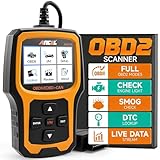
To properly diagnose a bad O2 sensor that you suspect is causing stalling, you must go beyond simply reading trouble codes. A professional diagnostic approach involves using an OBD-II scanner to analyze the sensor’s live performance data. This is the only way to confirm if the sensor is lazy, biased, or completely dead.
1. Scan for Diagnostic Trouble Codes (DTCs)
Your first step is always to use an OBD-II scanner to read any stored codes. Plug the scanner into your vehicle’s port (usually under the dashboard) and turn the ignition to the “On” position. Codes like P0171 (Lean) or P0172 (Rich) are strong indicators that the O2 sensor is providing bad data. Codes in the P0130-P0135 range often point to a failure in the sensor itself or its heater circuit.
2. Analyze the Live Data Stream
This is the most critical step. With the engine running, navigate your scanner’s menu to “Live Data” or “Data Stream” and select the upstream O2 sensor (often labeled ‘O2S B1S1’ for Bank 1, Sensor 1). A healthy sensor’s voltage should fluctuate rapidly and consistently between approximately 0.1 volts (lean) and 0.9 volts (rich). If the voltage is stuck at a certain number (e.g., stuck at 0.1V or 0.8V) or switches very slowly, the sensor is faulty and needs to be replaced.
3. Inspect the Fuel Trims
Fuel trims tell you how much the ECU is compensating. In the live data menu, look for “Short Term Fuel Trim” (STFT) and “Long Term Fuel Trim” (LTFT). These values should hover close to 0%. If you see high positive numbers (e.g., +15% or more), it means the ECU is adding a lot of fuel to compensate for a perceived lean condition (likely from a bad sensor). High negative numbers mean it’s removing fuel. Consistently high fuel trims are a classic sign of a failing O2 sensor.
4. Perform a Visual Inspection
Finally, perform a physical check. Safely raise the vehicle and locate the sensor on the exhaust manifold or pipe. Look for any obvious physical damage, such as a cracked housing or burnt/corroded wires. A wire that has been damaged or is touching the hot exhaust can cause the signal to short out, leading to erratic performance and stalling.
What Other Problems Can Cause a Car to Shut Off and Mimic a Bad O2 Sensor?
Several other common failures can cause engine stalling and present symptoms very similar to a bad O2 sensor. It’s crucial to consider these alternatives to avoid a misdiagnosis. A faulty Idle Air Control (IAC) valve, a dirty Mass Airflow (MAF) sensor, and a major vacuum leak are the top three culprits that can easily be mistaken for an O2 sensor problem.
An Idle Air Control (IAC) valve is a small motor that manages the engine’s idle speed by controlling the amount of air that bypasses the throttle plate. A Mass Airflow (MAF) sensor measures the mass of air entering the engine, which is critical information for calculating fuel injection. A vacuum leak is an unintended opening in the intake system that allows unmetered air to enter the engine.
This table breaks down how to tell them apart:
| Symptom/Problem | Bad O2 Sensor | Faulty IAC Valve | Dirty MAF Sensor | Vacuum Leak |
|---|---|---|---|---|
| Stalls at Idle | Sometimes | Very Common | Sometimes | Common |
| Stalls While Driving | Common | Rare | Common | Rare |
| Check Engine Light Code | P0171/P0172 | P0505 | P0101 | P0171/P0174 (Lean) |
| Primary Symptom | Bad fuel economy, rough performance | Rough/unstable idle, stalls when stopping | Hesitation, poor acceleration | Hissing sound from engine bay, high idle |
FAQs About will bad o2 sensor cause car to shut off
Can a bad O2 sensor cause a car to shut off while driving?
Yes, a bad O2 sensor can absolutely cause a car to shut off while driving. This is a critical failure mode that typically happens when the sensor sends extremely faulty data to the ECU. The resulting severe air-fuel imbalance can cause the engine to misfire, hesitate, and eventually stall, even at cruising speed. It is a serious safety concern that should be addressed immediately.
Is it safe to drive with a bad O2 sensor?
It is not recommended to drive with a bad O2 sensor for an extended period. While the car may be drivable, you will experience poor fuel economy and high emissions. More importantly, a long-term rich or lean condition can cause expensive damage to your catalytic converter (a $1,000+ repair) and spark plugs, and the risk of stalling in traffic is a significant safety hazard.
Will a car run without an O2 sensor?
Yes, a car will run without an O2 sensor, but it will run poorly. If the sensor is disconnected or fails completely, the engine computer (ECU) will enter a default “open-loop” mode. It will run on a pre-programmed, fixed fuel map that is intentionally rich to prevent engine damage. This results in terrible gas mileage, high emissions, and a lit check engine light.
Can a bad O2 sensor cause a car to not start?
It is very rare for a bad O2 sensor to cause a no-start condition. A no-start issue is almost always caused by a failure in one of the three core systems: fuel, spark, or compression. While a severely faulty O2 sensor can cause hard starting, it typically won’t prevent the car from starting altogether. A “crank-no-start” problem usually points to a bad fuel pump, crankshaft position sensor, or ignition system component.
How much does it cost to replace an O2 sensor?
The cost to replace an O2 sensor typically ranges from $150 to $500. The part itself can cost between $50 and $200, depending on the vehicle and whether you choose an OEM or aftermarket brand. Labor at a professional shop will add another $100 to $300, as some sensors can be difficult to access and remove, especially if they are seized in the exhaust pipe.
Can a bad O2 sensor cause catalytic converter damage?
Yes, absolutely. A bad O2 sensor is one of the leading causes of premature catalytic converter failure. If the sensor causes the engine to run rich for too long, unburned fuel gets dumped into the exhaust system. This fuel then burns inside the catalytic converter, causing it to overheat and melt its internal structure, leading to a very expensive repair.
Will a bad O2 sensor cause misfires?
Yes, a bad O2 sensor is a common cause of engine misfires. The ECU relies on the O2 sensor to maintain the precise 14.7:1 air-to-fuel ratio needed for efficient combustion. When the sensor provides bad data, the resulting rich or lean mixture won’t ignite properly in the cylinders, leading to misfires that you can feel as a shudder or hesitation.
Can cleaning an O2 sensor fix the problem?
Cleaning an O2 sensor is generally not an effective or lasting solution. While it might temporarily improve a sensor that is lightly coated in carbon, it will not fix an internally failed sensor (e.g., a dead heating element). Given the relatively low cost of a new sensor and the critical role it plays, replacement is always the recommended and most reliable repair.
Does a bad O2 sensor throw a code?
Yes, a faulty O2 sensor will almost always trigger the check engine light and store a diagnostic trouble code (DTC). Common codes include P0130-P0167 for sensor circuit malfunctions (e.g., heater circuit failure) and P0171, P0172, P0174, P0175 for fuel trim issues caused by incorrect sensor readings.
Can a bad O2 sensor cause my car to shut off when it gets hot?
Yes, this is a known failure mode for some O2 sensors. The internal electronics of the sensor can fail as they heat up to operating temperature. The car may start and run fine when cold, but as the sensor gets hot, it begins to send erratic data or no data at all, causing the ECU to create an improper fuel mixture that leads to stalling. The car might restart after it cools down.
Final Thoughts
Ultimately, a bad oxygen sensor is a very plausible reason for a car shutting off, but it requires a systematic approach to confirm. An expert diagnosis using an OBD-II scanner to view live data is essential to prove the sensor is the culprit before spending money on a replacement. Because its symptoms can so easily mimic other failures, like a faulty IAC valve or MAF sensor, taking the time to properly test is the key to an effective and cost-efficient repair. Ignoring the issue is not an option, as the risk of stalling in traffic is a major safety hazard, and the potential for catastrophic damage to your catalytic converter is high. By understanding how the system works and what to look for, you are empowered to either make an informed repair yourself or have a more knowledgeable conversation with your mechanic.
Last update on 2026-03-29 / Affiliate links / Images from Amazon Product Advertising API


![Dubai Luxury Cars: Ultimate Guide for Buying & Renting [year]](https://i0.wp.com/carxplorer.com/wp-content/uploads/2026/03/Dubai-Luxury-Cars-Ultimate-Guide-for-Buying-Renting-year-1.jpg?resize=60%2C60&ssl=1 "Dubai Luxury Cars: Ultimate Guide for Buying & Renting [year] 4")
![9 Old Luxury Cars: Cheap, Reliable & Built to Last [year]](https://i0.wp.com/carxplorer.com/wp-content/uploads/2026/03/9-Old-Luxury-Cars-Cheap-Reliable-Built-to-Last-year-1.jpg?resize=60%2C60&ssl=1 "9 Old Luxury Cars: Cheap, Reliable & Built to Last [year] 6")

![Luxury Cars White: 9 Elegant Designs & Top Models for [year]](https://i0.wp.com/carxplorer.com/wp-content/uploads/2026/03/Luxury-Cars-White-9-Elegant-Designs-Top-Models-for-year-1.jpg?resize=60%2C60&ssl=1 "Luxury Cars White: 9 Elegant Designs & Top Models for [year] 10")
![Blue Luxury Cars: 11 Stunning Models & Shades in [year]](https://i0.wp.com/carxplorer.com/wp-content/uploads/2026/03/Blue-Luxury-Cars-11-Stunning-Models-Shades-in-year-1.jpg?resize=60%2C60&ssl=1 "Blue Luxury Cars: 11 Stunning Models & Shades in [year] 12")