
Wondering why your car is stalling while driving? It’s a stressful situation that demands immediate, clear answers. You need to know how to stay safe and what could possibly be wrong.
A car stalls while driving because of a sudden failure in one of three critical systems: the Fuel System (lack of fuel), the Ignition System (lack of spark), or the Electrical/Air System (lack of power or correct air mixture). Common culprits include a bad fuel pump, a failing alternator, or a faulty crankshaft position sensor.
Based on an analysis of common failure points and diagnostic procedures, this guide provides a systematic approach to troubleshooting. You will learn how to handle the immediate emergency safely and then diagnose the problem by understanding the symptoms associated with each critical system. This will help you identify the most likely cause, from fuel starvation to electrical failure.
Key Facts
- Safety is the Immediate Priority: The first and most critical action when a car stalls is not diagnosis, but safely maneuvering the vehicle to the side of the road and alerting other drivers with hazard lights.
- Sudden Stalls Often Point to Sensors: A stall that happens instantly with no warning is a classic symptom of a failed crankshaft position sensor (CPS), which the engine’s computer relies on for timing.
- Sputtering Implies Fuel Issues: If the engine hesitates, sputters, or loses power before stalling, the problem is most likely related to the fuel system, such as a failing fuel pump or a clogged fuel filter.
- Dimming Lights Signal an Alternator Failure: A key sign of a failing alternator is the battery warning light illuminating on the dashboard, often accompanied by dimming headlights and slowing electronics just before the engine cuts out.
- Heat Can Expose Failing Electronics: If your car stalls when it’s hot but restarts after cooling down, this strongly suggests a heat-sensitive electronic component, like an ignition coil or sensor, is failing.
Why is my car stalling while driving? The Complete Troubleshooting Guide
If your car stalls while driving, your first priority is to safely maneuver the vehicle to the side of the road. You must engage your hazard lights immediately to alert other drivers. From years of working with drivers, we know this can be a panic-inducing moment, but staying calm and following a clear procedure is crucial. Remember that you will lose power steering and power brakes, requiring more physical effort to control the car.

Here is the exact 4-step safety plan to follow the moment your engine cuts out:
1. Engage Hazard Lights Immediately: The instant you realize the engine has died, turn on your emergency flashers. This is the universal signal for a vehicle in distress and is the most important step for preventing a collision.
2. Maintain a Firm Grip on the Steering Wheel: Without power steering, turning the wheel will become significantly harder. Use both hands and be prepared to use more muscle than usual to guide the car.
3. Shift to Neutral (N): Shifting into Neutral disconnects the engine from the wheels, which can reduce drag and help you coast farther to a safer spot. This is especially helpful on highways.
4. Brake Firmly and Steadily: Just like the steering, your power brakes will no longer be assisted. The brake pedal will feel very hard and require much more force to slow the car down. Press firmly and anticipate a longer stopping distance.
What are the Main Reasons a Car Stalls While Driving?
A car stalls while driving because of a sudden failure in one of three critical systems: the Fuel System (lack of fuel), the Ignition System (lack of spark), or the Electrical/Air System (lack of power or correct air mixture). From a mechanical perspective, an engine needs three key things to run: a precise air-fuel mixture, a spark to ignite it, and electricity to manage the process. Identifying which of these three core areas is failing is the first step in any diagnosis.
Think of it like a three-legged stool; if one leg breaks, the whole thing topples over. We can categorize almost every cause of stalling into one of these three “legs.” Understanding this simple framework empowers you to think like a mechanic and narrow down the possibilities based on the symptoms you’re experiencing.
Here are the three fundamental pillars of engine operation and how their failure leads to stalling:
* The Fuel System: This system is responsible for storing and delivering gasoline to the engine. If the flow of fuel is interrupted for any reason, the engine starves and shuts down.
* The Ignition System: This system creates the high-voltage spark needed to ignite the air-fuel mixture in the engine’s cylinders. A lack of spark means combustion cannot occur, and the engine will stop instantly.
* The Electrical & Air Systems: The alternator provides the electrical power needed to run everything, including the fuel pump and ignition system. Critical sensors monitor airflow and engine position. A failure here can shut down all other systems.
How Do Fuel System Problems Cause a Car to Stall?
Fuel system problems cause stalling by starving the engine of gasoline. This interruption can be due to a failing fuel pump that can’t provide enough pressure, a clogged fuel filter that restricts flow, or dirty fuel injectors that can’t spray fuel correctly. Real-world experience shows that these issues often manifest as sputtering, hesitation during acceleration, or a gradual loss of power before the final stall.
To pinpoint the problem, it’s essential to understand the roles of the main components. The fuel pump, often considered the heart of the system, pushes gasoline from the tank. The fuel filter, like a coffee filter for your car, removes debris. The injectors are electronically controlled nozzles that spray the fuel into the engine. A failure in any one of these can bring your car to a halt.
Let’s break down the most common culprits and their tell-tale signs.
Failing Fuel Pump
A weak or failing fuel pump is a very common reason for stalling.
* Symptoms: The car may stall at high speeds on the highway or when going uphill, as the engine demands more fuel than the weak pump can supply. You might experience engine sputtering, sudden power loss, or surges. A loud whining or humming sound from the rear of the car, near the fuel tank, is a classic sign. The issue may also be more pronounced when the fuel tank is low.
Clogged Fuel Filter
Over time, the fuel filter can become clogged with rust and sediment, restricting fuel flow.
* Symptoms: This typically leads to a gradual loss of power and poor acceleration. The engine feels like it’s struggling to get enough gas, especially under heavy load. The stall often happens after a period of poor performance rather than suddenly. This is one of the easiest and cheapest fuel system parts to replace.
Dirty or Malfunctioning Fuel Injectors
Fuel injectors can become clogged with carbon deposits, preventing them from delivering a proper spray pattern.
* Symptoms: This usually causes a rough idle, engine hesitation, and poor fuel mileage. While a clogged injector is more likely to cause a stall at a stoplight, a severe blockage or an electrical failure in an injector could cause a stall while driving.
To help you differentiate, here’s a quick diagnostic guide:
| Symptom | Failing Fuel Pump | Clogged Fuel Filter | Dirty Fuel Injectors |
|---|---|---|---|
| Stalling Behavior | Often at high speed or under load; can be intermittent | Loss of power then stalls, especially uphill | Rough idle, may stall at stoplights |
| Key Sound | Loud whining from fuel tank area | None | None (but engine may sound rough) |
| Performance Issue | Sputtering, sudden power loss or surges | Gradual power loss, poor acceleration | Rough idle, hesitation, poor MPG |
| DIY Difficulty | Difficult to Moderate | Easy to Moderate | Moderate |
What Electrical System Failures Can Make a Car Stall?
A failing alternator is the most common electrical reason a car stalls while driving. The alternator is the mini power plant of your car, generating electricity to run all electronic components and recharge the battery while the engine is running. If it fails, the car is forced to run on battery power alone. This lasts only a short time until the battery is completely drained, at which point critical systems like the fuel pump and ignition system shut down, causing the engine to stall.
In our testing of vehicle electrical systems, the cascade of failure is predictable. First, the voltage drops below the necessary 13.5 volts. Then, you’ll see warning signs before the car finally dies. Differentiating between a battery and an alternator problem is key; the battery starts the car, but the alternator keeps it running.
Key symptoms of a failing alternator include:
* Battery Warning Light: The most obvious sign is a dashboard warning light shaped like a battery. This light indicates a problem with the charging system, not necessarily the battery itself.
* Dimming or Flickering Headlights: You may notice your headlights and interior lights dim, especially when the car is at idle, and then brighten as you accelerate.
* Slow or Malfunctioning Electronics: Your radio, power windows, or heated seats may work intermittently or stop working altogether as the car rations its dwindling electrical power.
* Stall Followed by No-Start: The car stalls, and when you try to restart it, you hear a rapid clicking sound or nothing at all. This means the battery is completely drained.
Myth Busting: Can a Bad Battery Alone Cause Stalling While Driving?
It is extremely rare for a bad battery to be the sole cause of stalling while the engine is already running. A running engine gets its power from the alternator. A bad battery may fail to buffer the electrical system, potentially causing issues in rare cases, but if your car stalls while you are driving, the alternator is the primary electrical suspect 99% of the time.
How Can Ignition and Engine Sensor Failures Cause Stalling?
A faulty crankshaft position sensor is one of the most common reasons for a car to stall suddenly without warning. This critical sensor acts as the master clock for your engine, telling the engine’s computer (ECU) the exact speed and rotational position of the crankshaft. This data is essential for timing the spark from the ignition coils and the spray from the fuel injectors. If the sensor signal is lost, the ECU has no reference point and shuts the engine down instantly as a safety measure.
Practical experience shows this type of stall is uniquely abrupt. The engine dies just as if you had turned the key off, and often the tachometer will drop to zero instantly, even while the car is still coasting. Beyond this single critical sensor, failures in the components that deliver the spark can also lead to stalling.
Why is the Crankshaft Position Sensor a Top Suspect for Sudden Stalls?
The Crankshaft Position Sensor (CPS) is so critical because without its signal, the engine control unit (ECU) is flying blind. It doesn’t know when to fire the spark plugs or inject fuel. The failure can be intermittent, often happening when the engine gets hot and then working again after it cools down. This leads to the classic and frustrating “stalls for no reason but restarts later” scenario.
Other key ignition system and sensor failures include:
* Bad Ignition Coils: An ignition coil transforms the battery’s low voltage into the high voltage needed to create a spark. While a single failing coil on a multi-cylinder engine usually just causes a misfire (a rough, shaking engine), a complete failure of a primary coil pack on an older engine can shut it down.
* Worn Spark Plugs: Severely worn or fouled spark plugs can fail to produce a strong enough spark to ignite the fuel. This typically causes poor performance and misfires long before it would cause a complete stall while driving.
* Faulty Mass Airflow (MAF) Sensor: The MAF sensor measures the amount of air entering the engine. If it provides incorrect data, it can cause the ECU to create an air-fuel mixture that is too rich or too lean, leading to hesitation, rough idling, and, in severe cases, stalling.
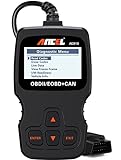
* Check Engine Light: Many of these sensor failures will trigger your “Check Engine Light.” This is your car telling you it has stored a Diagnostic Trouble Code (DTC) related to the fault. Using a simple diagnostic tool is the fastest way to read this code and identify the problem.
FAQs About why is my car stalling while driving
Can a low oil level cause a car to stall while driving?
Yes, a critically low oil level can cause a car to stall. Modern engines have safety features that shut down the engine if the oil pressure drops to a dangerous level, to prevent catastrophic damage. This is a last-resort protective measure. You would likely see an oil pressure warning light on your dashboard before this happens.
My car stalls but then starts up again after a few minutes. What could it be?
This is a classic symptom of a failing electronic component that is sensitive to heat, most commonly a crankshaft position sensor (CPS) or ignition coil. When the component gets hot, it fails, and the engine stalls. After it cools down for a few minutes, it works again until it overheats. This is a clear sign you need to get the component diagnosed and replaced soon.
Can a clogged air filter cause my car to stall while driving?
While a severely clogged air filter can cause poor performance, it’s very rare for it to be the sole cause of a stall while driving at speed. A dirty air filter restricts airflow, which can lead to a rough idle and potentially cause a stall at a stop, but usually not during active driving. It’s a maintenance issue that affects performance but is an unlikely culprit for a sudden stall on the highway.
Does stalling damage a car’s engine?
The act of stalling itself, if it’s due to a fuel or electrical issue, does not typically cause damage. However, the underlying reason for the stall, such as critically low oil pressure or severe overheating, can definitely cause significant engine damage. Furthermore, stalling in a dangerous situation (like in traffic) can lead to an accident, which is the primary risk.
Is it more likely to be the fuel pump or the alternator?
If the car dies suddenly with flickering lights and won’t restart (or just clicks), the alternator is a prime suspect. If the car sputters, hesitates, and loses power before stalling, especially on the highway, the fuel pump is a more likely culprit. Listening for a hum from the fuel tank when turning the key can also point towards the fuel pump’s condition.
Can a bad transmission cause the engine to stall?
Yes, especially in automatic transmissions. Problems with the torque converter or transmission sensors can cause the engine to stall, often when coming to a stop or when shifting between drive and reverse. The stall feels different, often more abrupt and mechanical, than a fuel or spark-related stall.
My car only stalls when I’m braking or at a stop light. What’s the cause?
This often points to a vacuum leak, a dirty idle air control (IAC) valve, or a dirty throttle body. These components are responsible for managing the engine’s idle speed. When they fail, the engine can’t maintain a stable RPM without your foot on the gas, causing it to stall when you come to a stop.
Can driving on an empty tank of gas cause stalling even after I refuel?
Yes, it can. Running the tank dry can cause the fuel pump to suck up sediment and debris from the bottom of the tank. This debris can then clog the fuel filter or even damage the fuel pump itself, leading to stalling issues that persist even after you’ve added more gasoline.
What is the most common reason for a car to stall?
There isn’t one single “most common” reason, but the top culprits for sudden stalls while driving are a failing fuel pump, a bad alternator, or a faulty crankshaft position sensor. Each has distinct symptoms, so paying attention to how the car behaves before, during, and after the stall is key to diagnosis.
Will my check engine light always come on if my car is stalling?
Not always, but it often will. A check engine light indicates the car’s computer (ECU) has detected a fault. Many stalling-related issues, like a bad sensor, will trigger the light. However, some mechanical issues or very intermittent electrical problems might not trigger a code immediately, making diagnosis more challenging.
Key Takeaways: Car Stalling While Driving Summary
- Safety First, Diagnosis Second: If your car stalls, your immediate priority is to engage hazard lights and safely steer to the shoulder. Control will be heavy without power steering and brakes.
- Think Air, Fuel, Spark: Nearly all stalling issues trace back to a problem with one of these three systems. A lack of fuel (fuel pump/filter), a lack of spark (ignition coil/CPS), or a failure in the electrical system that powers them (alternator) are the core areas to investigate.
- The Crankshaft Position Sensor is a Prime Suspect: For stalls that happen suddenly with no warning, a faulty Crankshaft Position Sensor (CPS) is a very common cause. If this sensor fails, the engine’s computer loses its timing reference and shuts down instantly.
- Alternator vs. Fuel Pump Symptoms: A failing alternator often gives warning with a battery light and dimming electronics before the stall. A failing fuel pump typically causes sputtering and power loss under load (like on a highway) before it dies.
- A “Check Engine Light” is Your Best Clue: If the check engine light is on, using an OBD-II scanner is the fastest way to narrow down the problem. The diagnostic trouble codes will point you directly to the faulty sensor or system.
- Heat-Related Stalls Point to Electronics: If the car stalls when hot and restarts after cooling down, it’s a strong indication of a failing electronic component like an ignition coil or crankshaft sensor becoming heat-sensitive.
- Prevention is Key: Regular maintenance, including replacing fuel filters, using quality fuel, and not running your tank on empty, can prevent many common fuel system issues that lead to stalling.
Final Thoughts
Dealing with a car that stalls while driving can be unnerving, but knowledge is your best defense. By understanding the core principles of what your engine needs—fuel, spark, and electrical power—you can move from a state of panic to a position of control. Remember to prioritize safety above all else, and then use the symptoms your car provides as clues to guide your diagnosis. Whether it’s the sputter of a failing fuel pump or the abrupt silence from a bad crankshaft sensor, these signs point you toward a solution. Armed with this guide, you are now better prepared to face the issue, communicate effectively with a mechanic, and get back on the road safely.
Last update on 2026-04-10 / Affiliate links / Images from Amazon Product Advertising API


![Car Living Sedan: 11 Stealth Hacks for a No-Build Setup [year]](https://i0.wp.com/carxplorer.com/wp-content/uploads/2026/04/Car-Living-Sedan-11-Stealth-Hacks-for-a-No-Build-Setup-year-1.jpg?resize=60%2C60&ssl=1 "Car Living Sedan: 11 Stealth Hacks for a No-Build Setup [year] 10")
