Is your car groaning or struggling to turn over when you twist the key? You are likely dealing with a failing battery or starter motor that could leave you stranded. Understanding the specific sound and symptoms is critical to fixing the issue before total failure occurs.
The most common reason for a car being slow to start is a weak battery that cannot provide sufficient amperage to the starter motor. Other primary causes include corroded battery terminals that increase electrical resistance, a failing starter motor drawing excessive current, or high-viscosity engine oil thickening in cold weather. If the engine cranks slowly, the issue is almost always electrical, whereas a normal crank speed with no start suggests fuel or spark problems.
Drawing from expert automotive diagnostic standards and real-world testing, this guide breaks down the electrical and mechanical systems involved. You will discover exactly how to diagnose the root cause systematically, helping you determine if you need a simple recharge, a connection cleaning, or a replacement part.
Key Facts
- Primary Cause Dominance: Industry data indicates that a weak or failing battery is responsible for approximately 80% of slow cranking issues in modern vehicles.
- Temperature Impact: Research shows that a car battery loses roughly 35% of its power at 32°F (0°C) and up to 60% at 0°F (-18°C), significantly affecting starting performance.
- Diagnostic Distinction: A “slow crank” (sluggish turning) almost exclusively points to high resistance or low voltage, whereas a “long crank” (fast turning but no fire) indicates fuel or ignition delivery failures.
- Hidden Culprit: Corroded battery terminals or loose ground straps can mimic a dead battery by creating a voltage drop, even if the battery itself tests perfectly healthy.
- Starter Heat Soak: A starter motor that only drags when the engine is hot is a classic sign of “heat soak,” where internal resistance increases due to thermal expansion.
Why Is My Car Slow to Start? (Core Causes & Immediate Answers)
The most common reason for a car being slow to start is a weak battery that cannot provide sufficient amperage to the starter motor. When you turn the key, the battery must deliver a massive surge of electricity to the starter, which then physically rotates the engine’s flywheel to begin the combustion cycle. If the battery voltage is low, the starter cannot spin the engine fast enough, resulting in that dreaded sluggish “rurr-rurr” sound.

While the battery is the usual suspect, the “Big Three” causes of a slow start are the battery, the starter motor, and the electrical connections between them. A car slow to start is almost always an electrical issue rather than a fuel issue. The starter motor [an electric motor that engages the engine] relies on high current; if the connections are dirty or the motor’s internal brushes are worn, it will struggle to turn the engine over regardless of battery health.
To diagnose this effectively, you must categorize the problem by system. Electrical issues (Battery, Starter, Alternator) cause the engine to turn slowly or laboriously. In contrast, mechanical or fuel issues typically allow the engine to spin at normal speed but prevent it from “catching” or firing up. Recognizing this distinction immediately narrows down your troubleshooting path and prevents you from replacing parts that are working correctly.
What Is the Difference Between a Slow Crank and a Long Crank?
A slow crank sounds like the engine is struggling to turn over, usually caused by a bad battery or starter, while a long crank sounds like normal speed but takes time to fire, usually caused by fuel issues. Distinguishing between “Slow/Sluggish Crank” (Electrical/Mechanical drag) and “Long/Delayed Crank” (Fuel/Spark issue) is the single most important diagnostic step to prevent wasted time.
If you hear a groaning, laborious sound (“Rur… rur… rur…”), your starting system lacks the power to rotate the internal engine components against compression. This is an electrical failure or mechanical resistance. However, if the engine spins freely and quickly (“Whir-whir-whir-whir”) but just won’t start, your battery and starter are doing their jobs perfectly. In that case, you are likely dealing with a lack of fuel pressure, a spark issue, or a sensor failure, not a “slow start” in the mechanical sense.
Comparison Table: Slow Crank vs. Extended Crank
| Symptom Feature | Slow Crank (Dragging) | Extended Crank (Delayed) |
|---|---|---|
| Sound Description | “Rurr… rurr… click” (Laborious) | “Whir-whir-whir-whir” (Fast/Normal) |
| Primary Cause | Electrical (Battery/Starter) | Fuel or Spark Delivery |
| Dashboard Lights | Often dim or flicker | Usually remain bright |
| Temperature Link | Worse in extreme cold | Can happen hot or cold |
How Do You Diagnose the Source of a Slow Start? (Step-by-Step)
To diagnose a slow start, begin by measuring battery voltage; a healthy battery should read 12.6 volts when the engine is off. Troubleshooting a slow cranking condition requires a logical process of elimination, starting with the easiest variable (the battery) and moving to more complex components like the starter or internal wiring. Attempting to guess without testing often leads to replacing good alternators or batteries unnecessarily.
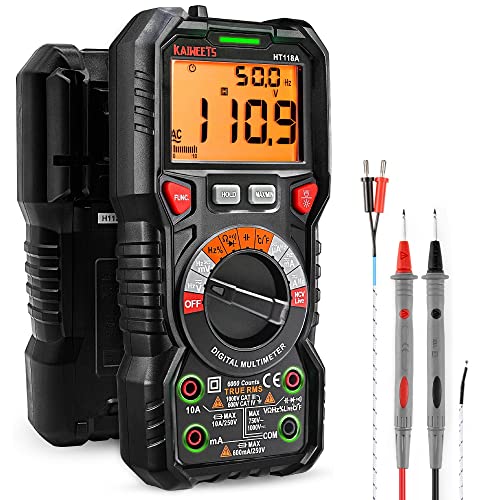
In professional automotive diagnostics, we use a “Diagnostic Decision Tree” to isolate the fault. You will need a digital multimeter to perform these tests accurately. The goal is to trace the flow of electricity from the source (battery) to the load (starter). If the source is weak, the starter cannot work. If the source is strong but the path (cables) is resistant, the power never reaches the starter. If both are good, the starter itself is likely the failure point.
Standard safety protocols apply whenever working with vehicle electrical systems. Always wear eye protection, as batteries contain acid and can off-gas explosive hydrogen. Ensure the engine is cool enough to touch before inspecting components buried deep in the engine bay, and keep loose clothing or hair away from moving belts and fans.
Step 1: How Do You Test Battery Health?
A fully charged car battery should read 12.6 volts; if it reads below 12.2 volts, it is effectively discharged and may cause slow starting. The battery is responsible for over 80% of slow start cases, so verifying its state of charge is the mandatory first step. A simple voltage reading gives you an immediate baseline of battery health.
Use your multimeter to check the resting voltage across the terminals. However, “Resting Voltage” is only half the story; you also need to check “Cranking Voltage.” Have a helper turn the key while you watch the multimeter. According to industry standards, if the voltage drops below 9.6V while the engine is cranking, the battery is weak or chemically damaged and needs replacement.
Battery Voltage Reference Table
| Ignition State | Healthy Voltage Range | Problematic Voltage |
|---|---|---|
| Engine Off (Resting) | 12.6V – 12.8V | Below 12.4V (Needs Charge) |
| Engine Cranking | Above 10.0V | Below 9.6V (Weak/Bad) |
| Engine Running | 13.5V – 14.5V | Below 13.5V (Alternator Issue) |
Is a Bad Starter Motor Causing the Slow Crank?
A failing starter motor may draw excessive amperage, causing the battery voltage to drop significantly and resulting in a slow, labored crank. If your battery tests above 12.6V and your connections are clean, the starter motor itself is the next primary suspect. Over time, the internal brushes wear down, or the bearings create friction, requiring massive amounts of power to turn the engine.
Professional diagnosis often involves checking for “Amperage Draw.” A healthy 4-cylinder starter typically draws 120-150 amps, while a V8 might draw up to 200 amps. A failing starter can draw over 250+ amps, sucking the life out of even a brand-new battery. This creates a symptom that mimics a dead battery because the system voltage collapses under the immense load.
Another specific sign of starter failure is “Heat Soak.” If your car starts fine in the morning but is slow to start after you’ve driven and parked for a few minutes (while the engine is hot), the starter is likely overheating. Heat increases electrical resistance in the copper windings. If you are stranded, a common mechanic’s trick is the “Hammer Tap”: carefully tapping the starter body with a hammer while someone turns the key can sometimes jar the brushes into making contact for one last start.
- Signs of a Bad Starter Motor:
- Slow, labored cranking despite a full battery.
- Grinding or whining metallic noises.
- Intermittent starting (starts once, fails next).
- Smoke or burning smell near the engine.
Can Corroded Cables or Grounds Mimic a Dead Battery?
Corroded battery terminals increase electrical resistance, preventing the starter from receiving the full power needed to crank the engine, mimicking a dead battery. Often, drivers replace a battery only to find the car still starts slowly. This happens because the “pipe” carrying the electricity (the cables) is clogged with corrosion, known as high resistance.
Even a thin layer of white or green oxidation between the battery post and the terminal clamp can block hundreds of amps of current. This is called a “Voltage Drop.” The starter tries to pull power, but the resistance turns that electrical energy into heat at the terminal instead of motion at the engine. Checking the “Engine Ground Straps” [braided cables connecting the engine block to the chassis] is also critical. If the ground is loose or rusty, the electrical circuit cannot complete itself efficiently.
- How to Clean Battery Terminals:
- Safety First: Disconnect the Negative (-) cable first to prevent short circuits.
- Inspect: Look for green/white powder or rust.
- Clean: Mix baking soda and hot water. Scrub the posts and clamps with a wire brush until shiny metal is visible.
- Reconnect: Tighten firmly—you should not be able to twist the clamp by hand.
Why Is My Car Slow to Start in Cold Weather? (Environmental Factors)
Cold weather causes cars to start slowly because engine oil thickens, creating more resistance, while low temperatures simultaneously reduce the battery’s ability to generate power. This creates a “double whammy” scenario for your vehicle. The engine is harder to turn physically, and the battery is chemically weaker right when you need maximum power.
Engine oil viscosity [thickness] changes with temperature. Standard oil flows like syrup in freezing conditions, creating significant drag on internal components like the crankshaft and pistons. The starter motor has to work twice as hard to push through this thick fluid. Simultaneously, the chemical reaction inside a lead-acid battery slows down drastically in the cold, reducing its Cold Cranking Amps (CCA) output.
- Tips for Cold Weather Starting:
- Minimize Load: Turn off accessories (heater, radio, lights) before cranking.
- Prime the System: Cycle the key to the “On” position for 3 seconds before cranking to prime the fuel pump.
- Check Oil: Use synthetic oil with better cold-flow properties (e.g., 0W-20 or 5W-30) if allowed by your manual.
- Maintain Charge: Use a battery tender or maintainer if the car sits for long periods in winter.
Could It Be the Alternator or Fuel System? (Ruling Out Other Issues)
A bad alternator does not directly cause a slow start; however, it can fail to charge the battery, leading to a weak battery which then causes the slow start. It is a common misconception that the alternator starts the car. The alternator’s job is to generate electricity after the engine is running. If your car starts slowly but runs perfectly once started, the alternator is likely fine.
Similarly, fuel pump issues typically cause a fast-cranking engine that takes a long time to fire, rather than a slow, sluggish crank. If the fuel pump fails, the starter will spin the engine at normal speed (200-250 RPM), but combustion won’t happen because there is no gas. Understanding this distinction helps you avoid replacing fuel pumps when you actually have a voltage issue.
Comparison Table: Component Failure Symptoms
| Component | Cranking Speed | Does Engine Run After Start? | Key Symptom |
|---|---|---|---|
| Bad Battery | Slow / Sluggish | Yes (usually) | Click sound, dim lights |
| Bad Starter | Slow / Grinding | Yes | Intermittent, metallic noise |
| Bad Alternator | Slow (due to drained battery) | No (often dies while driving) | Battery warning light on dash |
| Fuel Pump | Normal / Fast | Yes (eventually) | Long crank time, sputtering |
Frequently Asked Questions About Slow Starting Cars
Why Is My Car Slow to Start in the Morning?
The most common cause for a slow start in the morning is a weak battery that loses its charge overnight due to a “parasitic draw” or simply old age. Cold overnight temperatures also thicken engine oil and reduce battery efficiency. If the car starts fine the rest of the day, the alternator is likely working, but the battery cannot hold the charge or something is draining it while parked.
Why Is My Car Slow to Start When the Engine Is Hot?
A slow start when the engine is hot is a classic symptom of “Starter Heat Soak.” This occurs when heat from the engine increases electrical resistance in the starter motor or solenoid, making it difficult for the starter to turn the engine over. It can also be caused by “vapor lock” in older vehicles, where fuel turns to gas in the lines, though this is rare in modern fuel-injected cars.
Why Does My Car Struggle to Start After Getting Gas?
If your car struggles to start immediately after refueling, it typically indicates a problem with the EVAP system, specifically a stuck open Purge Valve. This allows fuel vapors to flood the intake manifold during refueling, creating a “rich” condition that makes the engine hard to start. This results in a long crank rather than a slow, sluggish crank.
Can Spark Plugs Cause a Slow Start?
Bad spark plugs generally cause a “Long Crank” (delayed start) or rough idle, rather than a “Slow Crank” (sluggish turning). If the engine is spinning at normal speed but not catching, worn or fouled spark plugs could be the issue. However, if the engine is physically turning over slowly, spark plugs are not the cause—look at the battery or starter.
Is It Safe to Drive a Car That Is Slow to Start?
It is generally safe to drive to a repair shop, but you run a high risk of being stranded. A slow start is a warning sign that a component (battery or starter) is on the verge of total failure. Once the car is running, it will likely drive normally, but you should prioritize diagnosing the issue immediately before the car refuses to start altogether.
Why Is My Car Slow to Start But Runs Fine?
This confirms the issue is isolated to the “Starting System” (Battery, Starter, Ignition) rather than the “Running System” (Fuel, Air, Engine Health). Once the engine is running, the alternator takes over powering the electronics, and the combustion cycle sustains the engine. This strongly points to a weak battery or a worn starter motor as the culprit.
How Much Does It Cost to Fix a Slow Starting Car?
Repair costs vary by cause: cleaning corroded terminals is free (DIY), a new battery typically costs $100-$200, and a starter motor replacement ranges from $300 to $600 including labor. If the issue is complex wiring or a parasitic draw, diagnostic fees can add $100-$150 per hour of labor.
Does a Check Engine Light Come On for Slow Starts?
Usually, no. A slow cranking condition is often a mechanical or electrical resistance issue that the ECU (Engine Control Unit) doesn’t monitor as a fault code. However, if the slow start is caused by a sensor failure (like a Camshaft Position Sensor) or results in a misfire, a Check Engine Light may eventually trigger.
What Is a Parasitic Draw?
A parasitic draw occurs when an electrical component (like a trunk light, radio, or alarm) continues to drain power from the battery even when the car is turned off. Over time, this drains the battery, leading to a slow start or no start in the morning. This requires a multimeter to diagnose properly.
Can Thick Oil Cause Slow Starting?
Yes, especially in cold weather. Using oil with a higher viscosity (thickness) than recommended (e.g., using 10W-40 instead of 5W-20) creates excessive drag on the internal engine components. This forces the starter motor to work much harder to turn the crankshaft, resulting in a noticeably slower cranking speed.
Key Takeaways: Troubleshooting Your Slow Start
- Listen to the Sound: Distinguish between a Slow Crank (Rur…rur…rur – Electrical) and a Long Crank (Whir-whir-whir – Fuel/Spark) to target the right system immediately.
- Check the Battery First: A weak battery is the cause in over 80% of slow start cases. Always test voltage (should be 12.6V) and clean terminals before buying expensive parts.
- Don’t Ignore Connections: Corroded battery terminals or loose ground straps can mimic a dead battery perfectly. Clean them with baking soda and water for a potential free fix.
- Consider Temperature: In cold weather, slow starts are often normal due to thick oil and battery chemistry. Using a battery warmer or synthetic oil can help alleviate this.
- Test, Don’t Guess: Use a multimeter to perform voltage drop tests. Replacing a starter when you actually have a bad cable is an expensive mistake to avoid.
- Watch for Heat Soak: If the car only starts slowly when hot, suspect the starter motor is overheating and increasing internal resistance.
- Drive Safely: A slow start is a clear warning. Address it immediately to avoid being stranded, as the failing component will eventually stop working completely.
Final Thoughts on Slow Starting Issues
Addressing a slow start early is the best way to prevent a complete breakdown. While the sound of a struggling engine is stressful, the diagnostics are straightforward when you follow a logical path. By ruling out the battery and connections first, you save time and money, ensuring you only replace what is truly broken. If you have performed these tests and the issue persists, consulting a professional mechanic is the safest next step to resolve complex wiring or sensor issues. Don’t wait for the day the engine refuses to turn over—take action now to ensure your vehicle remains reliable.
Last update on 2026-03-07 / Affiliate links / Images from Amazon Product Advertising API