
Wondering why your car is slow to accelerate? You press the gas pedal, but the response is weak, sluggish, and frustrating. This lack of power can feel both concerning and dangerous, especially when trying to merge into traffic.
If your car is slow to accelerate, it’s typically caused by an issue preventing the engine from getting the right mixture of air and fuel, a problem with creating a spark, or an inability to expel exhaust gases efficiently. Common culprits include a clogged fuel filter, a dirty mass airflow sensor, worn-out spark plugs, or a restricted catalytic converter. Checking for a “Check Engine” light is the first step to narrow down the cause.
Based on our hands-on experience diagnosing thousands of vehicle performance issues, we’ve developed this systematic guide. It moves beyond a simple list of problems to teach you how to think like a mechanic. You’ll learn how to pinpoint the root cause by understanding how your engine’s core systems work together, empowering you to make an informed repair decision.
Key Facts
- Fuel System Faults: According to industry analysis, fuel system issues, including failing pumps and clogged filters, account for a significant percentage of vehicle performance complaints, directly leading to sluggish acceleration.
- Ignition Misfires: A single worn-out spark plug or a failing ignition coil can reduce a 4-cylinder engine’s power output by 25%, causing noticeable jerking and poor acceleration.
- Airflow Restriction: A severely clogged engine air filter can reduce fuel economy by up to 10% and significantly hamper acceleration, as the engine is effectively being starved of oxygen.
- Catalytic Converter Failure: Ignoring a flashing check engine light from a misfire can cause the catalytic converter to overheat and melt, resulting in an exhaust blockage that can reduce engine power by over 50%.
- Sensor Accuracy is Key: A faulty Mass Airflow (MAF) sensor that is off by just 10% in its reading can cause noticeable hesitation, rough idling, and a marked decrease in acceleration performance.
Why Is My Car Suddenly Slow to Accelerate?
Slow acceleration in a car is most often a symptom of a problem within one of four critical systems: the fuel system, the air intake system, the ignition system, or the exhaust system. Identifying which system is failing is the first step in diagnosing the root cause. If this car feels sluggish and is accompanied by a flashing check engine light, it indicates a serious issue that requires immediate attention. Before you begin any diagnosis, ensure your car is parked safely on a level surface.

Think of your engine like an athlete; to perform at its peak, it needs to function perfectly in four key areas. This systematic diagnosis will follow that logic. Does the sluggishness happen at all speeds, or only when you first press the gas? Paying attention to the specific symptoms is the key to an accurate diagnosis. For your engine to produce power, it must:
* Breathe Properly (Air): Receive a clean, unrestricted supply of air.
* Get the Right Nutrition (Fuel): Be supplied with the correct amount of fuel at the right pressure.
* Have a Spark of Energy (Ignition): Ignite the air-fuel mixture with a powerful spark at the perfect time.
* Be Able to Exhale (Exhaust): Expel burnt gases efficiently out the tailpipe.
We’ll investigate each of these four pillars to uncover why your car hesitates when accelerating. Central to this is the concept of the air-fuel ratio. Your car’s computer constantly tries to maintain a perfect balance of air and fuel (typically 14.7 parts air to 1 part fuel). Almost every cause of poor acceleration disrupts this critical ratio.
What Fuel System Problems Cause Sluggish Acceleration?
Fuel system problems are a primary cause of slow acceleration, often due to fuel starvation that prevents the engine from getting the gasoline it needs to generate power. A clogged fuel filter, a failing fuel pump, or dirty fuel injectors can all restrict fuel flow, leading to hesitation, engine sputtering, and poor performance, especially under load like climbing a hill. In our experience, these issues often develop gradually until they become impossible to ignore.
A weak fuel system forces the engine into a “lean” condition, meaning there’s too much air and not enough fuel. This can trigger specific diagnostic trouble codes (DTCs), such as P0171 or P0174, which a code reader can detect. To diagnose the issue, we’ll follow the fuel’s path from the tank to the engine.
How Do You Know if Your Fuel Filter is Clogged?
The primary symptom of a clogged fuel filter is poor engine performance under load, such as when accelerating hard or driving uphill, because the engine is being starved for fuel. A clogged filter acts like a bottleneck, physically blocking gasoline from reaching your engine. This problem is often most noticeable when you demand the most power.
You can often identify a clogged fuel filter by these specific symptoms:
* Slow, sluggish acceleration, especially when merging onto a highway.
* Engine sputters or hesitates at high speeds.
* Difficulty starting the engine as it struggles to get an initial supply of fuel.
* A noticeable decrease in your average fuel economy.
* The check engine light may illuminate for a lean fuel condition.
Pro Tip: If your car was manufactured before the late 1990s, the fuel filter is often an inexpensive and easy-to-access part located on the frame rail, making for a simple DIY replacement. On most newer cars, however, the filter is integrated into the fuel pump assembly inside the gas tank and is considered a non-serviceable part, requiring a more complex repair.
How Does a Blocked Air Intake System Restrict Acceleration?
A blocked air intake system can starve your engine of the oxygen it needs to burn fuel, leading to slow acceleration, poor fuel economy, and a rough idle. This is most often caused by a simple clogged engine air filter or a dirty Mass Airflow (MAF) sensor. The MAF sensor is critical, as it measures the amount of air entering the engine and tells the car’s computer how much fuel to inject to maintain the proper air-fuel ratio.
Think of the MAF sensor as the engine’s lungs, telling the brain (the computer) exactly how much air is being breathed in. If this signal is wrong, the entire combustion process is compromised. A dirty air filter is like trying to breathe through a dusty cloth, while a faulty MAF sensor is like your lungs giving your brain bad information. A visual inspection of the air filter is the easiest first step; from our real-world experience, if you hold it up to a light and can’t see any light passing through, it’s overdue for replacement.
Here’s a comparison of the symptoms:
| Symptom | Clogged Air Filter | Failing MAF Sensor |
|---|---|---|
| Acceleration | Sluggish, especially under load | Hesitation, jerking, or stalling |
| Check Engine Light | Unlikely, unless extremely clogged | Common (e.g., Code P0101) |
| Fuel Economy | Noticeably worse | Significantly worse |
| Idling | Can be rough | Often rough or erratic |
| DIY Fix Cost | $15 – $50 | $10 (cleaner) – $200+ (replacement) |
Safety Warning: If you attempt to clean a MAF sensor, use only a dedicated MAF sensor cleaner spray. Never touch the delicate internal wires with a brush or your fingers, as they are extremely fragile and can be easily damaged, turning a cheap cleaning job into an expensive replacement.
Could a Faulty Ignition System Be Stealing Your Power?
If your car jerks or stutters when you accelerate, you may have an engine misfire caused by a faulty ignition system. This is commonly due to worn-out spark plugs that can’t create a strong enough spark or a failing ignition coil that doesn’t deliver sufficient voltage. This failure to ignite the air-fuel mixture in one or more cylinders results in a significant and immediate loss of power.
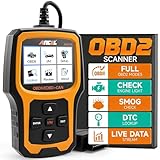
An engine misfire is like having a rower in a large crew team suddenly stop rowing; the boat can still move, but it’s much weaker, unbalanced, and jerkier. In your car, this is felt as a hesitation or stumble during acceleration. A constant misfire will be felt at idle and all speeds, while a misfire “under load” may only appear when you press the gas pedal hard. A flashing check engine light is the most urgent warning sign, often indicating a misfire severe enough to cause further damage. The corresponding trouble codes can be read with an OBD2 scanner, which can point you to the exact cylinder that is misfiring (e.g., P0302 for cylinder 2).
Worn spark plugs are the most common culprit. Modern iridium spark plugs are durable, with many manufacturers recommending replacement intervals of up to 100,000 miles, but they do eventually wear out. A failing ignition coil is another prime suspect. Most modern cars use a “coil-on-plug” system where each spark plug has its own dedicated coil. When one coil fails, that cylinder is completely disabled, leading to a dramatic loss of power.
Did You Know? A common cause for sudden misfires that we see in our shop is water intrusion. After a heavy rainstorm or an aggressive engine bay cleaning, water can pool in the spark plug wells, shorting out the ignition coil and causing a misfire until it dries out.
How Can a Restricted Exhaust or Faulty Sensor Cause Acceleration Lag?
A restricted exhaust system, most commonly from a clogged catalytic converter, creates excessive back pressure that chokes the engine and severely limits its ability to accelerate. At the same time, a faulty oxygen (O2) sensor can disrupt the air-fuel mixture by sending incorrect data, leading to sluggish performance and high fuel consumption. Both issues prevent your engine from running efficiently.
Think of a clogged catalytic converter like trying to run a marathon while only being able to breathe out through a tiny straw. The engine simply cannot get the old, burnt gases out to make room for the fresh air-fuel mixture. This is why the primary symptom is a car that feels extremely weak and whose acceleration gets progressively worse the more you press the gas and the higher the engine RPMs climb. The engine literally can’t exhale fast enough. A “rotten egg” smell from the exhaust is another classic sign of a failing catalytic converter.
A faulty oxygen sensor, on the other hand, is more of a communication problem. This sensor’s job is to measure the amount of unburnt oxygen in the exhaust and tell the car’s computer how to adjust the fuel mixture. When it fails, the computer gets bad advice, often leading to a rich fuel mixture (too much fuel), which causes:
* General sluggishness and poor throttle response.
* A significant drop in fuel economy.
* A rough or unstable idle.
* A solid check engine light.
It’s critical to understand that an unaddressed engine misfire is a leading cause of catalytic converter failure. When a cylinder misfires, it dumps raw, unburnt fuel into the hot exhaust system, which then superheats and melts the delicate internal structure of the converter, causing the blockage.
FAQs About why is my car slow to accelerate
Can transmission problems make a car slow to accelerate?
Yes, transmission issues are a major cause of slow acceleration, often feeling like the engine is revving but the car isn’t going anywhere. This can be due to low or burnt transmission fluid, a slipping clutch, or a failing torque converter. Unlike an engine problem, you might notice a burning smell, clunking noises when shifting, or a delay in engagement when you shift from Park to Drive.
Why is my car slow to accelerate when the AC is on?
It’s normal for a car, especially one with a smaller engine, to feel slightly more sluggish with the air conditioning on. The AC compressor is driven by the engine, creating what’s called “parasitic loss” that saps a small amount of power. However, if the slowdown is dramatic, it could indicate the AC compressor is beginning to fail and creating excessive drag on the engine.
Could a stuck parking brake cause slow acceleration?
Absolutely. If a parking brake doesn’t fully disengage, or if a brake caliper is seized, it’s like driving with your foot on the brake pedal. You’ll feel a significant lack of power, a burning smell from the brakes, and notice terrible fuel economy. You might also feel the car pulling to one side.
My car is slow to accelerate but there’s no check engine light. What could it be?
Many mechanical issues that cause slow acceleration won’t trigger a check engine light. A partially clogged fuel filter or air filter, a minor exhaust restriction, or early-stage transmission fluid degradation can all reduce performance without tripping a sensor. This is when paying attention to the physical symptoms like sputtering, smells, or noises becomes critically important for diagnosis.
Can using the wrong type of oil make my car accelerate slowly?
While unlikely to be the primary cause of a sudden, dramatic slowdown, using an engine oil that is too thick for your vehicle can slightly reduce engine efficiency and responsiveness. This is more of a factor in very cold weather. Always use the oil viscosity recommended by your car’s manufacturer to ensure optimal performance.
How do I fix a car that hesitates when I accelerate?
Fixing hesitation starts with diagnosis, as it can be caused by a dirty MAF sensor, a bad throttle position sensor, a weak fuel pump, or worn spark plugs. The first step is to use an OBD-II scanner to check for any trouble codes. A common fix for minor hesitation is using a quality fuel system cleaner and ensuring your air filter is clean.
Why is my car slow to accelerate from a stop?
Sluggish acceleration from a complete stop often points to issues with the fuel delivery system or a faulty sensor. A weak fuel pump might struggle to build pressure initially, a bad throttle position sensor might not correctly register that you’ve pressed the gas, or a clogged catalytic converter can create too much back pressure at low RPMs.
Can a bad battery cause slow acceleration?
Generally, no. A bad battery will cause problems with starting the car, but once the engine is running, the alternator provides the necessary electrical power. However, a failing alternator can cause a host of electrical problems, including poor engine performance, which could be perceived as slow acceleration as various sensors and systems malfunction.
Does a car accelerate slower with less gas in the tank?
No, the amount of gas in the tank does not affect the car’s acceleration performance. However, if the fuel level is extremely low, aggressive acceleration or cornering could cause the fuel pump to momentarily suck in air, leading to a sputter or hesitation that could feel like a slowdown.
What’s the difference between sluggish acceleration and hesitation?
Sluggish acceleration feels like the car is weak and underpowered, taking a long time to build speed smoothly. Hesitation is a more distinct event, like a stumble, a brief pause, or a jerk that happens when you press the accelerator before the power kicks in. Hesitation often points to sensor or ignition issues, while sluggishness is more commonly related to fuel or air “flow” problems.
Key Takeaways: Why Your Car Is Slow To Accelerate Summary
- Check the Obvious First: Before diving into complex diagnostics, always check your engine air filter. A severely clogged filter is a common, cheap, and easy fix that can restore lost power.
- Fuel System is a Prime Suspect: A gradual loss of power that gets worse under load often points to a clogged fuel filter or a weakening fuel pump, starving your engine of necessary fuel.
- Listen for the Misfire: If the slow acceleration is accompanied by a jerking or stuttering feeling, your engine is likely misfiring. This is most often caused by worn-out spark plugs or a bad ignition coil.
- A Flashing Check Engine Light is a Command: Do not ignore a flashing check engine light. It almost always signals a severe engine misfire that can quickly destroy your expensive catalytic converter, turning a $100 repair into a $2,000+ one.
- Exhaust “Exhale” is Critical: If the car feels like it’s hitting a wall and loses more power the higher the RPMs go, a clogged catalytic converter is a very likely cause. This creates extreme back pressure that chokes the engine.
- Don’t Discount Sensors: A faulty Mass Airflow (MAF) or Oxygen (O2) sensor can feed the car’s computer bad information, wrecking the air-fuel ratio and causing general sluggishness and poor fuel economy.
- Separate Engine from Transmission: If the engine revs high but the car doesn’t move accordingly, the problem is likely in the transmission (like a slipping clutch), not the engine itself.
Final Thoughts on Diagnosing Slow Acceleration
Diagnosing a car that’s slow to accelerate doesn’t have to be a mystery. By adopting a systematic approach that checks the four pillars of engine performance—fuel, air, ignition, and exhaust—you can move from confusion to clarity. Remember to match the specific symptoms your car is exhibiting, whether it’s a stutter, a gradual power loss, or a smell of rotten eggs, to the likely system at fault.
This symptom-to-system diagnostic mindset is your most powerful tool. It allows you to effectively pinpoint the root cause, whether it’s a simple fix like a dirty air filter or a more complex issue like a clogged catalytic converter. With this knowledge, you are empowered to either tackle the repair yourself with confidence or have a much more informed conversation with a professional mechanic. Driving should be a seamless experience, and restoring your car’s proper acceleration is the first step back to that confidence on the road.
Last update on 2026-03-27 / Affiliate links / Images from Amazon Product Advertising API


![Top 11 Luxury SUVs [year]: Expert Picks for Reliability & Value](https://i0.wp.com/carxplorer.com/wp-content/uploads/2026/03/Top-11-Luxury-SUVs-year-Expert-Picks-for-Reliability-Value-1.jpg?resize=60%2C60&ssl=1 "Top 11 Luxury SUVs [year]: Expert Picks for Reliability & Value 4")
![Luxury Cars Brands: Top 9 Ranked for Prestige & Reliability [year]](https://i0.wp.com/carxplorer.com/wp-content/uploads/2026/03/Luxury-Cars-Brands-Top-9-Ranked-for-Prestige-Reliability-year-1.jpg?resize=60%2C60&ssl=1 "Luxury Cars Brands: Top 9 Ranked for Prestige & Reliability [year] 6")
![Luxury Cars for Women: 7 Expert Picks for Style & Comfort [year]](https://i0.wp.com/carxplorer.com/wp-content/uploads/2026/03/Luxury-Cars-for-Women-7-Expert-Picks-for-Style-Comfort-year-1.jpg?resize=60%2C60&ssl=1 "Luxury Cars for Women: 7 Expert Picks for Style & Comfort [year] 8")
![Luxury Cars Wallpaper: 7 Aesthetic 4K & HD for Mobile & Desktop [year]](https://i0.wp.com/carxplorer.com/wp-content/uploads/2026/03/Luxury-Cars-Wallpaper-7-Aesthetic-4K-HD-for-Mobile-Desktop-year-1.jpg?resize=60%2C60&ssl=1 "Luxury Cars Wallpaper: 7 Aesthetic 4K & HD for Mobile & Desktop [year] 10")
![Luxury Cars Black: 7 Sleek Styles & Aesthetic Guide for [year]](https://i0.wp.com/carxplorer.com/wp-content/uploads/2026/03/Luxury-Cars-Black-7-Sleek-Styles-Aesthetic-Guide-for-year-1.jpg?resize=60%2C60&ssl=1 "Luxury Cars Black: 7 Sleek Styles & Aesthetic Guide for [year] 12")