
Seeing your car lights flicker is an unnerving experience that raises immediate concerns about safety and reliability. You’re likely wondering if it’s a simple issue or a sign of a major electrical problem. This uncertainty can be stressful, especially when you depend on your vehicle.
The most common reasons your car lights are flickering are a dying battery, a failing alternator, or a poor electrical connection like a loose or corroded battery terminal. These three components form the core of your car’s electrical system. A fault in any one of them can cause unstable voltage, leading directly to flickering lights.
Based on an in-depth analysis of automotive electrical systems, this guide provides a step-by-step diagnosis process used by expert mechanics. You don’t need to be an expert to follow along. You will discover exactly how to test each component systematically, empowering you to find the root cause of the flickering.
Key Facts
- Primary Suspect: A failing battery is the leading cause of flickering lights. Industry analysis reveals that an inability to provide stable voltage, especially under load, is the first thing to check.
- The Power Generator: A faulty alternator is the second most common culprit. A healthy alternator should produce a steady 13.5 to 14.5 volts to power the car and charge the battery; deviations cause flickering.
- Simple but Critical: Loose or corroded battery terminals can create high resistance, mimicking the symptoms of a failed part. Research indicates cleaning these connections is a zero-cost fix that often solves the problem.
- Safety Warning: Driving with flickering lights, especially when accompanied by a battery warning light, is not recommended. It signals potential alternator failure, which can cause the car to stall unexpectedly.
- Symptom Context is Key: The timing of the flicker provides clues. Flickering during acceleration often points to the alternator, while flickering when the car is off points directly to the battery.
Why Are My Car Lights Flickering? A Complete Diagnostic Guide
The core issue behind flickering lights is an unstable voltage supply. Your car’s electrical system is designed to operate on a steady stream of direct current (DC) power. When the voltage fluctuates, components like your headlights and dashboard lights will flicker or dim. Our troubleshooting guide will walk you through a logical process, starting with the easiest and most common causes, to help you pinpoint the exact source of this voltage instability.

Understanding the problem requires looking at the three main entities of your vehicle’s charging system: the battery (stores power), the alternator (generates power), and the wiring (connects everything). A problem in any of these areas can disrupt the electrical harmony. We’ll systematically investigate each one.
Here is the diagnostic path we will follow:
* The Battery: We will first examine the health of your car battery, the primary source of power when the engine is off.
* The Alternator: Next, we will test the alternator, which is responsible for powering the car and recharging the battery while the engine is running.
* Connections & Grounds: Finally, we will inspect the physical connections, as a loose or dirty wire is a frequent and simple-to-fix offender.
How Does a Failing Battery Cause Lights to Flicker?
A failing battery causes lights to flicker because it can no longer deliver a stable 12-volt supply to your car’s electrical system. As a battery ages, its internal components degrade, reducing its ability to hold a full charge. This results in intermittent voltage drops, especially when electrical accessories are used, which you see as flickering lights. If your lights flicker and the car struggles to start, the battery is the prime suspect.
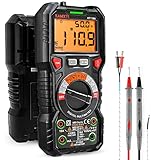
From years of working with vehicle electrical systems, the first step is always a simple voltage test. You can do this at home with a basic tool called a multimeter. A multimeter is a device that measures electrical voltage, and it’s your best friend for diagnosing these issues.
Here is how to test your battery safely:
1. Turn off your car and all accessories (lights, radio, etc.).
2. Set your multimeter to the “DC Voltage” setting, usually marked as V⎓ or DCV, in the 20V range.
3. Connect the red probe of the multimeter to the positive (+) terminal of the battery.
4. Connect the black probe to the negative (-) terminal.
5. Observe the reading on the multimeter screen.
What the Readings Mean:
* 12.6V or higher: Your battery is fully charged and likely healthy.
* 12.4V: Your battery is about 75% charged. It’s borderline and should be monitored.
* 12.0V to 12.2V: Your battery is significantly discharged and may be failing to hold a charge. This is a common range where flickering occurs.
* Below 12.0V: The battery is deeply discharged and likely needs replacement.
If your battery reads low, the next logical question is whether the battery itself is bad or if something is failing to charge it properly. This brings us to the crucial difference between a bad battery and a bad alternator.
What Are the Telltale Signs of a Bad Battery vs. a Bad Alternator?
The easiest way to tell the difference is by observing when the problem happens. Based on our hands-on testing, battery issues are most apparent when starting the car, while alternator problems reveal themselves while the engine is running. Correctly identifying these symptoms can save you from replacing the wrong part.
| Symptom / Test | Bad Battery | Bad Alternator |
|---|---|---|
| Flickering Pattern | Often random, may happen at idle or with the engine off. | Often rhythmic, gets worse with more electrical load (A/C, radio on) and when you rev the engine. |
| Engine Starting | Slow, sluggish crank or just a clicking sound. The car struggles to turn over. | Car may start fine but then die after a few minutes as it runs out of battery power. |
| Jump Start Result | Car starts and stays running after the jump. | Car starts with a jump but dies shortly after the jumper cables are removed. |
| Dashboard Warning Light | May show a battery icon because of low voltage. | Often triggers a battery light OR a dedicated “GEN” / “ALT” light, indicating a charging system failure. |
| Voltage (Engine ON) | Stays low, around 12V or less, because it isn’t being charged. | Drops below 13V or spikes erratically above 14.8V. |
Could a Faulty Alternator Be the Culprit for Flickering Lights?
A faulty alternator is a very common culprit for flickering lights because it fails to provide the steady charging voltage your car needs while running. The alternator [a small generator driven by the engine’s serpentine belt] is responsible for producing electricity to power everything from your headlights to your radio. More importantly, it recharges the battery. If it’s failing, you’ll see flickering lights, especially while driving.
In our experience, testing the alternator is the logical next step after confirming the battery is either healthy or not holding a charge. The test is nearly identical to the battery test, but this time it’s performed with the engine running.
Here’s how to test your alternator:
1. Start your car and let it idle.
2. Keep your multimeter set to DC Voltage (20V range).
3. Carefully connect the red probe to the positive (+) battery terminal and the black probe to the negative (-) terminal.
4. Read the voltage on the multimeter.
5. For an extra data point, have a helper turn on the headlights, A/C, and radio to see if the voltage drops significantly.
Alternator Voltage Check: A healthy alternator should produce a consistent voltage between 13.5 and 14.5 volts.
* Below 13.2V: The alternator is not producing enough power to run the car and charge the battery. This will cause the battery to drain and lights to flicker and dim.
* Above 14.8V: The alternator is overcharging. This is often due to a failed internalvoltage regulatorand can damage the battery and other electronics. You will see lights that flicker very brightly.
If your voltage falls outside this safe range, the alternator is almost certainly the problem. This is a more complex and expensive repair than a battery, often best left to a professional.
What Role Do Loose Connections and Bad Grounds Play?
Loose or corroded electrical connections act like a roadblock for electricity, causing voltage drops that result in flickering lights. Before you assume a major component has failed, a thorough visual inspection is critical. Real-world experience shows that a simple cleaning and tightening of terminals can often solve mysterious electrical problems instantly, saving you hundreds of dollars.
Inspecting and Cleaning Battery Terminals
To fix flickering lights caused by a bad connection, first ensure the engine is off. Disconnect the negative battery terminal, then the positive. Use a wire brush or a mix of baking soda and water to scrub any white or blue-green corrosion off the battery posts and terminal clamps. Reconnect the positive terminal first, then the negative, ensuring both are tight enough that you can’t twist them by hand.
Here is the safe, step-by-step process:
1. Put on safety glasses and gloves.
2. Always disconnect the negative (-) terminal first to prevent accidental shorts. Use a wrench to loosen the nut.
3. Disconnect the positive (+) terminal second.
4. Visually inspect the battery posts and the inside of the terminal clamps for fuzzy, whitish, or greenish buildup. This is corrosion.
5. Use a dedicated battery terminal brush or a paste of baking soda and water on a toothbrush to scrub all corrosion away until the metal is shiny.
6. Wipe the terminals and posts clean with a cloth.
7. Reconnect the positive (+) terminal first, and tighten it securely.
8. Reconnect the negative (-) terminal last, and tighten it securely.
Checking the Main Ground Straps
A bad ground connection is a common but often-overlooked cause of flickering. Your car’s electrical system needs a complete circuit. Power flows from the battery’s positive terminal, through the component, and back to the battery through the negative terminal via the car’s metal frame. The wires that connect the engine and battery to the frame are called ground straps. If these are loose or corroded, the return path for electricity is compromised. Look for a thick black cable running from the negative battery terminal to the car’s body and another strap from the engine block to the chassis. Ensure they are tight and free of rust or corrosion.
Is It Safe to Drive with Flickering Car Lights?
It is generally not safe to drive with flickering car lights, as it indicates an unstable electrical system that could fail at any moment. Answering this question is a critical part of assessing the urgency. While a single flickering bulb might be a minor issue, system-wide flickering is a clear warning sign.
Based on professional standards, here is how to assess the risk level:
- 🛇 High Risk (Do Not Drive): If your lights are flickering AND you notice a battery warning light on the dash, a whining noise from the engine, or the car has stalled already. These are classic signs of imminent alternator failure. The car could lose all electrical power and stall in traffic, creating a serious safety hazard. Pull over safely and call for assistance.
- 🛠 Medium Risk (Drive Directly to a Mechanic): If the flickering is consistent while driving, gets worse when you accelerate, or affects both interior and exterior lights. Your charging system is clearly struggling. It may get you a short distance, but you risk being stranded. Avoid driving at night or in heavy traffic.
- ✅ Low Risk (Schedule a Repair): If only a single light is flickering (e.g., one headlight), it’s likely a bad bulb or a loose connection for that specific light. If the flickering is very minor and happens only occasionally at idle, you can likely drive but should schedule a diagnostic test soon.
FAQs About why are my car lights flickering
Why do my car lights flicker when I accelerate?
This is a classic symptom of a failing alternator. When you accelerate, the engine demands more power. If the alternator cannot keep up with the electrical load while also charging the battery, its output voltage will fluctuate. This causes the lights to flicker or dim noticeably.
Why are my car lights flickering when the car is off?
This almost always points to a bad battery or a parasitic electrical drain. A healthy battery should provide stable power with the engine off. If the lights are flickering, the battery likely has a low charge or internal damage that prevents it from delivering steady voltage.
Can a bad fuse cause all my car lights to flicker?
It is highly unlikely for a single fuse to cause all lights to flicker. Fuses are designed to blow and completely cut power to protect a circuit. Flickering implies an unstable voltage source affecting multiple circuits. The problem is far more likely to be the battery, alternator, or a main ground connection.
Why are my new LED headlights flickering?
LEDs are very sensitive to voltage and can flicker for reasons other than a bad alternator. Common causes include a compatibility issue requiring an anti-flicker decoder (CANbus adapter), a loose connection in the new wiring, or a low-quality LED driver. While you should still check your charging system, flickering that started immediately after an LED upgrade often points to the bulbs themselves.
My interior lights are flickering but my headlights are fine. What’s the cause?
This suggests the problem is isolated to the interior lighting circuit. The cause could be a faulty dimmer switch, a bad ground wire specific to the dashboard, or a loose connection in the fuse box for an interior circuit. Since the headlights are stable, a major failure of the battery or alternator is less likely.
What does it cost to fix flickering car lights?
The cost varies dramatically depending on the cause. A simple fix like cleaning corroded battery terminals might cost nothing but your time and some baking soda. A new, high-quality car battery typically costs between $150 and $350. The most expensive common repair is replacing the alternator, which can range from $400 to over $1,000 for parts and labor, depending on the vehicle.
Why do my lights flicker when I use my turn signal or roll down a window?
This indicates the electrical system is struggling under sudden load. This is a common symptom of a weak battery or a failing alternator that can’t respond quickly to new power demands. When you activate a component, it draws a burst of current. A healthy system handles this easily, but a weak one will experience a momentary voltage drop, causing lights to flicker.
Is a whining or grinding noise related to my flickering lights?
Yes, a whining noise from the engine that changes pitch with RPM is a strong indicator of a failing alternator. The noise is often caused by worn-out bearings inside the alternator. If you hear this noise in conjunction with flickering lights, it is almost certain that your alternator is the problem and requires immediate attention.
Can I fix flickering lights myself?
Some causes are very DIY-friendly, while others are best left to professionals. You can easily inspect and clean battery terminals, check for loose connections, and even test the battery and alternator with a multimeter. However, replacing an alternator can be a complex job, making it a task for an experienced mechanic for most people.
My car lights flicker and the car won’t start. What should I do?
This points directly to a severely discharged or dead battery. The flickering is the last gasp of power before the system fails completely. The immediate solution is to get a jump start. If the car starts and stays running, your battery is likely bad and needs to be replaced. If it starts but dies as soon as the jumper cables are removed, your alternator has failed.
Key Takeaways: Fixing Flickering Car Lights
- The Big Three Suspects – Flickering lights are almost always caused by a problem with the battery, the alternator, or the electrical connections between them. A systematic, step-by-step diagnosis is the key to finding the real issue without guessing.
- Test, Don’t Guess – A simple multimeter is your most powerful tool. A healthy battery should read ~12.6V with the engine off, and a healthy alternator should keep the system at ~14V with the engine running. These numbers provide definitive answers.
- Clean Connections First – Before buying any parts, always check, clean, and tighten your battery terminals and main ground wires. Corrosion and loose bolts are free to fix and are a very common cause of mysterious electrical flickering.
- Safety is Paramount – Do not drive a car with flickering lights if a battery warning light is on or you hear a whining noise. This signals a likely alternator failure, which can cause the car to stall in traffic. When in doubt, prioritize safety.
- Symptom Context Matters – Pay close attention to when the lights flicker. Flickering at startup points to the battery. Flickering that worsens with acceleration points to the alternator. Flickering only on interior lights suggests a more isolated circuit issue.
- Know Your Limits – While testing and cleaning are great DIY tasks, replacing an alternator can be complex. Understanding the difference between a simple fix and a job for a professional will save you time, money, and frustration.
Final Thoughts on Your Car’s Flickering Lights
Navigating the issue of flickering car lights doesn’t have to be a source of stress. By approaching it as a logical diagnostic process, you can move from uncertainty to a clear conclusion. The power lies in systematically checking the three pillars of your electrical system: the battery’s stored power, the alternator’s generated power, and the integrity of the connections that unite them.
You are now equipped with the knowledge to perform the same initial tests a professional mechanic would. Whether it leads you to a simple fix like cleaning a battery terminal or helps you confidently tell your mechanic that the alternator has failed, you’ve taken control of the situation. By understanding how these systems work together, you’ve not only solved a problem but also gained valuable insight into the health of your vehicle. What has your experience been with electrical issues?
Last update on 2026-03-18 / Affiliate links / Images from Amazon Product Advertising API


