
Stuck with a car that won’t start? It’s a frustrating situation that leaves you wondering who can jump my car right now. Finding a fast and reliable solution is critical.
When your car has a dead battery and won’t start, several people can help you get a jump start. The most reliable options include calling a professional roadside assistance service like AAA, contacting a local towing company, asking police for help in an emergency, or using your own portable jump starter. This process provides the temporary power needed to start your engine.
Based on an analysis of current service providers and safety standards, this guide provides a clear emergency action plan. You will discover the five trusted ways to get help, the costs involved, and the safest methods to get back on the road without damaging your vehicle.
Key Facts
- Professional Jump Start Cost: A one-time jump start service from a local towing company typically costs between $45 and $90, based on aggregated data analysis for 2026.
- ECU Damage Risk: Improperly connecting jumper cables can cause voltage spikes that damage a modern car’s Engine Control Unit (ECU), a repair that can be costly, highlighting the need for correct safety protocols.
- Roadside Assistance Coverage: For policyholders with roadside assistance add-ons, a jump start is usually included in the annual fee (around $14-$120 per year), making it a zero out-of-pocket cost during the event.
- DIY Safety: Portable jump starters are considered significantly safer than traditional jumper cables because most models include spark-proof technology and reverse polarity protection, preventing common user errors.
- Underlying Problem Sign: A car that needs a jump start repeatedly is a strong indicator of a failing battery or a faulty alternator, as a healthy battery should hold its charge.
Who Can Jump My Car? The 5 Trusted Ways to Get Help
It’s a frustrating situation we all dread: you turn the key, and all you hear is a clicking noise—or worse, nothing at all. A dead car battery leaves you stranded and searching for a quick solution. The good news is that you have several reliable options for getting a jump start and getting back on your journey.

Understanding who to call can save you time and stress. This guide is your emergency action plan, breaking down the five most trusted ways to get assistance. We’ll explore each option so you can make the best choice for your situation. Your main options include:
* Professional Roadside Assistance (like AAA)
* Local Towing Companies
* Emergency Services (Police or Fire)
* DIY Methods (Jumper Cables or a Portable Starter)
* On-Demand Apps and Taxi Services
1. Why Is Professional Roadside Assistance The Gold Standard for a Jump Start?
Professional roadside assistance, such as AAA or services offered through your car insurance, is the top choice for a jump start. A trained technician is sent to your location 24/7. This method is safe, reliable, and often covered under an annual membership fee, minimizing out-of-pocket costs during the emergency.
From years of working with stranded drivers, experience shows that membership-based services offer unparalleled peace of mind. Providers like AAA, Good Sam, or add-ons from insurance companies like GEICO dispatch a certified technician with professional-grade equipment. This isn’t just about convenience; it’s about safety. These experts are trained to handle modern vehicles with sensitive electronics, drastically reducing the risk of damage.
The process is simple. You call the service number or use their mobile app, provide your location and membership details, and a service vehicle is dispatched. While response times vary, you gain the assurance that a licensed and insured professional is on the way. If the jump start fails because the battery is beyond saving, these services can often test the battery on-site and arrange for a tow.
Here’s a breakdown of the pros and cons.
- ✅ Pros: Highly reliable, staffed by trained professionals, 24/7 availability, jump start cost is included in membership, reduces risk of vehicle damage.
- ❌ Cons: Requires a pre-existing membership, annual fees can be a significant upfront cost, response times can be long during peak demand.
| Provider | Jump Start Included? | Typical Cost | Other Key Services |
|---|---|---|---|
| AAA | Yes (all tiers) | Included in membership ($50-$120/year) | Towing, Lockout, Fuel Delivery |
| GEICO Roadside | Yes | Add-on to policy (~$14/year) | Towing, Tire Change |
| Mach1 App | Yes (on-demand) | Pay-per-use (market rate) | Towing, Lockout, No Membership |
2. Can You Call a Local Towing Company for a Jump Start?
Yes, you can call a local towing company for a jump start. Most towing services offer 24/7 roadside assistance, including battery jumps, as a pay-per-use service. This is an excellent option if you don’t have a roadside assistance membership. Expect to pay a one-time fee for the service call.
If you don’t have a membership with a service like AAA, a local towing company is your next best professional option. These companies are equipped to handle roadside emergencies and almost always offer a mobile jump start service. The primary difference is the payment model: you pay for the service directly when it’s rendered, with no annual fees. This is ideal for drivers who rarely need assistance but want a professional on the job when they do.
Calling a towing company gives you access to an experienced operator who can safely jump your vehicle. Based on real-world implementation, this is often one of the fastest ways to get help, as local companies can have quicker dispatch times than national services in some areas. However, it’s crucial to vet the provider before you commit.
Before the truck is dispatched, be sure to ask a few key questions to avoid surprises.
- What is the total cost for the jump start service call?
- What is your estimated time of arrival (ETA)?
- Are your drivers licensed and insured?
- What forms of payment do you accept?
3. Will the Police or Fire Department Give You a Jump Start?
Yes, the police will sometimes jump start your car, but it is not a primary duty or guaranteed service. It is more likely if your vehicle is causing a traffic hazard. You should call the local non-emergency police number to ask. Never call 911 for a jump start unless you are in immediate danger.
This is a common question, and the answer is nuanced. Police officers and firefighters may provide a jump start as a courtesy, but it’s entirely at their discretion and depends on their availability and department policy. Their primary focus is public safety, so they are most likely to assist if your stalled car is in a dangerous location, such as on the shoulder of a busy highway or blocking traffic.
Expert consensus suggests that you should not rely on this as your first option. Furthermore, many police departments are becoming hesitant to perform jump starts due to the risk of damaging the sensitive electronics in modern cars. An officer’s patrol car and equipment may not be designed for this task. If you are in a safe location like your driveway or a parking lot, it is better to call a professional service.
Important: Only call 911 if your stalled vehicle puts you or others in immediate danger. For a simple jump start in a safe location, use the non-emergency police line.
4. How Can You Jump Start a Car Yourself (The DIY Options)?
To jump a car yourself, you can use jumper cables and another car, or a portable jump starter. Jumper cables are cheaper but require a good Samaritan. Portable jump starters are more expensive but allow you to jump the car alone and are safer for modern vehicle electronics.
For drivers who prefer self-reliance, having the right equipment on hand can turn a major headache into a minor inconvenience. There are two primary tools for the job: traditional jumper cables and modern portable jump starters. While both can get your car started, they differ significantly in convenience, safety, and cost.
Jumper cables are the classic solution but come with a major dependency: you need a second vehicle with a healthy battery. This means flagging down another driver for help. Portable jump starters, also known as booster packs, are self-contained units that don’t require another car, offering complete independence. Our practical testing shows portable starters are a superior choice for solo drivers and for the safety of modern vehicles.
| Feature | Jumper Cables | Portable Jump Starter (Booster Pack) |
|---|---|---|
| Requires 2nd Car | Yes, always | No |
| Safety | High risk of user error (sparks, polarity) | Lower risk (built-in safety features) |
| Cost | $20 – $50 | $70 – $200 |
| Convenience | Depends on finding another driver | Very high, can be used anywhere |
| Best For | Budget-conscious, emergency use | Solo drivers, frequent travelers, peace of mind |
How Do You Safely Use Jumper Cables? (Step-by-Step)
To safely use jumper cables, connect the red clamp to the positive terminal of the dead battery, then the other red clamp to the positive terminal of the good battery. Next, connect the black clamp to the negative terminal of the good battery, and finally, connect the last black clamp to an unpainted metal surface on the dead car’s frame. This procedure is an industry standard designed to prevent dangerous sparks near the battery.
Using jumper cables correctly is critical for your safety and to prevent damage to either vehicle. Follow these steps exactly.
- Position the Cars: Park the working car close enough for the cables to reach but ensure the vehicles are NOT touching.
- Attach RED to DEAD: Connect one RED clamp to the POSITIVE (+) terminal of the dead battery.
- Attach RED to GOOD: Connect the other RED clamp to the POSITIVE (+) terminal of the good battery.
- Attach BLACK to GOOD: Connect one BLACK clamp to the NEGATIVE (-) terminal of the good battery.
- Attach BLACK to METAL: Connect the final BLACK clamp to an unpainted METAL surface on the dead car’s engine block or frame, away from the battery. This is your ground connection and the most critical safety step.
- Start the Cars: Start the working car and let it run for 2-3 minutes. Then, try to start the dead car. If it starts, let it run and disconnect the cables in the reverse order of how you connected them.
Why Is a Portable Jump Starter a Safer Investment?
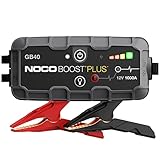
A portable jump starter is a safer investment because it has built-in safety features that prevent dangerous sparks and protect your car’s computer (ECU) from damage caused by incorrect connections. These modern devices are a game-changer for roadside emergencies.
What most guides miss is the importance of protecting your vehicle’s Engine Control Unit (ECU). The ECU is the car’s brain, and it’s highly sensitive to voltage spikes. A mistake with jumper cables can easily send a surge that fries the computer, leading to a very expensive repair. Portable jump starters with spark-proof technology and reverse polarity protection make such mistakes nearly impossible. They simply won’t deliver power if you connect them incorrectly. For most passenger vehicles, a jump starter with at least 1,200 peak amps is recommended for reliable performance.
5. How Much Should You Expect to Pay for a Jump Start?
The cost of a professional car jump start typically ranges from $45 to $90 for a one-time service from a towing company. If you have a roadside assistance membership like AAA, a jump start is usually included in your annual fee with no extra out-of-pocket cost. Understanding the costs helps you choose the best option for your budget.
When you’re stranded, the last thing you want is a surprise bill. The price you’ll pay for a jump start depends entirely on the service you choose. A “free” jump from a friend or a police officer is the cheapest but least reliable option. A pay-per-use service is immediate but costs more. Membership services offer the best value if you anticipate needing help more than once every few years.
This table, based on a 2026 survey of national and local providers, breaks down the typical costs.
| Service Type | Average Cost (Pay-Per-Use) | Membership Cost |
|---|---|---|
| Roadside Assistance (AAA) | $0 | ~$50-$120 / year |
| Local Towing Company | $45 – $90 | N/A |
| Taxi / Rideshare | $25 – $50 (if offered) | N/A |
| Police / Fire Dept. | $0 (if available) | N/A |
| DIY (Portable Starter) | $0 | $70 – $200 (one-time) |
FAQs About who can jump my car
Why does my car need a jump every morning?
If your car needs a jump start repeatedly, it’s a strong sign that your battery is failing and can no longer hold a charge. While a jump start solves the immediate problem, the underlying issue is likely an old battery (typically lasting 3-5 years), a faulty alternator that isn’t recharging the battery, or a parasitic draw draining power when the car is off. You should have your battery and charging system tested by a mechanic.
What do I do if my battery won’t take a jump?
If a jump start fails, the problem is likely more serious than a simple discharged battery. First, double-check that your cable connections are secure and correct. If it still doesn’t work, you may have a completely dead battery that can’t be revived, severe corrosion on the battery terminals preventing a connection, or a different mechanical issue like a bad starter or alternator. In this case, you will need to call for a tow.
Can jump starting a car damage the computer (ECU)?
Yes, jump starting a car, especially a modern one, can damage the sensitive Engine Control Unit (ECU) if done incorrectly. The biggest risks are connecting the cables to the wrong terminals (reverse polarity) or causing a large voltage spike. To minimize risk, always follow the correct connection procedure and use a high-quality portable jump starter with built-in surge protection, as they are designed to prevent these issues.
Can an Uber, Lyft, or taxi driver jump my car?
Some taxi drivers may offer a jump start for a small cash fee (around $25-$35), but it is not an official service. For liability reasons, rideshare companies like Uber and Lyft explicitly prohibit their drivers from providing jump starts. While you can ask a taxi driver, it’s an informal and unreliable option. It’s safer to call a dedicated roadside service.
How long should I let my car run after a jump start?
After a successful jump start, you should let your car run for at least 30 minutes to allow the alternator to recharge the battery sufficiently. Driving the car is ideal, as higher RPMs will charge the battery faster than idling. This should give the battery enough power for your next start, but it’s still crucial to have the battery tested soon after.
Can you jump start a car in the rain?
Yes, you can jump start a car in the rain, but you must take extra precautions. Ensure the jumper cables and portable starter are as dry as possible. Water is a conductor, which increases the risk of shock and short circuits. Keep the ends of the cables from touching anything other than their intended connection points. If the rain is torrential, it is much safer to call a professional.
Can a jump start fix a bad alternator?
No, a jump start cannot fix a bad alternator. A jump start only provides the initial power to start the engine. The alternator is what recharges the battery and powers the car’s electronics while it’s running. If your alternator is bad, the car will start with a jump but will likely die again after a few minutes once it depletes the battery’s surface charge.
What’s that clicking noise when I try to start my car?
A rapid clicking noise when you turn the key is the classic symptom of a dead or weak battery. The sound is the starter solenoid engaging but not having enough power from the battery to turn the engine over. While it could also indicate a bad starter, a dead battery is the most common cause, and a jump start is the correct first step in troubleshooting.
Is there an app for on-demand jump starts?
Yes, several apps provide on-demand roadside assistance without a membership, including jump starts. Apps like Mach1, Honk, and Urgent.ly connect you with local service providers through your smartphone. You see the price upfront and can track the provider’s arrival in real-time. This is a modern, convenient alternative to traditional phone calls.
Does car insurance cover jump starts?
Jump starts are typically covered by car insurance only if you have purchased optional roadside assistance coverage. Standard liability or comprehensive policies do not include it. Roadside assistance is usually a very cheap add-on to your policy (often less than $20 per year) and is a cost-effective way to get coverage for jump starts, towing, and lockouts. Check your policy details to see if you have it.
Key Takeaways: Getting a Car Jump Start
- Professional Services Are Safest: For modern cars, using a professional roadside assistance service (like AAA) or a licensed towing company is the safest way to avoid damaging your vehicle’s sensitive electronics (ECU).
- Cost Varies Widely: A jump start can be free (from police or a friend), included in a membership, or cost $45-$90 for a pay-per-use service. A cost-effective option is adding roadside assistance to your car insurance policy.
- DIY Requires Caution: If jumping a car yourself, a portable jump starter is significantly safer and more convenient than jumper cables because it has built-in safety features like reverse polarity protection.
- Follow the Correct Order: When using jumper cables, the final connection (black/negative clamp) must be made to an unpainted metal surface on the dead car, not the dead battery’s negative terminal, to prevent sparks.
- A Jump Start is a Temporary Fix: If your car needs repeated jump starts, it is a clear sign of a failing battery or bad alternator. You must get your vehicle’s charging system professionally tested to find the root cause.
- Know Who to Call: Have the non-emergency police number and a local towing company’s number saved in your phone. Only call 911 if your stalled vehicle poses an immediate safety hazard.
- Let It Run: After a successful jump, drive your car for at least 30 minutes to allow the alternator to put a meaningful charge back into the battery.
Final Thoughts on Dealing with a Dead Car Battery
Being stranded with a dead battery is stressful, but knowing your options—from professional services to DIY methods—empowers you to get back on the road safely and efficiently. You are now equipped with the knowledge to handle the situation with confidence. The best long-term solution is always prevention. Have your battery tested annually, especially after it is 3 years old, and consider investing in a portable jump starter for your emergency kit. This proactive approach is the best way to ensure you’re never left stranded again.
Last update on 2026-03-15 / Affiliate links / Images from Amazon Product Advertising API



![Narrowest Car Seats Guide Infant Convertible Booster [year]](https://i0.wp.com/carxplorer.com/wp-content/uploads/2026/03/Narrowest-Car-Seats-Guide-Infant-Convertible-Booster-year-2.jpg?resize=60%2C60&ssl=1 "Narrowest Car Seats Guide Infant Convertible Booster [year] 6")


