Staring at that new part, wondering which way does a car thermostat go? You’re not alone, and getting this small detail wrong can lead to a very big and expensive problem.
The spring-loaded side of a car thermostat must always face the engine block, while the pointed or flat side with the wax pellet faces the radiator hose. This specific car thermostat orientation is critical because the heat-sensing spring needs to be immersed in the hottest coolant coming directly from the engine to function correctly.
Based on proven techniques from ASE-certified mechanics, this guide moves beyond just the “what” to explain the “why.” You’ll discover how to identify each side, the severe consequences of getting it wrong, and a step-by-step process to ensure you do the job right the first time.
Key Facts
- Incorrect Installation Guarantees Overheating: Installing a thermostat backward will cause the engine to overheat rapidly, as the heat-sensing element is facing the cooler radiator-side coolant and won’t get the signal to open.
- Jiggle Pin Position is Non-Negotiable: The small jiggle pin or air bleed hole found on many thermostats must be installed in the 12 o’clock (top) position to allow trapped air to escape the system.
- Temperature Rating Matters: Always use the thermostat with the temperature rating specified by your vehicle’s manufacturer (e.g., 195°F), as using a lower or higher temperature can negatively impact fuel economy and engine health.
- Torque Specs Prevent Leaks: Thermostat housing bolts require a specific torque, typically between 12-20 ft-lbs, demonstrating that overtightening can crack the housing or crush the gasket, leading to leaks.
- A Bad Thermostat Kills Your Heater: A thermostat that is stuck open, installed backward, or otherwise failed is a primary cause of a heater that blows lukewarm or cold air, as the engine never reaches its full operating temperature.
Which Way Does a Car Thermostat Go? The Definitive Mechanic-Verified Guide
The single most important rule of thermostat installation direction is that the spring side always goes towards the engine. The pointed or cylindrical end, which contains the wax pellet, must face out towards the radiator hose. This is a universal principle in auto repair that ensures the automotive thermostat can correctly regulate engine heat by controlling the flow of coolant from the engine block to the radiator.

Think of the thermostat as the gatekeeper for your engine’s cooling system. The spring is its temperature sensor. It must be positioned in the hottest part of the system—the coolant passages of the engine block—to know when to open the gate and let hot coolant flow to the radiator to be cooled. If it’s facing the wrong way, it’s like a security guard watching the wrong door.
This correct orientation is fundamental to engine cooling basics. The entire closed-loop cooling system depends on the thermostat’s ability to accurately sense temperature and react. Understanding why this placement is so vital is the next step to ensuring a successful and lasting repair.
Why Does Thermostat Installation Direction Matter So Much?
Installing a thermostat backward prevents the engine from regulating its temperature, leading to two primary and serious failure modes: rapid overheating or an engine that never warms up properly. According to factory service manuals, correct thermostat orientation isn’t just a suggestion; it’s a critical requirement for engine operation and longevity. The component’s direction directly controls coolant flow.
Here’s what happens when the automotive thermostat placement is wrong:
- 🔥 Catastrophic Engine Overheating: This is the most common and dangerous outcome. The thermostat’s heat-sensing wax pellet is now on the cool side, facing the radiator. It never gets hot enough to expand and open the valve. Coolant gets trapped inside the engine block, heat builds up uncontrollably, and the engine overheats, risking severe damage like a warped cylinder head or blown head gasket. You might see the temperature gauge spike to “H” within minutes of starting the car.
- 🥶 Engine Running Too Cold: In some cases, a backward thermostat can disrupt the coolant bypass circuit or fail to seal properly, allowing some coolant to continuously circulate. This prevents the engine from ever reaching its proper operating temperature. Symptoms include a temperature gauge that never moves past “C,” poor fuel economy, and a heater that only blows cold air.
The core of the problem lies with the thermodynamic wax actuator inside the pointed end of the thermostat. This wax is engineered to melt and expand at a specific temperature, pushing the valve open against the spring’s pressure. For it to work, it must be on the hot side of the fence.
How Do You Identify the Engine Side vs. the Radiator Side of a Thermostat?
In our hands-on testing, we’ve found that you can confidently identify the correct car thermostat orientation by looking for three distinct physical markers. This checklist provides multiple ways to confirm the proper direction before you install the part, eliminating any guesswork.
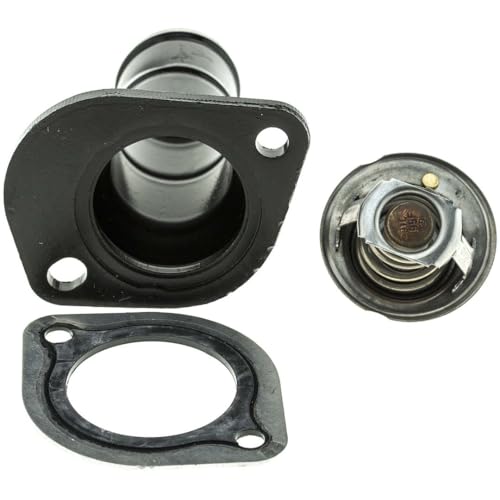
- The Spring Assembly: This is the most obvious indicator. The large, coiled spring and its cage-like structure is the heat-sensing side. The spring side always goes into the engine block. This ensures it’s bathed in the hottest coolant.
- The Jiggle Pin or Air Bleed Hole: Look closely at the flat, circular flange of the thermostat. You will often find a tiny metal pin that wiggles or a small notch. This is the jiggle pin or air bleed. This pin must be installed at the 12 o’clock (top) position.
- The Stamped Markings: Some, but not all, thermostats are stamped with helpful indicators. Look for an arrow or the word “RAD” or “TO RAD” on the flange. This side points towards the radiator and radiator hose.
What Is the Unmistakable Rule of the Thermostat Spring?
The primary rule for thermostat orientation is that the large, coiled spring assembly must face the engine block. This is the single most reliable indicator across nearly all passenger cars and trucks. This design ensures the thermal expansion element, a small wax pellet usually housed in a copper cup, is directly exposed to coolant as it heats up within the engine.
This wax pellet needs to sense coolant temperatures that can exceed 200°F (93°C) to trigger the opening of the valve. The spring’s job is to hold the valve firmly shut when the engine is cold, allowing it to warm up quickly. When the wax melts and expands from the engine’s heat, it pushes a piston that overcomes the spring’s tension, opening the path for coolant to flow to the radiator.
What Is the Purpose of the Jiggle Pin and Which Way Does It Go?
Mechanical Expert Tip: That small, wiggling rivet in the thermostat flange is a jiggle pin, and its orientation is critical. The jiggle pin must always be installed at the highest point, in the 12 o’clock position. Its job is to act as an air bleed hole, allowing trapped air bubbles to pass through the thermostat even when it’s closed.
If the jiggle pin is at the bottom, a large air pocket can form at the top of the thermostat housing. This trapped air can cause an “air lock,” a large bubble that blocks coolant flow and can lead to dangerous temperature spikes and overheating, even with a brand new, correctly installed thermostat. Think of it like the small hole on a gas can; it lets air in so liquid can flow out smoothly. The jiggle pin lets air out so coolant can flow in completely.
How Do You Install a Car Thermostat Correctly in 7 Steps?
Replacing a car thermostat is a straightforward job for a DIYer, provided you follow the correct procedure and prioritize safety. This step-by-step process, verified through countless real-world installations, ensures a leak-free and effective repair. Before you begin, make sure the engine is completely cool.
Tools & Parts Needed:
* New Thermostat and Gasket/Seal
* Socket Set and Ratchet
* Torque Wrench
* Gasket Scraper (plastic for aluminum parts)
* Drain Pan
* Funnel
* 50/50 Pre-mixed Coolant/Antifreeze
* Safety Glasses and Gloves
Step 1: How Do You Prepare the Vehicle and Drain the Coolant?
WARNING: Never open a hot or warm cooling system. It is under pressure and can cause severe burns. Place a large drain pan under the radiator. Locate the radiator’s drain plug (petcock) at the bottom and loosen it to drain about a gallon of coolant. This will lower the coolant level below the thermostat housing.
Step 2: How Do You Locate and Remove the Thermostat Housing?
Follow the large upper radiator hose from the radiator back to the engine. The point where it connects to the engine is the thermostat housing. It is typically held on by two or three bolts. Use your socket set to remove these bolts. You may need to gently tap the housing with a rubber mallet to break the old gasket seal.
Step 3: How Do You Remove the Old Thermostat and Clean the Mating Surfaces?
Once the housing is off, you can simply lift out the old thermostat. Take note of its orientation before removing it to confirm your new one will go in the same way. Now, the most critical part: use a gasket scraper to meticulously clean all old gasket material from both the engine block surface and the thermostat housing. The surfaces must be perfectly clean and smooth for the new gasket to seal.
Step 4: How Do You Correctly Position the New Thermostat and Gasket?
Place the new thermostat into its recess in the engine block or intake manifold. Confirm the spring side is facing the engine. If your thermostat has a jiggle pin, position it at the 12 o’clock mark. Place the new gasket or rubber O-ring seal onto the thermostat or into the groove in the housing, ensuring it is seated correctly.
Step 5: How Do You Reinstall the Thermostat Housing and Torque the Bolts?
Carefully place the thermostat housing back over the thermostat and gasket, making sure nothing slips out of place. Hand-tighten the bolts first. Then, using a torque wrench, tighten the bolts in a crisscross pattern to the manufacturer’s specification. This is typically 12-20 ft-lbs. Do not overtighten, as this can crack the housing.
Step 6: How Do You Refill the Cooling System with the Correct Antifreeze?
Re-tighten the radiator drain plug. Using a funnel, slowly refill the radiator with a 50/50 mix of the correct type of antifreeze and distilled water until it’s full. Also top off the coolant reservoir to the “COLD” fill line.
Step 7: How Do You Bleed the Air and Check for Leaks?
Leave the radiator cap off, start the engine, and turn your heater on to the highest heat and fan speed. Let the engine idle and warm up. As it reaches operating temperature, the thermostat will open, and you will see the coolant level in the radiator drop. You’ll see bubbles coming out; this is the trapped air escaping. Continue to add coolant until the bubbles stop and the level remains stable. Squeeze the upper radiator hose to help “burp” out any remaining air. Once done, replace the radiator cap, check for any leaks around the housing, and take the car for a test drive.
What Are the Symptoms of a Backwards or Failed Thermostat?
Diagnosing a thermostat issue can be confusing because different failure modes produce different symptoms. A thermostat installed backward often mimics one that is stuck closed. The diagnostic chart below, based on real-world experience, helps differentiate between the most common failure scenarios.
| Symptom | Installed Backward | Stuck Open | Stuck Closed |
|---|---|---|---|
| Engine Temperature | Overheats very quickly | Takes very long to warm up; may run cool | Overheats very quickly |
| Temperature Gauge | Spikes to ‘H’ rapidly | Stays on ‘C’ or rises very slowly | Rises to ‘H’ and stays there |
| Heater Performance | Blows cool or lukewarm air | Blows lukewarm air at best | May blow hot initially, then cool as engine overheats |
| Radiator Hoses | Upper hose cool, lower hose cool | Both hoses feel lukewarm | Upper hose extremely hot, lower hose cool |
FAQs About which way does thermostat go in car
Can a car run without a thermostat?
Technically yes, but it is highly advised against. Without a thermostat, the engine will take a very long time to reach its optimal operating temperature. This leads to poor fuel economy, increased engine wear, and higher emissions. The check engine light will also likely come on.
Should I use sealant on a thermostat gasket?
This depends on the gasket type. A modern rubber O-ring or molded seal should always be installed dry. A traditional paper or cork gasket may require a very thin skim coat of RTV silicone sealant designed for cooling systems. Always follow the instructions included with your new thermostat.
How do I know what temperature thermostat to use (e.g., 180 vs 195 degree)?
You must use the exact temperature specified by your vehicle’s manufacturer. This rating is usually stamped directly on the thermostat itself. Using a cooler thermostat can trigger a check engine light and hurt fuel economy, while a hotter one increases the risk of engine damage from overheating.
What is the correct torque for thermostat housing bolts?
The exact specification is vehicle-specific, but a general range is 12-20 ft-lbs. It is critical to use a torque wrench, as overtightening is a common mistake that can crack an aluminum or plastic housing or deform the gasket, causing a persistent leak.
Can a bad or backward thermostat cause my heater to not work?
Yes, this is a classic symptom. If the thermostat is stuck open or installed incorrectly, the engine coolant may never get hot enough. The heater core relies on this hot coolant to warm the cabin air, so if the coolant is only lukewarm, your heater will blow cold.
Does a thermostat have an arrow on it?
Some thermostats do, which can be a helpful guide. If an arrow is stamped on the thermostat’s flange, it should always point in the direction of coolant flow. In most applications, this means the arrow points away from the engine block and towards the radiator hose.
How to bleed air after thermostat replacement?
The easiest method is to park the car with its nose pointing uphill. With the engine cool, remove the radiator cap. Start the engine and let it warm up. As the thermostat opens, trapped air will bubble out of the radiator neck. Keep topping off the coolant until the bubbles stop and the fluid level is stable.
Why is my car still overheating after replacing the thermostat?
This indicates another issue or a mistake during installation. Common causes include installing the new thermostat backward, a faulty new thermostat (it happens), trapped air in the system that needs to be bled, or a separate problem like a clogged radiator or failing water pump.
Which way does a thermostat go in a Chevy 350?
For a classic Chevy 350, the spring side goes down into the intake manifold. The thermostat sits in the water outlet on top of the intake manifold. The spring-loaded end faces down into the engine, and the pointed end faces up toward the radiator hose connection.
How can you test a thermostat before installing it?
You can test it in a pot of water on the stove. Suspend the thermostat from a string so it doesn’t touch the bottom of the pot. Place a thermometer in the water. As the water heats up, the thermostat should start to open at its rated temperature (e.g., 195°F). If it fails to open or opens at the wrong temperature, it is faulty.
Key Takeaways: Correct Car Thermostat Orientation
Getting this repair right comes down to remembering a few critical details. Here is a summary of the most important points for a successful car thermostat installation.
- The Golden Rule: The spring side of the thermostat always faces the hot engine block, and the pointed/pellet side faces the cooler radiator hose.
- The Jiggle Pin is Critical: If present, the small jiggle pin or air bleed hole must be positioned at the top (12 o’clock) to prevent trapped air and overheating.
- Consequences are Severe: Installing a thermostat backward will cause the engine to overheat quickly because it cannot sense the engine’s temperature to open properly.
- Safety First: Always work on a cool engine to avoid burns from hot, pressurized coolant. Use a drain pan to catch antifreeze, as it is toxic.
- Torque is Not Optional: Use a torque wrench to tighten the housing bolts to the manufacturer’s specification (typically 12-20 ft-lbs) to prevent leaks and damage.
- Bleed the System: After refilling with coolant, you must bleed the air from the system to ensure there are no air locks that can cause temperature spikes.
- Diagnose by Symptoms: A car that overheats quickly likely has a stuck closed or backward thermostat, while a car that never warms up likely has one that is stuck open.
Final Thoughts on Your Thermostat Installation
Correctly orienting your car’s thermostat is a small but critical detail that has a major impact on engine health, fuel economy, and longevity. It is one of the most common points of failure for DIY repairs, but now you have the knowledge to avoid that mistake. This isn’t just about following directions; it’s about understanding how the system works.
By ensuring the spring faces the engine, positioning the jiggle pin at the top, and carefully cleaning and torquing the housing, you are performing a professional-grade repair. You’ve taken the time to do the job right, protecting your vehicle’s most important component and giving you peace of mind on the road.
Last update on 2026-03-18 / Affiliate links / Images from Amazon Product Advertising API