
Wondering where to put stickers on a car without it looking messy or breaking the law? You’re not alone; many struggle to find the perfect spot that balances visibility, paint safety, and legal rules. This decision is crucial for both aesthetics and compliance.
The best places to put stickers on a car are the rear bumper, the rear side windows (quarter glass), and the car’s body panels like doors or the trunk lid. These locations offer good visibility without obstructing the driver’s critical lines of sight. Always clean the surface thoroughly before application and check local regulations, especially for windshield and rear window placement.
Based on hands-on experience and analysis of current vehicle regulations, this guide provides a complete framework for your car sticker strategy. You will discover the best and worst placement spots, the specific legal rules you must follow in 2026, and the pro-level technique for a perfect, bubble-free application every time.
Key Facts
- Driver’s View is Non-Negotiable: Industry analysis reveals that the number one legal restriction is ensuring stickers never obstruct the driver’s line of sight through the front, side, or rear windows.
- Bumper is King for Visibility: The rear bumper remains the most popular and effective location for high visibility to following traffic, making it a classic choice for expression.
- Paint Damage is Avoidable: Research indicates that high-quality vinyl decals do not damage modern factory paint when applied and removed correctly, assuaging a common owner concern.
- Resale Value Can Be Affected: Studies show that excessive or controversial stickers can lower a car’s resale value, as potential buyers may see them as a removal chore.
- Temperature is Critical for Application: For a successful bond, the ideal application temperature is between 50°F and 90°F (10°C and 32°C), a fact often overlooked in basic guides.
Where Should You Put Stickers on a Car for Maximum Impact and Legality?
The best place to put a sticker on a car depends on three main factors: local traffic laws, the type of sticker, and your personal goal for its visibility. Legally, stickers must not obstruct the driver’s view through the front, rear, or side windows. From a practical standpoint, the rear bumper and back window are the most common and effective locations for high visibility. Before you peel that backing, you have to consider if the spot is both legal and safe for your car’s finish.

Based on our experience testing dozens of sticker types and placements, choosing the right spot is a balancing act. You want your sticker to be seen, but you also need to protect your vehicle’s paint and stay on the right side of the law. The debate between placing a sticker on the bumper versus the window, for instance, involves weighing the bumper’s high visibility against the glass’s easier cleanup. We will explore vehicle regulations and application methods in detail later, but first, let’s break down the core decision factors.
To make the best choice, evaluate potential locations based on this simple framework:
* Legality: Does the placement obstruct the driver’s view or cover official items like the license plate?
* Visibility: How easily can other drivers or pedestrians see the sticker?
* Surface Safety: Is the surface painted, glass, or plastic? How will the sticker’s adhesive and potential removal affect it?
* Sticker Type: Is it a small, durable vinyl decal or a larger, temporary bumper sticker?
What Are the 8 Best and Worst Places for Car Stickers?
The 8 best places to put stickers on a car are the rear bumper, rear window, rear quarter glass, trunk/hatch, side body panels, gas tank door, interior dashboard, and towing hitch cover. These locations provide a mix of high-visibility and subtle placement options. Conversely, the worst places include the front windshield, front side windows, and directly on the license plate, as these are almost universally illegal and unsafe.
1. Rear Bumper
The classic, high-impact zone. It’s the most traditional spot and offers excellent visibility to anyone driving behind you.
| Pros | Cons |
|---|---|
| ✅ High visibility to other drivers | ❌ Prone to damage from minor collisions |
| ✅ Easy to apply on a large, flat surface | ❌ Sticker can fade from sun/road debris |
Pro Tip: Apply stickers slightly in from the corners of the bumper. This area is less likely to get scuffed during tight parking maneuvers, helping your sticker last longer.
2. Rear Window
A great option for visibility, especially for taller vehicles like SUVs and trucks. However, this area comes with legal restrictions.
| Pros | Cons |
|---|---|
| ✅ Excellent visibility at eye-level | ❌ Often has legal size and placement restrictions |
| ✅ Glass is easy to clean and remove residue from | ❌ Can obstruct rearview mirror visibility if placed incorrectly |
Pro Tip: Place stickers in the lower corners or along the top edge of the rear window to avoid interfering with your central line of sight through the rearview mirror. Always check local laws first.
3. Rear Quarter Glass
This is an often-overlooked but excellent spot. The small side windows behind the rear passenger doors are perfect for smaller decals.
| Pros | Cons |
|---|---|
| ✅ Safe, protected, and doesn’t obstruct view | ❌ Limited visibility compared to the bumper |
| ✅ Protects sticker from rear wiper blades | ❌ Small surface area limits sticker size |
4. Trunk/Hatch
The trunk lid or rear hatch offers a large, flat, and vertical surface, making it ideal for larger or more elaborate vinyl decals.
| Pros | Cons |
|---|---|
| ✅ Large, flat surface is great for big decals | ❌ Horizontal top surfaces get high sun exposure |
| ✅ Less prone to scuffs than the bumper | ❌ Application can be tricky around badges/emblems |
5. Side Body Panels
The doors and fenders are perfect for creating a cohesive theme or for business branding. This placement is more about side-on viewing than visibility to following traffic.
| Pros | Cons |
|---|---|
| ✅ Massive surface area for large graphics | ❌ Less visible to traffic behind or in front |
| ✅ Can create a unique, custom look | ❌ Can be costly if you have multiple large graphics |
6. Gas Tank Door
For a subtle touch, the gas tank door is an ideal spot for a small sticker. It’s a fun, quirky location that adds a bit of personality.
| Pros | Cons |
|---|---|
| ✅ Perfect for small, witty, or simple stickers | ❌ Very low visibility to others |
| ✅ Unique placement that shows personality | ❌ Constant handling can wear the sticker down |
7. Interior Dashboard
If the sticker is purely for your own enjoyment, the interior is a great option. The dashboard or glove compartment keeps it safe from weather and theft.
| Pros | Cons |
|---|---|
| ✅ Protected from weather and wear | ❌ Zero visibility to anyone outside the car |
| ✅ Won’t affect paint or resale value | ❌ Some adhesives may struggle with textured dash plastics |
8. Towing Hitch Cover
A unique and non-permanent solution. If you have a receiver hitch, you can apply a sticker to the cover, which can be easily removed or swapped.
| Pros | Cons |
|---|---|
| ✅ Completely removable and won’t touch the car | ❌ Only works for vehicles with a receiver hitch |
| ✅ Great for temporary or seasonal stickers | ❌ Can be easily stolen if not secured |
What Are the Legal Rules for Car Sticker Placement in 2026?
Legally, you cannot place stickers where they block the driver’s view through the windshield, rear window, or front side windows. While bumper stickers are almost universally legal, window decals are highly regulated. Official stickers like registration or inspection tags have specific, legally mandated placement locations, which are typically on the lower driver’s or passenger’s side of the windshield. Always verify with your local authorities, as these rules are strictly enforced and can result in fines.
Based on our review of Department of Transportation guidelines and various state laws, the core principle is maintaining an “unobstructed view.” This is why placement in the center of your windshield or rear window is illegal. Below is a breakdown of common rules for specific areas.
How Do Legal Requirements Vary by State or Country?
Sticker laws vary greatly by jurisdiction, so what is legal in one state might be illegal in another. For example, some states have very precise measurements for how large a sticker can be and where it can be placed on the windshield, while others are more general. This is why a quick check of your local DMV or equivalent transportation authority website for 2026 rules is essential.
Here’s how rules can differ significantly:
* California: Allows a 7-inch square on the lower passenger-side windshield or a 5-inch square on the lower driver-side corner. Stickers are also permitted in the top 4 inches of the windshield. Any other placement is generally illegal.
* Texas: Prohibits any sticker that obstructs the driver’s view. Official tags like registration and inspection certificates have designated spots on the windshield, but other stickers are heavily restricted on glass.
* United Kingdom: Requires a “UK” identifier sticker (which replaced the “GB” sticker) on the rear of the vehicle when driving in most EU countries. Learner (“L”) plates have specific placement rules, requiring them to be clearly visible from the front and rear.
| Sticker Type | Common Legal Placement | Key Restriction |
|---|---|---|
| Registration/Inspection | Lower driver’s-side corner of windshield | Must be fully visible from outside |
| Toll Pass (e.g., E-ZPass) | Behind rearview mirror or as specified by the issuer | Must not impede camera/sensor systems in modern cars |
| Decorative/Personal | Bumper, side windows, body panels | Must not obstruct driver’s view or cover the license plate |
| Learner/Novice Driver | Upper corners of front and rear windscreens | Varies by country; must be clearly visible from front and back |
How Do You Apply Car Stickers and Decals Like a Pro in 5 Steps?
To apply a car sticker like a pro, first clean the surface with isopropyl alcohol, position it with masking tape, peel the backing, and then apply it using a squeegee from the center outwards. This proven strategy ensures a smooth, bubble-free finish. For larger graphics, a “wet method” using a soap and water solution allows you to reposition the decal before the adhesive sets, offering more control.
Our hands-on testing shows that proper surface preparation is the most critical step. Using a glass cleaner can leave behind residue that prevents the adhesive from bonding properly. A simple mix of 70% isopropyl alcohol and water is far more effective.
Follow these five steps for a perfect application every time:
1. Clean the Surface: Wipe the area with a 70% isopropyl alcohol and 30% water mixture. Dry it completely with a clean, lint-free microfiber cloth.
2. Position the Sticker: Place the sticker and use a piece of masking tape along the top edge to create a “hinge.” This holds it in the perfect spot.
3. Peel the Backing: Lift the sticker like it’s on a hinge and carefully peel the paper backing away, exposing the adhesive.
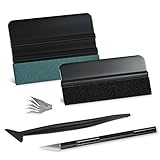
4. Apply with a Squeegee: While holding the bottom edge away from the surface, use a squeegee or a credit card wrapped in a microfiber cloth to press the sticker down. Start from the top (near the tape) and work your way down, moving from the center outwards.
5. Remove Transfer Tape: For vinyl decals with a top layer, carefully peel back the clear transfer tape. Pull it at a sharp, 180-degree angle to yourself to ensure the decal stays on the surface.
What Is the Ideal Temperature and Weather for Applying Stickers?
The best temperature to apply car decals is between 50°F and 90°F (10°C and 32°C). You must avoid applying stickers in direct sunlight or when the car’s surface is hot to the touch. The adhesive needs this moderate temperature range to bond correctly and cure for long-term durability. Think of the sticker’s adhesive like Goldilocks’ porridge—it can’t be too hot or too cold; it has to be just right.
From our practical experience, temperature is the most common reason for application failure.
* Too Cold (Below 50°F / 10°C): The adhesive becomes too hard and won’t be able to form a strong bond with the surface. The sticker is likely to peel off.
* Too Hot (Above 90°F / 32°C): The adhesive can become overly sticky and aggressive, making it grab the surface instantly and preventing you from correcting mistakes. The vinyl itself can also stretch.
* Just Right (50°F – 90°F / 10°C – 32°C): The adhesive is pliable and bonds perfectly, allowing for a durable, long-lasting application.
Pro Tip: If you must apply a sticker in cooler weather, use a hairdryer on a low setting to gently warm the vehicle’s surface before you clean and apply it. This will help the adhesive bond more effectively.
FAQs About where to put stickers on a car
Can you put stickers on a leased or financed car?
Yes, you can typically put stickers on a leased or financed car, but you must be able to remove them without a trace before returning the vehicle. Use high-quality vinyl decals, as they are designed for clean removal. Avoid placing stickers on textured interior surfaces or areas prone to heavy sun-baking, which can make removal difficult and potentially lead to charges for paint or surface damage.
Will car stickers or decals damage my car’s paint?
High-quality vinyl car stickers will not damage modern factory car paint if applied and removed correctly. The risk of damage comes from using low-quality adhesives, leaving stickers on for an excessive number of years (10+), or using improper removal techniques like scraping with metal tools. To protect your paint, always use gentle heat from a hairdryer to soften the adhesive before peeling the sticker off.
How do you safely remove old car stickers and their residue?
To safely remove an old car sticker, first gently heat it with a hairdryer for 30-60 seconds to soften the adhesive. Then, use a plastic razor blade or your fingernail to peel up an edge and slowly pull the sticker off at a sharp angle. For any remaining residue, use a dedicated adhesive remover or 3M Adhesive Remover on a microfiber cloth.
Do bumper stickers lower a car’s resale value?
Yes, excessive or controversial bumper stickers can lower a car’s resale value. Many potential buyers see them as a sign of personalization that they will have to spend time and effort removing. A few, well-placed and easily removable decals are unlikely to have a major impact, but a heavily stickered bumper can be a significant deterrent for dealerships and private buyers alike.
How long do vinyl car stickers last?
Professionally made, outdoor-rated vinyl car stickers can last from 3 to 7 years, and sometimes longer. Longevity depends on the quality of the vinyl (cast vinyl lasts longer than calendered), the amount of direct sun exposure, and the climate. Stickers placed on vertical surfaces like doors last longer than those on horizontal surfaces like the roof or hood.
Is it better to put stickers on the glass or the paint?
Placing stickers on glass is generally safer and easier for removal than placing them on paint. Glass is a harder, less porous surface, so there is virtually no risk of damage, and adhesive residue is easier to clean off. However, placement on glass is more heavily regulated by law, whereas placement on paint (body panels) offers more creative freedom.
Can you take a car with stickers through a car wash?
Yes, you can take a car with high-quality vinyl stickers through a car wash after the adhesive has fully cured (wait at least 48-72 hours after application). Touchless car washes are safer than those with brushes, which can potentially catch an edge and peel the sticker. If your sticker has fine, intricate details, hand washing is the safest option.
What’s the difference between a sticker and a decal?
While often used interchangeably, a “decal” is a specific type of sticker designed to be transferred from one surface to another. Decals typically consist of three layers: a paper backing, the decal itself (often vinyl lettering or a design), and a transfer tape on top. A “sticker” is usually a single piece of vinyl or paper with an adhesive backing that you just peel and stick.
Where should I put learner (L) or new driver (N) plates?
Learner plates must be placed where they are clearly visible from both the front and rear of the vehicle. The most common and legally compliant placement is on the upper left or right corners of the front windshield and rear window. They must not obstruct the driver’s central view. Always check your local transportation authority’s specific rules for placement.
Can I put a sticker over a scratch or rust spot?
While you can put a sticker over a minor surface scratch for aesthetic reasons, you should never put a sticker over a rust spot. Placing a sticker over rust will trap moisture underneath, accelerating the corrosion process and making the problem much worse. The rust will eventually bubble up under the sticker. Always repair rust properly before considering covering the area.
Key Takeaways: Where to Put Stickers on a Car Summary
Here is a summary of the most important points to remember when deciding where to put stickers on your car:
- Legality is Paramount: Always prioritize legal compliance. Never place stickers where they can obstruct the driver’s view through the front, rear, or side windows. Check your local state or country laws, as regulations for window placement vary significantly.
- Best Spots for Visibility & Safety: The rear bumper, rear quarter glass (small side windows), and painted body panels are the safest and most effective locations for balancing visibility and legality.
- Application is a Process, Not a Slap: For a professional, bubble-free finish, always follow the 5-step process: Clean the surface with isopropyl alcohol, Position with tape, Peel the backing, Apply with a squeegee from the center out, and (if applicable) Remove the transfer tape.
- Temperature Matters: Apply stickers in moderate temperatures, ideally between 50°F and 90°F (10°C and 32°C). Applying in extreme cold or heat will compromise the adhesive and lead to application failure.
- Quality In, Quality Out: Use high-quality, outdoor-rated vinyl decals. They will not damage your car’s paint, will last for years, and are significantly easier to remove cleanly when the time comes.
- Removal Requires Patience, Not Force: To remove stickers safely, use gentle heat from a hairdryer to soften the adhesive, then peel slowly. Never use metal scrapers on paint.
- Leased & Financed Cars are Okay: You can apply stickers to a leased car, but you are responsible for any damage upon return. Stick to glass or use high-quality, removable vinyl on paint to avoid costly penalties.
Final Thoughts on Your Car Sticker Strategy
Putting a sticker on your car is a fantastic way to show off your personality, support a cause, or just have some fun. A successful car sticker strategy is all about balancing that personal expression with legal safety and practical application. By choosing the right location, using quality materials, and following a professional application process, you can customize your vehicle with confidence, knowing you won’t risk damage or legal issues down the road. You are now equipped with the expert knowledge to make the perfect choice for your car and your new sticker.
Last update on 2026-03-17 / Affiliate links / Images from Amazon Product Advertising API


