Worried about when you should install your car seat? You’re not alone; many expecting parents feel anxious about getting this critical task done right and on time. Preparing for your baby’s arrival involves a long checklist, and this is one item you want to check off with confidence.
The recommended time to install your car seat is between 35 and 37 weeks of pregnancy. This gives you a few weeks of buffer before your due date to practice, get it inspected, and make any necessary adjustments without feeling rushed. This timeline applies specifically to installing the car seat base in your vehicle.
Based on official guidelines from Child Passenger Safety Technicians (CPSTs), this approach ensures you are prepared for an early arrival while avoiding last-minute stress. This guide will walk you through not just the timing, but the entire process, covering the critical difference between the base and carrier, common mistakes, and how to get your installation verified by an expert.
Key Facts
- Ideal Installation Window: Official guidelines recommend installing your car seat between 35 and 37 weeks of pregnancy, providing a crucial buffer before your due date.
- Hospital Discharge Requirement: Hospitals will not let you leave with your newborn in a vehicle without a properly installed, non-expired infant car seat, as this is a matter of both policy and law.
- The Safest Spot: The center rear seat is statistically the safest location, but only if you can achieve a secure installation. A tight install on an outboard (side) seat is safer than a loose one in the middle.
- Expert Verification: Research indicates that a high percentage of car seats are installed incorrectly. Having your installation checked by a certified Child Passenger Safety Technician (CPST) is the only way to ensure it’s 100% correct.
- Used Seat Warning: Safety experts strongly advise against using a second-hand car seat unless you know its complete history, as it could be expired, damaged, or have been in a crash, compromising its integrity.
When Should You Install Your Car Seat During Pregnancy?
The recommended time to install your car seat is between 35 and 37 weeks of pregnancy. This expert-backed timeline is the sweet spot for several important reasons. It gives you a comfortable window to complete the installation before the final, often hectic, weeks of your third trimester without the pressure of an impending due date. Imagine going into labor early at 38 weeks; you’ll be relieved the seat is already correctly installed and ready to go.
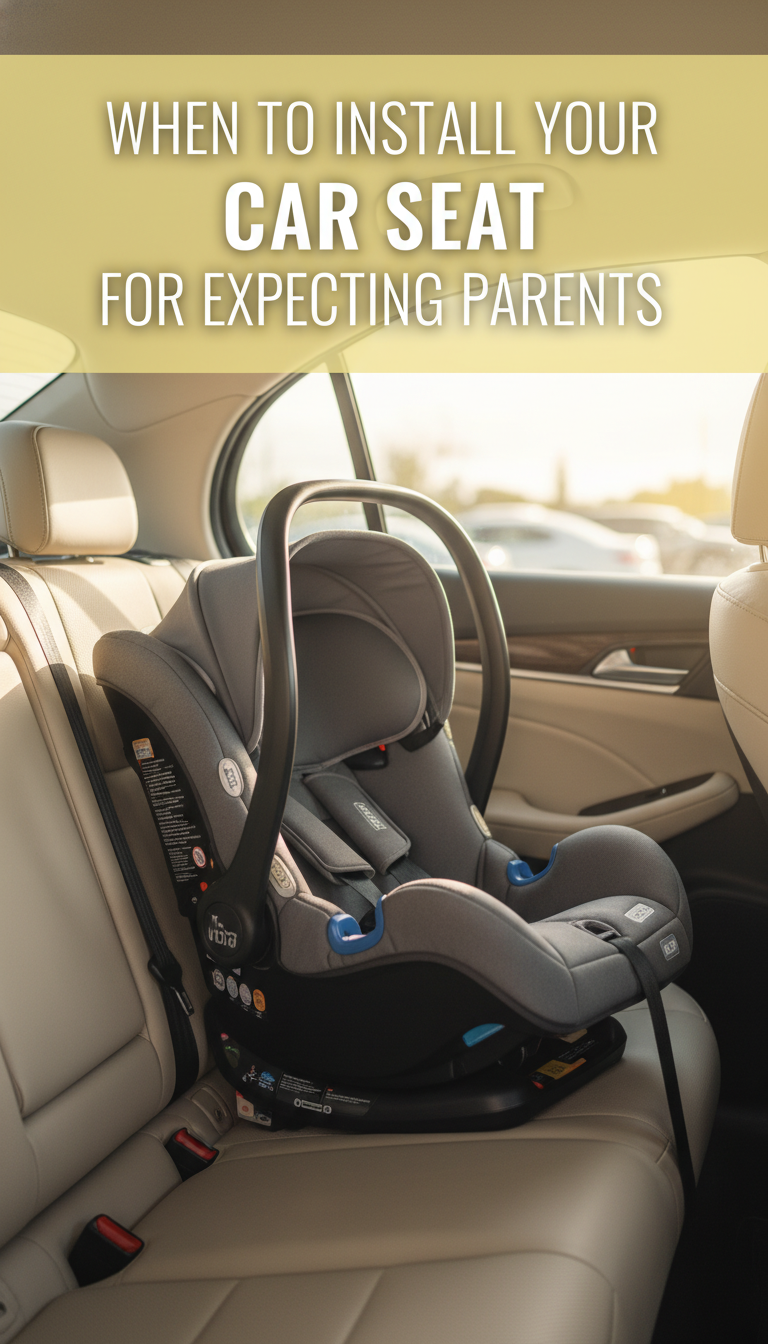
Waiting until this period also means the car seat base won’t sit in your car for an unnecessarily long time. More importantly, it gives you ample time to practice with the seat, read the manufacturer instructions thoroughly, and schedule a professional inspection. This installation is just one part of preparing for your baby, similar to packing your hospital bag checklist, and getting it done in the 35-37 week window brings immense peace of mind.
Pro-Tip: When we talk about “installing the car seat,” we mean installing the car seat base only. The separate infant carrier should be kept clean and safe inside your home until delivery day.
Why is It Important To Distinguish Between Installing the Base and the Carrier?
Thinking of the car seat as two separate parts—the infant car seat base that stays in the car and the portable infant carrier the baby rides in—is a key insight. You should install the base ahead of time, but keep the carrier inside. For example, leaving the carrier in a hot or cold car can make the materials uncomfortable for a newborn.
Here’s why this distinction is so important:
- 🌡 Temperature Control: Plastic and metal parts on the carrier, like buckle tongues, can get dangerously hot in the summer or uncomfortably cold in the winter. Keeping the carrier indoors prevents this.
- 💤 Cleanliness: Your home is a much cleaner environment than your car. Keeping the carrier inside ensures the fabric is fresh and ready for your newborn’s first ride home.
- 🚗 Convenience on Delivery Day: When it’s time to go to the hospital, you’ll only need to grab the lightweight carrier. You won’t be fumbling with a car seat manual or a full installation on the day of delivery, which simplifies the process of hospital discharge.
How Do You Properly Install an Infant Car Seat Base?
To properly install a car seat base, you can use either the vehicle’s LATCH system or the seatbelt—never both simultaneously. The goal is to ensure the base is level according to its indicator and does not move more than one inch side-to-side or front-to-back when you test it at the belt path.
Before you begin, grab two essential documents: your vehicle owner’s manual and your car seat manufacturer manual. These are your ultimate guides. Here’s a step-by-step process to follow.
- Read Your Manuals: Your car’s manual shows where the LATCH anchors are located. Your car seat manual explains the specific steps for your model. Read them first.
- Choose Your Position and Method: Decide on the location (center or side seat) and your installation method (LATCH or vehicle seatbelt).
- Position and Level the Base: Place the car seat base on the vehicle seat. Adjust the recline foot or use a rolled towel (if your manual allows) until the level indicator shows it’s at the correct angle for a newborn.
- Secure and Tighten:
- For LATCH: Click the lower anchor connectors onto the vehicle’s anchors. Pull the tightening strap while pressing down firmly on the base with your body weight.
- For Seatbelt: Thread the vehicle seatbelt through the marked belt path on the base. Buckle it, then engage the seatbelt’s locking mechanism. Pull the belt tight while pressing down firmly on the base.
- Perform the 1-Inch Test: Grab the base at the belt path where it’s secured. Tug it side-to-side and front-to-back. If it moves more than one inch in any direction, it is too loose and you need to tighten it further.
What Is the Difference Between Using the LATCH System and a Seatbelt?
Both the LATCH system (Lower Anchors and Tethers for Children) and your vehicle’s seatbelt are equally safe methods for car seat installation when used correctly. You must choose one—never use both at the same time. LATCH is often easier for first-time installers, but a seatbelt installation is equally safe. A key difference to be aware of is that the LATCH system has a lower anchor weight limit of 65 pounds total (the combined weight of the seat and your child).
Here’s a clear breakdown of the differences:
| Feature/Aspect | LATCH System | Vehicle Seatbelt |
|---|---|---|
| How it Works | Uses dedicated lower anchors and tethers built into the vehicle. | Uses the car’s standard lap and shoulder belt. |
| Ease of Use | Often considered easier; many seats have simple click-in connectors. | Can be more complex; requires understanding how to lock the seatbelt. |
| Common Mistake | Exceeding the total weight limit (seat + child); check your manual! | Not locking the seatbelt, resulting in a loose installation. |
| Best For | Achieving a tight installation quickly, especially for beginners. | All seating positions, including the center seat where LATCH is often unavailable. |
| Safety Level | Equally Safe | Equally Safe (when installed correctly) |
Remember: The safest method is the one that allows YOU to get a secure, tight installation in YOUR vehicle.
What Are the Most Common Car Seat Installation Mistakes to Avoid?
The most common mistake is a loose installation; the car seat base should not move more than one inch at the belt path. However, even with a tight fit, other critical errors can compromise safety. According to CPST certified technicians, mistakes with the recline angle and harness fit are just as dangerous. Knowing these pitfalls ahead of time can help you avoid them.
1. The Installation is Too Loose
A loose car seat can’t properly protect your child in a crash. The 1-inch test is the gold standard for checking tightness.
- Why It’s a Risk: In a collision, a loose seat can move excessively, increasing the risk of injury from impact with other parts of the vehicle.
- How to Fix It:
- Put your weight into the base as you tighten the LATCH strap or seatbelt. Use your knee or hand to press down firmly in the center of the base.
- Ensure the vehicle’s seatbelt is in its locked mode. Check your vehicle owner’s manual to learn how to lock your specific seatbelt.
2. The Recline Angle is Wrong
For a newborn, the recline angle is a critical safety feature that protects the baby’s airway.
- Why It’s a Risk: If the seat is too upright, a newborn’s head can fall forward, potentially obstructing their fragile airway. If it’s too reclined, it may not offer optimal crash protection.
- How to Fix It:
- Adjust the built-in recline foot on the base until the level indicator is in the correct zone for a newborn.
- If your base is still not level, your car seat manual may permit the use of a tightly rolled towel or pool noodle under the base to achieve the correct angle.
3. The Harness is Twisted or Too Loose
The five-point harness is what holds your child securely in the seat. It only works if it’s flat and snug.
- Why It’s a Risk: A loose harness can lead to ejection in a crash. Twisted straps distribute force unevenly and can cause injury.
- How to Fix It:
- The Pinch Test: After buckling your baby in, try to pinch a horizontal fold of the harness strap at their collarbone. If you can pinch any excess webbing, it’s too loose.
- Always make sure the straps are flat and not twisted before buckling.
4. The Chest Clip is in the Wrong Position
The chest clip is a pre-crash positioner. Its job is to keep the shoulder straps correctly placed on your child’s shoulders before a crash happens.
- Why It’s a Risk: If the clip is too low (on the belly), the shoulder straps can slide off, and the child could come out of the seat in a crash. If it’s too high, it can be a choking hazard.
- How to Fix It:
- Position the chest clip at armpit level. It should sit squarely across your child’s sternum.
Where Is the Safest Place to Install a Car Seat in Your Vehicle?
The safest location for a car seat is where you can get the most secure fit. The center rear seat is statistically the safest spot because it is the farthest from a potential side impact. However, this is only true if you can install the car seat tightly there. If you cannot get a good fit in the middle, a securely installed car seat on either side of the back seat is a very safe option.
Here are the pros and cons of each position:
- Center Rear Seat
- Pro: Statistically the safest position, as it offers maximum distance from side impacts.
- Con: Many vehicles do not have LATCH anchors for the center seat, and the vehicle seat or floor hump can make a secure seatbelt installation difficult.
- Outboard Rear Seat (Passenger or Driver Side)
- Pro: Almost always equipped with LATCH anchors and a flat seat, making a secure installation easier to achieve. The passenger side is often preferred for easier access to the baby from the curb.
- Con: It is closer to the door in the event of a side-impact collision.
Crucial Safety Rule: You must NEVER install a rear-facing car seat in the front passenger seat. A deploying front airbag is designed for an adult and will strike the back of the car seat with tremendous force, which can cause severe injury or death.
Who Can Check if Your Car Seat Is Installed Correctly?
To confirm your car seat is installed correctly, you should have it inspected by a certified Child Passenger Safety Technician (CPST). These technicians are trained and certified experts who can teach you how to install and use your car seat correctly. This final check provides peace of mind that your baby will be as safe as possible.
Finding a CPST is easier than you think. Here’s how:
- Visit the NHTSA Car Seat Inspection Station Locator online.
- Enter your zip code to find local inspection stations, community events, or individual technicians.
- Call to schedule an appointment. Many inspections are free, but some may have a small fee.
Myth: All Firefighters are Car Seat Experts
While many fire departments host inspection events, not every firefighter is a certified CPST. It’s a common misconception. Always confirm you are meeting with a certified technician, as they have undergone extensive, standardized training on all types of car seats and vehicles. An inspection is an educational session where they teach you how to do it, so you can be confident reinstalling it yourself anytime.
FAQs About when should i install my car seat
Is 35 weeks too soon to install a car seat?
No, 35 weeks is not too soon; it’s the perfect time to start. Most safety experts recommend installing your car seat base between 35 and 37 weeks. This gives you plenty of time to ensure it’s done correctly and even get it professionally inspected before the baby’s arrival, which could happen anytime in the coming weeks.
Do I need a car seat to leave the hospital?
Yes, you absolutely need a properly installed car seat to bring your baby home from the hospital. Hospitals and birthing centers have strict discharge policies and will not allow you to leave in a vehicle with a newborn unless they are secured in an appropriate, non-expired infant car seat. This is a matter of both hospital policy and state law.
When should you switch from an infant to a convertible car seat?
You should switch to a convertible car seat when your child reaches the maximum height or weight limit of their infant seat, whichever comes first. Do not switch based on age. Check the labels on the side of your infant carrier for these specific limits. Keeping them in the infant seat as long as they fit is safest.
Can I install a car seat without the base?
Many infant car seats can be installed without the base using the vehicle’s seatbelt. This is safe when done correctly and is designed for convenience when traveling in taxis, Ubers, or other cars. However, you must read your specific car seat manual to confirm it allows for a baseless install and to learn the proper technique.
Is it okay to leave a car seat in a hot car?
You should avoid leaving the infant carrier portion of the car seat in a hot car. The plastic and metal components, especially buckle tongues, can become extremely hot and pose a burn risk to your baby. It is fine to leave the installed base in the car, but always bring the carrier inside with you.
Can I use a second-hand car seat?
It is strongly recommended that you do not use a second-hand car seat unless you know its full history. A used seat could have been in a crash (even a minor one), cleaned with harsh chemicals, or be past its expiration date, all of which compromise its safety. A new, inexpensive seat is always a safer choice than a used seat with an unknown past.
How do I know if my car has LATCH or ISOFIX?
Nearly all vehicles manufactured after September 1, 2002, are required to have the LATCH system in at least two rear seating positions. ISOFIX is the European standard, which is functionally very similar. Look for small plastic buttons or tags on the seat bight (the crack between the seat back and bottom cushion) labeled “LATCH” or showing a car seat icon.
What is a CPST?
A CPST is a Child Passenger Safety Technician who is nationally certified to inspect car seats and teach parents and caregivers how to install and use them correctly. They are highly trained experts and the best resource for ensuring your car seat is installed safely. They have undergone extensive training and certification.
When should I take the newborn insert out of the car seat?
You should remove the newborn insert when your baby reaches the weight or height limit specified by the car seat manufacturer for that specific insert. This information is always in the car seat manual. Some inserts are for babies up to 11 lbs, while others may be different. Do not remove it early, as it provides crucial support.
Can I install the car seat in the front seat?
No, you must never install a rear-facing car seat in the front passenger seat. A deployed airbag would strike the back of the car seat with immense force, causing catastrophic injury or death. The back seat is the only safe place for a child in a car seat, especially a rear-facing one.
Key Takeaways: Car Seat Installation Timing Summary
- Install Between 35-37 Weeks: The ideal time to install your car seat base is during this window. This provides a stress-free buffer before your due date for installation, practice, and professional inspection.
- Base in Car, Carrier in House: Install the base securely in your vehicle, but keep the infant carrier indoors until it’s time to go to the hospital. This protects the carrier from extreme temperatures and keeps it clean for your newborn.
- Secure Fit is the #1 Priority: The safest seating position is the one where you can achieve a tight, secure installation. A secure install on the side is safer than a loose install in the middle. The seat should not move more than 1 inch at the belt path.
- Avoid Common Mistakes: The most critical errors are a loose installation, an incorrect recline angle for a newborn, and improper harness use (loose straps or a low chest clip). Always perform the 1-inch test and the pinch test.
- Get It Professionally Checked: The only way to be 100% sure is to have your installation checked by a certified Child Passenger Safety Technician (CPST). This is the gold standard for ensuring your baby’s safety.
- Read Your Manuals: Your vehicle manual and your car seat manual are the ultimate sources of truth. They contain specific instructions and limitations (like LATCH weight limits) that are critical for a safe installation.
- Never Use an Expired or Damaged Seat: Car seats have expiration dates (usually 6-10 years) because materials degrade. Never use a seat that has been in a crash or has an unknown history.
Final Thoughts on Your First Car Seat Installation
Installing your first car seat is a rite of passage for expecting parents. By following the guidance to install between 35 and 37 weeks, focusing on a secure fit, and understanding the common pitfalls, you have already taken massive steps toward ensuring your child’s safety. You’ve learned the why, the how, and the where.
Now for the final, most important step. Consider this a three-part process: you learned with this guide, you installed it yourself, and now it’s time to verify. Scheduling an appointment with a certified Child Passenger Safety Technician is not a sign of failure—it is the ultimate act of responsible parenting. It provides the final layer of confidence you deserve before your baby’s first ride home.