
Is your car’s temperature gauge stubbornly stuck on “C” long after you’ve started driving? You’re right to be concerned. This dashboard reading can be confusing, signaling anything from a minor issue to a critical engine problem that requires immediate attention.
A car temperature gauge on “C” means the Engine Control Unit (ECU) perceives the coolant as cold. This is normal for the first few minutes of driving. However, if it stays on “C” after 5-10 minutes, it indicates a problem, such as a faulty thermostat, a bad sensor, or dangerously low coolant levels that could lead to severe overheating.
Based on extensive automotive diagnostic data and repair analysis, this guide explains exactly what a cold reading means and what to do. You’ll learn the safety risks, the most common causes, and a clear, step-by-step process to diagnose the issue accurately, helping you avoid costly engine damage.
Key Facts
- The Overheating Paradox: A gauge on “C” can paradoxically mean the engine is severely overheating, which happens when a total coolant loss prevents the sensor from getting a reading.
- Thermostat is the Prime Suspect: A thermostat stuck in the open position is the most common cause, preventing the engine from reaching its proper operating temperature.
- Fuel Economy Impact: An engine that runs too cold can suffer up to a 15% reduction in fuel economy because it remains in a fuel-rich “open-loop” mode.
- Heater as a Diagnostic Tool: One of the quickest diagnostic checks is your heater; if it blows cold air when the gauge is on “C”, a stuck-open thermostat is the likely culprit.
- Sensor vs. Thermostat Failure: A faulty thermostat usually causes a slow or low-rising gauge, while a faulty temperature sensor often causes an abrupt drop from normal to “C”.
What To Do If Your Car Temperature Gauge Is On C?
A temperature gauge on “C” indicates the engine’s coolant has not reached its normal operating temperature, or the system that measures it has failed. This is completely normal when you first start your vehicle on a cool day. The needle should gradually climb to the middle of the gauge (typically 195-220°F) within 5 to 10 minutes of driving. The problem arises when the needle never leaves the “C” mark or takes an unusually long time to warm up.

Understanding the meaning of dashboard icons is crucial, and this one is particularly tricky. The core issue is that a cold reading presents a paradox. In most cases, it points to a component that is over-cooling the engine, like a stuck-open thermostat. However, in the worst-case scenario, it can mean you have no coolant at all. This creates a dangerously unmonitored hot engine, as the sensor has no liquid to measure and falsely reports a cold temperature while the engine is critically overheating.
⚠️ Safety First: Critical Warning Before You Proceed
A temperature gauge stuck on “C” (Cold) can be misleading and potentially dangerous. In some cases, it can indicate a total loss of coolant, meaning the sensor has nothing to measure while the engine is severely overheating. NEVER open the radiator cap on a hot or recently driven engine. Pressurized, superheated steam and coolant can cause severe burns. If you see steam coming from the hood or smell hot antifreeze, pull over immediately, shut off the engine, and call for professional assistance.
Is It Safe to Drive If My Car Temperature Gauge Stays On C?
This is the most critical question, and the answer requires a careful risk assessment. The safety of driving depends entirely on the underlying cause, which can be determined by observing other symptoms.
You can drive short distances if the gauge stays on “C,” but it is not recommended for long trips. The primary risk is that the engine isn’t reaching its proper operating temperature, causing poor fuel economy and long-term engine wear. The most dangerous scenario is if the gauge is on “C” because of a total coolant loss, which means the engine is overheating without you knowing.
Here’s a simple framework to follow for your emergency protocol:
- When It Might Be Temporarily Okay (With Caution): If the gauge stays on “C,” the Check Engine Light is off, the car is running smoothly, and the heater is blowing cool air, you likely have a stuck-open thermostat. In this case, you can generally drive a short distance to your home or a repair shop. The engine is running in “open-loop” mode—a less efficient state—but is not in immediate danger of catastrophic failure.
When to Pull Over IMMEDIATELY: If the temperature gauge is on “C” but you notice any of the following signs, you must pull over safely and shut off the engine. These indicate a potential overheating situation masked by a faulty gauge reading:
- Steam coming from under the hood.
- A strong, sweet smell of hot antifreeze.
- The red temperature warning light illuminates on the dashboard.
- The engine begins to run rough, make knocking noises, or lose power.
Driving under these conditions, even for a minute, can lead to severe engine damage, like a warped cylinder head or a seized engine.
Why Is My Car Temperature Gauge Staying On Cold? (The 4 Most Common Causes)
If your gauge remains on “C” after 15 minutes of driving, it’s almost certainly due to a fault in the cooling or sensor system. From years of diagnostic experience, the issue usually traces back to one of these four components.
1. Stuck-Open Thermostat
This is the most common culprit. The thermostat is a small valve that controls coolant flow between the engine and the radiator. It’s designed to stay closed when the engine is cold, allowing coolant to warm up quickly within the engine block. Once it reaches operating temperature (around 195°F), the thermostat opens to circulate coolant through the radiator to prevent overheating.
If the thermostat gets stuck in the open position, coolant circulates through the radiator constantly. The engine never gets a chance to warm up properly, especially in cool weather or at highway speeds, so the gauge stays on “C”.
2. Faulty Coolant Temperature Sensor (CTS)
The Coolant Temperature Sensor (CTS) is a small probe that measures the temperature of the antifreeze and sends this information to two places: the dashboard gauge and the Engine Control Unit (ECU). If this sensor fails, it can send an incorrect signal.
Often, a failed CTS will send a “full cold” reading (e.g., -40°F) to the ECU and the gauge, causing the needle to stay pinned on “C” even if the engine is perfectly warm. This can also trigger the Check Engine Light.
3. Extremely Low Coolant Levels
This is the most dangerous cause. The CTS needs to be submerged in coolant to get an accurate reading. If there’s a major coolant leak, the level can drop so low that the sensor is left measuring the temperature of air or steam inside the system.
Air does not transfer heat as well as liquid, so the sensor will report a “cold” temperature to the gauge. Meanwhile, the metal parts of the engine, starved of cooling liquid, are rapidly overheating. This is why you must trust other signs like steam or smells over the gauge itself.
4. Wiring or Instrument Cluster Issues
Less commonly, the problem may lie in the electrical path between the sensor and the gauge. A broken wire, a corroded connector, or a fault within the dashboard’s instrument cluster itself can interrupt the signal, causing the gauge to stop working and rest at the “C” position. An OBD2 scanner can quickly diagnose this by comparing the ECU’s temperature data to what the gauge is showing.
To help you distinguish between the two most frequent causes, here is a direct comparison.
| Symptom / Test | 1. Stuck-Open Thermostat | 2. Faulty Coolant Temp Sensor (CTS) |
|---|---|---|
| Heater Performance | Heater blows cool or lukewarm air, never gets hot. | Heater performance is usually normal (gets hot). |
| Gauge Behavior | Needle rises very slowly and may drop at highway speeds. | Needle stays on ‘C’ or behaves erratically (jumps around). |
| Fuel Economy | Noticeably worse; engine stays in “open-loop” mode. | May or may not be affected, but can trigger a Check Engine Light. |
| Check Engine Light | Less common, but possible for “engine cold too long” codes (e.g., P0128). | More common, with codes specific to the CTS circuit (e.g., P0117, P0118). |
| Diagnostic Clue | Upper radiator hose feels cool/lukewarm after 15 mins of driving. | OBD2 scanner shows an irrational reading (e.g., -40°F) while engine is warm. |
What Are The Signs Of A Stuck-Open Thermostat?
Because a stuck-open thermostat is the most frequent cause, it’s helpful to know its specific symptoms. If your car is experiencing the following, a thermostat replacement is very likely in your future.
- Heater Blows Cold or Lukewarm Air: This is the telltale sign. The heater core, which provides warmth to the cabin, uses hot coolant from the engine. If the engine never gets hot, the air from your vents never will either. The gauge may struggle to get above 1/4 of the way up.
- Gauge Rises Slowly and Drops at Speed: The needle may slowly creep up in stop-and-go traffic but then fall back toward “C” when you drive on the highway. The constant airflow through the radiator at higher speeds over-cools the engine.
- Decreased Fuel Mileage: You may notice you’re filling up your gas tank more often. The engine is staying in its inefficient warm-up mode, wasting fuel.
- Check Engine Light with Code P0128: Modern vehicles monitor how long it takes for the engine to warm up. If it takes too long, the ECU will trigger a Check Engine Light with the code P0128 (Coolant Thermostat Temperature Below Regulating Temperature).
A simple at-home test can provide a strong clue. After 10-15 minutes of idling, carefully feel the upper radiator hose. If it’s only slightly warm or cool to the touch, the thermostat is likely stuck open, allowing coolant to flow prematurely before the engine is warm.
How Can You Diagnose Why Your Car Temperature Gauge Is On C?
To pinpoint the exact cause, follow this systematic diagnostic process, moving from simple visual checks to using specialized tools. This is the same workflow a professional mechanic would use.
- Perform the Heater Test: This is the first and easiest check. After driving for at least 10 minutes, turn your heater and fan on high.
- If the air is cold or lukewarm: The problem is almost certainly a stuck-open thermostat, as not enough hot coolant is available.
- If the air gets hot: The engine is warming up correctly. The problem lies with what’s reporting the temperature—likely a faulty coolant temperature sensor (CTS), wiring, or the gauge itself.
- Check the Coolant Level (When Cold): Park the car on a level surface and wait for the engine to cool down completely (at least a few hours). Open the hood and locate the coolant overflow reservoir—a semi-transparent plastic tank near the radiator. The coolant level should be between the “MIN” and “MAX” lines. If it’s empty, you have a leak that needs immediate attention.
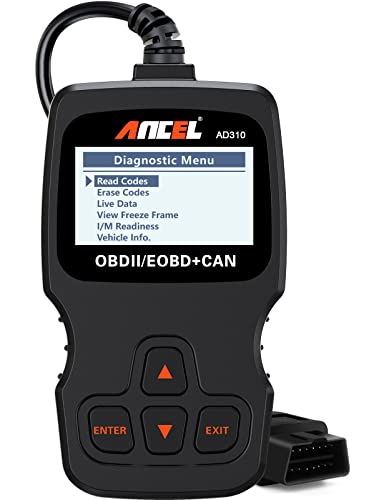
Scan for Diagnostic Trouble Codes (DTCs): The most definitive way to diagnose the issue is with an OBD2 scanner. These devices plug into a port under your dashboard and communicate with your car’s computer.
- Connect the scanner and check for any stored codes. A P0128 code points to a thermostat issue. Codes like P0117 (Sensor Circuit Low) or P0118 (Sensor Circuit High) point directly to a bad CTS.
- Check Live Data with an OBD2 Scanner: A good scanner can show you “live data” from the car’s sensors. Navigate to the engine coolant temperature reading.
- Start the cold engine and watch the temperature rise on the scanner. It should climb steadily to around 195-220°F.
- If the scanner shows a normal operating temperature but the dashboard gauge still reads “C,” you have confirmed the problem is the gauge itself or its wiring.
- If the scanner’s reading stays very low (e.g., below 150°F) or is an irrational number (e.g., -40°F), you have confirmed a faulty thermostat or CTS, respectively.
For DIY diagnostics, an OBD2 scanner is an invaluable tool that can save you hundreds of dollars in diagnostic fees.
What Happens If a Car Never Reaches Normal Operating Temperature?
Ignoring a temperature gauge that stays on “C” might not seem urgent, but running an engine too cold for extended periods causes several significant problems that lead to expensive repairs. Here’s what’s happening under the hood.
- 🚧 Poor Fuel Economy: To ensure smooth operation when cold, the ECU intentionally runs a “rich” fuel mixture (more fuel, less air). If the engine never reaches its target temperature, it never switches to the more efficient “closed-loop” mode. This constant rich mixture wastes a significant amount of fuel.
- 🔧 Increased Engine Wear: Engine oil is designed to work at a specific temperature. When it’s too cold, the oil is thicker (has higher viscosity) and doesn’t lubricate moving parts effectively. This increases friction and wear on critical components like pistons, bearings, and cylinder walls.
- 🧱 Engine Sludge Buildup: A normal byproduct of combustion is water. In a hot engine, this water turns to steam and is expelled through the exhaust. In an engine that runs too cold, the water condenses and mixes with the engine oil, forming a thick, damaging sludge that can clog oil passages and starve the engine of lubrication.
- 🚩 Failed Emissions Tests: The rich fuel mixture from a cold engine results in incomplete combustion, producing high levels of hydrocarbons (HC) and carbon monoxide (CO). This not only pollutes the air but can overwhelm and damage the catalytic converter, an expensive and essential emissions control device. This will cause an automatic failure on an emissions test.
FAQs About what to do if car is on c
Can a car overheat if the gauge says cold?
Yes, absolutely. This is the most dangerous scenario. If you have a major coolant leak, there may be no liquid left to touch the coolant temperature sensor. The sensor will report a “cold” reading to the gauge, while the metal of the engine is getting dangerously hot. If the gauge is on C but you see steam or smell antifreeze, pull over immediately.
Why is my car heater blowing cold air?
This is a classic symptom of a stuck-open thermostat. The thermostat’s job is to keep hot coolant inside the engine block until it’s warm. If it’s stuck open, coolant flows to the radiator and cools down before it can get hot enough to provide heat to the heater core in your dashboard.
Why does my temp gauge suddenly drop to C while driving?
This often points to an electrical issue, like a faulty coolant temperature sensor (CTS) or bad wiring. A thermostat typically fails slowly, but a sensor can fail instantly, causing the gauge to drop from normal to “C” in a second. It can also be caused by a large air bubble in the cooling system passing over the sensor.
Why is my radiator fan running if the gauge is on C?
This can happen if the Engine Control Unit (ECU) goes into a “fail-safe” mode. If the coolant temperature sensor fails and gives an irrational reading, the ECU might turn the fans on high as a precaution to prevent potential overheating. It can also be related to the A/C system, as the fans often run when the air conditioning is on, regardless of engine temp.
How much does it cost to fix a temp gauge that’s on C?
The cost varies widely depending on the cause. A thermostat replacement is one of the most common and affordable repairs, typically costing between $150 and $350. Replacing a coolant temperature sensor is often cheaper, around $100 to $250. If the problem is the instrument cluster itself, the repair could be significantly more expensive.
Why does my car stay on C in the winter?
While it takes longer for an engine to warm up in cold weather, it should still reach normal temperature within 10-15 minutes. If it stays on “C” or just above it for your entire drive, you likely have a stuck open thermostat. The cold ambient air flowing through the radiator makes it impossible for the engine to warm up properly.
Can low coolant cause a cold reading on the gauge?
Yes, and it’s a very dangerous situation. If the coolant level is so low that it’s no longer making contact with the temperature sensor probe, the sensor will read the temperature of the air or steam in the system. This creates a false “cold” reading while the engine is actually overheating.
What is the normal position for a temp gauge?
For most vehicles, the normal position is directly in the middle of the gauge’s range (the 50% mark). The needle should climb to this position after 5-10 minutes of driving and stay there consistently, whether in city traffic or on the highway. On gauges with numbers, normal is typically 195-220°F (90-104°C).
Does a car use more gas when the engine is cold?
Yes, significantly more. When the engine is cold, the ECU operates in an “open-loop” mode, intentionally injecting extra fuel to help the engine warm up faster and ensure smooth operation. If your car never reaches operating temperature due to a fault, it stays in this fuel-rich mode, drastically reducing your fuel economy.
Is the blue temperature light on my dashboard the same as a “C” on a gauge?
Yes, it serves the same purpose. Many modern cars have replaced the analog gauge with a simple blue “cold engine” indicator light. This light will be on when you first start the car and should turn off after a few minutes. If the blue light stays on for your entire drive, it indicates the same problems as a gauge stuck on “C”.
Key Takeaways: Car Temperature Gauge on C Summary
- A “C” Reading Can Be Deceptive: A temperature gauge on “C” can mean the engine is simply warming up, but it can also dangerously indicate a total loss of coolant while the engine is severely overheating. Always be cautious.
- Heater is a Key Diagnostic Tool: The simplest first test is your car’s heater. If the gauge is on “C” and the heater blows cold air, the problem is most likely a stuck-open thermostat.
- Driving Is a Risk: Continuing to drive with a gauge on “C” leads to poor gas mileage, increased engine wear, and potential damage to your catalytic converter. It is not recommended for long distances.
- Thermostat vs. Sensor: A stuck-open thermostat is the most common cause. A faulty coolant temperature sensor is the next most likely culprit, often indicated by a sudden gauge drop or an immediate Check Engine Light.
- Trust Your Senses Over the Gauge: If you see steam, smell sweet-smelling antifreeze, or hear strange engine noises, pull over immediately and shut off the engine, regardless of what the temperature gauge says.
- Use an OBD2 Scanner for Certainty: The most accurate way to diagnose the issue is with an OBD2 scanner. It can read diagnostic trouble codes and show you the exact temperature reading the ECU is receiving, confirming if the gauge or a component is at fault.
Final Thoughts on Your Car’s Cold Temperature Reading
A car temperature gauge stuck on “C” is more than just a minor annoyance; it’s a critical warning that your engine’s health monitoring system is compromised. As we’ve seen, it can mask a serious overheating condition or, at best, lead to long-term engine damage and wasted fuel.
Don’t ignore it. By following a systematic approach—checking your heater, monitoring for serious warning signs, and using an OBD2 scanner for a definitive diagnosis—you can confidently identify the root cause. Addressing the issue, whether it’s a simple thermostat or a faulty sensor, will restore your engine’s efficiency, protect it from premature wear, and ensure you can trust the information on your dashboard.
Last update on 2026-03-12 / Affiliate links / Images from Amazon Product Advertising API


