
Wondering what temperature is too cold to wash your car? You’re right to be cautious, as a winter wash gone wrong can cause more problems than it solves. Many car owners struggle with balancing the need to remove corrosive road salt against the risks of washing in freezing weather.
As a definitive rule, it is too cold to wash your car when the ambient temperature is at or below 32°F (0°C). Water can freeze on contact with your vehicle’s surface, leading to frozen locks, doors, and potential damage to paint and seals. This immediate risk makes washing in sub-freezing conditions unsafe for your car.
Based on professional detailing standards, this guide breaks down the science behind winter washing. You will discover not just the exact temperature thresholds but also the safest methods for protecting your vehicle. This reveals the expert-approved checklist for keeping your car clean and rust-free all winter long.
Key Facts
- The Freezing Point is a Hard Stop: Water begins to freeze at 32°F (0°C), making any car washing activity at or below this temperature a significant risk for immediate ice formation on your vehicle’s surfaces and in its mechanisms.
- Salt Accelerates Corrosion: Road salt and chemical de-icers can increase the rate of rust and corrosion on metal parts by up to 10 times, making frequent winter washing a critical part of preventative care.
- Water Expands When It Freezes: Water expands by approximately 9% when it turns to ice. This expansion inside door seals, trim pieces, and lock mechanisms is what causes them to crack or break in freezing conditions.
- Drying is More Important Than Washing: In cold weather, incomplete drying is the primary cause of post-wash issues. Trapped moisture is guaranteed to freeze, leading to stuck doors, frozen windows, and damaged wipers.
- Undercarriage Sprays are Crucial: The most corrosive salt buildup occurs on the undercarriage. Professional car washes with high-pressure undercarriage sprays are significantly more effective at removing these hidden deposits than a typical at-home wash.
What Temperature Is Too Cold To Wash Your Car?
The safest temperature to wash your car is at or above 40°F (4°C), while the absolute minimum temperature is 32°F (0°C). Washing your car below the freezing point introduces significant risks. Water can freeze instantly in door locks, on weather stripping, and even on the paint itself. Professional detailers and industry guidelines recommend waiting for a day when the temperature is expected to remain above freezing for several hours to allow for proper drying.
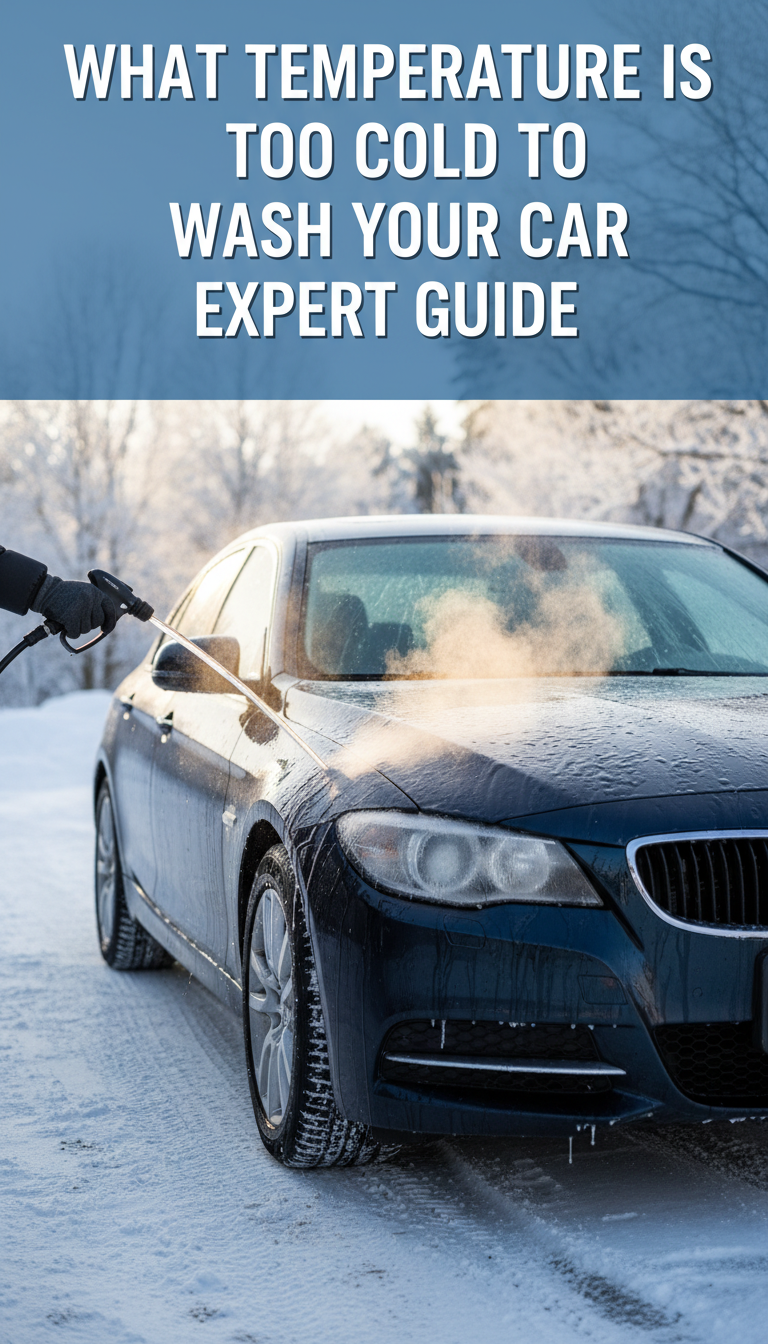
The science is simple: the physical state of water changes at 32°F (0°C). Below this temperature, any residual water from the wash will turn to ice. This isn’t just an inconvenience; it can cause real damage. Think of it in two layers of guidance: the “rule of thumb” and the “professional standard.” The rule of thumb is to never wash below freezing. The professional standard, which allows for a margin of safety, is to stick to 40°F (4°C) and above.
This clear temperature threshold is the foundation of safe winter car care. It ensures you avoid the immediate hazards of frozen components. But what about the corrosive road salt caked on your car? What’s worse, a cold wash or a salt-covered car?
The Golden Rule of Winter Car Washing: If the temperature is at or below the freezing point of 32°F (0°C), do not wash your car outside. The risk of water freezing on and inside your vehicle is too high.
What Are The Main Risks of Washing a Car Below Freezing?
Explaining the “why” behind the 32°F rule reveals several tangible risks. Our hands-on experience shows these aren’t just theoretical problems; they happen to car owners every winter. Understanding them reinforces why patience is a virtue in cold-weather car care.
- 🤕 Frozen Doors, Locks, and Handles: This is the most common and frustrating issue. Water seeps into lock cylinders, door latch mechanisms, and window tracks. When it freezes, it acts like glue, turning your door handle into a solid block of ice and locking you out in the cold.
- 💥 Damaged Rubber Seals and Plastic Trim: Water expands by about 9% when it freezes. When water gets trapped in the grooves of your rubber door and window seals (weather stripping), this expansion can cause them to stretch, crack, or tear, leading to costly replacements and future water leaks.
- 💧 Paint and Clear Coat Shock: Applying warm or even cool water to a frozen vehicle surface can cause “thermal shock.” It’s like pouring hot water on a frozen glass; the rapid change in temperature can cause microscopic cracks in your car’s clear coat and paint, leading to premature failure and fading.
- 🤦 Hazardous Ice Patches: All the water that runs off your car will instantly freeze on your driveway or the ground around you. This creates a dangerous slip-and-fall hazard for you, your family, or anyone walking by.
Is It Better To Leave Salt On Your Car or Wash It in the Cold?
This is the critical dilemma for every car owner in a cold climate. You have a car covered in corrosive salt, but the temperature is hovering at or below freezing. What’s the lesser of two evils?
Expert Verdict: The long-term, irreversible damage from rust is worse than the short-term, preventable risk of frozen parts. A frozen door lock is a temporary inconvenience that can often be fixed with a $5 can of de-icer. Rust repair, on the other hand, can easily cost $500 or more and signals permanent structural damage to your vehicle.
Therefore, it is better to find a safe way to wash the salt off than to leave it on your car for weeks or months. The ideal solution is always to wait for a day when temperatures rise above 40°F (4°C). If you are faced with a long stretch of sub-freezing weather, the least harmful choice is to take your vehicle to a professional touchless car wash that has high-powered heated blowers to dry the car as much as possible.
How Do You Safely Wash a Car in Cold Weather? (The [Year] Winter Wash Checklist)
If you have a window of opportunity with temperatures above 40°F (4°C), you can safely wash your car at home. Following a professional winter maintenance protocol is key to getting great results without causing damage. This checklist, based on detailing best practices, ensures you do it right.
1. Wait for the Right Conditions
Choose the warmest part of the day, usually early afternoon, when the sun is out. Ensure the temperature is at least 40°F (4°C) and is not forecast to drop below freezing for several hours. This gives your vehicle ample time to dry.
2. Gather Your Supplies
Use two buckets for this process. One bucket is for your soapy water (using a quality, pH-neutral car shampoo), and the second is filled with plain water for rinsing your wash mitt. This “two-bucket method” prevents you from rubbing dirt and grit back onto your paint. Use warm, but not hot, water.
3. Pre-Rinse and Undercarriage First
Start with a gentle pre-rinse to knock off loose salt and grime. If you have a pressure washer, use it from a safe distance to thoroughly spray the wheel wells, rocker panels, and the entire undercarriage. This is where the most destructive salt accumulates.
4. Wash Top to Bottom
Dip your wash mitt into the soapy water and begin washing the car from the roof down. Work in small sections. After each section, rinse the mitt in your plain water bucket before putting it back in the soap bucket. This keeps your soapy water clean. Wash the lower, dirtiest parts of the car last.
5. Rinse Thoroughly
Rinse the car completely, ensuring no soap residue is left behind. Soap residue can interfere with wax or sealant performance and can leave streaks. Make sure water flows freely from all panel gaps.
6. Dry Immediately and Completely
This is the most critical step. Use high-quality, absorbent microfiber towels to dry the entire vehicle. Do not let it air dry, as this will lead to frozen parts.
Pro Tip: Use a battery-powered leaf blower or compressed air to blast water out of panel gaps, mirror housings, door handles, grilles, and around the locks. This touchless drying method is incredibly effective at removing trapped water.
How Do You Prevent Frozen Locks and Doors After a Winter Wash?
Taking a few extra minutes for prevention after drying is the secret to a stress-free winter wash. This small step is what separates amateurs from experts and ensures you can always get into your car.
- Blow Out Water (Again): After towel drying, use a leaf blower or compressed air one last time. Focus on every crevice: door locks, handles, the gap around your gas cap, and side mirrors.
- Wipe Down Seals: Open every door, the trunk, and the hood. Use a clean, dry microfiber towel to manually wipe down all the rubber weather stripping around the door frames.
- Lubricate Rubber Seals: This is the most important step. Apply a quality automotive silicone spray to a cloth and wipe a thin layer onto all the rubber seals. Silicone is hydrophobic; it repels water and will prevent the rubber from freezing to the metal frame of the car.
- Treat Lock Cylinders: If your car has traditional keyholes, give each one a very short spray of lock de-icer or graphite lubricant. This displaces any remaining moisture inside the lock mechanism.
How Do Different Car Wash Types Compare in Winter?
When washing at home isn’t an option, you need to choose the right professional car wash. The choice between a touchless and a friction wash becomes more important in winter, as your car’s surfaces are more vulnerable. This comparison will help you decide.
| Feature | DIY Driveway Wash | Automatic Friction Wash | Touchless Automatic Wash |
|---|---|---|---|
| Salt Removal | Good (if undercarriage is targeted) | Fair (brushes may miss spots) | Excellent (high-pressure jets) |
| Risk of Freezing | Highest (slow process, no blowers) | Medium (residual water in crevices) | Medium (powerful blowers help) |
| Paint Safety | Highest (with proper technique) | Lowest (winter grime on brushes can scratch) | High (no physical contact) |
| Best For | Detailing enthusiasts with time & space | Quick, convenient washes | Protecting paint & effective salt removal |
For the concerned commuter focused on preventing rust, the touchless automatic wash is the superior choice in winter. Its high-pressure undercarriage spray is most effective at removing salt, and the lack of physical contact protects cold, potentially brittle paint from scratches. While a DIY wash offers the most control, it also carries the highest risk if not performed under the right conditions with a meticulous drying process.
FAQs About what temperature is too cold to wash your car
How often should I wash my car in winter?
As a general rule, you should wash your car every 1-2 weeks during winter months when roads are treated with salt. If you frequently drive through heavy slush or after a snowstorm, washing more often is recommended. The goal is to prevent corrosive materials from sitting on your vehicle’s surfaces for extended periods.
Can I just use hot water to melt ice off my car?
No, you should never use hot water on a frozen car. This can cause thermal shock to the glass and paint, leading to cracks. The temperature difference is too extreme. Always use lukewarm water if you are washing in the cold, and use a proper scraper or de-icer for thick ice.
What temperature do automatic car washes close?
There is no universal closing temperature, as it depends on the facility’s equipment. Many modern car washes have powerful heated blowers and can operate in temperatures down to 15°F (-9°C) or even lower. However, older washes may close at or just below the freezing mark (32°F / 0°C) to prevent equipment damage and icy exits.
Is it safe to wash my car in my garage in winter?
Washing your car in a garage is only safe if the garage is heated and has proper floor drainage. Washing in a standard, unheated garage can create an extremely humid environment, which slows drying time and can actually promote rust. Furthermore, the runoff will freeze on the unheated floor, creating a significant safety hazard.
Does car wax or a ceramic coating help in winter?
Yes, absolutely. A layer of wax or a ceramic coating acts as a sacrificial barrier between your paint and the harsh elements. These hydrophobic coatings make it harder for salt, grime, and ice to stick to your car, making future washes much easier and more effective. It’s a key part of winterizing your vehicle’s exterior.
Can I use a pressure washer to wash my car in winter?
Yes, a pressure washer can be a great tool for winter washing, but with caution. It’s excellent for blasting salt from the undercarriage and wheel wells from a safe distance. However, avoid using high pressure too close to rubber seals, plastic trim, or chipped paint, as it can force water into crevices or cause further damage.
What’s the best time of day to wash a car in cold weather?
The best time is mid-day, typically between 12 PM and 3 PM, when the sun is at its peak and temperatures are highest. This gives your car the most time to dry in the relative warmth and sunlight before temperatures drop again overnight. Avoid washing in the late afternoon or evening.
Will my windshield wipers freeze to the glass after a wash?
Yes, this is a common risk. Water can get into the wiper blade and hinge mechanism and freeze. To prevent this, make sure your wipers are thoroughly dry after a wash. You can lift them off the glass while drying the car. Some people place small plastic bags over the wipers overnight if a deep freeze is expected.
Is a touchless car wash really effective at removing salt?
Yes, modern touchless car washes are very effective at removing salt. They use high-pressure water jets and strong detergents specifically designed to break down and wash away de-icing chemicals. Their undercarriage spray options are particularly crucial for removing the most damaging salt buildup from the chassis and suspension components.
What should I do immediately if my door freezes shut?
Do not force the handle, as it can easily break. First, try another door. If you can get inside, start the car and let the interior warm up. If you’re locked out, you can use a commercial de-icer spray on the lock and around the door seal. Gently pushing on the door can also help break the ice seal.
Final Thoughts
Successfully navigating winter car care is a balancing act. You must weigh the immediate risks of washing in the cold against the slow, silent destruction caused by road salt. By understanding the critical temperature thresholds and adopting a safe, thorough washing and drying process, you can effectively protect your vehicle from both. Here are the most important points to remember.
- The Golden Rule is 32°F (0°C): Never wash your car if the temperature is at or below freezing, as water can freeze on contact, causing frozen locks, doors, and damage to seals. The ideal temperature is 40°F (4°C) or warmer.
- Salt is the Enemy: Leaving road salt on your vehicle is more damaging in the long run than the risks of a careful cold wash. Salt accelerates rust and corrosion, severely impacting your car’s structure and value.
- Drying is Non-Negotiable: The most critical step in any winter wash is to dry the vehicle completely. Use microfiber towels and a leaf blower or compressed air to force water out of every crevice, especially door jambs, locks, mirrors, and handles.
- Prevention is Key: After drying, apply a silicone lubricant to all rubber door seals to prevent them from freezing shut. A shot of de-icer in the lock cylinders will also displace moisture and prevent freeze-ups.
- Choose Your Wash Method Wisely: For DIY, only wash above 40°F with a proper drying method. For professional washes, a touchless automatic wash is often the safest and most effective option for removing salt without risking scratches from friction brushes.
Managing your car wash schedule effectively during winter is one of the most important things you can do to maintain your vehicle’s safety, appearance, and resale value. Armed with this knowledge, you can now make informed decisions that will keep your car looking great and running strong through the harshest of seasons.
Last update on 2026-01-24 / Affiliate links / Images from Amazon Product Advertising API


