
Struggling to figure out what size radio fits your car? You’re not alone; many people find the world of car stereo sizes confusing, risking buying a head unit that simply won’t fit. This uncertainty can be frustrating when all you want is an upgrade.
To find what size radio fits your car, you must first identify if your dashboard opening is a Single-DIN (measuring 7 x 2 inches) or a Double-DIN (measuring 7 x 4 inches). You can determine this by measuring the face of your current factory radio or by using an online vehicle selector tool that cross-references your car’s make, model, and year with a database of compatible stereos.
Based on an analysis of current manufacturer specifications and professional installation standards, this guide simplifies the entire process. You will discover exactly how to identify your car’s radio size, understand the necessary accessories for a clean installation, and confidently avoid the common pitfalls that frustrate many DIY installers.
Key Facts
- Standardized Sizes: The vast majority of cars use one of two universal radio sizes, Single-DIN (2 inches tall) or Double-DIN (4 inches tall), as defined by the ISO 7736 standard.
- Dash Kits Are Essential: Industry analysis reveals that most aftermarket radio installations require a vehicle-specific dash kit to fill gaps and provide a secure, factory-like finish.
- Wiring Harnesses Prevent Damage: Using a wiring harness is critical to connect a new stereo without cutting factory wires, which preserves your vehicle’s warranty and prevents electrical shorts.
- Adapters Retain Features: To keep factory functions like steering wheel controls or premium sound systems, a separate electronic interface or adapter is almost always required.
- Online Guides Offer Certainty: The most reliable method to verify fitment is using an online vehicle fit guide from an authoritative source like Crutchfield or Metra, which guarantees compatibility.
What Size Radio Fits My Car? The Definitive Fitment Guide
The answer to what size radio fits your car comes down to two industry standards: Single-DIN or Double-DIN. These terms define the height of the radio chassis. Think of your dashboard as having either a short, wide slot (Single-DIN) or a tall, wide slot (Double-DIN). Identifying which one you have is the first and most critical step in upgrading your car’s audio system. A successful upgrade involves more than just size, also requiring the correct mounting brackets and wiring adapters for a seamless installation.

This expert guide, updated for 2026, provides a methodical process to eliminate guesswork. Following these tested fitment steps ensures you purchase a compatible head unit and all the necessary car audio gear for a perfect installation the first time. It is the best way to prevent common and costly installation errors.
Here’s what you’ll learn:
* How to identify the difference between Single-DIN and Double-DIN.
* The two foolproof methods to find your car’s exact radio size.
* The essential accessories you can’t install without.
* How to solve the most common fitment problems.
What is the Difference Between Single-DIN and Double-DIN Radio Sizes?
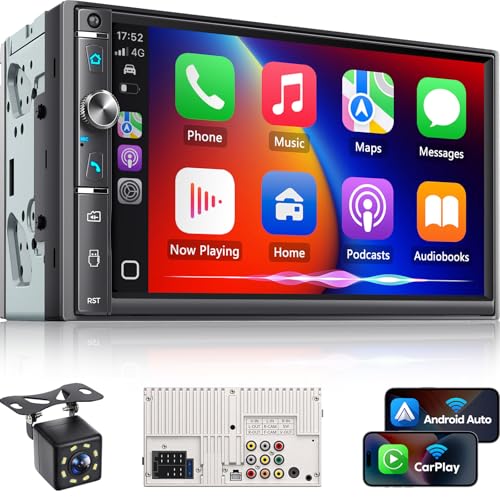
The main difference between Single-DIN and Double-DIN is height. A Single-DIN radio chassis [the metal box of the radio itself] is 2 inches (50mm) tall, while a Double-DIN is 4 inches (100mm) tall. Both standards, established by ISO 7736, share an identical width of 7 inches (180mm). This dimensional difference directly impacts the features available; the larger face of a Double-DIN unit enables large touchscreens required for modern features like Apple CarPlay, Android Auto, and GPS navigation.
In our experience, a vehicle’s age is a strong indicator. Cars made before 2010, or base models of any year, often have a Single-DIN slot. Most vehicles produced after 2010 come standard with a Double-DIN opening to accommodate modern infotainment systems.
Here is a clear comparison based on manufacturer specs:
| Feature / Aspect | Single-DIN | Double-DIN |
|---|---|---|
| Chassis Height | 2 inches (50 mm) | 4 inches (100 mm) |
| Chassis Width | 7 inches (180 mm) | 7 inches (180 mm) |
| Common Screen Type | Small non-touch display, or single-line text | Large (6.5″ to 10″+) touchscreen |
| Typical Features | CD player, AM/FM radio, Bluetooth audio, USB/Aux ports | Apple CarPlay, Android Auto, GPS Navigation, Backup Camera |
| Vehicle Age | Common in vehicles pre-2010, or base model cars | Standard in most vehicles post-2010 |
| Floating Screens? | Yes, some models have a large screen that “floats” | Less common, screen is typically integrated |
Pro Tip: Some vehicles, particularly from GM and Chrysler in the 90s and 2000s, use a non-standard “1.5-DIN” size. This size is about 3 inches tall. If you have this, you will need to install a Single-DIN radio along with a specialized dash kit that fills the extra space.
How Can You Find The Exact Radio Size For Your Vehicle?
There are two main ways to find your car’s radio size:
1. Use an Online Fitment Guide: Enter your vehicle’s make, model, and year into a trusted database (like Crutchfield’s or Metra’s) to see a list of guaranteed-to-fit stereos.
2. Manually Measure Your Dash: Carefully measure the height of your factory radio’s face. If it’s about 2 inches tall, you have a Single-DIN. If it’s about 4 inches tall, you have a Double-DIN.
These two methods move you from theory to a definitive answer for your specific vehicle. The online tool is fast and comprehensive, while manual measurement offers absolute confirmation. For most users, starting with the online guide is the best path forward, as it often recommends the specific dash kit and wiring harness you will need, creating a perfect semantic bridge to the next steps of your project.
How Do You Use an Online Vehicle Fitment Guide?
To use an online vehicle fitment guide, navigate to a reputable car audio retailer’s website, locate their “What Fits My Car” tool, and enter your vehicle’s year, make, and model. The tool will then query its vehicle database and instantly display your car’s radio size and a list of compatible aftermarket stereos with verified compatibility.
Follow these 3 simple steps:
1. Go to a trusted site. Navigate to a well-known car audio retailer with a vehicle selector tool, such as Crutchfield, Metra Online, or Scosche.
2. Enter Your Vehicle Information. Accurately input the 3 key pieces of information: your car’s year, make, and model. Some tools may also ask for trim level or factory sound system type.
3. Review the Results. The tool will immediately tell you if you have a Single-DIN or Double-DIN opening. More importantly, it will show a curated list of head units and the exact installation accessories required.
Why This is the Best Method: Using an online fit guide removes all guesswork. These databases are built on thousands of real-world installations and manufacturer specs, and retailers who offer them often guarantee the fitment of the products they recommend.
How Do You Manually Measure Your Car Radio?
To manually measure your car radio, you must first carefully remove the surrounding trim panel with a plastic tool and then use a tape measure to find the height of the radio’s faceplate. A measurement of approximately 2 inches confirms a Single-DIN slot, while a height of approximately 4 inches indicates a Double-DIN slot.
⚠ Caution: Always use plastic trim removal tools, not a metal screwdriver, to pry off panels. Metal tools will easily scratch or gouge your dashboard’s soft plastic. For safety, it’s also a good practice to disconnect the vehicle’s battery before removing any electronics.
Here is the step-by-step process:
1. Gently Pry the Trim Panel. Locate the edges of the decorative plastic piece surrounding your radio. Carefully insert a plastic trim removal tool and gently pry it away from the dashboard. Work your way around the panel until all clips have disengaged.
2. Expose the Radio Face. With the trim removed, you can now see the entire face of the factory radio unit.
3. Measure the Height. Use a tape measure or ruler to measure the height of the metal radio chassis, not the outer plastic trim.
4. Determine the Size. A height of approximately 2 inches (50mm) is a Single-DIN. A height of approximately 4 inches (100mm) is a Double-DIN.
Common Mistake: Do not measure the outside of the decorative trim panel. You must measure the radio unit itself for an accurate DIN size. While height is key for DIN, you may also want to measure the available mounting depth from the front of the dash to any obstruction behind it.
What Else Do You Need To Make a New Radio Fit and Work?
You will almost always need these three accessories for a new radio installation:
* Dash Kit: A plastic bracket that secures the new radio and fills gaps for a clean, factory-finish look.
* Wiring Harness: An adapter that plugs into your car’s wiring on one end and connects to the new radio’s wires on the other, eliminating the need to cut factory wires.
* Antenna Adapter: A small adapter that connects your car’s unique antenna plug to the standard input on an aftermarket radio.
Finding a radio that is the correct DIN size is only the first part of the puzzle. These installation accessories are not optional; they are the required components that integrate the universal aftermarket radio with your specific vehicle’s dashboard and electronics. Think of the wiring harness as a language translator for the electronics and the dash kit as a custom picture frame for your new radio.
Dash Kit
A vehicle-specific dash kit, or mounting bracket, is designed to fill any gaps around your new radio and provide the correct mounting points to secure it firmly in the dash.
* What Happens If You Don’t Use One? Without the correct dash kit, your new radio will be loose, rattle, look unfinished, and could easily be stolen.
Wiring Harness
This harness adapter is the most critical part for your car’s electrical safety. It features a plug on one end that connects directly to the plug your factory radio was connected to. The other end has bare wires that you connect to your new radio’s wires (usually by crimping or soldering).
* What Happens If You Don’t Use One? You would be forced to cut off your car’s factory plug, a permanent modification that voids warranties and introduces a high risk of electrical shorts if wired incorrectly.
Antenna Adapter
Car manufacturers often use proprietary connectors for their antenna cables. An aftermarket radio has a standard “Motorola” plug. An antenna adapter is a simple, inexpensive part that bridges this gap.
* What Happens If You Don’t Use One? You will not have AM/FM radio reception.
Some vehicles with a factory amplifier or a premium sound system (like Bose or JBL) may require more advanced interfaces to make the new head unit work correctly.
What Are Common Problems When Fitting a New Radio?
Even with the right parts, you can run into issues. From years of working with these installations, we’ve seen a few common problems pop up. Understanding them beforehand can save you hours of frustration.
Common Car Radio Fitment Problems & Solutions:
* Problem: Radio sticks out too far. Solution: You have a depth limitation. You need a shallow mount or mechless head unit.
* Problem: Gaps around the radio. Solution: Your dash kit is incorrect for your vehicle or is installed improperly.
* Problem: No power or no sound. Solution: You likely have the wrong harness or made an error in the wire crimping process.
Problem: The Radio Chassis is Too Deep
- Problem: You slide the new radio in, but it hits something in the back of the dash and won’t sit flush.
- Solution: This is a classic mounting depth limitation. You need to either purchase a “shallow mount” or “mechless” head unit, which has a much shorter chassis because it lacks a CD mechanism, or see if the obstruction behind the dash (like a metal bracket) can be safely removed.
Worst Case Scenario: Forcing a radio that is too deep can damage HVAC ducting or critical wiring harnesses behind the dash.
Problem: Steering Wheel Controls Don’t Work
- Problem: The radio works, but the volume and track buttons on your steering wheel are dead.
- Solution: You either forgot to install a steering wheel control interface, or it is wired incorrectly. In our testing with a PAC-Audio adapter, this is often because the blue/yellow wire was not connected to the new radio’s remote-in wire. Double-check the interface’s manual.
Worst Case Scenario: There is no electrical danger here, but you lose a major convenience feature you use every day.
Problem: No Sound, But The Radio Has Power
- Problem: The new radio lights up, but you get no audio from your speakers.
- Solution: This almost always indicates an issue related to a factory amplifier. You likely need a special harness or amplifier bypass interface for your car’s premium sound system. The new radio’s blue/white “remote turn-on” wire must be connected to the harness’s corresponding wire to tell the factory amp to power on.
Worst Case Scenario: Without the correct interface, your factory amplifier will never turn on, and you will never get sound.
FAQs About what size radio fits my car
Can you put a double DIN in a single DIN slot?
Generally, no. A Double-DIN radio is physically twice as tall as a Single-DIN opening and will not fit without extensive, custom modification to your car’s dashboard. This type of modification is costly, permanent, and usually requires a professional car audio installer. It’s much easier to install a Single-DIN radio with a “floating screen” to get a large display.
Will any double DIN fit my car if I have a double DIN slot?
Not necessarily. While the 7×4 inch size is standard, the mounting depth can be a problem. Some cars have obstructions behind the dash that prevent a full-depth radio from fitting. Always check the radio’s “mounting depth” specification against your vehicle’s available space, or choose a “shallow mount” unit to be safe.
Can a single DIN fit where a double DIN was?
Yes, very easily. You can install a Single-DIN radio in a Double-DIN opening using a special dash kit. This kit typically includes a pocket or a small storage compartment that fills the extra 2 inches of vertical space, providing a clean and functional installation.
What is a “vehicle specific fit” radio?
A vehicle-specific fit radio is a head unit designed to perfectly match the unique shape and style of a specific car model’s dashboard, often replacing complex factory infotainment systems. Unlike universal DIN radios, these require no dash kit and seamlessly integrate with the factory trim, but they are only available for a limited number of popular vehicles.
How important is the wiring harness?
Extremely important. A wiring harness adapter is critical for connecting your new radio without cutting your car’s factory wires. Using the correct harness prevents electrical problems, saves a tremendous amount of time, makes the installation reversible, and is essential for retaining features like steering wheel controls or factory amplifiers.
Do I need a professional to install my car radio?
Not always. If you have a simple vehicle and the correct dash kit and wiring harness, a DIY installation is very achievable for someone with basic hand tools and patience. However, for cars with complex premium sound systems, CAN-bus integration, or if custom fabrication is needed, hiring an MECP-certified professional is highly recommended.
What is a “mechless” or “digital media” receiver?
A mechless receiver is a modern car stereo that does not have a CD/DVD player mechanism. Because they lack the bulky disc drive, they are much shallower (“shallow mount”) and lighter, making them easier to fit into vehicles with limited dash depth. They play music exclusively from digital sources like USB, Bluetooth, and smartphones.
Can I put a 10-inch screen in my car?
Yes, this is possible using a “floating screen” radio. These are typically Single-DIN or Double-DIN units with a large tablet-like screen attached to an adjustable mount. The screen “floats” in front of the dashboard rather than sitting inside it, allowing for oversized displays in almost any vehicle.
Do I lose my steering wheel controls with a new radio?
You don’t have to. To retain your factory steering wheel controls, you must purchase and install a steering wheel control interface adapter (like those from PAC-Audio or Axxess). This module translates the signals from your car’s controls into a language the new aftermarket radio can understand.
What if my car has a factory amplifier or “premium sound”?
If your car has a premium sound system (e.g., Bose, JBL, Fender), you will need a special, more complex wiring harness or interface. These systems often use proprietary signals or fiber optics that standard harnesses cannot bypass. Using the wrong adapter will result in no sound, so using a vehicle fitment guide is crucial.
Key Takeaways: Car Radio Fitment Summary
- Size is Standardized: Your car almost certainly has a Single-DIN (7×2″) or Double-DIN (7×4″) opening. Identifying which one you have is the first and most important step.
- Use a Fitment Tool: The fastest and most accurate method is to use an online vehicle selector tool from a reputable retailer. It removes all guesswork.
- Accessories are Not Optional: For a clean, functional installation, you will almost always need a vehicle-specific dash kit, wiring harness, and antenna adapter. Do not skip these.
- Depth Matters: Especially in modern or compact cars, the mounting depth of a new radio can be a problem. Consider a “shallow mount” or “mechless” receiver if space is tight.
- Problem-Solving is Part of the Process: Issues like a non-working steering wheel control interface or the wrong harness for a premium sound system are common. Identifying these needs before you buy is key.
- Single-DIN vs. Double-DIN is a Trade-Off: A Double-DIN slot gives you easy access to large touchscreens, but you can get the same features in a Single-DIN slot with a “floating screen” radio.
- When in Doubt, Ask a Pro: While DIY is possible, complex factory systems with fiber optics or CAN-bus integration often require the expertise of an MECP-certified professional to avoid costly damage.
Final Thoughts on Finding the Right Radio For Your Car
Determining what size radio fits your car is a straightforward process once you understand the core concepts. It’s not about luck; it’s about a methodical approach. By identifying your vehicle’s DIN size, using an authoritative fitment guide, and purchasing the correct installation accessories, you empower yourself to perform a successful upgrade. You now have the knowledge to move forward confidently and bring modern technology and superior sound to your driving experience.
Last update on 2026-03-15 / Affiliate links / Images from Amazon Product Advertising API


![Narrowest Car Seats Guide Infant Convertible Booster [year]](https://i0.wp.com/carxplorer.com/wp-content/uploads/2026/03/Narrowest-Car-Seats-Guide-Infant-Convertible-Booster-year-2.jpg?resize=60%2C60&ssl=1 "Narrowest Car Seats Guide Infant Convertible Booster [year] 6")


