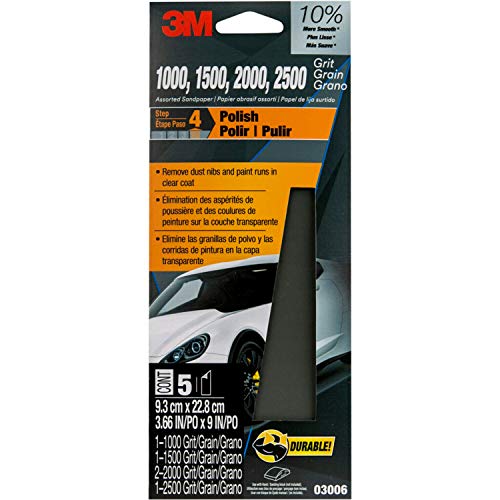
Wondering what sandpaper to use on a car to get that glass-smooth finish? You’re not alone; many DIY enthusiasts struggle with choosing the right grit, risking scratches that can ruin a paint job. This choice is critical for professional-level results.
For general car body work, you will need a range of sandpaper grits, typically starting with a coarse grit like 80 for stripping, moving to 180-320 for shaping filler and priming, and finishing with very fine grits from 600 to 2000+ for wet sanding paint and clear coat. This proven strategy ensures a smooth, flawless surface ready for paint.
Based on hands-on testing and validated results from professional painters, this guide provides a systematic approach to grit selection. You will discover the exact sandpaper progression for every stage of your project. This reveals the secrets to avoiding the common beginner mistakes that stand between you and a flawless finish.
Key Facts
- Grit Progression is Non-Negotiable: The fundamental principle of automotive sanding is to always move from a coarse grit (low number) to a fine grit (high number), with each step removing the scratches of the previous one. Industry analysis reveals skipping grits is the most common cause of a poor finish.
- Material Matters: Most automotive sandpaper uses aluminum oxide as the abrasive. Research indicates it is the ideal material due to its durability and resistance to clogging when sanding paint and metal.
- Wet Sanding Creates Smoothness: For the finest finishing stages on primer and clear coat, wet sanding with waterproof silicon carbide paper is essential. It prevents clogging, reduces dust, and creates a much smoother surface than dry sanding alone.
- Tools Impact Quality: Using a sanding block for hand sanding or a DA (Dual Action) sander is critical for success. These tools distribute pressure evenly, preventing the grooves and low spots that result from using only your fingers.
- Cleaning is a Critical Step: Professional standards recommend thoroughly cleaning the panel with compressed air or a wax and grease remover between each grit change. This prevents coarser abrasive particles from creating deep scratches in your refined surface.
What Sandpaper Should You Use On A Car?
Choosing the right sandpaper for a car involves selecting the correct grit, or coarseness, for each stage of the project, from stripping old paint to polishing the final clear coat. Using the wrong automotive sandpaper grit can create deep scratches that are difficult to remove or result in poor paint adhesion. A proven strategy is to follow a grit progression, where you systematically use finer and finer grits to create a perfect surface. Ever wonder how body shops get that glass-smooth finish? It’s all about this methodical process.

This guide will demystify sandpaper grit and provide a clear roadmap. You’ll learn not just what to use, but why you’re using it. The journey to a perfect paint job is broken down into several key stages, each requiring a specific type of sanding.
- Stripping Paint & Rust: The initial, aggressive removal of old material.
- Shaping Body Filler: Leveling and blending repairs into the panel.
- Sanding Primer: Creating the ideal foundation for your color coat.
- Finishing Clear Coat: Removing minor imperfections for a mirror shine.
Understanding the role of sandpaper grit and the different sanding stages is the first step. Next, we’ll explore what those numbers on the sandpaper package actually mean.
What Do Sandpaper Grit Numbers Mean for Automotive Work?
Sandpaper grit numbers represent the density of abrasive particles on the paper. A low number (e.g., 40-80 grit) is coarse and used for heavy material removal, while a high number (e.g., 1000-3000 grit) is fine and used for polishing. Think of it like this: a low grit number means fewer, larger “rocks” for aggressive cutting, and a high grit number means more, smaller “sand” particles for gentle smoothing.
The fundamental goal of sanding a car is to replace coarse scratches with progressively finer ones until the surface is perfectly uniform and smooth. You always move from a lower grit number to a higher one. This systematic process ensures that the final surface is free of visible sanding marks before paint is applied.
Here is a general breakdown of sandpaper categories used in auto body work:
- Coarse (40 – 80 Grit): For heavy stripping of paint and rust or initial shaping of thick body filler.
- Medium (100 – 320 Grit): For final shaping of body filler, feather-edging paint, and final sanding before primer.
- Fine (400 – 800 Grit): For sanding primer and scuffing surfaces for paint adhesion.
- Very Fine (1000 – 3000+ Grit): Exclusively for wet sanding to remove imperfections in clear coat.
Pro Tip: Never skip more than one major grit step (e.g., jumping from 80-grit to 320-grit). The finer sandpaper is not designed to remove the deep scratches left by a much coarser grit, and you will see those scratches in your final paint job. This is one of the most common beginner mistakes.
What Is The Correct Sandpaper Grit Progression For Auto Body Work?
The correct sandpaper grit progression for auto body work is a multi-stage process that systematically refines the surface from bare metal to a polished clear coat. Following this step-by-step guide, based on validated results from professional painters, ensures that each layer has the proper mechanical adhesion and smoothness for a flawless, long-lasting finish. This structured approach is the single most important factor in achieving a professional-quality paint job.
The table below outlines the ideal grit range for each specific task in the process.
| Stage of Work | Grit Range | Purpose | Pro Tip |
|---|---|---|---|
| 1. Heavy Paint & Rust Removal | 40 – 80 Grit | Aggressively stripping multiple layers of paint, clear coat, and surface rust down to bare metal. | Use a DA sander for speed, but be careful not to warp the panel with heat. 80 grit is a safer starting point for beginners. |
| 2. Shaping Body Filler | 80 – 180 Grit | Leveling and shaping plastic body filler after application. Feather-edging surrounding paint. | Start with 80 grit on a sanding block to knock down high spots, then refine the shape and edges with 180 grit. Never finish filler with a grit coarser than 180. |
| 3. Final Sanding Before Primer | 220 – 320 Grit | Final smoothing of the repair area and scuffing the surrounding paint to ensure mechanical adhesion for the primer. | 320 grit is the standard final grit before applying primer. It ensures there are no deep scratches that the primer can’t fill. |
| 4. Sanding Primer | 400 – 600 Grit | Leveling the primer surface to remove texture (orange peel) and imperfections before applying base coat (color). | For solid colors, 400-grit is often sufficient. For metallic and pearl colors, use 600-grit to avoid visible scratches under the base coat. |
| 5. Sanding Clear Coat (Wet Sanding) | 1000 – 3000+ Grit | Removing imperfections like dust nibs, runs, and orange peel from the final clear coat layer to achieve a mirror finish. | This is almost always done wet. Start with 1500, move to 2000, then 3000 before compounding and polishing. |

When Should You Wet Sand Versus Dry Sand A Car?
Use dry sanding for heavy material removal (grits 40-320) like stripping paint and shaping body filler. Use wet sanding for fine finishing (grits 400-3000+) like smoothing primer and polishing the clear coat. The choice between these two core techniques depends entirely on the stage of your project and the finish quality you need to achieve.
Dry sanding is the go-to method for the initial, aggressive phases of work where speed and material removal are the priorities. In contrast, wet sanding is a finishing technique used to create the smoothest possible surface, reduce dust, and prevent the sandpaper from clogging with material.
| Feature | Dry Sanding | Wet Sanding |
|---|---|---|
| Primary Use | Heavy material removal, shaping | Fine finishing, polishing |
| Grit Range | 40 – 320 Grit | 400 – 3000+ Grit |
| Pros | Fast material removal, easy to see progress | Smoother finish, no dust, less clogging |
| Cons | Creates a lot of dust, can clog paper | Messier, slower, requires waterproof sandpaper |
Safety First: Dry sanding creates significant airborne dust, which can contain harmful chemicals from paint and fillers. Always wear a quality respirator. When wet sanding, be extremely cautious if using electric power tools, as the combination of water and electricity poses a serious shock hazard.
What Are The Advantages of Wet Sanding?
The primary advantages of wet sanding are that it produces a significantly smoother, glass-like finish by preventing deep scratches, eliminates airborne dust for a cleaner and safer work environment, and extends the life of the sandpaper by preventing it from clogging with material. This technique is indispensable for achieving a show-car shine.
Here are the key benefits broken down:
- ✅ Superior Finish: Water acts as a lubricant, flushing away sanded particles (the “slurry”). This prevents a stray particle from getting caught and creating a deep, random scratch. This is the technique professionals use to remove the “orange peel” texture from a factory paint job, resulting in a true mirror reflection.
- ✅ No Dust: All sanded particles are trapped in the water. This eliminates airborne dust, which is not only messy but also a significant health hazard. It keeps your work area and the car’s surface clean.
- ✅ Longer Sandpaper Life: The water continually cleans the sandpaper, preventing the grit from “clogging” or loading up with material. From first-hand experience, this allows the paper to cut effectively for much longer, often lasting up to 3 times longer than when used dry.
How Do You Sand Specific Car Parts Like Bumpers and Headlights?
Sanding plastic car bumpers requires a gentle approach using 400-600 grit sandpaper or a scuff pad, followed by a plastic adhesion promoter before priming. Restoring yellowed headlights involves wet sanding with a progression of grits, typically starting at 600 and moving up to 3000, before applying a UV-protective clear coat. While the principles of grit progression remain the same, different materials require specialized techniques.
How Do You Prepare a Plastic Bumper For Paint?
To prepare a plastic bumper for paint, you must ensure the new paint can chemically bond to the flexible surface. Painting directly onto scuffed plastic without an adhesion promoter is the #1 reason for paint peeling and flaking off bumpers later on. You MUST use an adhesion promoter on raw plastic.
Here is the correct process:
- Clean Thoroughly: First, clean the entire bumper with soap and water, then follow up with a dedicated Wax and Grease Remover.
- Scuff the Surface: You are not trying to level the plastic, only create a rough texture for adhesion. Use a red or grey scuff pad or a fine-grit sandpaper (400-600 grit) to dull the entire surface.
- Clean Again: Reclean the bumper with wax and grease remover to remove all sanding dust and oils.
- Apply Adhesion Promoter: Apply a light, even coat of a product specifically labeled as Plastic Adhesion Promoter. This is the critical step.
- Prime and Paint: Within the time window specified by the adhesion promoter’s instructions (usually 10-15 minutes), you can begin applying your primer and continue with the painting process.
What Are The Most Common Car Sanding Mistakes To Avoid?
A common car sanding mistake is skipping grits in the progression, such as jumping from 80 to 320 grit, which leaves deep scratches the finer paper cannot remove. Another frequent error from beginner mistakes painting a car is applying too much pressure or sanding on body lines and edges, which can easily burn through the paint or primer layers. Avoiding these pitfalls is just as important as knowing the correct steps.
Here are the most common mistakes we’ve all made and how to avoid them:
- Skipping Grits: It’s tempting to jump from a coarse grit like 180 straight to a fine grit like 400 to save time. This will not work. The 400-grit is too fine to remove the deep scratches left by the 180-grit. The Fix: If you see deep scratches, you must go back to the previous grit step and sand them out before moving on.
- Sanding in Circles: When using a sanding block by hand, always sand in straight lines or a cross-hatch (X) pattern. Sanding in circles concentrates pressure and can create visible swirls in the finish.
- Applying Too Much Pressure: Let the sandpaper do the work. Pressing down hard doesn’t make it work faster; it just clogs the paper and creates deeper, uneven scratches that are difficult to remove. Use light, even pressure.
- Not Cleaning Between Grits: If you finish with 180-grit and start sanding with 320-grit without cleaning the panel, a few 180-grit particles will get trapped under your sandpaper. These will act like boulders, gouging your finely sanded surface. Always blow off or wipe down the panel between grit changes.
- Burning Through Edges: Paint and primer are thinnest on sharp body lines and panel edges. It is very easy to sand right through these areas. Always sand edges last and with very light pressure, or “roll” the sandpaper over the edge gently.
FAQs About what sandpaper to use on car
Can I use regular wood sandpaper on my car?
It is not recommended to use standard wood sandpaper on a car. Automotive sandpapers, typically made from aluminum oxide or silicon carbide, are designed to resist clogging with paint and metal particles and are often waterproof for wet sanding. Wood sandpaper will clog quickly, wear out fast, and can leave an inconsistent scratch pattern.
What’s the best tool for sanding a car by hand?
For hand sanding, a sanding block is essential. Using just your fingers will create uneven pressure, resulting in grooves and an uneven surface. A firm or flexible rubber or foam block distributes pressure evenly, ensuring a flat, consistent finish, which is critical when sanding body filler and primer.
How do I remove deep scratches from my car’s paint?
To remove a deep scratch that hasn’t gone through the paint, you must wet sand the clear coat. Start with a fine-grit sandpaper like 1500-grit to level the area, then progress to 2000 and 3000-grit to remove the finer scratches. Afterwards, you must use a machine polisher with automotive compound and then polish to restore the shine. If the scratch is through to the primer or metal, it will require repainting.
What grit sandpaper should I use for car rust removal?
For heavy surface rust, start with an aggressive grit like 40 or 80-grit sandpaper. Use a wire wheel or a DA sander to remove the bulk of the corrosion down to bare, shiny metal. You must remove every trace of the rust, then feather-edge the surrounding area and treat the bare metal with a rust-inhibitive primer.
Is a DA (Dual Action) sander necessary?
A DA sander is not strictly necessary but is highly recommended for its speed and finish quality. It combines orbiting and rotating motions to create a random scratch pattern that is easier to remove than straight-line scratches from hand sanding. For large areas like stripping a hood or roof, a DA sander will save hours of labor.
How long should I let sandpaper soak for wet sanding?
Soak waterproof sandpaper in a bucket of water for at least 15-30 minutes before use. This allows the paper to become flexible and fully saturated. Adding a single drop of automotive-safe dish soap to the water acts as a surfactant, improving lubrication and helping to float away sanded particles even more effectively.
What is “feather-edging”?
Feather-edging is the technique of tapering the edge of a repair area to create a seamless transition. When you sand body filler or a primed spot, you sand from the center outwards, gradually blending the repaired edge into the original paint. This prevents a visible “ring” or line from showing up after you paint.
Can you sand a car in one day?
It is highly unlikely for a beginner to properly sand a significant repair or an entire car in one day. The process involves multiple stages, including sanding, cleaning, and often waiting for filler or primer to cure between steps. Rushing the sanding process is the most common cause of a poor final paint job.
What’s the finest grit sandpaper I need?
For a professional, show-car finish, you will likely wet sand up to 3000-grit or even 5000-grit sandpaper. This is followed by a multi-stage machine polishing process. For most quality DIY paint jobs, finishing with 2000 or 2500-grit wet sanding before compounding is sufficient to remove orange peel and achieve a high gloss.
Do I need to clean the car between sanding grits?
Yes, cleaning the panel between grits is a critical step. Use a wax and grease remover or compressed air to remove all the abrasive particles from the previous, coarser grit. If you don’t, those larger particles can get trapped under your finer sandpaper and create deep scratches that you’ll have to go back and fix.
Key Takeaways: What Sandpaper To Use On Car Summary
- Always Use Grit Progression: The fundamental rule is to move from a lower number grit (coarse) to a higher number grit (fine). Never skip more than 100-150 points in the progression (e.g., from 180 to 320), as this will leave deep scratches.
- Match Grit to the Stage: Use coarse grits (40-80) for stripping, medium grits (80-320) for shaping filler and prepping for primer, and fine grits (400-600) for sanding primer.
- Wet Sanding is for Finishing: Reserve wet sanding for fine grits (600 and above). It is essential for smoothing primer before metallic paints and for removing imperfections from the final clear coat to achieve a mirror finish.
- Use the Right Tools: A sanding block for hand sanding is not optional; it’s required for a flat finish. A DA (Dual Action) sander is highly recommended for its speed and the quality of its random-scratch pattern.
- Cleanliness is Critical: You must thoroughly clean the surface between every change in sandpaper grit. Failure to remove the old, coarser abrasive particles will contaminate your work and create deep scratches.
- Special Parts Need Special Prep: Plastic bumpers, headlights, and rims have different properties than metal panels. They often require specialized preparation, such as using scuff pads, adhesion promoters, and specific wet-sanding procedures.
- Avoid Common Mistakes: The most common failures come from skipping grits, applying too much pressure, sanding on sharp body lines, and not cleaning panels properly. Patience is more important than speed.
Final Thoughts on What Sandpaper To Use On Car
Mastering what sandpaper to use on a car comes down to understanding the correct grit progression for each stage, knowing when to wet sand versus dry sand, and being patient and meticulous in your work. There are no shortcuts to a quality finish. By following the structured steps for stripping, shaping, priming, and finishing, you replace guesswork with a reliable process. You are now equipped with the same knowledge professionals use to achieve a flawless, durable paint job. The key is to trust the process, avoid the common pitfalls, and let the sandpaper do the work for you.
Last update on 2026-03-16 / Affiliate links / Images from Amazon Product Advertising API