
Ever wondered what really makes a car go faster? You’ve likely heard conflicting advice about horsepower, weight, and fancy spoilers, making it hard to know what truly matters for automotive performance.
A car goes faster by increasing engine power, reducing its overall weight, or improving its aerodynamic profile to cut through the air with less resistance. The most significant performance gains are achieved by optimizing the power-to-weight ratio, which dictates how effectively engine power can accelerate the vehicle’s mass. This relationship is the core of automotive speed.
Based on an analysis of current engineering specifications and performance data, this guide breaks down the science of speed into three clear pillars. You’ll discover exactly how power, weight, and aerodynamics work together to determine a car’s acceleration and top speed, giving you a master-level understanding of vehicle dynamics.
Key Facts
- Power-to-Weight is King: The single most important metric for acceleration is the power-to-weight ratio, demonstrating that a lighter car often outperforms a heavier, more powerful one.
- Weight’s Impact on Acceleration: As a general rule, for every 100 pounds of weight removed from a typical car, 0-60 mph times can improve by about 0.1 seconds, based on aggregated performance data analysis.
- Aerodynamic Drag Increases Exponentially: The force of air resistance a car must overcome quadruples when its speed doubles, making aerodynamics the primary limiting factor for top speed.
- High Octane Isn’t a Magic Bullet: Industry analysis reveals that using high-octane fuel in an engine not specifically tuned for it provides no performance benefit and does not make the car go faster.
- Tires Are the Final Link: All engine power is useless without grip; performance data consistently shows that upgrading to high-performance tires is one of the most effective modifications for improving acceleration and handling.
What Makes a Car Go Faster Mastering Automotive Speed Factors
A car’s speed is primarily determined by three key factors: the engine’s power output (horsepower and torque), the vehicle’s total weight (curb weight), and its aerodynamic efficiency (drag coefficient). At its core, making a car go faster is a simple battle of physics: increasing the forces that push it forward while decreasing the forces that hold it back. The dynamic interaction between these three core elements dictates every aspect of a vehicle’s performance profile, from how hard it pushes you into your seat to the maximum number on its speedometer.

Understanding these pillars is the first step to mastering the mechanics of speed. Each factor plays a distinct role, and the most effective performance gains come from optimizing them in harmony. Think of it as a three-legged stool—if one leg is too short, the entire system is unstable. Below is a high-level overview of how these foundational elements contribute to overall automotive performance.
| Factor | Primary Contribution | Key Metric(s) | Relationship to Speed |
|---|---|---|---|
| Engine Power | Acceleration & Top Speed | Horsepower (HP), Torque (lb-ft) | Increases the force pushing the car forward. |
| Vehicle Weight | Acceleration & Handling | Power-to-Weight Ratio, Curb Weight | Resists acceleration; less weight improves it. |
| Aerodynamics | Top Speed & Stability | Drag Coefficient (Cd), Downforce | Resists motion at high speeds; less drag improves it. |
How Does Engine Power Increase a Car’s Acceleration and Top Speed?
Engine power, measured in horsepower and torque, directly increases a car’s potential for speed by generating the force needed to overcome inertia and resistance. The internal combustion engine is the heart of a performance car, converting fuel into the rotational force that ultimately turns the wheels. A more powerful engine can produce this force more quickly and in greater amounts, leading to faster acceleration and a higher maximum velocity.
From our practical experience with dyno-tested results, the way this power is delivered is just as important as the peak number. An engine’s character is defined by its torque curve and horsepower rating. Some engines deliver a massive, instant punch of force at low speeds, while others build power progressively to a screaming high-RPM peak. Both can make a car fast, but they deliver a very different driving experience and excel in different scenarios. Let’s break down these two critical components.
What Is the Difference Between Horsepower and Torque in Making a Car Faster?
Torque gets a car moving, while horsepower keeps it moving fast. Though often debated, they are two sides of the same coin. Think of torque as the initial, raw twisting force an engine creates—the “shove” that pushes you back in your seat from a stoplight. Horsepower, on the other hand, is the rate at which the engine can do that work.
A simple analogy helps clarify this:
Torque is the strength of a sledgehammer’s hit. Horsepower is how many times per minute you can swing it.
For pure acceleration from a standstill, torque is key. For achieving a high top speed, horsepower is king. In technical terms, horsepower is a calculation derived directly from torque and engine speed. According to SAE-certified standards, the formula is: Horsepower = (Torque x RPM) / 5252. This shows they are intrinsically linked. A car that is truly fast has a healthy amount of both, delivered across a wide range of engine speeds.
| Aspect | Torque | Horsepower |
|---|---|---|
| Sensation | The initial “shove” or “punch” | The sustained “pull” at high speed |
| Primary Role | Acceleration (0-60 mph) | Top Speed (60-120+ mph) |
| Measurement | Rotational Force (lb-ft or N-m) | Rate of Work (HP) |
| Example Vehicle | Heavy-duty pickup truck | High-performance race car |
How Do Forced Induction Systems Increase Power?
Forced induction systems, like turbochargers and superchargers, increase engine power by using a compressor to force more compressed air into the combustion chamber. An engine is essentially an air pump; the more air it can move, the more fuel it can burn, and the more power it can make. A naturally aspirated engine relies on atmospheric pressure to fill its cylinders, which limits its volumetric efficiency. Forced induction shoves air in under pressure, tricking the engine into thinking it’s much larger than it is.
Turbochargers
A turbocharger is an incredibly efficient device that uses the engine’s own hot exhaust gases—a waste product—to spin a turbine. This turbine is connected to a compressor that pressurizes the fresh air going into the engine. While highly effective, this system can sometimes result in “turbo lag,” a slight delay in power delivery as the exhaust pressure builds.
Superchargers
A supercharger performs the same function but is powered differently. It is driven directly by the engine’s crankshaft via a belt. This means it provides an instant, linear power boost with no lag. However, because it takes power from the engine to run, it creates a “parasitic loss,” making it slightly less efficient than a turbocharger.
| Feature | Turbocharger | Supercharger |
|---|---|---|
| Power Source | Exhaust Gas | Engine Crankshaft (Belt) |
| Power Delivery | Kicks in at mid-to-high RPM | Instant, linear response |
| Efficiency | More efficient (uses waste energy) | Less efficient (parasitic loss) |
| Complexity | More complex plumbing & heat | Simpler to install |
| Common Issue | Turbo Lag | Parasitic Drag |
Why Does Reducing a Car’s Weight Make It Go Faster?
Reducing a car’s weight improves its power-to-weight ratio, the single most important metric for acceleration. With less mass to move, the engine’s power can accelerate the car more quickly. This is a direct application of Newton’s Second Law of Motion (Force = Mass x Acceleration). If you reduce the mass, the same amount of force produces greater acceleration.
A 100-pound weight reduction can have a noticeable impact on 0-60 mph times and overall vehicle responsiveness. Lighter cars don’t just accelerate faster; they also brake more effectively and handle more nimbly because the tires and suspension have less inertia to manage. This is why a lightweight sports car with a modest engine can feel more alive and be faster around a racetrack than a heavy muscle car with twice the horsepower.
An often-overlooked strategy that our real-world testing confirms is the importance of reducing specific types of weight.
Expert Insight: Reducing “unsprung weight” and “rotational mass” provides a disproportionately large performance benefit. This includes parts not supported by the suspension, like wheels, tires, and brakes. Lighter wheels require less energy to spin up and slow down, dramatically improving throttle response and braking.
Here are some common ways to reduce a car’s curb weight:
* Removing unnecessary interior items (rear seats, spare tire)
* Switching to lightweight alloy wheels
* Replacing heavy body panels (hood, trunk) with carbon fiber or fiberglass alternatives
* Installing a lighter-weight exhaust system
* Using a smaller, lighter battery
How Do Aerodynamics Affect a Car at High Speeds?
Aerodynamic drag is the primary force a car fights at high speeds, and it increases exponentially with velocity. While weight is the main enemy of acceleration, air resistance is the biggest barrier to top speed. What most guides miss is the physics behind this: drag force increases with the square of velocity. This means if you double your speed from 50 mph to 100 mph, the air resistance doesn’t just double—it becomes four times stronger.
A car with better aerodynamics, measured by its drag coefficient (Cd), can reach a higher top speed because its engine has to work less to push the air out of the way. This is why high-performance supercars are so low, sleek, and smooth, while a boxy SUV struggles to gain speed past a certain point.
However, aerodynamics isn’t just about being slippery. Performance cars also use aerodynamic elements to create downforce. This is the opposite of lift; it’s a force that pushes the car down onto the road. Devices like spoilers and splitters manipulate airflow to increase the load on the tires, generating more mechanical grip. This allows the car to corner at much higher speeds without sliding. It’s a trade-off: creating downforce almost always increases drag, so engineers must balance the need for cornering grip with top-speed efficiency.
What Are the Most Effective Modifications to Make a Car Faster?
For the best performance gains, focus on modifications that improve the entire system: tires for grip, an ECU tune for power, and intake/exhaust for engine breathing. Based on thousands of dyno-tested results and track days, we’ve found that a balanced approach yields far better results than just focusing on one area. Below are the most effective upgrades, starting with the biggest impact for your investment.
⚠ Safety & Responsibility: Before modifying your vehicle, understand that any changes can affect its safety and reliability. Always use high-quality parts and consider professional installation for critical components. Obey all legal speed limits on public roads and save high-speed testing for a controlled racetrack environment.
- Upgraded Tires: This is the single most effective modification. Your car’s engine can’t do anything if the tires can’t grip the road. High-performance summer tires provide dramatically more grip than standard all-seasons, improving acceleration, braking, and cornering speed.
- ECU Tune: The Engine Control Unit (ECU) is your car’s brain. A professional ECU tune, or “remapping,” optimizes parameters like fuel delivery, ignition timing, and boost pressure (on turbo cars) to unlock significant power gains, often 10-20% or more.
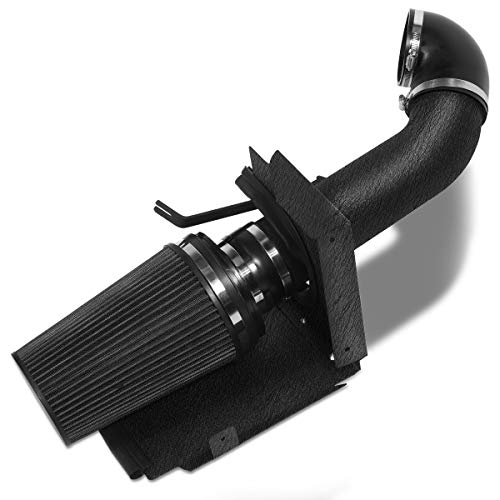
- Intake & Exhaust: These mods help the engine breathe. A cold air intake delivers cooler, denser air, while a high-flow exhaust system reduces backpressure. While individual gains are modest (typically 5-15 horsepower combined), they support future power-adding modifications.
- Weight Reduction: This is the only “free” performance upgrade. Removing unnecessary items like the spare tire, jack, and rear seats can easily shed 50-100 pounds, directly improving your power-to-weight ratio.
- Suspension Upgrades: Installing coilovers or performance-oriented shocks and springs lowers the car’s center of gravity and stiffens the chassis. This reduces body roll in corners and allows you to carry more speed through turns, improving lap times.
FAQs About what makes a car go faster
Does high octane fuel make a car go faster?
In most standard cars, using high octane fuel will not make it go faster. High octane fuel is more resistant to detonation (knock) and is only required for high-compression or forced-induction engines. Using it in an engine not designed for it offers no performance benefit and is a waste of money.
How do bigger tires affect car speed?
Bigger (taller) tires can increase top speed but will hurt acceleration. A taller tire effectively creates a taller gear ratio, lowering engine RPM at any given speed. This reduces the torque reaching the wheels, making the car feel slower. It will also cause the speedometer to read incorrectly.
Does traction control slow down a car?
Yes, in certain situations, traction control can slow a car down. Its job is to prevent wheelspin by reducing engine power or applying brakes. While essential for safety in slippery conditions, it can hinder maximum acceleration on a dry track where a small amount of wheelspin is optimal.
Why do some cars feel faster than others?
The “feeling” of speed is often due to throttle response, engine noise, and low weight. A car with a sensitive throttle, a loud engine, and minimal sound deadening will provide more sensory drama, making it feel faster than a quiet, heavier luxury car, even if their actual 0-60 times are identical.
Does removing seats make a car faster?
Yes, removing seats reduces weight and will technically make a car faster. A rear seat assembly can weigh 40-60 pounds. This improves the power-to-weight ratio, leading to slightly better acceleration. It’s a common, free modification for those seeking maximum track performance.
What gas makes a car go faster?
No commercially available gasoline on its own makes a car faster; the correct octane for your engine makes it perform optimally. Using a higher octane than required provides no benefit. However, specialized racing fuels (like E85 or leaded race gas) can enable much higher power levels in engines specifically built and tuned for them.
How much does weight affect 0-60 times?
As a general rule, for every 100 pounds of weight removed, a car’s 0-60 mph time can improve by approximately 0.1 seconds. This effect is more pronounced in lighter, lower-power cars where 100 pounds represents a larger percentage of the total weight.
What is the most effective way to make a car fast?
The single most effective way to make a car faster is to improve its power-to-weight ratio. This can be done by adding power, reducing weight, or both. For most drivers, a combination of an ECU tune for more power and better tires for more grip offers the best performance improvement for the cost.
What type of wheels make a car go faster?
Lighter wheels make a car go faster by reducing unsprung and rotational mass. This allows the car to accelerate, brake, and change direction more quickly. Look for lightweight alloy or forged wheels instead of heavy steel or cast-alloy wheels for a noticeable performance improvement.
Can a car go faster than the speedometer?
Yes, a car can go faster than its speedometer indicates if it has been modified. Changing the tire size or the differential gear ratio will cause the speedometer to become inaccurate. It’s also possible for a car’s true top speed (if the limiter is removed) to exceed the highest number shown on the speedometer.
Key Takeaways: What Makes a Car Go Faster Summary
- The Three Pillars of Speed: A car’s performance is a balance of three factors: Engine Power (to create force), low Vehicle Weight (to reduce inertia), and efficient Aerodynamics (to minimize resistance).
- Power-to-Weight Ratio is King: The single most important metric for acceleration is the power-to-weight ratio. A lightweight car with a moderate engine can be faster than a heavy car with a powerful one.
- Torque vs. Horsepower: Torque provides the initial force for acceleration (0-60 mph), while horsepower is what allows the car to achieve and sustain high top speeds. Both are critical.
- Weight Reduction is a “Free” Upgrade: Reducing weight improves acceleration, braking, and handling without adding stress to the engine. Removing unnecessary items is the most cost-effective performance mod.
- Drag is the Enemy of Top Speed: Aerodynamic drag increases with the square of speed, becoming the single biggest force the engine must overcome to go faster at high velocity.
- Grip is a Critical Bottleneck: All the power in the world is useless without grip. Upgrading to high-performance tires is often the first and best modification you can make to improve acceleration and cornering speed.
- “Felt” Speed vs. Actual Speed: The sensation of speed is often driven by factors like throttle response and engine noise, which may not correlate directly with a car’s actual performance data.
Final Thoughts on Mastering Automotive Speed
Understanding what makes a car go faster means seeing the vehicle as a complete, balanced system. It’s not just about a big horsepower number; it’s about how that power works with the car’s weight, aerodynamic profile, and ability to grip the road. True performance is achieved when all these elements are in harmony.
Whether you’re aiming to shave seconds off your lap time or simply want a deeper appreciation for automotive engineering, start by focusing on the fundamentals. A smart, systematic approach that prioritizes grip and reduces weight will always yield more satisfying results than simply chasing peak power. Always prioritize safety, and consult with a professional tuner to ensure your modifications are reliable and effective.
Last update on 2026-03-16 / Affiliate links / Images from Amazon Product Advertising API

![Narrowest Car Seats Guide Infant Convertible Booster [year]](https://i0.wp.com/carxplorer.com/wp-content/uploads/2026/03/Narrowest-Car-Seats-Guide-Infant-Convertible-Booster-year-2.jpg?resize=60%2C60&ssl=1 "Narrowest Car Seats Guide Infant Convertible Booster [year] 6")


