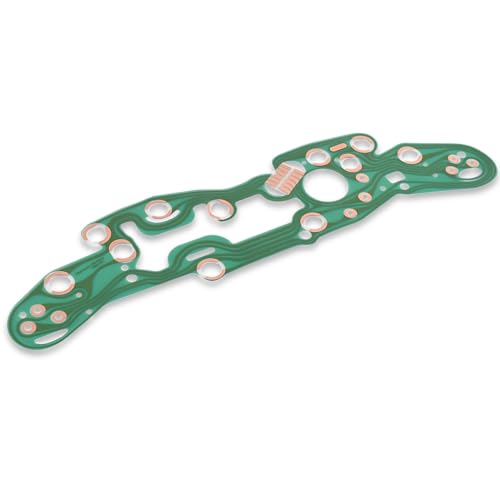
Struggling to understand “what is IPC in car”? You’re not alone if the acronym feels like a puzzle. Many drivers find vehicle electronics complex and difficult to decipher, but understanding your car’s brain is crucial now more than ever.
An IPC in a car is the Instrument Panel Cluster, which is the main display on the vehicle’s dashboard containing all the gauges, warning lights, and driver information screens. It functions as the central hub for communicating critical real-time vehicle data—such as speed, fuel level, engine temperature, and system alerts—directly to the driver.
From years of hands-on experience with automotive electronics, this guide explains why the Instrument Panel Cluster, a digital authentication file, is far more than just a speedometer. You’ll discover exactly how this vital component works and why it is indispensable for safe driving.
Key Facts
- Full Name Clarification: IPC stands for Instrument Panel Cluster, distinguishing it from general dashboard components.
- Primary Function: The IPC serves as the main human-machine interface (HMI) for real-time vehicle data, showing crucial operational information.
- ECU Classification: Modern IPCs are considered a type of Electronic Control Unit (ECU), equipped with processors and software for data processing.
- Network Integration: It communicates with other vehicle modules via the CAN bus system, receiving sensor data for display.
- Information Display: IPCs are essential for driver awareness, displaying speed, RPM, fuel, temperature, and critical safety warnings.
What Is an IPC (Instrument Panel Cluster) in a Car?
An IPC, or Instrument Panel Cluster, is the central display unit located on your car’s dashboard that provides essential real-time operational information to the driver. It serves as the primary communication bridge between the vehicle’s complex computer systems and the person behind the wheel. Think of it as your car’s immediate information hub.
This crucial component aggregates data from various sensors and other Electronic Control Units (ECUs)—the car’s computers—and presents it in an easily digestible format. This includes everything from your current speed to the engine’s RPM, fuel level, and vital warning indicators. The IPC’s full form in automotive contexts always refers to this Instrument Panel Cluster, an integral part of the vehicle’s Human-Machine Interface (HMI).

Its role has evolved significantly. What started as simple mechanical gauges is now a sophisticated electronic module capable of displaying complex diagnostics and customizable information. The vehicle IPC ensures that you, the driver, are constantly aware of your car’s status. This allows for informed decisions on the road. Aligning with automotive electronics standards, the IPC is designed for both functionality and clarity, meeting OEM vehicle specifications across the industry.
Why Is the Instrument Panel Cluster Important for a Driver?
The Instrument Panel Cluster is important because it provides drivers with real-time feedback on the vehicle’s health and operational status, enabling safe driving decisions. It is the primary system for displaying critical safety warnings, such as low tire pressure or brake system faults. The IPC also helps drivers monitor engine performance and fuel efficiency, preventing potential damage and saving costs.
The IPC is critical for three main reasons:
* Safety: It displays urgent warnings (like brake failure or airbag faults) that require immediate driver action.
* Vehicle Health Monitoring: It shows vital data (like engine temperature and oil pressure) to prevent long-term damage.
* Informed Driving: It provides essential information (like speed and fuel level) needed for legal and efficient road operation.
Imagine driving without knowing your speed or how much fuel remains. The IPC prevents such dangerous scenarios. It supports vehicle safety by translating complex system information, gathered from numerous sensors, into visual alerts like the Malfunction Indicator Lamp, commonly known as the “Check Engine Light.” This immediate feedback is vital for diagnostic procedures, helping you address issues before they escalate into major problems. For example, a rising temperature gauge signals potential overheating, allowing you to take action before engine damage occurs.
What Are the Core Components and Displays of an IPC?
The core components of an Instrument Panel Cluster include a speedometer to show speed, a tachometer for engine RPM, and gauges for fuel level and engine temperature. It also features a set of universal warning and indicator lights for system faults and status updates. Modern IPCs include a digital driver information display or message center for more detailed information.
The main components are:
1. Speedometer: Displays current vehicle speed.
2. Tachometer: Shows engine speed in revolutions per minute (RPM).
3. Fuel Gauge: Indicates the amount of fuel remaining.
4. Temperature Gauge: Monitors engine coolant temperature.
5. Warning & Indicator Lights: Signal system status and critical faults.
6. Driver Information Display: A screen for trip data, messages, and settings.
These elements combine to form the driver information system. Each part plays a specific role in keeping you informed. Understanding what each display means enhances your ability to operate the vehicle safely and efficiently. The layout and specific features may vary between car models, but these core components are universally present.
What Are the Speedometer and Tachometer?
The speedometer displays the vehicle’s current speed, measured in miles per hour (MPH) or kilometers per hour (km/h), while the tachometer measures the engine’s rotational speed in revolutions per minute (RPM). These are often the largest and most prominent gauges in the IPC. The speedometer receives its data from wheel speed sensors, converting rotational data into a recognizable speed value for the driver.
The tachometer shows how fast the engine is spinning. This is especially helpful in manual transmission vehicles for optimal gear shifting. Even in automatic cars, the tachometer helps you notice if the engine is revving unusually high. This could indicate a transmission issue or other engine problem before a warning light even illuminates. Many tachometers also feature a “redline” zone, warning against exceeding safe engine RPMs to prevent damage.
What Are Warning Lights and Indicator Lights?
Warning lights on an IPC are illuminated symbols that signal a problem with a vehicle system, such as the check engine light for engine faults or the ABS light for braking issues. Indicator lights, like turn signals or high beam indicators, simply show that a system is active. Understanding the difference between these is critical for driver safety.
- Red Warning Lights (e.g., Oil Pressure, Brake Fault) mean a critical issue requiring an immediate stop.
- Yellow/Amber Warning Lights (e.g., Check Engine, Tire Pressure) mean a system needs to be serviced soon.
These visual cues are vital. Red warning lights indicate an urgent problem that could compromise safety or cause severe damage. Yellow or amber lights suggest a less immediate but important issue that requires attention soon. For example, the Check Engine Light, triggered by Diagnostic Trouble Codes (DTCs) from various ECUs, signals a need for professional diagnosis. Distinguishing between a simple indicator and a serious warning can prevent costly repairs or dangerous situations.
How Does an IPC Work and Communicate with the Car’s ECU?
An IPC works by receiving digital messages from various Electronic Control Units (ECUs) across the vehicle’s Controller Area Network (CAN bus) system. Sensors send data to modules like the Engine Control Unit, which then processes and broadcasts that information. The IPC listens for relevant messages, processes the data, and displays it to the driver as gauge readings, numbers, or warning lights.
The process of the IPC receiving and displaying data is highly structured:
1. Data Collection: Sensors (e.g., wheel speed, engine temp) send signals to specific ECUs.
2. Data Processing: The Engine Control Unit (ECU) or Body Control Module (BCM) processes this raw data.
3. Network Broadcast: The ECU broadcasts the information (e.g., “Current Speed is 60 MPH”) onto the CAN bus network.
4. IPC Reception & Display: The IPC receives this message, validates it, and updates the speedometer display accordingly.
Think of the CAN bus as the car’s central nervous system or a party line where all the computers in the car can talk to each other. Every ECU (like the engine control unit or powertrain control module) constantly sends and receives information. The IPC acts as a specialized display ECU. It filters this vast stream of data, selecting only what’s relevant to the driver. This intricate communication, a core automotive engineering concept, ensures that information is accurate and rapidly updated, reflecting real-time vehicle data from the vehicle ECU network.
What Are the Main Types of Instrument Panel Clusters?
The three main types of Instrument Panel Clusters are Analog, Digital, and Hybrid, primarily categorized by their display technology. Analog clusters use physical needles and gauges. Digital clusters use a full LCD or TFT screen to display information graphically. Hybrid clusters combine physical needles with a central digital screen for driver information. These variations reflect the evolution of vehicle technology and driver preferences.
This categorization highlights the progression from purely mechanical systems to highly sophisticated, customizable electronic displays. The underlying technology drives these differences. For instance, analog gauges rely on stepper motors, while digital ones render graphics via a software processor on a high-resolution screen, similar to a smartphone display. The rise of digital clusters is closely linked to integrating Advanced Driver-Assistance Systems (ADAS) and advanced infotainment systems, which demand more complex and adaptable display capabilities.
| Feature | Analog Cluster | Hybrid Cluster | Digital Cluster |
|---|---|---|---|
| Primary Display | Physical gauges with moving needles | Physical gauges + central digital screen | Fully digital LCD/TFT screen |
| Customization | None to very limited | Limited (digital screen area only) | Highly customizable layouts and themes |
| Information Displayed | Basic (speed, RPM, fuel, temp) | Basic + trip computer, navigation | Extensive (maps, media, ADAS, etc.) |
| Technology | Stepper motors, incandescent bulbs | Combination of motors and LCD panel | Software, graphics processor, screen |
| Common in Vehicles | Older models, base-trim economy cars | Most modern non-luxury vehicles | Luxury vehicles, EVs, high-trim models |
What Are the Common Problems and Failure Symptoms of an IPC?
Common problems with an Instrument Panel Cluster include a completely blank display, gauges that are stuck or inaccurate, flickering backlighting, and individual warning lights that stay on incorrectly. These issues can be caused by electrical problems like a blown fuse, software corruption requiring an update, or internal component failure. Recognizing these symptoms is the first step toward diagnosis.
Common IPC failure symptoms include:
* Total Power Loss: The entire cluster is dark and unresponsive.
* Inaccurate Gauge Readings: The speedometer, tachometer, or fuel gauge shows incorrect values.
* Flickering or Dim Lights: The backlighting flickers, or parts of the display are unreadable.
* Warning Lights Stuck On: One or more warning lights remain illuminated despite no actual fault.
* Intermittent Operation: The cluster works correctly sometimes and fails at other times.
In our testing, common challenges we’ve observed include gauges sweeping randomly on startup or pixelated/dead spots on digital displays. These symptoms are frustrating and can even be dangerous. Practical experience shows that the first thing a mechanic will check is for power and ground issues, along with communication codes. A professional scan tool is needed to check for communication error codes (U-codes) with the IPC module through the On-Board Diagnostics (OBD) system. This structured approach helps in diagnosing the underlying problem, which could range from a simple fuse replacement to a complex module repair.
Frequently Asked Questions About IPC in Car
Is the IPC the same as the dashboard?
No, the IPC is a component located on the dashboard. The term “dashboard” refers to the entire front panel of the car’s interior that houses the IPC, infotainment system, climate controls, and glove box. The Instrument Panel Cluster is specifically the section with the gauges and driver displays.
Is the IPC considered an ECU?
Yes, a modern Instrument Panel Cluster is considered a type of Electronic Control Unit (ECU). While early IPCs were simple electrical devices, modern clusters contain their own processors, memory, and software to process data from the CAN bus and drive the displays. They are a complex control module within the vehicle’s electronic network.
Can a car run without an IPC?
Technically, the engine may run, but it is extremely unsafe and not recommended. Without a functioning IPC, the driver has no information on speed, fuel level, engine temperature, or critical safety warnings. In some modern vehicles, the IPC is also part of the immobilizer or network gateway system, and the car may not start or run properly without it.
What is an IPC software flash or update?
An IPC software flash is the process of updating the cluster’s internal software (firmware). Manufacturers release these updates to fix bugs (like inaccurate gauge readings), improve performance, or add new features to the display. This is similar to updating the operating system on your phone and is typically done by a dealer with specialized equipment.
How do you reset the instrument cluster?
A simple reset can sometimes be done by disconnecting the car’s battery for about 15-30 minutes. This forces all electronic modules, including the IPC, to reboot. However, this may not fix underlying software or hardware issues. For specific problems, a professional scan tool may be needed to perform a dedicated reset procedure.
What is the difference between an IPC and an infotainment system?
The IPC displays critical driving information, while the infotainment system handles media, navigation, and connectivity. The IPC’s primary job is safety- and vehicle-related data (speed, warnings). The infotainment system (the central touch screen) is for entertainment, communication, and comfort features. While they are separate, they often share data.
Can a faulty IPC drain the car battery?
Yes, a faulty IPC can cause a parasitic battery drain. If the internal electronics of the cluster do not shut down correctly when the car is turned off, it can continue to draw a small amount of power, leading to a dead battery over time. This is a common symptom of an internal short or software issue in the IPC module.
What does “IPC communication error” mean?
This means the IPC is not successfully sending or receiving data on the vehicle’s CAN bus network. A diagnostic tool will often show this as a “U-code” (e.g., U0155 – Lost Communication With Instrument Panel Cluster). This fault can be caused by a wiring issue, a problem with the IPC itself, or a failure in another module on the network.
Does the IPC store the vehicle’s mileage?
Yes, in most modern vehicles, the official odometer reading is stored in the IPC. It may also be stored in other modules like the ECU or BCM as a backup to prevent tampering. This is why replacing an IPC often requires special programming to transfer the correct mileage to the new unit.
What is a “virtual cockpit” or “digital cockpit”?
These are marketing terms for a fully digital Instrument Panel Cluster. Popularized by brands like Audi and Volkswagen, a virtual cockpit replaces all physical gauges with a single, large, high-resolution screen. This allows for extensive customization, such as displaying a full-screen navigation map in place of traditional gauges.
Key Takeaways: What Is IPC In Car Summary
The Instrument Panel Cluster (IPC) is a vital component in any modern car, evolving from simple analog dials to a sophisticated digital interface. It is essential for safe and efficient driving. Understanding its warnings and displays empowers drivers to better maintain their vehicles and respond to potential issues promptly.
Here are the critical insights from our discussion:
- Core Definition: The IPC stands for Instrument Panel Cluster, the collection of gauges, displays, and warning lights on the dashboard that serves as the driver’s primary information source.
- Critical Function: Its main purpose is to ensure safety and vehicle health by displaying real-time data like speed, engine status, and urgent system warnings.
- Key Components: Every IPC includes a speedometer, tachometer, fuel/temperature gauges, and a variety of warning lights. Modern versions add a digital Driver Information Display.
- Network Communication: The IPC doesn’t work alone. It’s a smart device (an ECU) that receives data from the car’s other computers (like the Engine Control Unit) via a communication network called the CAN bus.
- Three Main Types: Clusters can be Analog (physical needles), fully Digital (a large screen), or Hybrid (a mix of both), with digital clusters offering the most customization and information.
- Failure Symptoms: Common problems include a blank display, flickering lights, or inaccurate gauges, often caused by electrical faults, software glitches, or internal component failure.
Final Thoughts on Understanding Your Car’s IPC
The Instrument Panel Cluster is a true testament to the evolution of automotive electronics. It has transformed from basic indicators into a sophisticated HMI, playing an indispensable role in vehicle safety and driver awareness. This comprehensive module, acting as its own ECU, tirelessly processes complex data from across the vehicle’s CAN bus system. It then translates this information into actionable insights presented directly to you.
Whether your car features an analog, hybrid, or fully digital cluster, the core function remains the same: to empower you with the knowledge needed to drive safely and maintain your vehicle. Recognizing the subtle cues, understanding the warning lights, and appreciating the seamless data flow through this system are all crucial aspects of modern car ownership. By understanding your car’s IPC, you gain a deeper connection to its operational health and intelligence. This knowledge not only enhances your driving experience but also positions you as a more informed and proactive vehicle owner in 2026. What’s your experience been with different types of instrument clusters?