
Ever felt lost reading a car’s feature list and wondered what is a bucket seat in a car? You’re not alone; automotive terms can be confusing. This distinction is crucial for comfort and performance.
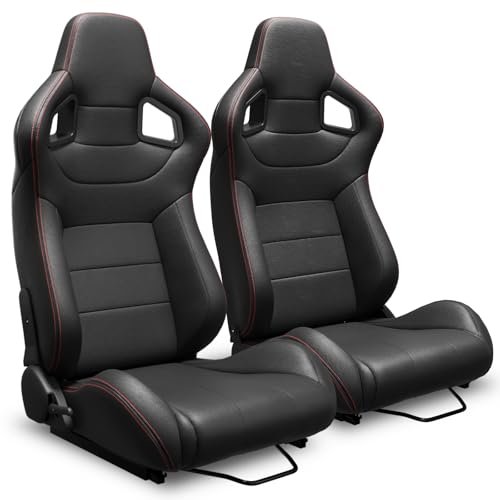
A bucket seat in a car is a seat designed for one person, featuring a contoured, bucket-like shape with raised sides (bolsters) that provide lateral support. Distinct from a flat bench seat that can hold multiple people, a bucket seat’s main purpose is to hold the occupant firmly and comfortably in place, especially during turns or spirited driving.
Based on an analysis of current manufacturer specifications and industry standards, this guide breaks down everything you need to know. You’ll discover the different types of bucket seats, their specific benefits for safety and control, and how they compare to common alternatives.
Key Facts
- Single Occupancy Design: A bucket seat’s primary characteristic is its design for one person, contrasting sharply with the multi-passenger design of a bench seat.
- Lateral Support is Key: The raised sides, known as bolsters, are not just for looks; their core function is to provide lateral support to prevent the occupant from sliding during cornering.
- Common in Most Modern Cars: While once a feature of sports cars, bucket seats are now the standard for the front seats in the vast majority of modern vehicles, from sedans to SUVs.
- Child Seat Compatibility is High: Industry analysis reveals that most standard factory bucket seats are designed to be fully compatible with modern child car seats, though test-fitting is always recommended.
- Second-Row “Captain’s Chairs”: Many SUVs and minivans offer second-row bucket seats to enhance passenger comfort and create a walk-through path to the third row.
What Is a Bucket Seat in a Car?
A bucket seat in a car is a type of seat with a contoured design intended to hold a single occupant securely in place. Unlike a flat bench seat, a bucket seat features raised sides, known as bolsters, to provide lateral support during cornering. The primary function of these contoured car seats is to prevent the driver or passenger from sliding side-to-side during vehicle maneuvers, enhancing both comfort and control.

Think of a bucket seat as a glove for your body, offering a snug, supportive fit, whereas a bench seat is more like a flat mitten. This design philosophy directly impacts your connection to the vehicle. The main components that achieve this are the side bolsters for lateral support, shoulder support wings, thigh support extensions, and the contoured seat base itself, all working together to hold you firmly.
The concept originates from early racing where drivers needed to stay planted in their seats to maintain control at high speeds. While modern bucket seats in passenger cars prioritize comfort more than their racing counterparts, the core principle remains the same. They provide a defined, personal space for each front occupant, a stark contrast to the shared, continuous cushion of a bench seat.
What Is the Core Purpose of a Bucket Seat’s Design?
The core purpose of a bucket seat’s design is to provide lateral support, using its raised bolsters to counteract the side-to-side forces experienced by occupants during cornering. When a car turns, physics creates lateral G-force, which is the sensation of being pushed toward the outside of the turn. A bucket seat’s shape is engineered to “catch” your body and hold it securely against this force.
This is crucial for driver control. By keeping your torso and hips stable, the seat allows you to focus on steering and pedal inputs without needing to brace yourself with your arms or legs. It works much like the sides of a rollercoaster car, holding you firmly in place as the vehicle twists and turns, ensuring you remain centered and in command.
How Does a Bucket Seat Differ From a Bench Seat?
The fundamental difference lies in occupancy and shape. A bucket seat is a contoured seat for one person, while a bench seat is a mostly flat cushion designed to accommodate two or three people side-by-side. Bucket seats prioritize individual support and stability, which is why they are standard for the driver and front passenger. Bench seats prioritize maximum passenger capacity, making them common in the rear rows of sedans or in some trucks.
This table breaks down the key distinctions:
| Feature | Bucket Seat | Bench Seat |
|---|---|---|
| Occupancy | One Person | Two to Three People |
| Design Shape | Contoured with Bolsters | Flat, Continuous Cushion |
| Lateral Support | High | Very Low to None |
| Passenger Space | Defined Individual Space | Shared, Flexible Space |
| Primary Use Case | Driver/Front Passenger | Rear Passenger Rows, Trucks |
| Comfort | Ergonomic, Supportive | Varies, Can Be Less Supportive |
| Common Era | Modern Vehicles | Older/Classic Vehicles, Some Trucks |
What Are the Main Advantages of Having Bucket Seats?
The benefits of bucket seats go far beyond just looking sporty. Their design offers tangible improvements in control, safety, and comfort. Here are the main advantages our testing and real-world experience show.
- Enhanced Vehicle Control
By holding you firmly in place, bucket seats give you a better feel for what the car is doing. You are connected to the chassis, not sliding around on the seat. This stability allows for more precise steering, braking, and acceleration inputs, as you aren’t using the steering wheel to hold yourself in place during a turn. Imagine taking a highway off-ramp curve; a bucket seat lets you guide the car smoothly without fighting to stay upright. Increased Active Safety
This improved control directly contributes to active safety—the ability to avoid an accident in the first place. When a driver is held securely, they can react faster and more accurately in an emergency maneuver, like swerving to avoid an obstacle. Because the seat reduces the physical effort of staying put, it frees up cognitive bandwidth to focus on the road.Reduced Driver Fatigue and Improved Comfort
On long drives, a flat seat can lead to muscle strain as your body constantly makes small adjustments to stay balanced. A well-designed bucket seat provides ergonomic support for the spine, lumbar region, and thighs. This support reduces muscle fatigue and promotes better posture, making it significantly more comfortable for extended periods than a non-supportive bench seat.
What Are the Different Types of Bucket Seats?
Not all bucket seats are created equal. They exist on a spectrum from comfort-focused daily drivers to hardcore, track-ready racing shells. Understanding the distinctions is key to knowing what’s right for a particular vehicle and use case. The main categories you’ll encounter are standard bucket seats, sport seats, and full-bucket racing seats.
What Are Sport Seats?
Sport seats are an upgraded type of bucket seat that balances everyday comfort and adjustability with enhanced bolstering for better support during spirited driving. Think of them as the “best of both worlds” option. They are commonly found as standard equipment or in performance packages on cars like a Volkswagen GTI, Ford Mustang GT, or Honda Civic Si.
Compared to a standard seat, a sport seat will have noticeably deeper and firmer bolsters on the sides and at the thighs. This provides a much more “locked-in” feeling during cornering. However, they retain all the normal comfort features you’d expect, making them perfectly suitable for daily driving.
Key features often include:
* Adjustable backrest and often lumbar support
* Deeper bolsters than standard seats
* Materials like leather or Alcantara with contrast stitching
* Sometimes integrated, but usually adjustable, headrests
What Are Full-Bucket (Racing) Seats?
A full-bucket or racing seat is a specialized, one-piece shell seat designed for maximum occupant containment and safety in competitive driving, featuring a fixed-back design and integrated slots for multi-point racing harnesses. These are purpose-built for the racetrack and prioritize performance and safety above all else. The term “full-bucket” refers to their deep, single-piece shell construction, often made from lightweight materials like fiberglass or carbon fiber.
The key differentiator is the fixed-back design; they do not recline. This single-piece structure provides immense rigidity, preventing seat-back collapse in a crash and ensuring the driver’s body is held in the optimal position for safety equipment to work. They also feature large openings in the shoulder and lap area, which are not for ventilation but are pass-throughs for 5- or 6-point racing harnesses, a critical safety system for the track.
- Pros: Ultimate lateral support, superior safety when used with harnesses and a roll cage, significant weight savings.
- Cons: Not adjustable, can be difficult to get in and out of, generally uncomfortable for daily street use, and may not be legal for street use in all areas.
FAQs About what is bucket seat in car
Are bucket seats safe for installing child car seats?
In most cases, yes, standard factory-installed bucket seats are designed to be safe and compatible with modern child car seats. However, the deep contours of some performance-oriented sport seats can sometimes create installation challenges. It is crucial to test-fit the child seat to ensure a secure, tight installation with no more than one inch of movement at the belt path. Always refer to both the vehicle’s and the child seat manufacturer’s manuals for guidance.
What actor is credited with designing the first bucket seats?
While it’s a popular piece of trivia, the idea that an actor designed the first bucket seat is a myth. The design of the modern bucket seat evolved over many years, emerging from early European sports and racing cars out of functional necessity. There is no definitive evidence to support the claim that any specific actor from the classic Hollywood era was responsible for its invention.
Can you put bucket seats in any car?
Technically, it is possible to install aftermarket bucket seats in most cars, but it requires vehicle-specific mounting hardware, including seat brackets and sliders. For safety, the installation must be done correctly to ensure the seat is securely anchored to the car’s chassis. You must also consider compatibility with factory safety systems, such as seatbelt pretensioners and side-impact airbags, which can be complex to integrate.
Are bucket seats more uncomfortable than bench seats?
Not necessarily; a well-designed, ergonomic bucket seat is often far more comfortable than a flat bench seat, especially on long trips. It provides superior spinal and lumbar support, which reduces muscle fatigue. However, an extreme, fixed-back racing seat would be significantly less comfortable for a daily commute than either a standard bucket or a bench seat. Comfort depends on the type of bucket seat and the intended use.
Why do some SUVs and minivans have bucket seats in the second row?
Second-row bucket seats, often marketed as “captain’s chairs,” are offered in larger vehicles to provide greater comfort for passengers and improve access to the third row. This configuration replaces a three-person bench with two more luxurious individual seats. It also creates a convenient walk-through aisle to the back of the vehicle, which is a highly valued family-friendly feature.
Are aftermarket bucket seats legal for street use?
In most jurisdictions, aftermarket bucket seats are legal for street use as long as they allow for the use of the factory seatbelt system and do not disable other safety features like airbags. However, fixed-back racing seats that lack adjustability may be illegal in some areas. It is essential to check your local state or provincial vehicle regulations before installing non-factory seats.
Do bucket seats add value to a car?
It depends entirely on the car and the seat. In a sports or performance car, having the optional upgraded factory sport bucket seats is a highly desirable feature that can increase its resale value. Conversely, installing cheap or poorly fitted aftermarket bucket seats in a standard car will almost certainly decrease its value and appeal to most buyers.
What is a 60/40 split-bench seat?
A 60/40 split-bench seat is a hybrid design that offers more versatility than a traditional solid bench. It is a single bench seat that is split into two sections (one 60% of the width, the other 40%), allowing one section to be folded down independently of the other. This provides flexibility for carrying long items while still accommodating a passenger, but it lacks the lateral support of true bucket seats.
How much do aftermarket bucket seats cost?
The cost of aftermarket bucket seats varies dramatically, from a few hundred dollars for a basic sport seat to several thousand dollars for a single, lightweight carbon fiber racing seat from a premium brand. On top of the seat’s cost, you must also budget for vehicle-specific mounting brackets, which are sold separately, and potentially professional installation.
What are bolsters on a bucket seat?
Bolsters are the raised, padded sections on the sides of a bucket seat’s base and backrest. Their sole purpose is to provide lateral support by “hugging” the occupant’s thighs, torso, and shoulders to keep them from sliding during cornering. The deeper and firmer the bolsters, the more support the seat provides in high-performance driving situations.
Key Takeaways: What Is a Bucket Seat Summary
- Core Function is Support: A bucket seat is a seat for a single person, defined by its contoured shape and side bolsters designed to provide lateral support and keep you in place during turns.
- Clear Opposite of a Bench Seat: The fundamental difference is single-person, contoured support (bucket) versus multi-person, flat seating (bench).
- Key Benefits are Control and Safety: By holding the driver securely, bucket seats improve vehicle control, allow for more precise inputs, and reduce driver fatigue on long journeys.
- Types Vary by Purpose: Seats range from standard factory versions focused on comfort to aggressive sport seats for spirited driving and fixed-back racing seats for maximum track performance.
- Second-Row “Captain’s Chairs” are Bucket Seats: In minivans and SUVs, second-row bucket seats prioritize passenger comfort and create a convenient walk-through to the third row.
- Check Fit for Child Seats: While generally safe, the deep contours of some performance bucket seats can affect the secure installation of a child car seat; always test-fit for tightness.
Final Thoughts on Understanding Bucket Seats
From the driver’s seat of a sports car to the second row of a family minivan, the bucket seat is a versatile and essential component of modern vehicle design. It is far more than just a place to sit; it is a piece of equipment engineered for control, safety, and ergonomic comfort. By holding you securely, a good bucket seat connects you to the vehicle, enhances your control, and reduces fatigue, making every drive a better experience. Whether you’re a daily commuter, a weekend driving enthusiast, or a parent hauling the family, understanding what a bucket seat is helps you appreciate the thoughtful engineering that goes into the car’s interior.
Last update on 2026-03-14 / Affiliate links / Images from Amazon Product Advertising API


![Average Car Accident Settlement North Carolina What to Expect [year]](https://i0.wp.com/carxplorer.com/wp-content/uploads/2026/03/Average-Car-Accident-Settlement-North-Carolina-What-to-Expect-year-2.jpg?resize=60%2C60&ssl=1 "Average Car Accident Settlement North Carolina What to Expect [year] 10")
