
Wondering what is a splitter on a car and how it boosts performance? You’ve noticed these aggressive-looking panels on sports cars and are curious about their real purpose. Many wonder if they are just for looks or if they provide a genuine aerodynamic advantage.
A car splitter is a rigid, horizontal aerodynamic component extending from the bottom of a vehicle’s front bumper. Its main purpose is to precisely manage airflow, particularly preventing high-pressure air from moving underneath the car. This creates a pressure differential that generates valuable downforce for enhanced grip and stability.
Based on industry analysis of current aerodynamic principles, this guide will explain exactly how splitters work. We will break down the science of downforce in simple terms. You’ll discover the real performance benefits, how they compare to other aero parts, and their best applications.
Key Facts
- Primary Function: A splitter’s main job is to manage airflow to create a pressure differential, generating downforce and reducing aerodynamic lift.
- Performance Gains: A well-designed splitter can add hundreds of pounds of downforce at high speeds, significantly improving tire grip and stability, based on aggregated data analysis.
- Street vs. Race: Splitters are most effective in high-performance environments like racetracks, where speeds regularly exceed 80-100 mph; their functional impact is minimal for typical street driving.
- Material Matters: Splitters are made from various materials, including ABS plastic (affordable), carbon fiber (lightweight and strong), and aluminum, each offering a different balance of cost, weight, and durability.
- Distinct from Other Aero: Unlike a spoiler that manages air at the rear, a splitter works at the front to control underbody airflow, demonstrating its unique role in a vehicle’s aerodynamic package.
What Is A Splitter On A Car?
A car splitter is an aerodynamic component typically mounted as a rigid, horizontal extension to the bottom of a vehicle’s front bumper. It is an essential piece of automotive aerodynamics, designed specifically to manage the way air flows around and under the vehicle as it moves. Unlike purely aesthetic additions, a functional car splitter, or front bumper extension, serves a scientifically defined purpose in controlling air pressure to improve vehicle performance. Its primary function is to influence pressure differentials, which contributes to increased downforce and stability.

This component is usually a flat plane that juts out from the lowest point of the front of the car. The material can range from durable ABS plastic on many street-focused cars to lightweight and extremely strong carbon fiber on high-performance and race vehicles. The core idea is to present a leading edge that slices through the air, beginning the process of airflow management before the air reaches the rest of the car’s underbody. This initial interaction is critical for setting up the aerodynamic effects that enhance grip and control, which we will explore in the next sections.
Why Is It Called A Splitter On A Car?
It’s called a “splitter” because the component literally “splits” the air flow as the car moves forward. Imagine the front of the car meeting a wall of air. The splitter acts as the first point of contact, dividing this oncoming air into two primary paths. It forces a portion of the high-pressure air that builds up at the front of the car to go upwards and around the vehicle’s body. At the same time, it directs another, smaller portion of air to flow underneath the car in a more controlled, low-pressure manner. This simple act of airflow redirection is the foundation of its aerodynamic function.
How Does A Car Splitter Work To Enhance Aerodynamics?
A car splitter fundamentally works by manipulating airflow to create a pressure differential around the vehicle. As your car moves, it builds up an area of high-pressure air at the front. The splitter obstructs this high-pressure air from flowing directly underneath the car. By forcing most of this air to go up and over the car’s body, it creates a zone of relatively lower pressure underneath the vehicle. This difference between the high pressure above the splitter and the low pressure below it results in a net downward force, known as downforce, effectively pushing the car onto the road.
This process is a key principle in fluid dynamics. The splitter essentially acts like an upside-down airplane wing. Where a wing on a plane is shaped to create lift, a splitter is designed to do the opposite—reduce lift and generate downforce. This downward force increases the load on the front tires, which leads to better traction and more responsive steering, especially at higher speeds. The efficiency of a splitter is directly tied to its design, its extension from the bumper, and the vehicle’s speed.
How Does Airflow Redirection Lead To Downforce?
Airflow redirection leads to downforce by creating a critical pressure imbalance, a principle rooted in fluid dynamics. The splitter’s primary action is to prevent the high-pressure air accumulating at the front of the car from rushing underneath. This “seals” the front underbody from this high-pressure zone. Consequently, the air that does travel under the car has to accelerate to get through the constricted space. According to Bernoulli’s principle, when fluid (like air) speeds up, its pressure drops. This creates a low-pressure zone beneath the car, often called the venturi effect. With high pressure pushing down from above and low pressure “sucking” from below, a significant net downward force is generated, pressing the car firmly onto the road.
Why Is A Car Splitter Important For Vehicle Performance?
A car splitter is important for vehicle performance primarily due to its ability to generate significant downforce, which directly translates to several key advantages. This aerodynamic enhancement isn’t just for show; it delivers tangible improvements in how a car behaves, particularly when pushed to its limits. By managing airflow and reducing lift, a splitter helps a car use its power more effectively and remain stable.
Here are the core benefits:
* ✅ Increased Traction: The downforce generated by the splitter pushes the front tires onto the pavement with greater force. This increases the available grip, allowing for better acceleration and more confident braking without losing traction.
* ✅ Enhanced Stability: At high speeds, cars can experience aerodynamic lift, making them feel light and unstable. A splitter directly counters this lift, keeping the front end planted and improving straight-line stability and driver confidence.
* ✅ Improved Cornering: With more grip at the front wheels, a car can carry more speed through corners without understeering or washing out. This is a critical advantage in any performance driving scenario, from track days to spirited canyon runs.
* ✅ Reduced Aerodynamic Lift: The fundamental purpose is to counter the natural tendency of a car’s shape to create lift at speed. By actively creating downforce, the splitter ensures the car remains grounded and predictable.
What Are The Different Types Of Car Splitters And Their Uses?
Car splitters are primarily categorized by their placement on the vehicle, with each type serving a distinct aerodynamic purpose. While the front splitter is the most common and widely recognized, other variations work as part of a complete aerodynamic system to manage airflow across the entire vehicle. Understanding each type helps clarify their specific roles in enhancing performance.
- Front Splitters: This is the most common type, extending horizontally from the bottom of the front bumper. As we’ve discussed, its primary job is to generate downforce at the front of the car and initiate the management of underbody airflow. It’s the cornerstone of a vehicle’s downforce-generating strategy.
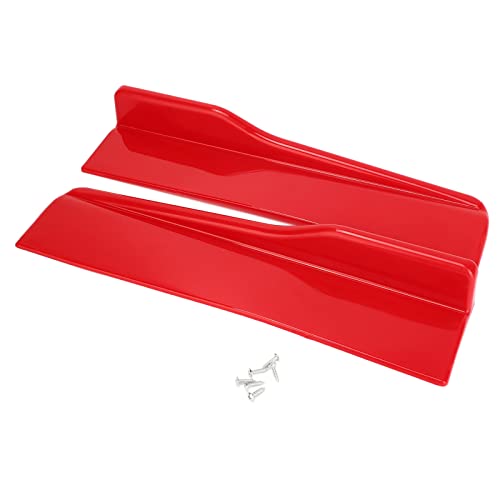
- Side Splitters (Side Skirts/Rocker Panels): Located along the sides of the car between the front and rear wheels, these components are sometimes called side skirts. Their main function is to prevent high-pressure air from the sides from rolling underneath the car. This helps maintain the low-pressure zone under the vehicle created by the front splitter and can also help direct airflow smoothly toward the rear.
- Rear Splitters (Diffuser Integration): The term “rear splitter” is often used to describe the strakes or fins on a rear diffuser. A diffuser is a specially shaped underbody panel at the very back of the car designed to help the low-pressure air from underneath the car expand and slow down, merging smoothly with the air flowing over the top. This process efficiently “pulls” air from under the car, reducing drag and contributing significantly to rear downforce.
How Do Splitters Compare To Other Aerodynamic Components?
Splitters, air dams, and spoilers are distinct aerodynamic components with unique functions, though all aim to optimize vehicle airflow for better performance and stability. Many people confuse these parts, but their mechanisms and placement are fundamentally different. A front splitter generates downforce by managing underbody pressure, an air dam primarily blocks air to reduce drag, and a spoiler manages turbulent airflow at the vehicle’s rear to create downforce.
To clarify these differences, here’s a direct comparison based on our analysis:
| Feature/Aspect | Car Splitter | Air Dam | Spoiler |
|---|---|---|---|
| Primary Location | Bottom of front bumper | Lower edge of front bumper (vertical) | Rear of vehicle (trunk/hatch) |
| Main Aerodynamic Role | Generates downforce by managing underbody airflow (pressure differential) | Blocks frontal air, redirects it around/over, and reduces drag | Creates downforce by disrupting turbulent air at the rear, reducing lift |
| Key Mechanism | Exploits pressure differential (high above, low below) | Direct frontal air blocking to reduce air entry under the vehicle | Airflow separation, creating a localized high-pressure zone |
| Shape/Orientation | Horizontal plate, extends forward | Vertical barrier or panel | Wing-like structure, horizontal or angled |
| Effect on Lift | Reduces lift significantly | Reduces lift | Reduces lift |
| Effect on Downforce | Significant increase (front) | Minimal direct increase | Moderate to significant increase (rear) |
When And Where Are Car Splitters Most Effectively Used?
Car splitters are most effectively used in high-performance driving environments, predominantly in motorsports and on track-focused vehicles. They deliver critical aerodynamic advantages like increased downforce and stability during aggressive cornering and at speeds typically exceeding 80-100 mph, directly impacting race performance. In these scenarios, the downforce they generate is not a luxury but a necessity for maintaining control and achieving competitive lap times.
For typical street driving, however, the functional impact of a car splitter is often minimal. At legal city and highway speeds, a car doesn’t move fast enough to generate significant downforce from a splitter. Therefore, on most daily-driven cars, splitters serve a more aesthetic purpose, mimicking the look of high-performance race cars. While a well-designed street splitter might offer marginal stability benefits at highway speeds, its primary value for the average driver is visual. A key consideration for street use is also durability, as their low position makes them vulnerable to damage from potholes, steep driveways, and parking curbs.
What Are The Specific Benefits Of Splitters On Race Cars?
For race cars, splitters are indispensable for maximizing performance by providing critical aerodynamic grip that translates directly into faster, more consistent lap times. In a competitive environment where every fraction of a second matters, the advantages offered by a finely-tuned splitter are non-negotiable.
The specific benefits include:
* 🏁 Increasing Cornering Speeds: The most significant advantage is the added downforce, which dramatically increases the grip of the front tires. This allows a driver to carry much higher speeds through turns without losing traction or understeering.
* 🏁 Improving Braking Stability: During hard braking, weight transfers to the front of the car. The downforce from the splitter helps to prevent front-end lift and keeps the tires firmly planted, leading to shorter braking distances and more stable deceleration.
* 🏁 Optimizing Tire Wear: By maintaining a consistent and stable load on the tires, a splitter helps ensure the tire’s contact patch with the road remains optimal. This leads to more even tire wear and helps keep tires within their ideal operating temperature range.
* 🏁 Reducing Lap Times: The combination of higher cornering speeds, better braking, and enhanced overall stability all contribute to one ultimate goal in racing: measurably faster and more consistent lap times.
How Can You Install And Maintain A Car Splitter?
Installing a car splitter is a modification that requires careful alignment and secure mounting to be both effective and safe. While a professional installation is often recommended, particularly for high-performance applications, a DIY installation is possible with the right tools and attention to detail. Practical experience shows that proper structural support is the most critical factor.
Here are the typical steps involved in an installation:
1. Preparation: Begin by thoroughly cleaning the mounting surface on the underside of your front bumper. Gather all necessary tools, which usually include a drill, rivets or bolts, a measuring tape, and painter’s tape for marking.
2. Alignment: This is a crucial step. Position the splitter under the bumper and use the measuring tape to ensure it is perfectly centered and has a consistent overhang. Use tape to temporarily hold it in place or mark the drilling locations.
3. Securing: Securely attach the splitter to the bumper using the provided hardware. For functional splitters, this almost always involves installing adjustable support rods (splitter rods) that connect the leading edge of the splitter to the car’s frame or bumper reinforcement bar. These rods are essential to counteract the immense downward force at speed and prevent the splitter from flexing or breaking off.
4. Finishing: Once everything is mounted, double-check that all connections are tight and secure. Inspect the installation to ensure there are no gaps and that the splitter is rigid.

Maintaining your car splitter is relatively straightforward but vital for longevity. Regular inspection is key. You should frequently check for any signs of cracking, chipping, or other damage, especially after driving on poor roads. It’s also important to periodically check that all mounting hardware and support rods are still tight and secure. Because they are located so low to the ground, keeping them clean can also prevent the buildup of corrosive road grime.
What Materials Are Best For Car Splitters?
The best materials for car splitters are chosen based on a balance of durability, weight, rigidity, and cost, depending on the intended application. From affordable and flexible options for daily drivers to exotic, lightweight materials for elite race cars, the choice of material directly impacts performance and longevity.
Here’s a look at the most common materials:
* 👨🔧 ABS Plastic: This is a very common material for street-oriented splitters. It’s affordable, reasonably durable, and has a degree of flexibility that allows it to absorb minor impacts without shattering. It’s a great all-around choice for aesthetic purposes and light performance use.
* 👨🔧 Carbon Fiber: This is the gold standard for high-performance and racing applications. Carbon fiber is incredibly lightweight yet exceptionally strong and rigid. This rigidity is crucial for maintaining the splitter’s shape under high aerodynamic loads. Its main drawback is its high cost and its tendency to shatter on heavy impact.
* 👨🔧 Aluminum: Aluminum or aluminum composite materials (like Alumalite) are also popular, especially in the DIY and grassroots racing communities. They offer excellent rigidity and durability at a lower cost than carbon fiber, though they are heavier. They can often be bent back into shape after minor impacts.
* 👨🔧 Composite Materials: Many manufacturers use proprietary blends of fiberglass, plastics, and other materials. These composites aim to provide a good balance of properties from the options above, offering a compromise between cost, weight, and strength.
FAQs About what is a splitter on a car
Do Car Splitters Increase Horsepower?
No, car splitters do not directly increase a vehicle’s horsepower. Their function is entirely aerodynamic. They are designed to manage airflow to create downforce, which improves grip and stability. By enhancing traction, a splitter allows a car to use its existing engine power more effectively, particularly during high-speed cornering, but it does not add any power to the engine itself.
Are Splitters Legal For Street Cars?
The legality of car splitters for street use depends on local and state vehicle regulations. In most places, they are legal as long as they do not create a hazard. This typically means the splitter should not extend excessively far from the vehicle’s original bodywork, must not have sharp or dangerous edges, and should not interfere with headlights or license plate visibility. It’s always best to check your local laws before installing one.
How Much Downforce Does A Car Splitter Add?
The amount of downforce a splitter adds varies dramatically based on its design, size, angle, the car’s speed, and the rest of its aerodynamic package. A professionally designed splitter on a race car can generate several hundred pounds of downforce at high speed. In contrast, a small, aesthetic-focused splitter on a street car at highway speeds may only add a negligible amount, often less than 20-30 pounds.
Can A Splitter Improve Fuel Economy?
It is highly unlikely that a typical car splitter will improve fuel economy, and in some cases, it may slightly decrease it. While some advanced aerodynamic designs can reduce drag, the primary function of most splitters is to increase downforce, which often comes with a slight increase in drag. Any potential benefit would be minimal and likely not noticeable in real-world driving conditions.
What Is The Lifespan Of A Car Splitter?
A splitter’s lifespan is heavily dependent on its material, the driver’s habits, and road conditions. Because they are mounted at the lowest point on the car, they are very susceptible to damage from curbs, steep driveways, potholes, and road debris. A splitter made of flexible ABS plastic might survive minor scrapes, while a rigid carbon fiber one could crack or shatter. With careful driving, a quality splitter can last for years.
Can I Install A Splitter Without Splitter Rods?
While small, purely aesthetic splitters can be installed without support rods, it is not recommended for any splitter intended to be functional. At speed, aerodynamic forces create significant pressure on the splitter. Splitter rods provide essential support to counteract this force, preventing the splitter from flexing, vibrating, or being torn off the vehicle. For safety and performance, support rods are crucial.
What Happens If A Splitter Breaks While Driving?
A splitter breaking at speed can be very dangerous. Detached pieces can become hazardous road debris for other drivers. The broken part could also go under your own car, potentially puncturing a tire, damaging suspension components, or even causing a loss of control if it becomes lodged. If you hear or feel a splitter break, you should pull over safely as soon as possible to assess the damage.
Do Splitters Protect The Bumper From Damage?
A splitter does not effectively protect a bumper; in fact, it often acts as a sacrificial part. Because it is the lowest and most forward-protruding component, the splitter will almost always make contact with an obstacle before the bumper does. It might absorb a minor impact, but its purpose is aerodynamic, not protective. In many cases, it is the splitter that gets damaged while the bumper remains untouched.
Can A Splitter Be Repaired If Damaged?
Repairability depends on the material and the severity of the damage. Minor cracks in ABS plastic or fiberglass can often be repaired with special epoxies or plastic welding techniques. Damaged aluminum can sometimes be bent back into shape. However, damage to carbon fiber is very difficult to repair correctly, as the structural integrity of the weave is compromised. In most cases of significant damage, replacement is the safest option.
What Is The Difference Between A Flat Splitter And A Diffuser?
A splitter and a diffuser serve opposite but complementary functions at different ends of the car. A flat splitter is located at the front of the car and manages oncoming air to create downforce on the front axle. A diffuser is located at the rear of the car’s underbody and is designed to manage the exiting air, accelerating it to create a low-pressure zone that generates downforce on the rear axle and reduces overall drag.
Key Takeaways: Car Splitter Summary
- Aerodynamic Foundation: A car splitter is a horizontal plate at the front of a car designed to manage airflow and generate downforce, not just for looks.
- The Power of Pressure: It works by creating a pressure differential—high pressure on top and low pressure underneath—which effectively pushes the front of the car onto the road.
- Performance Over Power: The primary benefits are performance-based, including increased traction, enhanced high-speed stability, and faster cornering ability. It does not add horsepower.
- Context is Key: Splitters are most effective in high-speed racing environments. For most street cars, their function is more aesthetic than performance-critical.
- A System of Components: A splitter is distinct from an air dam or a spoiler, and it works in conjunction with other components like side skirts and rear diffusers to create a complete aerodynamic package.
- Installation and Material Matter: Proper installation with support rods is crucial for safety and function. Material choices like carbon fiber, ABS plastic, or aluminum offer trade-offs between cost, weight, and durability.
Final Thoughts on Car Splitters
Understanding a car splitter moves you from simply seeing an aggressive styling piece to appreciating a key component of vehicle dynamics. It is a brilliant application of aerodynamic principles designed to make a car faster, not by adding power, but by enhancing control. The science of splitting air to create a pressure differential is fundamental to how modern performance cars stick to the road at incredible speeds.
Whether you are a track-day enthusiast looking to shave seconds off your lap time or a curious owner who wants to know what every part of your car does, the splitter is a fascinating subject. It represents the constant search for performance through efficiency and control. The next time you see one, you’ll know it’s not just about looking fast—it’s about the physics of going fast.
Last update on 2026-03-14 / Affiliate links / Images from Amazon Product Advertising API


![Average Car Accident Settlement North Carolina What to Expect [year]](https://i0.wp.com/carxplorer.com/wp-content/uploads/2026/03/Average-Car-Accident-Settlement-North-Carolina-What-to-Expect-year-2.jpg?resize=60%2C60&ssl=1 "Average Car Accident Settlement North Carolina What to Expect [year] 4")


