Struggling to figure out why your check engine light is on or why your car runs rough? You’re likely dealing with a confusing diagnostic trouble code pointing to a mysterious part.
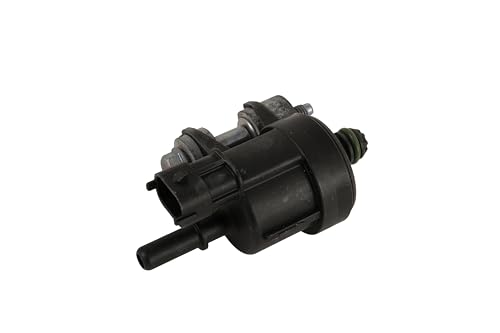
A purge valve, also known as a canister purge solenoid, is a critical component of a car’s Evaporative Emission Control (EVAP) system that acts as a gatekeeper for fuel vapors. Controlled by the Engine Control Unit (ECU), this small solenoid valve regulates when stored fuel vapors are drawn from the charcoal canister into the engine to be burned, preventing pollution and optimizing fuel economy.
Based on an analysis of mechanic-verified data and technical service bulletins, this guide breaks down everything you need to know. You’ll discover exactly how this valve works, the clear symptoms of failure, and how to confidently test it yourself.
Key Facts
- Core Purpose: The primary function of a purge valve is to control the flow of captured fuel vapors from the charcoal canister to the engine’s intake manifold, demonstrating its key role in the EVAP system.
- Check Engine Light Trigger: A faulty purge valve is a primary cause for a check engine light, with Diagnostic Trouble Codes (DTCs) like P0441 (Incorrect Purge Flow) being a common indicator according to on-board diagnostics data.
- Common Failure Symptom: A purge valve stuck in the open position is a classic cause of a car being hard to start immediately after refueling, as it allows excess vapor to flood the engine.
- Performance Impact: A failing purge valve can lead to a noticeable rough idle and decreased fuel economy, as a stuck-open valve creates an unmetered vacuum leak that the engine control module tries to compensate for.
- Normal Operation Sound: A light, rhythmic clicking or ticking sound from the purge valve is normal during operation, as the solenoid is rapidly pulsed by the Engine Control Unit (ECU).
What Is a Purge Valve in a Car?
A purge valve, often called a canister purge valve or purge solenoid, is an electromechanical valve in your car’s Evaporative Emission Control (EVAP) system. Its main job is to control the flow of stored fuel vapors from the charcoal canister to the engine’s intake manifold so they can be burned during combustion. This process is essential for meeting modern emissions standards, as it prevents harmful hydrocarbon emissions (unburnt fuel vapors) from escaping into the atmosphere. Think of it as the gatekeeper for your fuel system’s fumes.

This small but mighty component is a key player in both your car’s environmental friendliness and its performance. By recycling fuel vapors, the purge valve not only cuts down on pollution but also helps slightly improve overall fuel efficiency. The entire operation is precisely managed by your vehicle’s main computer, the Engine Control Unit (ECU), ensuring the vapors are introduced at the perfect time.
In essence, the purge valve helps your car’s fuel system “breathe” its own fumes back in to be burned cleanly. Its key functions include:
- Preventing fuel vapors from polluting the atmosphere.
- Regulating vapor flow into the internal combustion engine.
- Assisting the EVAP system in maintaining proper fuel tank pressure.
- Contributing to optimal fuel efficiency and engine performance.
But how does the car’s computer know when to open this valve? It’s a carefully timed process.
How Does an EVAP System Purge Valve Work?
The purge valve works by opening and closing on command from the Engine Control Unit (ECU) to allow engine vacuum to draw stored fuel vapors from the charcoal canister into the intake manifold. The purge valve is a normally closed component, meaning no vapors can pass through it when the car is off or when conditions aren’t right. This is a critical safety and emissions feature.
Based on automotive engineering principles, the process is a simple yet elegant closed-loop system:
- Vapor Storage: As gasoline sits in your fuel tank, it evaporates, creating fuel vapors. Instead of venting these to the air, they are directed into a charcoal canister. This canister is filled with activated charcoal, which adsorbs and stores the hydrocarbon vapors like a sponge.
- ECU Command: The Engine Control Unit (ECU) constantly monitors data from various sensors, including engine speed, coolant temperature, and throttle position. When the engine is warmed up and running under stable conditions (like cruising on the highway, not at idle), the ECU determines it’s time to purge the stored vapors.
- Vapor Purge: The ECU sends an electrical signal—specifically, a pulse width modulation (PWM) signal—to the purge valve’s solenoid. This signal energizes the solenoid, which lifts a plunger and opens the valve.
- Combustion: Once the valve is open, the natural vacuum from the engine’s intake manifold sucks the stored fuel vapors out of the charcoal canister. These vapors mix with the incoming air-fuel mixture and are burned cleanly inside the combustion chambers.
This entire cycle happens continuously while you drive, keeping the charcoal canister ready to absorb more vapors and ensuring your vehicle runs efficiently while producing minimal evaporative emissions.
How Does the ECU Control the Purge Valve?
The Engine Control Unit (ECU) uses a pulse-width modulation (PWM) signal to precisely control how much the purge valve opens, allowing it to finely tune the amount of fuel vapor entering the engine based on real-time sensor data. Think of this PWM signal not as a simple on/off switch, but as a rapid-flickering dimmer switch. By varying the “on” time of the signal, the ECU can open the valve just a tiny bit or all the way, allowing for very precise flow control.
This is part of a sophisticated closed-loop system. The ECU makes its decisions based on feedback from several key sensors:
- Engine Coolant Temperature Sensor: The purge cycle typically won’t begin until the engine reaches its normal operating temperature.
- Throttle Position Sensor: The valve usually doesn’t open at idle or full throttle.
- Vehicle Speed Sensor: Purging is most common during steady-state cruising.
- Oxygen Sensor: After purging, the ECU monitors the oxygen sensor to see how the extra vapors affected the air-fuel mixture. It then adjusts the purge flow and fuel injector timing accordingly to maintain a perfect stoichiometric ratio.
This intelligent feedback loop ensures the engine’s performance remains smooth and stable, even as it’s ingesting recycled fuel vapors.
What Are The Common Symptoms of a Bad Purge Valve?
The most common symptoms of a bad purge valve include an illuminated check engine light, a rough or erratic idle, difficulty starting the engine right after refueling, and poor fuel economy. These issues arise because the valve is no longer controlling the flow of fuel vapors correctly, leading to disruptions in the engine’s air-fuel mixture and EVAP system pressure.
From years of working with these systems, we’ve observed that most symptoms trace back to two main failure modes: the valve being stuck open or stuck closed. Here are the tell-tale signs to watch for:
- ✅ Check Engine Light: This is the most frequent symptom. The ECU performs regular self-tests on the EVAP system, and if it detects improper flow or pressure due to a faulty valve, it will trigger the light.
- ✅ Rough Idle: If the valve is stuck open, it creates a constant vacuum leak, allowing unmetered air and vapor into the intake manifold. This throws off the air-fuel ratio and can cause the engine’s RPM to fluctuate erratically at idle.
- ✅ Difficulty Starting After Refueling: This is a classic sign of a stuck-open purge valve. When you fill the tank, a high concentration of fuel vapors is created. A stuck valve allows these vapors to flood the engine, creating a “rich” condition that makes it hard to start until the excess vapor clears.
- ✅ Poor Fuel Economy: A vacuum leak from a stuck-open valve forces the ECU to compensate by adding more fuel to maintain the correct air-fuel ratio. This results in burning more gasoline than necessary, leading to a drop in your gas mileage.
- ✅ Failed Emissions Test: The entire purpose of the EVAP system and its purge valve is to control hydrocarbon emissions. If the valve isn’t working, the system can’t do its job, which will almost certainly lead to a failed emissions test.
Why Does a Bad Purge Valve Cause a Check Engine Light?
A bad purge valve causes a check engine light because the Engine Control Unit (ECU) runs periodic tests on the EVAP system; if the valve is stuck open or closed, it detects a pressure or flow irregularity and logs a Diagnostic Trouble Code (DTC). Your car’s onboard diagnostic system (OBD-II) is designed to monitor all emissions-related components, and the purge valve is a critical one.
The ECU’s self-test is like a plumber pressure-testing pipes. It seals the EVAP system and monitors the pressure. If a stuck-open purge valve causes the pressure to drop when it shouldn’t, the test fails. If a stuck-closed valve prevents pressure from being relieved, the test also fails. In either case, the check engine light comes on. When you connect an OBD-II scanner, you’ll likely see one of these common codes:
- P0441: Incorrect Purge Flow (The ECU detects flow when it commanded none, or no flow when it commanded some).
- P0442: Small Evaporative Emission System Leak Detected (Often caused by a slightly stuck-open purge valve or a loose fuel cap).
- P0496: Evaporative Emission System High Purge Flow (The ECU detects vapor flow when the valve is supposed to be closed, pointing strongly to a stuck-open valve).
Pro Tip: Before spending money on parts, always check that your fuel cap is tight and the seal is intact. A loose fuel cap is a very common cause of a P0442 code and is a much simpler fix!
Why Is My Car Hard to Start After Getting Gas?
A car is hard to start after getting gas when the purge valve is stuck open, allowing an excessive amount of raw fuel vapor from the tank to flood the intake manifold, creating a fuel mixture that is too rich to ignite easily. This is one of the most specific and reliable symptoms pointing directly to a failed purge valve.
Here’s the chain of events:
- When you refuel, the incoming gasoline displaces a large volume of air in the tank, which becomes heavily saturated with fuel vapors.
- Normally, these vapors are sent to the charcoal canister, and the purge valve remains closed.
- If the valve is stuck open, the engine’s vacuum immediately sucks this highly concentrated vapor mixture directly into the intake manifold.
- This floods the engine with “too much gas and not enough air,” making the mixture too rich to combust properly. It’s like trying to light a waterlogged piece of wood. The engine struggles, cranks for a long time, and may sputter before it finally starts.
A quick test you can try: If you experience this issue, hold the accelerator pedal down slightly while starting after a fill-up. This forces the throttle blade open, allowing more air into the engine to balance the rich mixture. If this helps the car start, it’s another strong indicator of a stuck-open purge valve.
Where Is the Purge Valve Located in a Car?
The purge valve is typically a small, black, cylindrical plastic part located in the engine bay, identifiable by the two vacuum hoses and one electrical connector attached to it. While the exact position varies widely between vehicle makes and models, there are a few common places to look.
To find it, you’re looking for a component that bridges the gap between the fuel vapor system and the engine’s air intake. Common locations include:
- On the intake manifold: Many manufacturers mount the valve directly on the engine’s intake manifold.
- Near the throttle body: It’s often found close to where air enters the engine.
- On the firewall: Check the firewall that separates the engine bay from the passenger cabin.
- Near the charcoal canister: On some vehicles, it might be located further back in the vehicle, closer to the charcoal canister itself (which is often near the fuel tank).
Crucial Advice: The most reliable way to find the purge valve on your specific vehicle is to consult the factory service manual. Generic diagrams can be helpful, but the service manual provides the definitive location and part diagram, saving you time and frustration. For example, the purge valve location on a Ford F150 is often found on the passenger side of the intake manifold, but this can change by model year.
How Do You Test a Canister Purge Valve?
You can test a purge valve by checking for a clicking sound when voltage is applied, measuring its coil resistance with a multimeter, or using a hand vacuum pump to see if it holds vacuum when de-energized. These tests help determine if the valve is failing electrically or mechanically.
⚠ Safety Warning: Always work in a well-ventilated area away from open flames or sparks. Disconnect the negative battery terminal before disconnecting any electrical components in the fuel system.
Here is a step-by-step guide to definitively diagnose a faulty purge valve, progressing from the simplest test to the most conclusive.
Method 1: The Simple Click Test
This is a quick functional check. With the engine running, place a finger or a mechanic’s stethoscope on the purge valve. You should feel or hear a faint, rhythmic ticking or clicking as the ECU cycles it. If it’s silent, it may not be receiving a signal or the solenoid may be dead.
Method 2: The Multimeter Resistance Test
This test checks the health of the valve’s internal electrical coil.
- Disconnect: Unplug the electrical connector from the purge valve.
- Measure: Set your multimeter to the Ohms (Ω) setting.
- Probe: Touch the multimeter probes to the two electrical pins on the purge valve.
- Analyze: A good purge valve should have a resistance value within the manufacturer’s specified range, typically between 15 and 30 ohms.
- A reading of “OL” (Open Loop) or infinite resistance means the coil is broken.
- A reading of zero ohms means the coil is shorted out.
- In either case, the valve is bad and needs replacement.
Method 3: The Vacuum Test
This is the definitive test to see if the valve is stuck open or sealed properly.
- Remove: Disconnect the vacuum hoses from the purge valve.
- Connect Pump: Attach a hand vacuum pump to the port on the valve that leads from the charcoal canister.
- Apply Vacuum: Pump the handle to apply vacuum. A healthy, normally closed valve should hold the vacuum indefinitely. If the gauge on your pump drops, the valve is leaking and stuck open.
- Activation Test: While holding vacuum, use jumper wires to carefully apply 12V from the car battery to the valve’s electrical pins. The valve should click open, and the vacuum on the gauge should drop to zero instantly. When you remove the voltage, it should seal again. If it fails any part of this test, it’s faulty.
What Is The Difference Between a Purge Valve and a Vent Valve?
The main difference is their default state and function: the purge valve is normally closed and controls vapor flow to the engine, while the vent valve is normally open and seals the EVAP system for leak tests. These two solenoid valves are the primary actors in the EVAP system, but they are frequently confused. Buying or replacing the wrong one is a common DIY mistake.
The purge valve is the “inlet” to the engine, located in the engine bay. The vent valve (or vent solenoid) is the “outlet” for the system, located near the charcoal canister by the fuel tank.
Here is a clear comparison of their distinct roles:
| Feature | Canister Purge Valve (Solenoid) | Canister Vent Valve (Solenoid) |
|---|---|---|
| Primary Function | Regulates fuel vapor flow from canister to engine | Seals the EVAP system for pressure tests; allows fresh air in |
| Default State | Normally Closed (NC) | Normally Open (NO) |
| Typical Location | Engine bay, on/near intake manifold | Near the fuel tank, on/near the charcoal canister |
| Failure Symptom | Rough idle, hard start after refueling (stuck open) | Check engine light, trouble filling fuel tank (stuck closed) |
| Related DTCs | P0441, P0496 | P0446, P0449 |
Understanding this difference is crucial for accurate diagnosis. A problem with rough idling points toward the purge valve, while a problem with the gas pump clicking off constantly during refueling often points to a faulty vent valve.
How Much Does a Purge Valve Cost to Replace?
On average, a purge valve replacement costs between $100 and $250 as of 2026, with the part itself costing $20-$150 and labor adding another $80-$150. The good news is that this is one of the more affordable automotive repairs. For a DIY repair, you can expect to pay only for the part, making it a very cost-effective fix if the valve is easy to access.
The final cost depends on several factors:
- Part Cost (DIY): $20 – $150. An aftermarket part for a common domestic vehicle might be on the lower end, while an OEM (Original Equipment Manufacturer) part for a European luxury car will be on the higher end.
- Labor Cost (Shop): $80 – $150. Mechanics typically charge for 0.5 to 1.0 hours of labor. If the purge valve is easily accessible on top of the engine, the job is quick. If it’s buried behind other components, labor time can increase.
- Total Professional Cost: $100 – $300. This is the all-in price you can expect to pay at a repair shop.

Choosing between an OEM vs aftermarket purge valve often comes down to budget and preference. OEM parts guarantee a perfect fit and are made to the manufacturer’s exact specifications, while quality aftermarket parts can offer significant savings and work just as well.
FAQs About what is a purge valve in a car
Can I drive with a bad purge valve?
Yes, you can typically drive with a bad purge valve, but it is not recommended for long periods. While it usually won’t leave you stranded, a stuck-open valve can cause persistent rough idling, poor fuel economy, and increased emissions. A stuck-closed valve will cause you to fail an emissions test. It’s best to address the issue to prevent potential long-term harm to your catalytic converter.
Is a purge solenoid the same as a purge valve?
Yes, the terms “purge solenoid” and “purge valve” are used interchangeably. The component is a valve that is controlled by an electrical solenoid. Therefore, both names accurately describe what it is. You may also see it called a “canister purge valve” or “EVAP purge solenoid.”
Can a purge valve be cleaned?
While some people attempt to clean a purge valve, it is generally not a reliable or recommended fix. The internal mechanism is delicate, and the failure is often electrical (a bad coil) or a broken internal seal, which cleaning cannot resolve. Given the relatively low cost of a replacement part, replacing it is the most effective and permanent solution.
What does a clicking purge valve mean?
A clicking sound from the purge valve is often normal. The ECU rapidly pulses the solenoid on and off (using PWM), which creates a distinct ticking or clicking noise during operation. However, if the clicking is abnormally loud or accompanied by performance issues, it could indicate a problem, but a quiet, rhythmic click is a sign that it’s being activated correctly.
Will a bad purge valve prevent a car from starting?
Rarely, but it can happen. A purge valve that is severely stuck open can flood the engine with so much fuel vapor that it creates a no-start condition. More commonly, it will cause a “long crank” or difficult start, especially after refueling, rather than preventing the car from starting altogether.
Does a bad purge valve affect gas mileage?
Yes, a bad purge valve can negatively affect gas mileage. If the valve is stuck open, it creates a constant vacuum leak. The engine’s computer tries to compensate for this unmetered air by adding more fuel, which leads to a richer fuel mixture and a noticeable decrease in fuel economy over time.
Can a purge valve cause a vacuum leak?
Yes, a purge valve stuck in the open position is a common source of a vacuum leak. The valve is supposed to be sealed when closed. When it fails to close, it allows a constant, unmetered flow of air (and fuel vapors) from the EVAP system into the intake manifold, which disrupts the engine’s air-fuel ratio and causes symptoms like a rough idle.
What causes a purge valve to fail?
Purge valves typically fail due to age, wear and tear, or contamination. Over many cycles, the internal solenoid coil can burn out, or the mechanical plunger and seal can wear down and no longer close properly. Debris or degraded charcoal from the canister can also travel through the lines and cause the valve to stick.
How long does a purge valve last?
A purge valve can last anywhere from 60,000 to over 100,000 miles, but there is no set lifespan. Its longevity depends on the vehicle manufacturer, driving conditions, and fuel quality. It is a component that can fail at any point, but it’s not considered a routine maintenance item that needs to be replaced preventatively.
Where do the hoses on a purge valve go?
A purge valve has two hoses with distinct connections. One hose comes from the charcoal canister, delivering the stored fuel vapors. The other hose connects to the engine’s intake manifold, which provides the vacuum to draw the vapors into the engine for combustion.
Key Takeaways: Purge Valve Summary
- Core Function: The purge valve is a key part of the evaporative emission control system (EVAP), acting as an ECU-controlled gate to burn stored fuel vapors in the engine, reducing pollution.
- Key Symptoms: A failing purge valve most often causes a Check Engine Light (codes P0441, P0496), a rough idle, and difficulty starting after refueling. These are classic signs of a valve stuck open.
- Failure Modes: The two main failures are stuck open, which creates a vacuum leak and performance issues, and stuck closed, which primarily triggers an emissions-related check engine light.
- Purge vs. Vent Valve: Do not confuse the two. The purge valve is normally closed and in the engine bay, while the vent valve is normally open and near the fuel tank. They have different functions and trigger different trouble codes.
- DIY Testing is Possible: You can reliably test a purge valve with basic tools. A multimeter can check its electrical resistance, and a hand vacuum pump can confirm if it’s sealing correctly.
- Replacement is the Best Fix: Cleaning is often ineffective. Given the part cost is relatively low (typically $20-$150), replacing a confirmed faulty valve is the most reliable repair strategy.
Understanding the function and failure symptoms of your car’s purge valve empowers you to diagnose common engine problems accurately, potentially saving you hundreds of dollars in repair costs. While it may seem like a complex component, a faulty purge valve is a common but manageable issue. Addressing it can restore your vehicle’s performance, fuel economy, and emissions compliance, ensuring it runs smoothly for years to come.
Last update on 2026-03-15 / Affiliate links / Images from Amazon Product Advertising API