Struggling to understand what a bucket seat in a car is? Many drivers are confused by the term, wondering how it differs from a regular seat. You just want to know what makes it special.
A bucket seat is a car seat designed for a single person, featuring a contoured shape with raised sides that partly enclose and support the body. Unlike a flat bench seat built for multiple people, this ergonomic design improves driver comfort and stability, especially during turns. It is a fundamental component of modern car cabin layouts.
Based on detailed analysis of automotive engineering principles, this guide breaks down everything you need to know. You will discover the exact characteristics that define a bucket seat, how it compares to a bench seat, and why its design is crucial for both comfort and safety.
Key Facts
- Superior Lateral Support: The primary benefit of a bucket seat is its ability to provide lateral support, preventing occupants from sliding side-to-side during turns and improving driver stability, as confirmed by automotive engineering standards.
- Early Performance Origins: The 1903 Mercedes-Simplex 60 hp is widely considered one of the first production cars to use individual bucket-style seats, demonstrating their importance for driver control even in early motorsports.
- Critical Safety Role: In motorsports, full-bucket seats are a key safety component. Many are FIA-approved and designed to work with 5- or 6-point racing harnesses for maximum occupant restraint.
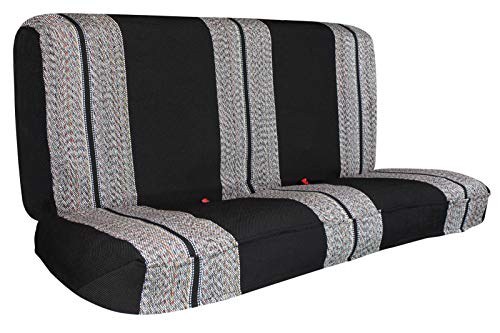
- Definitive Bench Seat Contrast: While a bucket seat is for one person, a bench seat is a flat, continuous cushion designed for multiple occupants. This makes bucket seats the choice for driver-focused cars and bench seats the choice for maximizing passenger capacity.
- Modern Comfort Features: Far from being just for racing, modern bucket seats in daily drivers often include advanced comfort features like multi-way power adjustments, heating, ventilation, and adjustable lumbar support.
What Is a Bucket Seat in a Car?
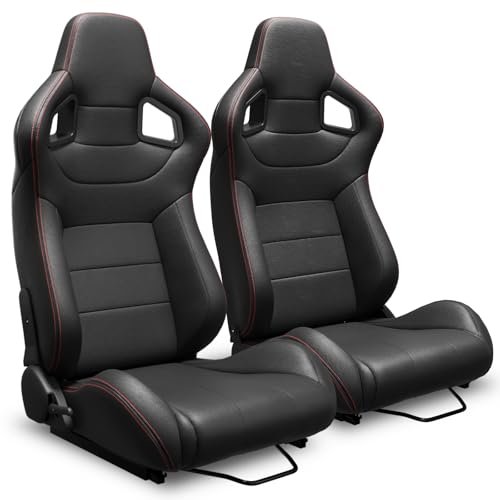
A bucket seat is a type of car seat designed to hold a single person, characterized by its contoured shape and raised sides that provide lateral support. This individual car seat is a staple in modern automotive engineering, designed to hold the driver or passenger securely and comfortably. Its purpose extends beyond simple seating; it enhances the car cabin layout and is integral to the ergonomics of driving, ensuring the driver maintains an optimal position for controlling the vehicle.

Unlike a flat, continuous bench seat, the bucket seat’s design is purpose-built around the human form. This design philosophy originated in early racing but has become standard in most passenger cars today due to its clear benefits in comfort and safety. The name itself hints at its function: to “hold” the occupant like a bucket holds its contents. This secure fit is not just for high-speed driving; it provides comfort and reduces fatigue on long journeys for everyday drivers.
What Are the Defining Characteristics of a Bucket Seat?
To truly understand what a bucket seat is, it helps to recognize its key features. These attributes distinguish it from any other type of automotive seating.
- ✅ Single Occupant Design: By definition, a bucket seat is made for one person. This allows the entire seat to be optimized for a single body.
- ✅ Contoured Shape: The seat base and backrest are not flat. They are ergonomically shaped to fit the curves of the human body, providing better support for the legs, hips, and back.
- ✅ Raised Side Bolsters: These are the padded sections on the sides of the seat cushion and backrest. Their job is to provide lateral support. Think of how a bucket seat holds you in place on a sharp highway exit ramp—that’s the lateral support from the side bolsters at work, preventing you from sliding.
- ✅ Individual Adjustments: Because it’s a single unit, a bucket seat almost always features individual adjustments for recline, fore/aft position, and often height and lumbar support.
Why Is It Called a “Bucket” Seat?
The term “bucket seat” comes from the seat’s shape, which resembles a bucket. Its deep, contoured design with raised sides “holds” the occupant in place, much like a bucket holds its contents. This name is a literal description of its primary function.
This design concept is not new and even predates the automobile. According to automotive history, similar individual, contoured seats were used in some horse-drawn carriages to keep riders more stable on rough roads. The name perfectly captures the feeling of being securely enveloped by the seat, providing a snug and supportive fit that a flat bench seat simply cannot offer.
What Is the Difference Between Bucket Seats and Bench Seats?
The primary difference between bucket seats and bench seats is that bucket seats are contoured for a single person, providing support, while bench seats are flat and designed for multiple occupants. This core distinction leads to significant trade-offs in comfort, capacity, safety, and interior design. Bucket seats prioritize individual comfort and stability, whereas bench seats prioritize maximum passenger capacity.
In practice, cars with front bucket seats almost always feature a center console between them. This console provides storage, armrests, and a location for shifters or infotainment controls. A front bench seat eliminates the center console to make room for a third passenger. Here is a clear breakdown of the key differences.
| Feature / Aspect | Bucket Seat | Bench Seat |
|---|---|---|
| Occupant Capacity | One person per seat | Two to three people |
| Lateral Support | Excellent (prevents sliding) | Poor to non-existent |
| Driver Comfort | High (ergonomic, adjustable) | Low to moderate (flat, less support) |
| Safety in Turns | High (keeps driver stable) | Low (occupants can slide) |
| Interior Space | Less passenger room; allows for a center console | Maximizes passenger room; no center console |
| Adjustability | Highly adjustable (recline, height, lumbar) | Limited to no individual adjustment |
| Common Vehicle Type | Sports cars, sedans, modern trucks/SUVs | Older cars, base model trucks, some vans |
What Are the Key Benefits of Using Bucket Seats?
Beyond just looking sporty, bucket seats offer tangible benefits that solve common driving problems and enhance the overall experience. Each advantage is directly tied to its unique, body-hugging design. Based on years of driver feedback and ergonomic research, these are the primary advantages.
- Superior Support & Safety
- Problem: You slide around in your seat during sharp turns or on winding roads, forcing you to brace yourself with the steering wheel.
- Solution: The deep side bolsters on a bucket seat provide excellent lateral support. This keeps your body firmly planted, reducing the physical effort needed to stay in position and allowing you to focus on steering. This stability is a key passive safety feature, reducing driver fatigue and improving control.
- Enhanced Comfort & Ergonomics
- Problem: On long drives, you experience back pain, leg numbness, or general fatigue from poor posture.
- Solution: A well-designed bucket seat supports the natural curve of your spine. Many include adjustable lumbar support to target the lower back. The contoured base provides better thigh support, reducing pressure points. According to ergonomic standards, this improved posture can significantly reduce driver fatigue and discomfort.
- Increased Driver Focus
- Problem: An uncomfortable or unsupportive seat is a constant distraction, pulling your attention away from the road.
- Solution: By holding you securely and comfortably, a bucket seat minimizes the subconscious adjustments and fidgeting that can break your concentration. A stable driver is a focused driver, able to react more quickly and maintain better control of the vehicle.
- Greater Adjustability
- Problem: You can’t find a comfortable driving position in a shared, non-adjustable seat.
- Solution: Bucket seats offer a wide range of individual adjustments. You can typically change the seat’s distance from the pedals, the backrest angle (recline), and often the seat height and cushion tilt. This allows you to create a personalized seating position tailored perfectly to your body.
What Are the Different Types of Bucket Seats?
Not all bucket seats are created equal. They exist on a spectrum from comfort-focused designs for daily driving to hardcore, safety-focused seats for motorsports. Understanding these categories helps clarify terms like “sport seat” and “racing seat” that are often used interchangeably but have very different meanings and applications. The main types are Sport Seats and Full-Bucket Seats.
What Is a Sport Seat (or Reclinable Bucket Seat)?
A sport seat, or reclinable bucket seat, is designed for daily-driven cars and offers a balance between the support of a racing seat and the comfort of a standard seat. This is the most common type of bucket seat found in modern performance-oriented vehicles, from hot hatches like the Volkswagen GTI to sports cars like the Ford Mustang. They are the “best of both worlds” solution.
They retain the practical features needed for daily use while providing a tangible upgrade in driver support over a flat seat.
Key Features:
* Adjustable backrest (recline function)
* Moderate side bolsters for a balance of support and easy entry/exit
* Often includes comfort amenities like heating, ventilation, and power adjustments
* Compatible with standard 3-point seatbelts
Best For:
* Daily drivers
* Spirited street driving (“canyon carving”)
* Owners who want improved support without sacrificing everyday comfort and convenience
What Is a Full-Bucket Seat (or Racing Seat)?
A full-bucket seat, also known as a racing seat, is a one-piece, fixed-back seat designed for motorsports. Its design philosophy prioritizes three things above all else: maximum safety, structural rigidity, and weight reduction. Comfort and adjustability are secondary concerns. These seats are found in dedicated track cars and race cars.
These seats are pieces of serious safety equipment. Many are certified to meet strict standards, such as the FIA 8855-1999 standard, which ensures they can withstand immense forces in a crash. Their one-piece shell construction eliminates the hinge of a reclinable seat, which is a potential failure point. This fixed-back design is also critical for use with a HANS device for head and neck protection.
🔍 Street Legality Warning: Many true fixed-back racing seats are not legal or safe for street use. They lack the DOT approval required for road vehicles, and removing factory seats often means disabling critical safety systems like side airbags and seatbelt pre-tensioners. Always check local regulations.
Key Technical Features:
* One-piece, fixed-back design for maximum structural rigidity
* Large pass-throughs (“holes”) for 4-, 5-, or 6-point racing harnesses
* Constructed from lightweight materials like fiberglass, Kevlar, or carbon fiber
* Deep, aggressive side bolsters for maximum lateral support under high G-forces
Can You Swap Bench Seats for Bucket Seats?
Yes, you can swap bench seats for bucket seats in many vehicles, but it is an advanced modification that requires careful planning and a focus on safety. This is a popular upgrade, especially in older cars, classic trucks, and base model vehicles, to improve comfort and driving dynamics. However, it’s not a simple bolt-in process.
From our practical implementation experience, here are the key considerations you must address before starting a bench-to-bucket swap:
- Mounting Brackets & Adapters: Your vehicle’s floor was designed for a bench seat. You will need vehicle-specific seat mounting brackets or universal adapters to securely attach the new bucket seats to the car’s floor pan. Never weld seats directly to the floor.
- Floor Pan Shape: The floor under the bench seat may not be flat. It might have a transmission tunnel or other contours that interfere with bucket seat placement, potentially requiring metal fabrication for a safe, level installation.
- Safety System Integration: This is the most critical step. If your original bench seat contained sensors for the airbag system or seatbelt pre-tensioners, you must address them. This often requires wiring in resistors to prevent airbag warning lights or seeking professional installation to ensure safety systems remain functional.
- Center Console Installation: Once the bench is removed, you will have a large gap between the new bucket seats. You will need to source and install a center console that fits your vehicle to complete the interior transformation.
FAQs About what is a bucket seat in a car
What was the first car with bucket seats?
The 1903 Mercedes-Simplex 60 hp is widely considered one of the first production cars to feature individual, bucket-style seats for the driver and front passenger. This was a significant departure from the bench-like seating common in horse-drawn carriages and early automobiles, prioritizing driver position and control even in the earliest days of performance motoring.
Why do some bucket seats have holes in them?
The “holes” in bucket seats, particularly racing seats, are correctly called pass-throughs for a 4- or 5-point racing harness. These slots are strategically placed at the shoulder and lap to guide the harness straps correctly over the driver’s body, ensuring they are held securely in the seat during high G-forces or a collision. They are a critical safety feature for motorsports.
Are bucket seats good for back pain?
Yes, well-designed ergonomic bucket seats can be very good for back pain, especially those with adjustable lumbar support. Their contoured shape promotes better driving posture by supporting the natural curve of the spine. The added lateral support also reduces the muscle tension required to stay upright during turns, further decreasing strain on the back during long drives.
What does 40/20/40 split seat mean?
A 40/20/40 split refers to a three-piece bench seat that mimics the function of two bucket seats with a small, foldable middle section. The two outer “40” sections are essentially individual seats, while the narrow “20” middle section can be folded down to act as an armrest or center console, or folded up to accommodate a third passenger.
Do bucket seats have airbags?
Yes, most modern bucket seats in production vehicles have side-impact airbags integrated directly into the outboard side bolster. This is a critical safety consideration when swapping seats. Removing a factory seat with an airbag and replacing it with an aftermarket seat without one will disable that safety feature and trigger a warning light on your dashboard.
Can bucket seats be heated or ventilated?
Absolutely. Most OEM sport-style bucket seats in mid-to-high-trim vehicles offer heating and ventilation as common features. The heating elements are placed within the seat cushions, while ventilation systems use small fans to circulate air through perforated leather or cloth upholstery, significantly improving comfort in hot and cold climates.
Are bucket seats legal?
Yes, standard bucket seats that come from the factory (OEM) are perfectly legal. Aftermarket racing seats, especially fixed-back models, may not be legal for street use in all jurisdictions. Issues can arise from the removal of OEM safety equipment like seatbelt pre-tensioners and airbags, or if they lack DOT (Department of Transportation) approval.
What is a semi-bucket seat?
A semi-bucket seat is a hybrid design that offers more support than a standard flat seat but has lower, less aggressive side bolsters than a full bucket seat. They are a compromise, providing a noticeable increase in lateral support for spirited driving without making it difficult to get in and out of the vehicle, making them common in sporty daily drivers.
Who invented bucket seats?
While no single person is credited with inventing the bucket seat, the concept evolved from early 20th-century European race cars. Coachbuilders and manufacturers like Mercedes realized that individual, contoured seats were essential for keeping a driver secure at high speeds. The design was later popularized in American production cars by the 1960s Ford Thunderbird.
What are captain’s chairs vs. bucket seats?
“Captain’s chairs” typically refer to the individual seats in the second row of a minivan or large SUV, while “bucket seats” usually refer to the front seats. Functionally, they are very similar: both are individual seats. However, captain’s chairs are designed for passenger comfort, often featuring their own armrests and a more upright position, while front bucket seats are more focused on driver ergonomics and support.
Key Takeaways: What Is a Bucket Seat in a Car Summary
- Definition & Purpose: A bucket seat is a seat for a single person with a contoured shape and raised sides. Its primary function is to provide lateral support, preventing the occupant from sliding during turns.
- Bucket vs. Bench: The main difference is capacity and support. Bucket seats prioritize individual ergonomic support for one person, while bench seats prioritize maximum passenger capacity over a flat surface.
- Key Benefits: They solve common problems like sliding in seat during turns and can alleviate back pain in car seats by promoting better posture and reducing muscle strain, leading to improved driver focus and comfort.
- Main Types: Seats are categorized by use. “Sport Seats” are reclinable and common in daily drivers, while “Full-Bucket” or “Racing Seats” have a fixed back design for maximum safety in motorsports and are often FIA approved.
- Safety is Paramount: The contoured design is a safety feature in itself. For racing, five-point harness pass-through slots are essential. When modifying, always consider the impact on factory airbags and seatbelt systems.
- Aftermarket Installation: Swapping a bench for bucket seats is a common modification but requires vehicle-specific seat mounting brackets, potential fabrication, and careful handling of safety sensor wiring.
- Comfort and Features: Modern bucket seats are not just for racing; they often include luxury features like heating, ventilation, and extensive power adjustments, including lumbar support features.
Final Thoughts on What Is a Bucket Seat in a Car
Ultimately, the bucket seat represents a fundamental evolution in automotive interior design. It marks the shift from treating seating as simple furniture to engineering it as a critical component of driver comfort, control, and safety. Whether it’s the supportive sport seat in your daily driver reducing fatigue on a long commute or the unyielding grip of a full-bucket racing seat on the track, its purpose remains the same: to connect the driver to the vehicle in the most secure and ergonomic way possible.
Understanding the “what” and “why” behind this ubiquitous car part empowers you to be a more informed car owner, a more comfortable driver, and a smarter shopper. The next time you slide into your car, you’ll know that the seat holding you is more than just a chair—it’s a piece of carefully considered engineering.
Last update on 2026-03-14 / Affiliate links / Images from Amazon Product Advertising API