
Want to know what grit sandpaper to sand car paint for that perfect finish? Many struggle with achieving smooth, professional results without damaging their car’s surface. Understanding the right sandpaper for each stage is crucial.
The ideal sandpaper grit for car paint depends entirely on the stage of the project: use 40-80 grit for stripping old paint, 180-320 grit for shaping body filler, 400-600 grit for sanding primer, and 1500-4000 grit for wet sanding the final clear coat to a smooth finish. This systematic approach ensures proper adhesion and a flawless outcome.
Based on years of hands-on experience in automotive refinishing, this guide reveals the precise grit sequence and techniques used by professionals. You’ll discover exactly how to navigate each sanding stage, ensuring your car’s paint job is durable and looks exceptional.
Key Facts
- Grit Sequence is Essential: Achieving a professional car paint finish requires a specific progression of sandpaper grits, moving from coarse to very fine to ensure a smooth, uniform surface.
- Primer Prepares for Adhesion: Sanding automotive primer with 400-600 grit is crucial, not just for smoothness, but to create a microscopic scratch pattern that the base coat needs to adhere properly.
- Wet Sanding is for Refinement: Ultra-fine grits (1200+) are specifically used for wet sanding the clear coat, a process designed to remove imperfections and prepare for a high-gloss polish.
- DA Sanders are Versatile: Dual Action (DA) orbital sanders are the preferred tool for many stages of car paint sanding, from stripping to primer prep, for efficiency and even material removal.
- Heat Management is Critical: Using coarse grits on metal panels requires constant movement and careful attention to avoid excessive heat buildup, which can lead to metal warping.
What Grit Sandpaper to Sand Car Paint? (The Quick Guide Chart)
For most car paint projects, start with coarse grits like 40-80 for stripping, move to medium grits like 180-320 for smoothing, use fine grits of 400-600 for primer, and finish with ultra-fine grits from 1500-4000 for wet sanding the clear coat. This comprehensive sandpaper grit guide offers a quick reference for each crucial stage, ensuring you select the appropriate grit for professional results. This chart synthesizes industry-standard grit usage, providing reliable recommendations for every step.

| Sanding Stage | Recommended Grit Range | Sanding Method | Purpose & Professional Tips |
|---|---|---|---|
| Heavy Paint/Rust Removal | 40 – 80 Grit | Dry Sanding | Purpose: To quickly strip multiple layers of paint, clear coat, and surface rust down to bare metal. Tip: Be aggressive but controlled; these grits can warp metal if overheated with a power sander. |
| Shaping Body Filler | 80 – 180 Grit | Dry Sanding | Purpose: To level and shape body filler after application. Start with 80 grit for initial shaping and finish with 180 to remove deep scratches. Tip: Use a sanding block to ensure a flat, even surface. |
| Feathering Paint Edges | 220 – 320 Grit | Dry Sanding | Purpose: To create a smooth, tapered transition between the repaired area and the existing paint. Tip: Work from the outside in to blend the edges seamlessly. |
| Final Primer Sanding | 400 – 600 Grit | Wet or Dry | Purpose: To create a perfectly smooth surface and provide a “mechanical key” for the base coat to adhere to. Tip: 600 grit is the industry standard final grit before applying base coat. |
| Scuffing for New Paint | 600 – 800 Grit | Dry Sanding | Purpose: To scuff an existing, intact clear coat to promote adhesion for a new paint layer or blend. Tip: Use a light touch; the goal is to dull the finish, not remove it. |
| Removing Orange Peel/Defects | 1200 – 1500 Grit | Wet Sanding | Purpose: To level minor surface imperfections in the clear coat, like orange peel or dust nibs. Tip: Always use a sanding block and plenty of soapy water as a lubricant. |
| Color Sanding for Show Finish | 2000 – 4000+ Grit | Wet Sanding | Purpose: To refine the scratches from the 1500 grit step, preparing the surface for final polishing and buffing. Tip: The finer you go, the less compounding and polishing work is needed later. |
This chart is your blueprint for automotive paint prep. It bridges the gap between simply knowing a grit number and understanding its specific application, a common challenge for DIY enthusiasts. Each stage is critical, and using the wrong grit can compromise your entire car paint job. For instance, using too fine a grit for paint removal would take forever, while too coarse a grit on primer leaves deep, hard-to-fill scratches. Always align your chosen sandpaper grit with the specific task.
How Do You Choose the Right Sandpaper Type for Auto Body Work?
For dry sanding car paint, body filler, and primer, Aluminum Oxide sandpaper is the most durable and effective choice. For wet sanding the clear coat, Silicon Carbide sandpaper is essential because it is waterproof and designed to create a much smoother, more refined scratch pattern suitable for polishing. Choosing the correct kind of sandpaper to sand a car involves understanding the abrasive material and its properties, which is crucial for achieving professional paint finish techniques. Different abrasive materials are suited for different tasks and sanding methods.
Aluminum Oxide sandpaper features durable, blocky grains that fracture to create new sharp edges during dry sanding. This makes it ideal for tasks like shaping body filler and sanding primer, where material removal and longevity are important. Its robust nature stands up well to the demands of these dry applications.
Silicon Carbide sandpaper, in contrast, has sharper, more brittle grains. It is perfect for wet sanding because it cuts quickly and cleanly, producing very shallow scratch patterns. The waterproof backing allows it to be used with water as a lubricant, preventing clogging and creating a finer, more consistent finish, especially important for clear coats. Understanding P-grade sandpaper classification also aids selection. The “P” indicates European standards, ensuring uniform abrasive particle sizes.

A common mistake is using a standard, non-waterproof sandpaper for wet sanding. This can lead to the paper disintegrating, clogging quickly, and leaving an inconsistent finish, hindering your smooth finish paint goals. Always match your sandpaper type to your sanding method for optimal results.
What Grit Sandpaper Should You Use for Heavy Paint and Rust Removal?
To remove old car paint and rust down to bare metal, use a coarse sandpaper in the 40 to 80 grit range. This aggressive grit is most effective when used with a Dual Action (DA) sander, but requires constant movement to avoid heat buildup. This initial stage is about stripping car paint efficiently.
When tackling heavy paint removal, starting with an aggressive grit is non-negotiable. For multiple thick layers of paint or significant rust, a 40-grit sandpaper will cut through quickly. As you get closer to the metal or for lighter layers, switch to 80-grit to refine the surface without being overly harsh. Practical experience shows that letting the DA sander do the work, rather than applying excessive pressure, prevents uneven material removal and potential damage to the underlying metal panel. Always keep the sander flat and moving.
The goal is to get down to clean, bare metal or well-adhered original paint before proceeding with any body filler or primer. This foundational step is critical for the longevity and quality of your new paint job. Using appropriate grit car paint for removal prevents having to redo work later.
How Do You Avoid Damaging the Metal While Stripping Paint?
To avoid damaging metal when stripping paint, keep the DA sander on a medium speed setting, never apply excessive pressure, and always keep the sander moving across the panel. Periodically stop to let the metal cool down. These are professional paint finish techniques honed by experienced technicians.
Avoiding metal damage, particularly warping, is crucial during coarse grit auto paint removal. Here are specific actions to prevent issues:
- Keep the DA sander flat on the surface. Tilting the sander concentrates heat and pressure, leading to low spots and swirls.
- Use a medium speed setting (3-4) on your DA sander. High speeds generate excessive heat quickly.
- Never press down hard; let the machine work. Your hands should guide the sander, not force it.
- Keep moving in overlapping passes. Do not linger in one spot, especially on larger, flatter panels like hoods and roofs. This distributes heat evenly.
- Stop and check for heat every 30-60 seconds. If the metal is too hot to touch comfortably, let it cool before continuing. This prevents permanent warpage.
Remember, a warped panel is an expensive fix. Taking your time and being methodical in the paint removal grit stage is far better than rushing and causing irreparable damage to the car’s body. These proven car paint sanding methods prioritize metal integrity.
What Sandpaper Grit Is Best for Sanding Body Filler?
To properly sand body filler, first use 80-grit sandpaper with a hard sanding block to shape the filler and make it level with the metal. After achieving the correct shape, switch to 180-grit to smooth out the surface and remove the deep scratches before applying primer. This two-step process addresses body filler leveling issues effectively.
Sanding body filler is a critical step in achieving an invisible repair. Starting with 80-grit allows for aggressive material removal to knock down high spots and sculpt the filler to the desired contour. Always block sand body filler, as this ensures a perfectly flat surface, which your hand simply cannot do consistently. Your fingers will naturally create waves and dips, making the repair visible under paint.
Once the 80-grit has brought the filler to the correct level and shape, switch to 180-grit. This finer grit will smooth out the surface and remove the deeper scratches left by the 80-grit. Failure to remove these coarse scratches will result in them showing through the primer and paint, leading to an uneven surface correction auto.
The use of a guide coat is a professional best practice. A guide coat is a light mist of contrasting color spray paint. When you sand, it highlights any low spots (which retain the guide coat) or high spots (where it’s removed too quickly), allowing you to achieve true flatness before primer application. This professional paint finish technique is indispensable.
What Grit Do You Use for Sanding Automotive Primer?
The industry standard for sanding automotive primer is to use 400-grit to 600-grit sandpaper. This grit range is fine enough to remove imperfections and create a smooth surface, yet coarse enough to leave a microscopic scratch pattern that is essential for proper base coat adhesion. This is a critical step for preparing for paint.
Sanding automotive primer serves two vital functions: first, it refines the surface, removing any minor imperfections, dust nibs, or texture. Second, and perhaps more importantly, it creates a “mechanical key” for the base coat. Think of it like Velcro: the rougher, microscopic surface left by 400-600 grit gives the subsequent paint layers something tangible to grip onto, ensuring strong paint adhesion problems are prevented. Using 400 grit is highly effective for achieving this.
If you sand primer with a grit that’s too coarse (e.g., 220-grit), the scratches will be too deep and will show through the final paint. Conversely, using a grit that’s too fine (e.g., 800-grit or 1000-grit) can make the surface too smooth, essentially “polishing” the primer. This reduces the mechanical adhesion, making the base coat more prone to peeling or delamination over time. While 600 grit car paint prep is generally considered the finest before base coat, 400-grit is often preferred for optimal adhesion.
- DO use a sanding block or a DA sander with a soft interface pad to ensure even pressure and a flat surface.
- DO clean the primer thoroughly before sanding to avoid sanding in dirt and debris.
- DO use a guide coat to highlight any remaining imperfections.
- DON’T sand with a grit finer than 600; it compromises adhesion.
- DON’T apply excessive pressure, which can create low spots.
- DON’T skip this step; it’s non-negotiable for a durable paint finish.
This attention to detail during the final sanding grit auto step ensures a durable and high-quality paint job, setting the foundation for a flawless finish.
How Do You Wet Sand Clear Coat for a Professional Finish?
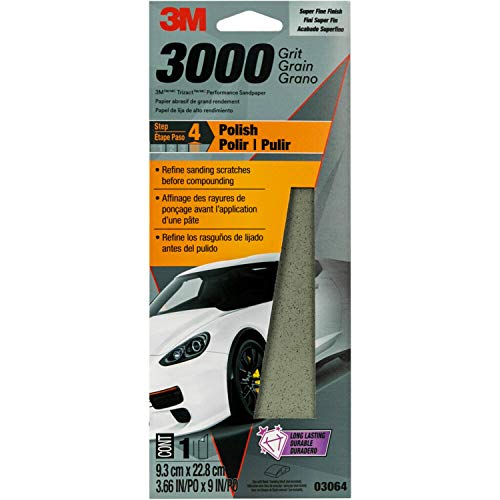
To wet sand a clear coat for a professional finish, start with 1200 or 1500-grit sandpaper to remove orange peel. Follow this with 2000-grit and then 3000-4000 grit to remove the previous step’s scratches. This process creates a perfectly flat surface ready for compounding and polishing. Wet sanding clear coat is an advanced technique for achieving a show-car quality, mirror-like finish, often referred to as color sanding and buffing car.
Wet sanding, also known as color sanding, is the most delicate and skill-intensive sanding stage. It is performed after the clear coat has fully cured, not just dried. The primary goal is to level minor surface imperfections like “orange peel” (a texture resembling an orange peel), dust nibs, or minor runs.
Here’s the step-by-step process for this advanced paint preparation:
- Start with 1500-grit sandpaper and soapy water to level orange peel and defects. The water acts as a lubricant, preventing clogging and keeping the surface cool.
- Sand in one direction until the surface has a uniform, dull haze. This indicates you have leveled the high spots. Continually wipe away residue to inspect your work.
- Clean the area and re-sand with 2000-grit in the opposite direction until the 1500-grit scratches are gone. Switching directions helps ensure you’ve removed the previous grit’s scratch pattern entirely.
- Repeat the process with 3000 or 4000-grit sandpaper for a final refinement before polishing. The finer you go with the wet sanding, the less work your compound and polish will have to do later.
⚠️ CRITICAL WARNING: Clear coat is incredibly thin (often only 1.5-2 mils thick). It is easy to sand through if you are not careful. Always use a soft sanding block and apply even, light pressure. Never sand edges or body lines too aggressively, as the clear coat is thinnest there. Removing orange peel car requires patience and a light touch.
This meticulous process provides the perfect smooth finish paint canvas for compounding and polishing, which will bring out the deep gloss and clarity. Understanding 2000 grit vs 4000 grit helps fine-tune this final step.
FAQs About what grit sandpaper to sand car paint
What grit sandpaper should I use for light scratches?
For very light surface scratches in the clear coat, you can often start with a fine 2000 or 2500-grit sandpaper. After wet sanding the small area, you will need to follow up with a rubbing compound and polish to restore the shine. For scratches you can feel with your fingernail, you may need to start with 1500-grit.
Can you use an orbital sander on car paint?
Yes, a Dual Action (DA) orbital sander is the preferred tool for most car paint sanding stages. It’s essential for efficiently stripping paint with coarse grits and for sanding primer evenly. However, for delicate wet sanding on clear coats, many professionals prefer to hand sand with a block for maximum control.
What happens if you sand car paint with too coarse of a grit?
Using a grit that is too coarse for the job will leave deep scratches that are difficult or impossible to remove later. For example, using 80-grit on a primer coat would require an excessive amount of new primer to fill the scratches, and using 400-grit on a clear coat would likely remove it entirely. Always follow the proper grit sequence.
Do you have to sand a car before painting?
Yes, sanding is arguably the most critical step in preparing a car for paint. Sanding serves two main purposes: it smooths out imperfections in body filler and primer, and it creates a “mechanical tooth” or scratch pattern that the new layer of paint can physically grip onto, ensuring proper adhesion and preventing peeling.
What is the difference between wet sanding and dry sanding?
Dry sanding is used for heavy material removal like stripping paint and shaping body filler, while wet sanding is a finishing technique. Wet sanding uses water as a lubricant with ultra-fine grit sandpaper (1200+) to create a much smoother finish on the final clear coat, removing tiny imperfections like orange peel before polishing.
How long should I wait before sanding new car paint?
You must wait for the paint to fully cure, not just dry to the touch. This depends on the type of paint and the manufacturer’s recommendations. For most modern clear coats, you should wait at least 24 hours in optimal conditions, but waiting 48-72 hours is often safer before attempting to wet sand.
Can I use 800 grit before base coat?
Using 800-grit before a base coat is generally too fine and not recommended. While it creates a very smooth surface, the scratch pattern may be too shallow for some base coats to adhere to properly, increasing the risk of delamination. The industry-standard final grit before base coat is 600-grit.
What grit should I use to remove orange peel?
To remove orange peel from a cured clear coat, start by wet sanding with 1200 or 1500-grit sandpaper. This is aggressive enough to level the textured “peel” but fine enough not to remove too much clear coat. You must then follow up with finer grits like 2000 and 3000 to refine the surface before buffing.
Do I need to use a sanding block?
Yes, using a sanding block is essential for any flat or gently curved panel. Your hand has natural pressure points that will create an uneven surface. A sanding block distributes the pressure evenly, ensuring you get a perfectly flat and level finish, which is especially critical when sanding body filler and primer.
What is the final sanding grit before clear coat?
The final sanding before clear coat is actually on the base coat, which typically does not get sanded. The base coat is applied over the primer that was final-sanded with 400-600 grit. After the base coat flashes (dries slightly), the clear coat is applied directly over it. The final sanding of the entire job happens on top of the clear coat after it has cured.
Key Takeaways: Sandpaper Grits for Car Paint
- Grit Follows Process: Always use the right grit for the specific job at hand—never jump from a very coarse grit like 80 to a fine grit like 400. The sequence is critical: Stripping (40-80) → Body Filler (80-180) → Primer (400-600) → Clear Coat Finishing (1200-4000+).
- Primer Prep is Key for Adhesion: The final sanding on primer with 400-600 grit is not just for smoothness; it creates a microscopic scratch pattern essential for the base coat to mechanically bond to, preventing future peeling.
- Wet vs. Dry Sanding Serve Different Goals: Use dry sanding for aggressive material removal and shaping during the initial stages. Reserve wet sanding with ultra-fine grits (1200+) exclusively for the final, cured clear coat to achieve a glass-like finish.
- Tools Matter: Always use a sanding block when sanding body filler and primer to ensure a flat, even surface. A DA orbital sander is excellent for stripping and initial prep, but control is paramount.
- Coarse Grits Require Caution: Grits below 100 are for heavy removal only. They can quickly remove material and generate heat that can warp metal panels. Always keep the sander moving and use a light touch.
- Finer Isn’t Always Better: Sanding primer with a grit finer than 600 (e.g., 800 or 1000) can make the surface too smooth, hindering paint adhesion. Stick to the recommended grit for each stage.
- The Final Polish Starts with Sanding: A show-car quality, mirror-like shine is impossible without the final wet sanding steps. This “color sanding” process (1500-4000+ grit) is what removes orange peel and creates a perfectly flat surface for buffing.
Final Thoughts on What Grit Sandpaper to Sand Car Paint
Achieving a professional car paint finish is dependent on a methodical sanding process, not a race. Understanding what grit sandpaper to sand car paint is the foundation for success. The journey from heavy paint removal to preparing for a high-gloss clear coat is a detailed dance of selecting the correct grit, employing the right technique, and exercising patience. Each stage, whether stripping with 40-grit or wet sanding with 4000-grit, serves a distinct purpose, building upon the last to create a flawless and durable paint finish. By adhering to these proven methods and understanding the ‘why’ behind each recommendation, you’re not just sanding; you’re crafting a lasting result. Prioritize accuracy and consistency, and your car paint job will stand out.
Last update on 2026-02-23 / Affiliate links / Images from Amazon Product Advertising API


![How to Clean a Car Duster Safely Extend Its Life [year] Guide](https://i0.wp.com/carxplorer.com/wp-content/uploads/2026/02/How-to-Clean-a-Car-Duster-Safely-Extend-Its-Life-year-Guide-2.jpg?resize=60%2C60&ssl=1 "How to Clean a Car Duster Safely Extend Its Life [year] Guide 4")


