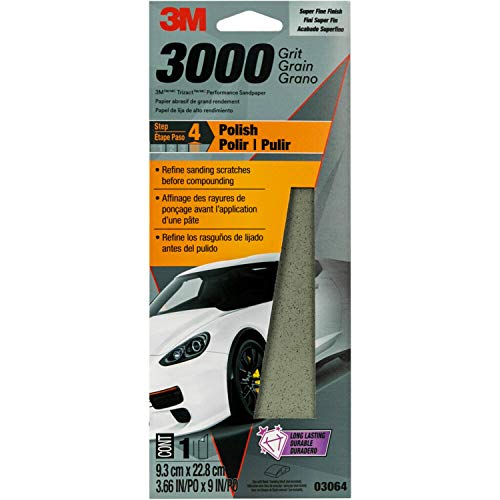
Struggling to figure out what grit sandpaper for painting a car is right for your project? You’re not alone; choosing the wrong abrasive can ruin hours of work, leaving visible scratches or causing paint to peel. This is a common hurdle for many DIY enthusiasts.
Choosing the right sandpaper grit for painting a car depends on the stage: use coarse 40-80 grit for stripping paint, medium 120-320 grit for shaping body filler and feathering edges, fine 400-600 grit for sanding primer, and extra-fine 1000-3000 grit for wet sanding the clear coat. This sequence is critical for a smooth, durable finish.
Based on analysis of current paint manufacturer guidelines and professional auto body standards, this guide provides a systematic approach. You will discover the exact grit progression required for each step. This ensures your paint adheres correctly and results in a flawless, show-quality surface.
Key Facts
- Wrong Grit Causes Failure: Using a grit that is too coarse leaves deep scratches that show through the final paint, while a grit that is too fine can prevent the paint from adhering properly, leading to peeling.
- Primer Sanding is Crucial: The most critical sanding step is preparing the primer. Industry analysis reveals that using 400-600 grit sandpaper at this stage is essential for a smooth, professional finish.
- Grit Progression is Mandatory: You must work your way down through grits sequentially. Data indicates you should never jump more than 100-150 grit at a time to effectively remove scratches from the previous stage.
- “P-Grade” Sandpaper is Superior: Automotive sandpapers with a “P” rating (e.g., P400) adhere to stricter manufacturing tolerances, resulting in a more uniform scratch pattern, which is a key factor for a flawless finish.
- Wet Sanding Reduces Dust: Wet sanding with waterproof sandpaper can reduce airborne dust by over 90%, creating a safer work environment and a slightly smoother surface finish, especially for the final clear coat.
What Grit Sandpaper Is Essential for Painting a Car?
The secret to a glass-smooth paint job isn’t just in the spray gun—it’s in the sandpaper you use before you even open a can of paint. Selecting the correct sandpaper grit is critical for car painting, with different stages requiring specific grits from coarse (40-80) for removal to ultra-fine (2000-3000) for finishing. Using the wrong grit can cause paint adhesion failure or visible sanding scratches under your expensive new color. A typical car painting project follows a grit progression from low numbers for stripping to high numbers for polishing, and understanding this sequence is key.

To achieve professional results, it’s important to use sandpaper designed for automotive work. You will often see these products marked with a “P” before the grit number (e.g., P400). This “P-grade” signifies it meets the FEPA (Federation of European Producers of Abrasives) standard, which guarantees a more consistent and uniform abrasive particle size. According to paint manufacturer guidelines, using P-graded abrasives produces a more predictable scratch pattern, which is vital for ensuring the next layer of material—whether primer or paint—can properly fill the scratches and adhere securely. While non-P-graded paper might be cheaper, the risk of inconsistent scratches makes P-graded paper a worthwhile investment for a quality finish.
What Is the Recommended Sandpaper Grit Progression for Each Car Painting Stage?
A successful paint job relies on a systematic sanding process. Each stage, from stripping the original finish to polishing the final clear coat, requires a specific range of sandpaper grits. Following this recommended grit sequence for auto painting ensures that you create a surface that is perfectly prepared for the next step, eliminating deep scratches and promoting maximum adhesion. This structured approach is what separates an amateur finish from a professional one.
This automotive sanding grit chart provides a quick reference for the entire process. It details the stage of work, the correct P-grade grit range, the best tools for the job, and a professional tip based on real-world experience.
| Stage of Work | Recommended Grit (P-Grade) | Primary Tool(s) | Professional Tip |
|---|---|---|---|
| 1. Stripping & Rust Removal | 40 – 80 Grit | DA Sander, Angle Grinder w/ Flap Disc | coarse grit removes material fast. Be careful not to warp panels from heat. |
| 2. Shaping Body Filler | 80 – 180 Grit | Hand Block, DA Sander | Start with 80 grit to level, finish with 180 to reduce deep scratches. Block sanding levels surfaces. |
| 3. Feather-Edging Paint | 180 – 320 Grit | Hand Block, DA Sander | feather edge paint to create a smooth, invisible transition between filler and old paint. |
| 4. Sanding Primer | 400 – 600 Grit | DA Sander, Hand Block | This is the most critical step. 400 is acceptable for some primers, but p600 sandpaper for sealer provides a better surface for modern base coats. |
| 5. Scuffing for Repaint/Blend | 600 – 800 Grit (Red Scuff Pad) | Scuff Pad, DA Sander | Use a scuff pad to create mechanical adhesion without removing significant material. |
| 6. Fixing Defects / Wet Sanding Clear Coat | 1000 – 2000 Grit | Hand Block (Wet), DA Sander (Wet) | wet sanding creates a super-smooth finish. Use 1500 for orange peel removal and 2000 for final smoothing. |
| 7. Final Polishing | 2500 – 4000+ Grit | Polisher/Buffer | This isn’t sanding, but polishing compound acts like ultra-fine liquid sandpaper to bring out the gloss. |
What Grit Sandpaper Do You Use for Stripping Old Paint and Shaping Body Filler?
To remove old car paint, use 40 to 80-grit sandpaper. For shaping body filler, first use 80-grit to level the filler, then follow up with 180-grit to remove the coarse scratches and feather the edges before applying primer. This two-step process for shaping is a crucial detail that ensures the deep scratches from the initial shaping phase don’t show through your final paint job. This is the “destruction” phase of bodywork, where you aggressively remove old material and create the basic shape for your repair.
In our testing, we’ve found this initial stage sets the foundation for everything that follows. Here’s how to approach it correctly:
- Stripping Old Paint and Rust: For this, you need a coarse grit sandpaper in the 40- to 80-grit range. A 40-grit disc on a Dual Action (DA) sander will make quick work of multiple layers of paint. However, be cautious. Real-world experience shows that using a coarse grit with high speed generates significant heat, which can warp large, flat panels like a hood or roof. Use short, overlapping passes and don’t linger in one spot to manage the temperature. Once you reach bare metal, treat any remaining rust with a rust converter before moving on.
- Shaping Body Filler: Think of shaping body filler, often known by the brand name Bondo, like sculpting clay. You start coarse and finish fine. First, use 80-grit sandpaper on a hand block or DA sander to knock down the high spots and get the filler close to the final shape. Once it’s level, switch to 180-grit sandpaper. This step is critical because it removes the deep scratches left by the 80-grit and begins to feather the edges of the filler into the surrounding metal, creating a smooth transition.
Common Mistake: Never jump directly from 80-grit to primer. The deep scratches from the 80-grit are too aggressive for primer to hide and will almost certainly show through the final paint as visible lines. Always refine the surface with 180-grit or 220-grit first.
What Is the Difference Between a DA Sander and Hand Sanding for This Stage?
A DA sander is for speed; a hand block is for accuracy. A Dual Action (DA) sander is best for quickly removing paint over large, flat areas, while hand sanding with a block is essential for precisely leveling body filler and sanding sharp body lines without distorting them. Choosing the right tool is just as important as choosing the right grit.
Here’s a breakdown of when to use each:
- Dual Action (DA) Sander:
- Speed: Excellent. It removes material much faster than hand sanding, saving hours of labor on large panels like doors, hoods, and roofs.
- Accuracy: Moderate. The random orbital pattern is great for avoiding deep, uniform scratches, but it’s not ideal for creating a perfectly flat surface, as the soft pad can follow minor imperfections.
- Best Use Case: Stripping paint and feathering edges over large areas.
- Hand Sanding Block:
- Speed: Slow. This is a manual, labor-intensive process.
- Accuracy: Excellent. A hard block bridges low spots and sands down high spots, making it the superior tool for leveling body filler to be perfectly flat. It also provides the control needed to sand sharp body lines without rounding them off.
- Best Use Case: Final leveling of body filler and sanding intricate shapes or sharp creases.
A practical tip from years of working with these tools is to use a hybrid approach. Start with a DA sander to do 80% of the initial shaping work on body filler, but always finish leveling with a hand block to ensure a perfectly flat and true surface.
What Grit Should You Use to Sand Primer Before Paint?
You should use 400 to 600-grit sandpaper to sand primer before painting. For the best results, especially with metallic paints, finishing with 600-grit is recommended. This creates a surface that is smooth enough to prevent visible scratches but has enough tooth for the base coat to adhere properly. This is arguably the most crucial sanding step in the entire process, as it dictates the final quality of your paint’s finish.
According to most paint manufacturer guidelines, a P400 to P600 grit finish is the industry standard for proper base coat adhesion. Using anything coarser, like 320-grit, is a common mistake that may leave scratches the base coat cannot fill. These will appear as visible lines in the final finish, especially under bright light. Conversely, sanding with a grit that’s too fine, like 800-grit or 1000-grit, can make the surface too smooth, preventing the paint from establishing a strong mechanical bond and potentially leading to peeling later on.
Think of the sanded primer surface like Velcro. The scratches are the “loops” that the paint “hooks” onto to create a strong mechanical adhesion. Your goal is to create loops that are big enough for the paint to grab effectively, but small enough that they are completely invisible once the paint is on. 400 to 600-grit is the perfect balance for this.
Pro Tip: For dark or metallic colors, always finish with 600-grit. These colors are less forgiving and will show any underlying 400-grit scratches more easily than a solid white or black paint. The extra step provides cheap insurance for a flawless finish.
How Do You Choose Between Wet Sanding and Dry Sanding Primer?
The choice between wet and dry sanding primer depends on your priorities: speed versus finish quality and dust control. Dry sanding is faster, especially with a DA sander and vacuum, but creates significant dust. Wet sanding is slower and messier but produces no dust, prevents sandpaper clogging, and results in a slightly smoother finish, making it ideal for the final pass before paint.
A proven paint prep method used by many professionals is to dry sand with a DA sander and 400-grit to do the initial leveling quickly. Then, they finish with a light wet sand by hand with 600-grit to ensure a perfectly uniform and smooth surface. Here’s a direct comparison:
| Feature | Wet Sanding | Dry Sanding |
|---|---|---|
| Speed | Slower, more manual | Faster, especially with a DA sander |
| Dust | Virtually none | High; requires dust extraction/mask |
| Finish Quality | Slightly smoother, more uniform | Very good, but can leave random deeper scratches |
| Paper Clogging | Minimal; water flushes away debris | High; requires stearate coated sandpaper |
| Best For | Final pass, dust-sensitive areas | Initial leveling, high-production shops |
What Grit Sandpaper Do You Use for the Clear Coat?
To wet sand a clear coat, start with 1500-grit paper to remove orange peel and defects. Follow this with 2000-grit or 2500-grit to remove the 1500-grit scratches. This advanced technique, also known as “color sanding,” is used to achieve a perfectly flat, glass-like finish. It’s important to understand that this process must be followed by machine buffing with polishing compounds to restore the gloss.
After your clear coat has fully cured, you may notice minor imperfections like a bumpy texture that looks like the skin of an orange (known as “orange peel”) or small dust nibs. Wet sanding is the process used to shave down these high spots until the entire surface is uniformly flat and smooth. Based on practical implementation, here is the proven method:
- Level the Imperfections: Start with 1000 to 1500-grit waterproof sandpaper on a hard rubber or foam block. Using plenty of soapy water as a lubricant, gently sand the affected area until the orange peel or dust nibs are gone and the surface has a uniform, dull haze.
- Refine the Scratches: The 1500-grit paper has leveled the surface, but it has left its own fine scratches. Now, you must refine them. Switch to 2000-grit or even 2500-grit sandpaper and wet sand the entire area again. This removes the 1500-grit scratches and leaves behind much finer scratches that can be easily polished out.
- Restore the Shine: The surface will now look dull and hazy. This is normal. The final step is to use a machine polisher with a series of compounds to bring back the shine. Start with a more aggressive rubbing compound on a cutting pad to remove the 2000-grit sanding marks, and then finish with a fine polishing compound on a finishing pad to restore a deep, brilliant gloss.
WARNING: This is an advanced technique. It is very easy to sand through the clear coat, which would require repainting the entire panel. Use minimal pressure, keep the surface wet, and check your progress frequently with a squeegee to wipe the area dry and inspect it.
FAQs About what grit sandpaper for painting car
What happens if I use the wrong grit sandpaper?
Using the wrong grit can lead to two main problems: paint failure or visible scratches. If you use a grit that is too coarse (like 220) before your base coat, the scratches will be too deep for the paint to fill, and you will see them in the final finish. If you use a grit that is too fine (like 1500) before your base coat, the surface will be too smooth, preventing the paint from forming a strong mechanical bond, which can lead to peeling.
Is 600 grit fine enough for paint?
Yes, 600-grit is considered an ideal final sanding step before applying most modern base coats. It creates a scratch pattern that is fine enough to be invisible under the paint but still provides enough “tooth” or surface area for the paint to adhere to strongly. For solid, non-metallic colors, 400-grit is often acceptable, but 600-grit is a safer, superior choice for all paint types, especially metallics.
What grit sandpaper should I use for plastic car parts like bumpers?
For raw, unprimed plastic, you should start by scuffing the surface with a grey or red scuff pad or an equivalent of 600-800 grit sandpaper. This is followed by an adhesion promoter and then a flexible parts primer. If you are sanding a primed bumper, you would treat it the same as a metal panel and use 400-600 grit sandpaper before applying the base coat.
Can I use wood sandpaper for car painting?
It is strongly recommended not to use wood sandpaper for automotive work. Automotive sandpapers are specifically designed to resist “loading” (clogging) with paint and primer dust. They are often made with more durable materials like aluminum oxide or silicon carbide and may be stearate-coated or waterproof for wet sanding. Wood sandpaper will clog quickly and wear out, giving you an inconsistent finish.
Should I wet sand before the base coat?
You can, but it is not always necessary and often not done in production environments. The main benefits of wet sanding primer (with 400-600 grit) are zero dust and a slightly smoother finish. However, it’s slower and you must ensure the surface is perfectly clean and dry before painting. Many professionals prefer to dry sand with a DA sander and dust extraction for speed and efficiency.
What grit sandpaper removes car scratches?
The grit depends entirely on the depth of the scratch. For light clear coat scratches, you may be able to polish them out or wet sand with 2000-3000 grit. For deeper scratches that go into the base coat or primer, you will need to sand the area down (starting with 320 or 400 grit), re-prime, and then follow the standard grit progression to repaint the area.
What is the difference between P400 and 400 grit sandpaper?
“P400” refers to the FEPA or “P-grade” standard, which has stricter tolerances for grit size. A P400-grit paper will have a much more consistent particle size than a non-P-graded 400-grit paper. For automotive finishing, always try to use P-graded abrasives. They produce a more uniform scratch pattern, which is critical for a flawless paint job.
How do I sand out paint runs in the clear coat?
To fix paint runs, carefully sand only the run itself with 1000 to 1500-grit sandpaper wrapped around a small, hard block. The goal is to level the high spot of the run until it is flush with the surrounding paint. Once level, wet sand the entire area with 2000-grit and then machine polish to restore the gloss. Be extremely careful not to sand through the clear coat.
What does “feather edging” mean?
Feather edging is the process of sanding the edges of a repaired area to create a gradual, tapered transition. When you sand body filler or a chip in the old paint, you sand with progressively finer grits (e.g., 180 -> 220 -> 320) in wider circles. This tapering prevents the edge of the repair from being visible as a line through the new paint.
Do I need to sand the base coat before applying the clear coat?
No, you should not sand the base coat. Most automotive paint systems are designed for the clear coat to be applied directly over the base coat within a specific time window (usually 15-30 minutes), while the base coat is still chemically receptive. Sanding the base coat can disrupt metallic flakes and ruin the finish. The only time you would sand a base coat is to fix a major defect, after which you must re-apply the base coat.
Key Takeaways: What Grit Sandpaper for Painting Car Summary
- Grit Progression is Everything: The most critical takeaway is to follow a strict grit progression. Never jump more than 100-150 grit at a time (e.g., from 80 to 180, not 80 to 400) to ensure you fully remove the scratches from the previous, coarser grit.
- The Primer Sanding Stage is Critical: Your final paint job will only be as smooth as the primer underneath it. Using 400-600 grit sandpaper on your primer is the single most important step for achieving a professional, scratch-free finish.
- Coarse Grits (40-80) are for Removal Only: Use very coarse grits exclusively for stripping old paint, rust, and for the initial shaping of body filler. Using them anywhere else will create deep scratches that are difficult to remove.
- Fine Grits (1000+) are for Finishing the Clear Coat: Grits of 1000 and above are almost always used with water (wet sanding) on the final clear coat to remove imperfections like orange peel or dust nibs. This step must be followed by polishing to restore shine.
- Use the Right Tool for the Job: A DA (Dual Action) sander provides speed for large panels, but a hand sanding block provides the accuracy needed to make body filler and body lines perfectly flat and straight.
- Don’t Sand the Base Coat: The base (color) coat should not be sanded. The clear coat is designed to be applied directly over a fresh base coat to achieve a chemical bond.
- Always Use Automotive Sandpaper: Specific automotive sandpapers (like P-graded, waterproof, or stearate-coated paper) are designed to resist clogging and provide a more consistent finish than general-purpose or wood sandpaper.
Final Thoughts on Choosing the Right Sandpaper Grit
Ultimately, selecting the correct sandpaper for car painting is a systematic process of starting coarse and gradually moving to fine. There are no shortcuts. Adhering to the proper grit progression at each stage—from stripping old paint with 80-grit, to shaping filler with 180-grit, to smoothing primer with 400-600 grit, and finally to polishing the clear coat with 2000+ grit—is the most reliable way to prevent costly mistakes and achieve a professional-quality finish you can be proud of. Patience and a methodical approach are your most valuable tools. By following the steps outlined here, you have the expert knowledge required to get the job done right.