Found the perfect car online, but the listing says “In Transit”? You’re likely wondering if it’s even available and how you can get your hands on it. Many buyers feel a mix of excitement and confusion when they see this status, especially in a competitive market.
An in-transit vehicle at a car dealership is a new car that has already been manufactured and is currently being transported from the factory to the dealership. It has a unique Vehicle Identification Number (VIN) and is officially allocated to that dealer’s incoming inventory, but it has not yet physically arrived on the lot.
Based on an analysis of current automotive industry standards, this guide reveals exactly what “in transit” means for you. You will discover the step-by-step process for reserving one of these vehicles, how to protect your purchase, and what to expect during the delivery process.
Key Facts
- VIN Assigned: An in-transit car is a real vehicle that has already been built and assigned a 17-digit Vehicle Identification Number (VIN), confirming its existence.
- Typical Transit Time: The journey from the factory to the dealership typically takes between 7 and 21 days, though this can vary significantly based on distance and logistics.
- Reservation is Possible: Most dealers allow customers to reserve an in-transit vehicle with a refundable deposit, securing it before it becomes available to the general public on the lot.
- Price Can Be Locked In: You can, and should, negotiate the final purchase price and lock it in with a signed agreement before the car arrives, protecting you from last-minute price changes.
- No Physical Inspection: The primary trade-off is that you cannot see, touch, or test drive an in-transit car before placing a deposit, as it has not yet arrived.
What Does “In Transit” Mean at a Car Dealership?
An in-transit vehicle at a car dealership is a new car that has already been manufactured and is currently being transported from the factory to the dealership. It has a unique Vehicle Identification Number (VIN) and is officially allocated to that dealer’s inventory, but it has not physically arrived on their lot for test drives or immediate purchase. This status means the vehicle has left the manufacturing facility and is in the shipping phase of the automotive supply chain.
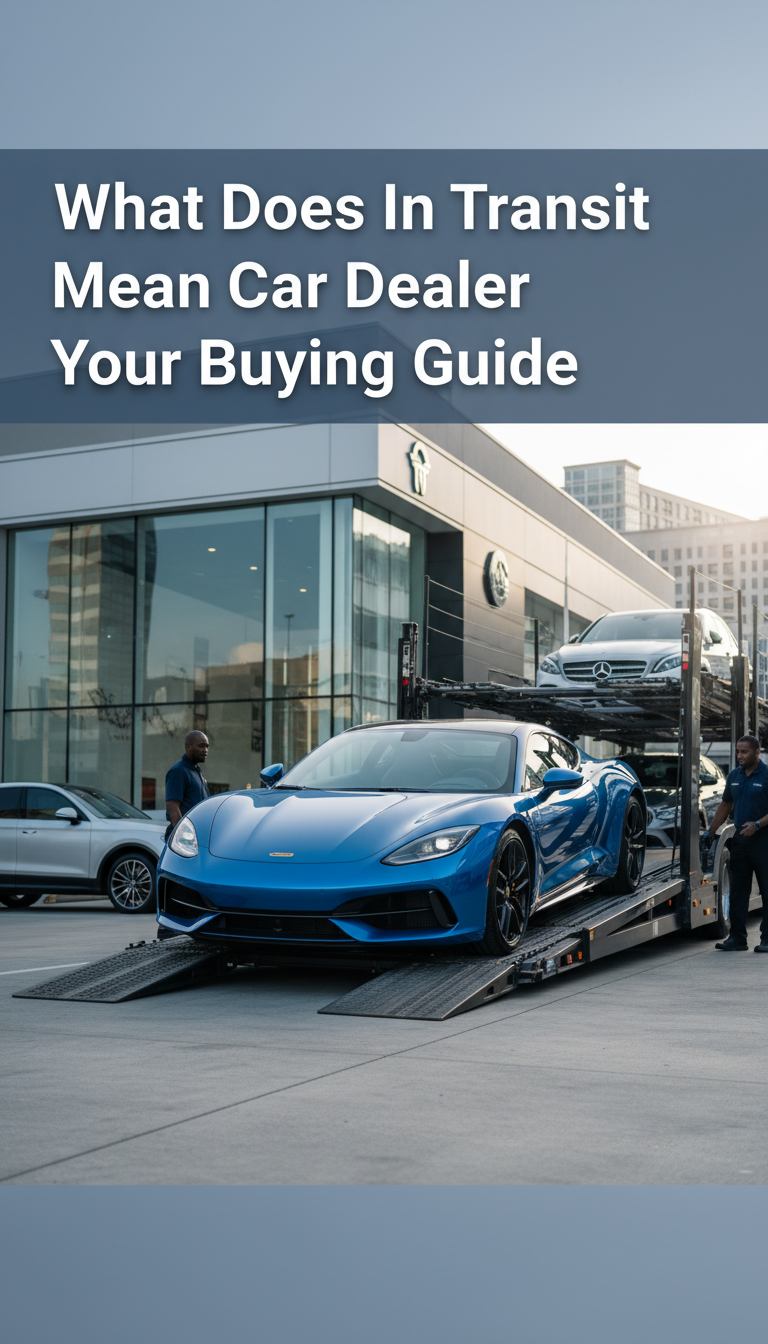
Think of it as the dealer’s “pipeline” inventory. Based on their dealer agreement with the auto manufacturer, dealerships are allocated a certain number of vehicles. Once a car is built and assigned to a specific dealer, its status changes to “in transit.” It is considered part of the dealer’s allocated inventory and will often be listed on the car dealership website to attract early interest.
This is great news for you as a buyer. It means the car isn’t just a potential factory order; it’s a real, physical vehicle that’s on its way. For instance, a Toyota Camry listed as ‘In Transit’ on a dealer’s site has left the factory in Kentucky and is on its way to your local showroom. You can often take steps to claim it before it even arrives.
What Is the Typical Journey of an In-Transit Car?
Understanding the journey of an in-transit car demystifies why it can take days or weeks to arrive. It’s a complex logistical process that involves more than just a single truck ride. Think of it like tracking a package from a large warehouse (the factory) to a regional sorting facility (the VPC) before it gets on the local delivery truck to your house (the dealership).
From years of working with dealer logistics, the journey generally follows four key stages:
- Factory Release: Once the vehicle passes its final quality inspections at the OEM production plant, it is officially released for shipping. At this point, it is assigned to a freight carrier.
- Long-Haul Transit: The car begins the longest part of its journey. Depending on the distance, this is handled by a primary freight carrier. This could be a train journey to a regional rail yard or a ship voyage if the car is imported from overseas to a port of entry.
- VPC/Port Arrival: The vehicle arrives at a regional hub. This is often a Vehicle Processing Center (VPC), a facility where cars are inspected for any damage that may have occurred during transport. At the VPC, port-installed options or accessories may be added, and minor repairs are made.
- Last-Mile Delivery: After being cleared from the VPC or rail yard, the car is loaded onto an auto transporter truck. This truck handles the final “last-mile delivery” to the dealership’s physical lot, where it will undergo a final Pre-Delivery Inspection (PDI) before being made ready for sale.
How Do You Buy or Reserve an In-Transit Car?
Buying an in-transit car is an excellent strategy to secure a high-demand model before anyone else. The process is straightforward if you follow a few key steps to protect yourself and ensure a smooth transaction.
Step 1: How Do You Find and Verify an In-Transit Vehicle?
Your first action is to confirm the vehicle’s existence and allocation. Check the ‘New Inventory’ section of dealer websites and look for cars tagged with “In Transit” or a similar status. When you find one you like, contact the dealer and ask for two crucial pieces of information:
- The 17-digit Vehicle Identification Number (VIN).
- A copy of the Monroney sticker data (the official factory window sticker) sent to your email.
This data proves the car is real, details its specific options and MSRP, and confirms it’s assigned to that dealer. A legitimate dealer will have no issue providing this.
Step 2: How Do You Negotiate and Lock In the Price?
Negotiate the final, ‘out-the-door’ price, including all fees and taxes, before placing a deposit. Do not wait for the car to arrive, as market conditions or demand could change the price. Once you agree on a number, get it in writing. This should be part of a formal purchase agreement that lists the VIN, the final price, and the terms of your deposit. Transparent pricing is a key signal of a trustworthy dealership.
Step 3: What Should You Know About Placing a Deposit?
A deposit is your way of telling the dealer, “This one is mine.” However, you must clarify the terms. Most deposits are refundable, but you must confirm this in writing. Ask the salesperson directly: “If I change my mind before the car arrives, is this deposit 100% refundable?” A non-refundable deposit is typically only for rare or highly customized factory orders.
💰 Pro Tip: Never place a deposit without a signed agreement that clearly states the deposit amount and its refundability. This written confirmation is your single most important piece of protection.
Step 4: What Happens After You Reserve the Car?
Once reserved, you should arrange your financing and insurance while you wait for the dealer to notify you of its arrival. Get pre-approved for a car loan so your financing is ready to go. You should also contact your insurance agent with the VIN to have a policy ready to activate. When the dealer notifies you that the vehicle has arrived, you can schedule a time to go in, inspect the vehicle, sign the final paperwork, and drive your new car home.
How Does an In-Transit Vehicle Compare to On-Lot Inventory?
Deciding between an in-transit car and one sitting on the lot involves a trade-off between selection and immediacy. Here’s a clear breakdown to help you choose the right path for your needs.
| Feature / Aspect | In-Transit Vehicle | On-Lot (In-Stock) Vehicle |
|---|---|---|
| Availability | Arriving soon (days/weeks) | Immediate |
| Selection | High (access to incoming inventory) | Limited to what’s on the lot |
| Test Drive | Not possible before reservation | Yes, immediately available |
| Condition | Brand new, zero lot miles | Brand new, may have test drive miles |
| Price Negotiation | Can be locked in early | Standard negotiation process |
| Risk of Prior Sale | Low (once deposit is placed) | High (can be sold at any moment) |
| Best For | High-demand models, specific configurations | Buyers needing a car now, flexible on options |
Ultimately, the choice depends on your priorities.
✅ Choose an In-Transit car if:
* You want a specific, high-demand model or color.
* You are willing to wait a few weeks for the perfect car.
* You want to lock in your purchase and avoid competing with other buyers on the lot.
🚫 Choose an On-Lot car if:
* You need a new vehicle immediately.
* You want to test drive the exact car you are buying.
* You are flexible on color and specific options.
Why Is My Car Still In Transit? (Common Delays & Challenges)
You’ve placed a deposit, and the estimated arrival date has come and gone. It’s a frustrating situation, but delivery delays are a common part of the car buying process, especially in the 2026 market. These issues are often part of the complex automotive supply chain and are usually outside your dealer’s direct control.
Here are the most common reasons your car is still in transit:
- Transportation Bottlenecks: A shortage of available railcars or a lack of truck drivers for last-mile delivery can create significant backlogs. The car may be ready, but there’s no space on the transport to move it.
- Port or Rail Yard Congestion: This is like a traffic jam for vehicles. If a port or rail yard receives more cars than it can process, your vehicle might have to wait in line to be unloaded and transferred.
- Vehicle Processing Center (VPC) Delays: Cars don’t just roll off the truck and onto the lot. They stop at a VPC for quality checks, accessory installation, or minor repairs. A backlog at this stage can delay final delivery by several days.
- Weather Events: Major storms, floods, or other natural events can shut down rail lines and highways along the transport route, causing unexpected and unavoidable delays.
What You Can Do
Patience is key, but you can be proactive. Maintain polite, regular contact with your salesperson for updates. Ask them if the manufacturer’s tracking system provides a more detailed status code. Understanding that most delays are legitimate logistical hurdles can help manage expectations.
FAQs About what does in transit mean car dealer
How long does a car stay in transit?
A car typically stays in transit for 7 to 21 days, but it can vary widely. The duration depends on the distance from the factory, the mode of transport (rail is often slower than truck), and potential delays at ports or rail yards. A car built domestically might arrive faster than one imported from overseas.
Can a dealer sell an in-transit car to someone else after I’ve put a deposit down?
No, a reputable dealer will not sell the car to someone else if you have a signed purchase agreement and a deposit. Your deposit effectively reserves that specific vehicle (by its VIN) for you. This is why getting your agreement in writing is crucial for your protection.
Can I get a VIN for a car in transit?
Yes, you absolutely should. An in-transit car has already been built and assigned a 17-digit VIN. The dealer has this information and should provide it to you as proof that the car exists and is allocated to them. The VIN is essential for tracking, insurance, and the purchase agreement.
What is the difference between “in transit” and “in production”?
“In production” means the car is still being assembled at the factory, while “in transit” means assembly is complete and the car is now being shipped. A car cannot be in transit until it has finished the production phase. The “in transit” status is the step that follows “in production.”
What happens if an in-transit car is damaged during transport?
The freight carrier’s insurance and the manufacturer are responsible for any damage during transport. The vehicle would be repaired to factory standards at the port or a certified collision center before being delivered. In cases of significant damage, the dealer would likely offer you a different vehicle or a refund of your deposit.
How accurate are the estimated arrival dates (ETAs) for in-transit cars?
ETAs are educated guesses and are often not 100% accurate. While dealers receive tracking information from the manufacturer, unforeseen logistical delays are common. It’s best to treat the ETA as a flexible window rather than a guaranteed delivery date.
Can I change options or colors on an in-transit car?
No, you cannot change the factory-installed options or color of an in-transit car. The vehicle has already been built to a specific configuration. The only additions possible are dealer-installed accessories (like floor mats or roof racks) which are added after the car arrives.
Does “in transit” mean the same thing for a used car?
Typically, no. The term “in transit” almost exclusively applies to new cars coming from the factory. If a dealer uses it for a used car, it likely means the vehicle was acquired at an auction or from a trade-in at another location and is being transported to their lot.
How do I know if a car is really in transit?
Ask for the VIN and a copy of the Monroney sticker (window sticker data). A legitimate dealer will have access to this information through their manufacturer portal. If they cannot provide a VIN for a car they claim is “in transit,” you should be cautious.
Can I track my new car from the factory myself?
Generally, no. The detailed tracking systems are proprietary and only accessible to the manufacturer and the dealership. While some brands offer limited customer-facing tracking portals, your salesperson is your best source for the most current status updates they receive from the factory.
Key Takeaways: In-Transit Vehicle Summary
- It’s a Real, Reserved Car: An “in-transit” vehicle is not a theoretical order; it’s a specific car with a VIN that has been built and allocated to that dealership.
- Reservation is Key: You can (and often should) reserve an in-transit car with a deposit to secure it, especially for high-demand models. This prevents it from being sold before it arrives.
- Get Everything in Writing: Always get a signed purchase agreement that includes the final price, the VIN, and the terms of your deposit (e.g., “fully refundable”) before paying anything.
- The Journey is Complex: The “in-transit” phase involves multiple logistical steps, including rail, ports, and trucks. This complexity is why estimated arrival dates (ETAs) are often subject to change.
- No Test Drive Is the Main Trade-Off: The biggest drawback of buying in-transit is that you cannot physically see or test drive the vehicle before committing with a deposit.
- Verification Protects You: Protect yourself by asking the dealer for the vehicle’s VIN and a copy of the Monroney sticker data. This confirms the car’s existence and exact specifications.
- Patience is Required: Delays due to supply chain issues are common and often outside the dealer’s control. Treat the ETA as a target window, not a firm date.
Final Thoughts on Buying an In-Transit Car
Understanding the “in transit” status transforms you from a passive car shopper into a proactive buyer. It’s a powerful way to secure the exact new car you want, often before it’s even visible to the public on the dealership lot. While it requires a bit of patience and trust in the process, the reward is driving home in a vehicle that meets all your specifications.
By verifying the vehicle with a VIN, negotiating the price upfront, and getting all agreements in writing, you can confidently navigate the process. Buying a car before it arrives at the dealership is an excellent strategy in today’s market, giving you a significant advantage in your search for the perfect ride.