Seeing a strange light pop up on your dashboard can be stressful. You’re likely wondering what the ESP BAS light means and if your car is safe to drive.
The ESP BAS light on a car’s dashboard signifies a malfunction in two critical, linked safety systems: the Electronic Stability Program (ESP) and the Brake Assist System (BAS). ESP helps prevent loss of traction and skidding, while BAS ensures maximum braking force in panic stops. When this light is on, these safety functions are inactive.
Based on an analysis of manufacturer guidelines and diagnostic reports, this guide explains exactly what these systems do. You will discover the most common causes for the warning light and learn clear, actionable steps to diagnose the problem. This information will help you understand the issue and make an informed decision.
Key Facts
- Critical Safety Disabled: An illuminated ESP BAS light means your vehicle’s primary anti-skid and emergency braking assistance features are offline, increasing safety risks in adverse conditions.
- Mandatory Safety Feature: Electronic Stability Control (ESC), the universal term for ESP, has been a mandatory safety standard on all new passenger vehicles in the US since the 2026 2012 model year, according to the NHTSA, due to its proven effectiveness in reducing crashes.
- Most Common Culprit: A faulty or uncalibrated Steering Angle Sensor is the leading cause of the ESP BAS warning light, accounting for a significant number of diagnostic cases.
- Inspection Failure: In most states with vehicle safety inspections, an active ESP BAS warning light is considered a critical safety defect and will cause your car to fail automatically.
- Voltage Sensitivity: The complex electronic modules for these systems are highly sensitive to voltage, meaning a weak or dying battery can often trigger the ESP BAS light even if no other parts have failed.
What Does ESP BAS Mean in a Car?
The ESP BAS light in a car indicates a fault within the Electronic Stability Program (ESP) or the Brake Assist System (BAS). ESP is an active safety system that prevents skidding by applying individual brakes. BAS is a complementary system that provides maximum braking power during emergency stops. An illuminated dashboard warning light means one or both of these critical safety features have been disabled due to a detected malfunction.

These two systems are deeply integrated and often share the same sensors and control module. This is why a single light, particularly common in Chrysler Group vehicles (like Jeep and Dodge) and Mercedes-Benz, signals an issue with either system. To understand the warning light, you first need to know what each system does.
- Electronic Stability Program (ESP): Think of this as a guardian angel that prevents your car from spinning out. It’s an active safety feature that constantly monitors your steering and the car’s actual direction. If it detects a skid, it intervenes automatically.
- Brake Assist System (BAS): This is an emergency power boost for your brakes. It detects a panic stop and ensures you get 100% of your car’s braking power, even if your foot hesitates.
But why do these two systems share a single light? Because their functions are linked. ESP often uses the braking system to correct a skid, and both systems rely on data from the same network of sensors to understand what the car is doing. A fault in a shared component, therefore, disables both.
What Is the Electronic Stability Program (ESP)?
The Electronic Stability Program (ESP) is a safety feature that improves a vehicle’s stability by detecting and reducing loss of traction. It automatically applies brakes to individual wheels to help steer the vehicle where the driver intends to go during a skid. Thanks to its proven ability to reduce fatal single-vehicle crashes, an equivalent system has been mandatory on all US passenger vehicles since the 2026 2012 model year, per NHTSA safety standards.
Think of ESP as an invisible hand that gently corrects your steering if you start to swerve on an icy patch. It works by comparing your intended direction (from the steering wheel) with the car’s actual movement (from its sensors). If there is a mismatch, it means the car is either understeering (plowing straight) or oversteering (spinning out). ESP then brakes the appropriate wheel to bring the car back in line.
To do this, the system relies on data from several key sensors:
* Steering Angle Sensor: Tells the computer which way you are trying to steer.
* Wheel Speed Sensors: Reports the rotational speed of each of the four wheels.
* Yaw Rate Sensor: Detects if the car is starting to spin around its vertical axis.
* Lateral Acceleration Sensor: Measures side-to-side G-forces, indicating a slide.
For instance, if you swerve to avoid a deer and the rear of your car starts to slide out, ESP might brake the outer front wheel to tuck the car’s nose back in line, preventing a spin.
What Is the Brake Assist System (BAS)?
The Brake Assist System (BAS) is a safety feature that detects when a driver is attempting an emergency stop and automatically applies additional brake pressure to minimize stopping distance. It works in conjunction with the Anti-lock Braking System (ABS) to prevent wheel lock-up while providing maximum stopping force. BAS addresses a common driver behavior noted in automotive safety research.
Research shows that in an emergency, over 50% of drivers fail to apply enough brake force to engage the ABS and achieve the shortest possible stop. They either press too slowly or let up on the pedal too soon. If your leg hesitates during a panic stop, BAS acts like a co-pilot stomping on the brake pedal for you.
The system determines you’re in a “panic stop” not by how hard you press the brake, but by how fast your foot moves from the accelerator to the brake pedal. When it detects this rapid movement, it assumes an emergency and commands the hydraulic brake system to apply full power instantly.
Why Is Your ESP BAS Light On? 6 Common Causes Explained
When the ESP BAS dashboard warning light comes on, it means the onboard computer has detected a fault in one of the components that these systems rely on. Here are the six most common causes, based on diagnostic data from certified technicians, ranked from most to least frequent.
Cause #1: A Faulty Steering Angle Sensor
A faulty steering angle sensor is the leading cause of an ESP BAS light. This sensor, located in your steering column, tells the car’s computer the precise angle of the steering wheel. If this sensor fails or its calibration is off, the ESP system cannot function correctly and disables itself as a precaution.
This is the car’s protractor. If it’s broken or not set to zero, the ESP system can’t calculate if the car is going where you’re pointing it, so it shuts down. This often happens after a wheel alignment if the technician forgets to recalibrate the sensor. On many Jeep Wranglers (JK), this is a notoriously common issue.
Other Symptoms to Look For:
* Traction control light is also on.
* Cruise control will not engage.
* The ESP light may flash when taking sharp turns.
Cause #2: A Failing Wheel Speed Sensor
A failing wheel speed sensor is another common cause for the ESP BAS light, often accompanied by the ABS and Traction Control lights. Each wheel has a sensor that reports its speed to the computer. If the signal from one sensor is lost or erratic, the stability and anti-lock brake systems are disabled.
The ESP system needs to know if one wheel is spinning faster than others to detect a slip. If a wheel speed sensor goes “blind,” the system can’t see the slip and shuts down for safety. Before replacing the sensor, it’s wise to visually inspect the wiring for damage and try cleaning the sensor tip, as a buildup of metallic debris can sometimes cause the fault.
Cause #3: A Defective Brake Light Switch
A surprisingly common and inexpensive cause is a faulty brake light switch. This small switch, located behind the brake pedal, does more than just turn on your brake lights. It also sends a critical signal to the ABS, BAS, and ESP systems to let them know when you are applying the brakes. If the switch fails, the systems lose this vital piece of information and will set a fault code.
Cause #4: Wheel Misalignment
Yes, a bad wheel alignment can directly trigger the ESP BAS light. The system depends on the Steering Angle Sensor being perfectly calibrated to a “straight-ahead” position when the wheels are pointed straight. If your wheels are misaligned (e.g., the steering wheel is crooked when you’re driving straight), the sensor’s reading conflicts with what the other vehicle sensors are reporting, causing the ESP system to log a fault and turn on the warning light.
Cause #5: Low Battery Voltage
Yes, low voltage from a weak or dying battery is a frequent culprit. The sensitive electronic modules that control the ESP and BAS systems require a steady, specific voltage to operate. A voltage drop, especially during engine startup, can cause these modules to temporarily glitch and trigger a warning light, even if there is no permanent fault with the sensors themselves.
Cause #6: A Faulty ABS Control Module
A problem with the ABS control module, the “brain” of the entire system, can cause the ESP BAS light. This is a less common but more serious issue. The ABS module receives data from all the sensors and makes the decisions to activate the ESP and BAS functions. If the module itself fails internally, it will shut down all related safety systems, illuminating multiple dashboard lights.
Is It Safe to Drive with the ESP BAS Light On?
While your car will still drive and brake under normal conditions, it is not recommended to drive with the ESP BAS light on for extended periods. The critical safety systems that prevent skidding (ESP) and assist in emergency stops (BAS) are disabled. You should drive cautiously and have the vehicle inspected by a certified technician as soon as possible.
The Bottom Line: Your car’s primary braking and steering are unaffected, but its electronic safety net is gone. This makes the vehicle significantly less safe in rain, snow, or during any sudden emergency maneuver where you might need to swerve or brake hard. Avoid hard acceleration, sharp cornering, and high speeds, especially in poor weather, until the issue is fixed.
Think of the risk level in these conditions:
* Green: Dry roads, slow city speeds, gentle driving. The risk is low.
* Yellow: Wet roads, moderate highway speeds. The risk is elevated. A sudden maneuver could be harder to control.
* Red: Snow, ice, or any emergency situation. The risk is high. The car will behave like an older vehicle without stability control.
How Do You Diagnose and Reset the ESP BAS Light?
Disclaimer: These steps are for informational purposes. Complex electronic diagnostics and repairs should be performed by an ASE certified professional. Always consult your vehicle’s service manual.
Diagnosing the ESP BAS light requires a logical process. The goal is to read the specific fault code stored in the computer, which will point you directly to the problem area.
Step 1: How to Read Fault Codes with an OBD2 Scanner
To read ESP BAS fault codes, you need an OBD2 scanner that supports ABS or Chassis system diagnostics. A basic, inexpensive code reader will only read engine codes (P-codes) and will not see the codes related to your braking and stability systems (C-codes).
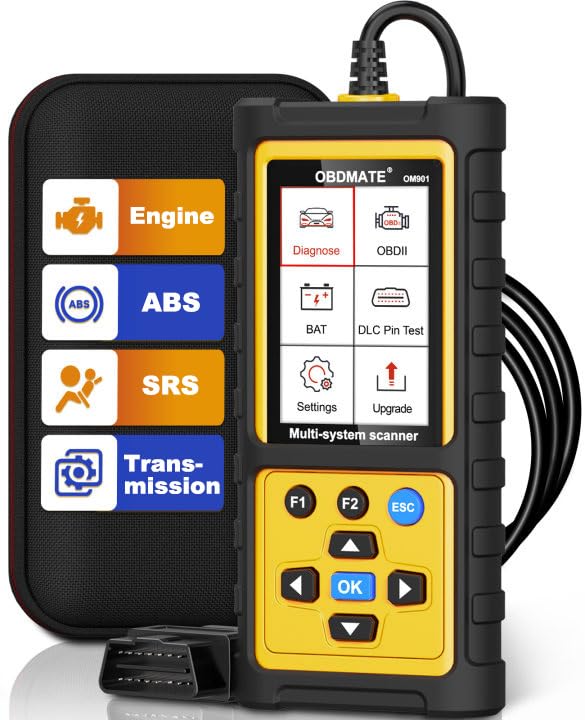
Here is the process:
1. Plug the scanner into the OBD2 port, typically located under the dashboard on the driver’s side.
2. Turn the ignition key to the “On” position without starting the engine.
3. Follow the scanner’s menu to select the ABS, Chassis, or ESP control unit. A code like C121A or C121C often points directly to the Steering Angle Sensor.
4. Record the code and use it to identify the faulty component.
Step 2: How to Perform a Basic Sensor Reset
For a potential simple fix, you can try resetting the steering angle sensor. This simple procedure works on many Chrysler, Dodge, and Jeep models and can sometimes clear the light if it was caused by a temporary glitch, such as after a battery disconnect.
- Start the car’s engine.
- Turn the steering wheel all the way to the full left lock position.
- Turn the steering wheel all the way to the full right lock position.
- Return the steering wheel to the center position.
- Drive the car for a short distance. If the light was due to a calibration loss, it may turn off.
Step 3: When to Seek Professional Diagnosis
If you have tried a basic reset, checked your battery, and the light remains on, it is time for professional help. A technician will have advanced diagnostic tools to not only read the codes but also view live data from each sensor. This allows them to confirm if a sensor has truly failed or if there is a wiring issue, saving you from replacing parts unnecessarily.
FAQs About what does esp bas mean in a car
Does wheel alignment affect ESP BAS?
Yes, absolutely. A bad wheel alignment is a common cause of an ESP BAS light. The system relies on the Steering Angle Sensor being perfectly calibrated to a “straight ahead” position. After an alignment, if the technician doesn’t reset this sensor, the car thinks you’re turning when you’re going straight, triggering a fault.
Can a bad battery or low voltage cause the ESP BAS light to come on?
Yes, low voltage from a weak or dying battery is a frequent culprit. The sensitive electronic modules that control the ESP and BAS systems require a stable voltage to operate correctly. A voltage drop during startup can cause these modules to glitch and trigger a warning light, even if there’s no actual fault with the sensors.
What is the difference between ESP and Traction Control?
Traction Control primarily prevents wheel spin during acceleration, while ESP is a more advanced system that prevents skids during cornering. Think of it this way: Traction Control works in a straight line (like on ice from a stoplight). ESP works in turns, using traction control and individual braking to keep the car from spinning out or plowing straight. ESP incorporates the function of traction control within its broader stability mandate.
Why did my ESP BAS, ABS, and Traction Control lights all come on at once?
These lights often illuminate together because the systems share the same critical sensors, primarily the wheel speed sensors. All three systems (ESP, ABS, Traction Control) need to know the speed of each wheel to function. If a single wheel speed sensor fails, all three systems are disabled as a safety precaution, triggering their respective warning lights.
Will an ESP BAS light cause my car to fail an inspection?
In most states with vehicle safety inspections, an illuminated ESP BAS light will result in an automatic failure. Because ESP is a federally mandated safety system, a malfunctioning system is considered a safety defect. You will likely need to have the issue repaired before your vehicle can pass inspection.
Final Thoughts
An illuminated ESP BAS light can be unsettling, but it is a manageable issue. You’ve learned that this light points to a fault in your car’s most important active safety systems—the digital guardians that keep you in control during a potential skid or panic stop. While the problem is often a straightforward sensor issue, the loss of these features is a significant safety concern that should be addressed promptly.
By following a logical diagnostic process—starting with a proper scan for fault codes—you can move from uncertainty to a clear action plan. Whether you attempt a simple reset yourself or take it to a certified technician for repair, you are now equipped with the knowledge to handle the situation confidently. Do not ignore this light; treat it as the important safety notification that it is and restore your vehicle’s full protective capabilities.
Last update on 2026-03-04 / Affiliate links / Images from Amazon Product Advertising API