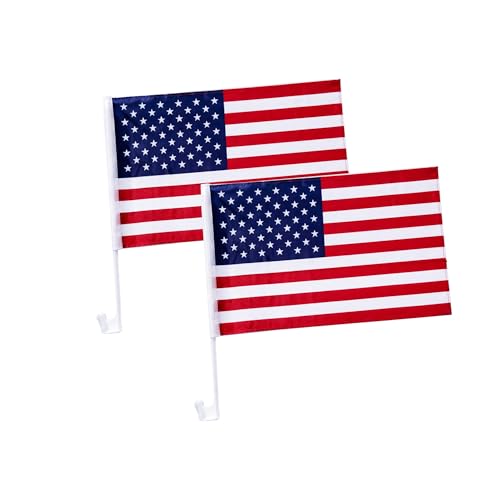
Have you ever noticed an American flag displayed “backwards” on a moving vehicle? Many drivers find this visual puzzling. Understanding its true meaning is simpler than you might think.
A backwards flag on a car is an intentional display that symbolizes forward motion, honoring military tradition where the flag’s union (stars) would lead into battle. It adheres to the United States Flag Code regarding proper flag orientation for vehicles and uniforms.
Drawing on extensive research into flag etiquette and historical military practices, this guide clarifies common misconceptions. You will uncover the deep symbolism behind this display, distinguishing it from signs of disrespect or distress.
Key Facts
- Intentional Display: The reversed American flag on vehicles is an intentional display, symbolizing continuous forward movement and progress.
- Military Origin: This tradition originates from military practice, ensuring the flag’s blue field of stars always appears to lead into battle.
- Flag Code Alignment: The display adheres to the United States Flag Code’s principles for flags mounted on moving objects and uniforms.
- Not Disrespectful: A backwards flag is a respectful display of patriotism and is not a sign of disrespect or distress.
- Common Usage: This flag orientation is widely adopted by military personnel, law enforcement, first responders, race cars, and certain civilian vehicles like Jeeps.
What Does a Backwards Flag Mean on a Car?
The backwards flag on a car is an intentional display, not an error, symbolizing forward motion and a constant state of advancement. This respectful orientation draws directly from military tradition. When soldiers carry a flag into battle, the flag’s union (the blue field with stars) is always positioned as if leading the charge. This ensures the flag appears to be streaming backward as the bearer moves forward, signifying an ongoing advance.

This symbolism translates directly to vehicle displays. For any moving object, be it a military uniform, a law enforcement vehicle, or a race car, the flag is depicted as if it is being carried into action. This means the blue field of stars, representing the union, is always placed closest to the front of the vehicle. This maintains the visual effect of the flag being propelled forward by movement.
The appearance of a “backwards” flag is therefore a purposeful design choice. It is a patriotic symbol of progression and readiness, upholding a time-honored custom. Understanding this origin helps clarify why the flag is displayed in such a manner and dispels common misunderstandings about its true meaning.
What Is the Core Symbolism of the Reversed American Flag?
The core symbolism of the reversed American flag originates from military tradition, representing a flag that is constantly moving forward into battle, with the union (stars) leading the charge. This imagery evokes a sense of perpetual advance, an unwavering commitment to moving forward without retreat. This tradition ensures the flag is always presented as if bravely facing the front, not fleeing.
Historically, a standard-bearer would carry the flag on their right shoulder. As they moved forward, the flag would flow backward due to the wind, with the union (blue field with stars) always closest to the front of the advance. This created the visual effect we now replicate. This military-inspired display is therefore a symbolic reminder of courage and dedication.
When applied to vehicles, this means the ‘union’ always faces the direction of travel. This symbolic display reinforces the idea of forward momentum and the country’s ongoing journey. It is a powerful visual statement that connects modern vehicles to a deep-seated respect for national service and continuous progress.
Why Is the American Flag Displayed Backwards? Understanding the US Flag Code
The American flag is displayed “backwards” on vehicles due to the principles outlined, or at least implied, within the United States Flag Code, particularly concerning the proper orientation of flags on moving objects and uniforms. While the code doesn’t explicitly mandate a “backwards” decal, it sets standards for respectful display that inform this practice. The core directive ensures the flag’s blue field of stars (the union) always appears to lead the way.
The United States Flag Code, specifically U.S. Code Title 4, Chapter 1, Section 7, concerns the “position and manner of display.” It dictates how the flag should be treated and positioned to show proper respect. For flags on uniforms, the unwritten rule, informed by historical military practice, is that the union should always face forward. This ensures the flag symbolizes advancing, not retreating.
This principle extends to vehicle flag displays. When a flag decal is placed on the side of a vehicle, for the union to appear to be moving forward, the flag on the right side of the vehicle must be reversed. This adherence to military tradition and the spirit of the Flag Code transforms the “backwards” appearance into an intentional, respectful, and patriotic statement of forward momentum.
How Does the “Union Forward” Principle Affect Flag Orientation?
The “union forward” principle dictates that the blue field of stars (union) on the American flag must always appear to be moving forward on a vehicle or uniform. This ensures the flag visually signifies an advance rather than a retreat. This simple rule has a significant visual impact, especially on the right side of a moving object.
On the left side of a vehicle, a standard flag decal (with the union on the left) naturally presents the union closest to the front of the vehicle, aligning with the forward motion. However, on the right side, a standard flag would have its union facing the rear of the vehicle. This would incorrectly suggest retreating. To maintain the “union forward” principle, the flag displayed on the right side is reversed, so its union is once again closest to the front of the vehicle.
This specific orientation maintains consistent directional symbolism across both sides of a vehicle or uniform. It’s a practical application of flag etiquette that ensures the American flag consistently represents an ongoing advance. This detail demonstrates a deep understanding of traditional flag display.
Which Vehicles Commonly Display the Reversed Flag?
The reversed American flag is prominently displayed on many vehicles, including military transport, law enforcement and fire/EMS vehicles, competitive race cars, aircraft, spacecraft, and popular off-road vehicles like Jeep Wranglers. Each display signifies continuous forward momentum, linking back to the original military symbolism. This widespread adoption shows a shared understanding of its deeper meaning.
Why Do Law Enforcement and First Responder Vehicles Use the Reversed Flag?
Law enforcement and first responder vehicles often display the reversed flag to symbolize their continuous readiness to move forward in service and protection, reflecting the “union leading the charge” into critical situations. For police, firefighters, and paramedics, their daily mission involves constant advancement towards emergencies and challenges. This symbolism resonates deeply with their duty.
The adoption of this flag orientation by these essential services mirrors its military origins. Just as a soldier advances into battle, these professionals advance into dangerous or urgent situations. The reversed flag on their vehicles visually represents their unwavering commitment. It signifies that they are always pushing forward to help and protect their communities. This visual cue reinforces their mission-driven approach.
This display also honors the sacrifices made by these individuals. It connects their selfless service to a broader national identity and the spirit of advancing for the greater good. It is a powerful and visible emblem of their dedication and courage in the face of adversity.
Why Are Flags Backwards on Race Cars and Jeeps?
Race cars display the reversed flag to visually reinforce their constant forward movement and competitive drive on the track, mirroring the flag’s ‘charging’ symbolism. In high-speed competitions like NASCAR, every element is designed to convey aggression and relentless pursuit of victory. The reversed flag perfectly embodies this spirit of competitive advancement.
Jeep owners often use the reversed flag to honor the brand’s military roots and to represent an adventurous, exploratory spirit. The Jeep Wrangler, in particular, has a strong heritage linked to military vehicles. Many owners embrace this connection. The flag symbolizes a readiness for exploration, conquering new terrains, and an adventurous forward-moving mindset. While distinct from the duty-bound roles of military or first responders, these civilian applications share the core theme of relentless progression.
Both examples demonstrate the versatility of the “union forward” principle beyond its initial military context. It adapts to different environments while maintaining its core message of moving decisively ahead. This wide application highlights the enduring power of the symbol.
Is a Backwards Flag Disrespectful or a Distress Signal? Separating Fact from Myth
No, a backwards flag is neither disrespectful nor a distress signal; these are common misconceptions. It is an intentional, respectful display symbolizing forward movement and adherence to official flag etiquette for moving objects. This contrasts sharply with an upside-down flag, which is a distress signal.
The idea that a reversed flag is disrespectful typically stems from a misunderstanding of its military origin and the United States Flag Code’s interpretations. In actuality, displaying the flag in this manner on uniforms and vehicles is a sign of honor. It respects the tradition of the flag advancing into battle. Those who display it this way are usually doing so out of deep patriotism and respect for the country and its service members.
Furthermore, a reversed flag is not a distress signal. An upside-down flag is the universally recognized symbol for extreme peril. The reversed flag’s specific orientation, with the union facing forward, carries a completely different meaning. Clarifying this distinction is crucial to preventing misinterpretation. This flag configuration is a symbol of strength and progress.
What Is the Difference Between a Backwards Flag and an Upside-Down Flag?
A backwards flag is an intentional display representing forward motion, typically seen on vehicles and uniforms, while an upside-down flag is an internationally recognized distress signal, used only in dire situations of extreme peril to life or property. These two flag orientations have profoundly different meanings and applications. It is crucial to distinguish between them to avoid misinterpretation.
The backwards flag adheres to the “union forward” principle. This ensures the blue field of stars leads the way, symbolizing advancement and progress. It is a sign of respect for military tradition and patriotic sentiment. This display is commonly seen on military uniforms, law enforcement vehicles, and race cars.
Conversely, an upside-down flag is a plea for help. This signal is reserved for situations of extreme danger, such as capture or immediate life-threatening circumstances. It is never meant as a casual display or a political statement. The United States Flag Code specifically acknowledges this use for distress. Understanding this clear distinction is vital for proper flag etiquette.
| Feature/Aspect | Reversed Flag (Backwards Flag) | Upside-Down Flag |
|---|---|---|
| Meaning | Symbolizes forward motion, advancing, and ongoing action. Follows military tradition. | International signal of dire distress (extreme danger to life or property). |
| Intent | Intentional, respectful display (e.g., on vehicles, uniforms). | Intentional signal for help in emergency situations. |
| Appearance | Union (stars) faces forward (to the right on the right side of a moving object). | Union (stars) is at the bottom, stripes are inverted. |
| Flag Code Status | Compliant with the spirit and interpretation of the US Flag Code for moving objects. | Specific provision in US Flag Code (4 U.S.C. § 8(a)) for distress. |
| Common Locations | Military uniforms, law enforcement vehicles, race cars, Jeeps, aircraft. | Flown from a flagpole or displayed in a static position during extreme peril. |
FAQs About What Does a Backwards Flag Mean on a Car
Is a Backwards Flag Political?
No, the display of a backwards flag on vehicles is generally not considered political; it is primarily a symbolic and traditional gesture. Its origin lies in military practice, symbolizing forward motion and respect for those advancing into battle, and its use extends to various contexts like first responders and race cars based on this established symbolism.
Why Is the Flag Reversed Only on the Right Side of a Vehicle or Uniform?
The flag appears reversed on the right side of a vehicle or uniform because of the “union facing forward” principle, which ensures the blue field of stars always leads the flag’s direction of movement. This means that when viewed from the right side, the flag must be printed in reverse to have the union correctly positioned closest to the front of the moving object, maintaining the visual effect of charging forward.
What Does the US Flag Code Specifically Say About Flags on Cars?
The US Flag Code doesn’t explicitly mention “backwards flags on cars” but its general guidelines for flag display on moving objects, particularly for uniforms, establish the principle of the union (stars) leading the charge. This principle is interpreted and applied to vehicle decals to maintain consistency with the symbolism of continuous forward movement.
Does a Backwards Black Flag Have the Same Meaning?
No, a backwards black flag does not have the same meaning as a backwards American flag. While the backwards American flag symbolizes forward motion and patriotism, a solid black flag, or a black flag with specific symbols, typically carries entirely different connotations, often associated with anarchism, surrender (historically), or specific military units, and its meaning would depend on the specific context and design.
Is It Okay to Have a Backwards Flag Sticker on a Civilian Car?
Yes, it is generally considered acceptable and often seen as a patriotic display to have a backwards flag sticker on a civilian car, especially if it adheres to the “union facing forward” principle. Many citizens choose to display it to honor military personnel, first responders, or simply to express patriotism and the symbolism of forward progress.
What Happens if the Flag Is Not Reversed on the Right Side?
If the flag is not reversed on the right side of a vehicle or uniform, the union (stars) would be facing backward, which would symbolically imply retreat or moving away from battle. While not a formal violation of the Flag Code, it goes against the traditional military symbolism of leading the charge and continuous forward motion.
Is the Backwards Flag Related to the Military’s Right Shoulder Patch?
Yes, the backwards flag on vehicles is directly related to the military’s right shoulder flag patch, which is intentionally reversed for the same symbolic reason. On military uniforms, the flag patch is placed so that the blue field of stars always appears to be advancing forward as the service member moves, maintaining the “union leading the charge” into battle.
Can a Backwards Flag Be Considered a Sign of Protest?
No, a backwards American flag itself is not traditionally considered a sign of protest or dissent; its established meaning is one of forward motion and patriotism, rooted in military tradition. If used in a protest context, any perceived protest symbolism would typically arise from surrounding messages or the specific event, not from the reversed flag’s orientation alone.
How Should I Properly Display a Backwards Flag Decal on My Car?
To properly display a backwards flag decal on your car, ensure that the blue field of stars (the union) is always facing towards the front of the vehicle, regardless of whether it’s placed on the left or right side. This adheres to the symbolic principle of the flag advancing forward, maintaining its respectful and traditional meaning.
Are There Any Legal Restrictions on Displaying a Backwards Flag on a Car?
No, there are generally no specific legal restrictions in the United States prohibiting the display of a properly oriented backwards flag decal on a personal vehicle. As long as the display doesn’t obstruct vision or create a safety hazard, it falls within the realm of symbolic expression and adherence to traditional flag etiquette, as guided by the US Flag Code’s principles.
Key Takeaways: What Does a Backwards Flag Mean on a Car Explained
- The “Backwards” Flag is Intentional Symbolism: A reversed American flag on a car or uniform is not an an error; it is a deliberate display rooted in historical military tradition, symbolizing continuous forward movement.
- It Represents “Union Forward”: The blue field of stars (the union) must always appear to be leading the charge, as if carried by a standard-bearer. On the right side of a moving object, this requires the flag to be printed in reverse.
- Aligned with US Flag Code Principles: While not explicitly mandating the “backwards” decal, the display adheres to the spirit of the United States Flag Code regarding the respectful presentation of the flag on moving objects and uniforms.
- Seen Across Various Contexts: This symbolism is commonly adopted by military personnel, law enforcement, first responders, race car drivers, and civilian vehicles like Jeeps, each for reasons related to service, competition, or heritage.
- Not Disrespectful Nor a Distress Signal: A properly oriented backwards flag is a sign of patriotism and respect; it is distinctly different from an upside-down flag, which is the internationally recognized signal for dire distress.
- Debunks Common Misconceptions: Understanding the historical context and Flag Code principles clarifies that the reversed flag is a symbol of advance and honor, not retreat, disrespect, or a political statement.
Final Thoughts on What Does a Backwards Flag Mean on a Car
Understanding what a backwards flag means on a car enriches our appreciation for national symbols and the traditions they represent. Far from being a sign of disrespect or confusion, this particular display is a powerful statement of forward momentum and unwavering purpose. It connects modern vehicles to a rich history of military courage and the ongoing spirit of national advancement.
This guide clarifies that the “union forward” principle, deeply embedded in the United States Flag Code and military etiquette, dictates this orientation. Whether seen on the side of a law enforcement cruiser, a speeding race car, or a rugged Jeep, the reversed flag consistently signifies progress. It reminds us that proper flag etiquette respects these deep-seated meanings. Armed with this knowledge, you can now confidently interpret and appreciate this patriotic symbol, distinguishing it from misinterpretations.