
Have you ever dreamed of the raw, mechanical sound of a flat-six engine echoing in your garage? You’re not alone. The allure of owning a Vintage Porsche is powerful, but navigating the world of classic car investment can feel daunting, with fears of rust, high maintenance, and sourcing rare parts.
A Vintage Porsche is the ultimate collector’s car due to its unique blend of timeless design, engaging air-cooled engine dynamics, and a proven history as a strong financial investment. These heritage vehicles offer a direct connection to motorsport history and represent a blue-chip asset in the classic car market.
Drawing from comprehensive analysis and established best practices, this guide will help you navigate the journey. We’ll demystify the key models, from the iconic 911 to the original 356. You’ll discover which air-cooled legend is the right fit for your garage and your goals.
Why is a Vintage Porsche the Ultimate Collector’s Car in 2026?
The passion for a Classic Porsche runs deeper than just metal, glass, and rubber. It’s an appreciation for a legacy of engineering purity that began with Ferry Porsche and a commitment to a singular vision: building the ultimate driver’s sports car. In 2026, these vehicles are more than just transportation; they are rolling sculptures, mechanical masterpieces, and remarkably astute financial assets. The appeal lies in a unique trifecta of value. First, the unparalleled driving experience of an air-cooled Porsche—its distinct sound, direct feedback, and analog feel—is something modern cars cannot replicate. Second is the timeless design; a 911 from 50 years ago is still unmistakably a 911. Finally, there’s the investment potential. The classic car market has consistently recognized the value of these cars, with models like the air-cooled 911 seeing significant appreciation over the past decade. This is not just a purchase; it’s an initiation into a global community, supported by organizations like the Porsche Club of America and the manufacturer’s own Porsche Classic division, which ensures that even a 50-year-old car can be serviced with genuine parts. However, entering this world requires diligence. The key to a successful acquisition lies in a meticulous pre-purchase inspection (PPI inspection), a thorough review of a car’s Documented History, and the verification of its authenticity as a true matching numbers vehicle via a Certificate of Authenticity.
Vintage Porsche: 7 Best Air-Cooled Models to Buy in 2026
Choosing your first or next Vintage Porsche is a deeply personal journey. Are you looking for a blue-chip classic car investment, a reliable weekend driver, or a raw, unfiltered connection to the road? Each of the legendary air-cooled Porsche models offers a different answer. From the original Porsche 356 that started it all to the final and most technically advanced Porsche 993, the lineage is packed with icons. This guide will serve as your buyer’s manual, breaking down the seven best air-cooled models to consider in 2026. We will evaluate each car not just on its history, but on its tangible attributes today—from specific engine types like the robust 3.2 Carrera to body styles like the Coupe and Targa. For each model, we’ll provide a detailed inspection plan, empowering you to purchase with confidence and avoid common pitfalls.
1. Invest in the Iconic Porsche 911 Carrera 3.2 (1984-1989)

Pin this dream car to your ‘Classic Garage’ board!
Model Details
- Engine: Robust 3.2-liter air-cooled flat-six engine.
- Key Feature: The final evolution of the original 911 silhouette with modern Motronic engine management, offering improved reliability.
- Investment Potential: High. Considered a blue-chip classic car investment. Prices are stable with consistent upward trends, especially for period-correct examples.
- Best For: The enthusiast who wants the pure, mechanical feel of a classic Porsche 911 without the complexity of earlier models.
Buyer’s Action Plan
- Inspect the valve guides. Ask for leak-down and compression test results, a known issue on earlier 3.2 engines.
- Verify the transmission. Models from 1987-1989 feature the much stronger G50 Transmission. This is a major desirability factor and commands a price premium.
- Source a Certificate of Authenticity from Porsche to confirm it is a matching numbers car.
- Check for rust thoroughly in the “kidney” panels behind the rear wheels, the battery box, and around the front and rear window seals.
- Evaluate the condition of the Fuchs wheels; original, well-kept sets are highly valuable.
Pro-Tip: In my experience, the G50-equipped cars (1987-89) are worth the premium. The hydraulic clutch is lighter, and the gearbox is nearly bulletproof, making it a much better car for regular driving. It is a key differentiator for investment grade examples.
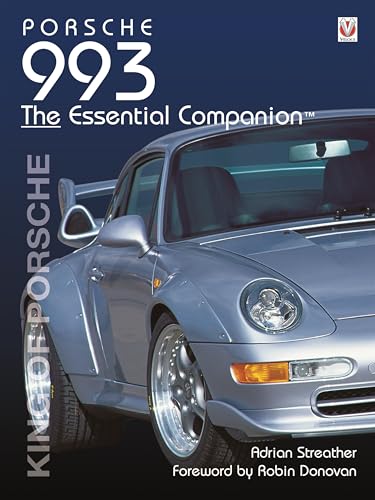
2. Appraise the Last True Air-Cooled: The Porsche 993 Carrera (1995-1998)

Save this guide to the ultimate air-cooled 911 to your ‘Dream Cars’ board!
Model Details
- Engine: 3.6-liter M64 air-cooled flat-six, with the Varioram system introduced in 1996 for increased torque.
- Key Feature: The most advanced and powerful naturally aspirated air-cooled Porsche 911. Its sophisticated multi-link rear suspension provided a major leap in handling and refinement over the Porsche 964.
- Investment Potential: Exceptional. As the last of its kind, the 993 is a top-tier collectible sports car with values that continue to climb aggressively in the classic car market.
- Best For: The discerning collector seeking the ultimate blend of classic air-cooled character and modern performance and comfort.
Buyer’s Action Plan
- Decode the VIN to confirm the model year. 1996+ models feature the more desirable Varioram engine.
- Inspect for smoke on startup, which can indicate worn valve guides—an expensive engine rebuild job.
- Check service records for resolution of the common secondary air injection (SAI) port clogging issue, which can cause a check engine light. This is a classic problem solution owners must address.
- Verify the functionality of the climate control system, as repairs can be labor-intensive.
- Listen for any whining from the 6-speed manual gearbox, and ensure smooth engagement.
Pro-Tip: Don’t be afraid of a car with a properly rebuilt top end. Due to the SAI issues and valve guide wear, many 993s have had this service. A car with a Documented History of this repair from a reputable Porsche Classic Partner is often a better buy than a lower-mileage car that will soon need it.
3. Purchase the Raw & Engaging Porsche 964 Carrera (1989-1994)

Pin this Porsche 964 buyer’s guide for your future restoration project!
Model Details
- Engine: 3.6-liter M64 air-cooled flat-six.
- Key Feature: The first 911 to offer coil-spring suspension, ABS, and power steering as standard, making it far more drivable than its predecessors. It maintains the classic long-hood design proportions with integrated bumpers.
- Investment Potential: Strong, especially for well-maintained manual Carrera 2 coupes. Its popularity as a base for high-end Restomod projects by firms like Singer Vehicle Design has significantly boosted its market value.
- Best For: Drivers who want a more modern and comfortable ride than a G-Body but still crave a raw, communicative driving experience.
Buyer’s Action Plan
- Inspect diligently for engine oil leaks. The lack of head gaskets on early models is a notorious issue. Look for leaks between the cylinders and the crankcase.
- Verify service records for a top-end engine reseal or rebuild. This is a common and expensive oil leak fix, and proof of it being done is a major plus.
- Evaluate the dual-mass flywheel on manual cars. If it rattles at idle, it’s a sign of impending failure, which is a costly repair.
- Test the climate control unit (CCU). These are known to fail and are expensive to replace.
- Authenticate mileage and history. Due to the potential for expensive repairs, a car with a Proven Pedigree is essential.
Pro-Tip: When considering Porsche 964 vs 993, the 964 offers a more direct, analog driving feel. While the 993 is more refined, the 964 is often preferred by purists. Don’t dismiss a car with a quality aftermarket suspension like Bilstein suspension, as it can transform the car’s handling for the better.
4. Source the Original Icon: The Porsche 356C (1964-1965)

Pin this piece of Porsche Heritage to your ‘Mid-Century Modern’ board!
Model Details
- Engine: 1.6-liter air-cooled flat-four “boxer” engine.
- Key Feature: The 356C was the first Porsche to feature four-wheel disc brakes as standard, a significant upgrade that makes it the most usable of the 356 series for modern driving.
- Investment Potential: Very high. As the genesis of the Porsche brand, all 356s are blue-chip collectibles. The extremely rare Porsche 356 Speedster is a multi-million dollar car, making all 356s desirable.
- Best For: The purist and historian who values connection to the brand’s origins over raw speed.
Buyer’s Action Plan
- Inspect for rust obsessively. This is the number one enemy of the 356. Check the floors, longitudinals, battery box, and the bottom of the doors and fenders.
- Verify panel gaps and bodywork. Wavy panels or uneven gaps can hide poor past repairs or excessive body filler.
- Authenticate the car’s identity by checking chassis, engine, and transmission numbers against the Kardex or a Heritage Certificate. Distinguishing between an Original vs Replica is critical.
- Evaluate the electrical system. The original 6-volt system can be finicky; many cars are converted to 12-volt, which is a desirable upgrade for drivers.
- Source a specialist. A pre-purchase inspection from a mechanic specializing in the 356 is non-negotiable.
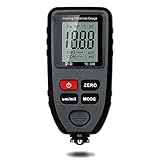
Pro-Tip: Use a paint thickness gauge and a small magnet during your inspection. The gauge will reveal areas with thick body filler, and the magnet will identify non-steel (filler) areas. This is the best way to uncover hidden bodywork issues and is a core part of professional expert appraisal.
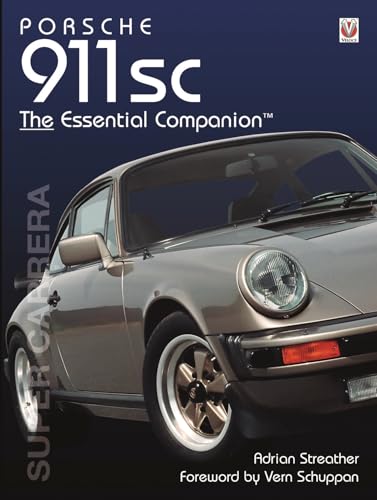
5. Find the Driver’s Choice: The Porsche 911 SC (1978-1983)

Ready for a road trip? Pin this Targa top guide to your ‘Summer Drives’ board!
Model Details
- Engine: Bulletproof 3.0-liter air-cooled flat-six engine with Bosch K-Jetronic (CIS) fuel injection.
- Key Feature: The galvanized body introduced with the SC makes it far more resistant to rust than its predecessors. This, combined with its strong engine, makes it one of the most durable vintage Porsche models.
- Investment Potential: Good. While more affordable than a Carrera 3.2, the 911 SC has seen steady appreciation. It’s an excellent entry-level classic car investment.
- Best For: The enthusiast looking for a tough, reliable classic 911 that can be driven regularly with less worry.
Buyer’s Action Plan
- Verify if the timing chain tensioners have been upgraded to the later, pressure-fed style from the Carrera 3.2. Original tensioners are a known failure point that can cause catastrophic engine damage.
- Inspect service records for replaced head studs. Broken head studs were a problem, especially on earlier models. This is a critical engine rebuild checkpoint.
- Check for a “pop-off” valve installed in the airbox. A backfire in the Bosch K-Jetronic fuel injection system can destroy the expensive airbox; this valve is a crucial protective upgrade.
- Evaluate the heat exchangers/exhaust for rust, as they are costly to replace.
- Test the Targa top for leaks if applicable. Worn seals are common and can lead to water damage in the interior.
Pro-Tip: A well-sorted CIS fuel injection system is reliable, but many mechanics today don’t understand it. Finding a Master Technician who is an expert in Bosch K-Jetronic is key to happy ownership. Don’t be scared of it, just be prepared.
6. Pursue the Purest 911: The “Long Hood” (1969-1973)

Pin this tribute to the original Porsche 911 design to your ‘Automotive Art’ board.
Model Details
- Engine: 2.0L, 2.2L, or 2.4L air-cooled flat-six with carburetors (T model) or Mechanical Fuel Injection (E and S models).
- Key Feature: The iconic and beautiful long-hood design with delicate chrome details, lost after 1973 due to US bumper regulations. These cars are lightweight, nimble, and offer a uniquely direct driving feel.
- Investment Potential: Extremely high. This era includes the legendary 1973 911 RS, one of the most valuable Porsches ever. All long-hood models are considered top-tier collectibles.
- Best For: The serious collector and driving purist who values aesthetic beauty and a raw, unfiltered connection to the machine.
Buyer’s Action Plan
- Authenticate everything. These cars are valuable and often have stories. A Heritage Certificate is mandatory to verify it’s a Factory Original T, E, or S, and not a tribute.
- Inspect for rust everywhere. These early cars had minimal rust prevention. Check the suspension pan, floor pans, and smugglers box in the front trunk with extreme prejudice.
- Hire an expert for cars with MFI Fuel Injection. This is a complex system that requires a specialist to evaluate and tune properly. Do not attempt this yourself as a beginner.
- Verify the engine. Is it the original matching numbers engine? Many have been swapped over the years. This massively impacts value.
- Look for period-correct details. Originality is key to value. Check for the correct steering wheel, seats, and trim for the specific year and model.
Pro-Tip: The 911 S is the most valuable, but a 911 E (for “Einspritzung” or injection) is often called the “sweetheart” of the lineup, offering a smoother, more flexible engine than the high-strung S. It’s a fantastic driver’s car and a superb investment grade choice.
7. Select the Quirky Classic: The Porsche 914/6 (1970-1972)

Pin this mid-engine marvel to your ‘Unique Sports Cars’ board!
Model Details
- Engine: A genuine 2.0-liter air-cooled flat-six engine from the Porsche 911T.
- Key Feature: The mid-engine layout provides phenomenal balance and handling that is arguably superior to a contemporary 911. The 914/6 is a true Porsche-powered sports car, unlike its 4-cylinder sibling.
- Investment Potential: Very high and rising. Once the cheapest vintage Porsche, genuine 914/6 models are now rare and highly sought after by collectors who appreciate their racing pedigree and unique driving dynamics.
- Best For: The driving enthusiast who prioritizes handling and balance above all else and loves a quirky, unconventional classic.
Buyer’s Action Plan
- Authenticate the chassis number (VIN) mercilessly. Many standard 914s have been converted to 6-cylinder “tributes.” A real 914/6 VIN starts with “914”. A ‘tribute’ is not a classic car investment.
- Inspect the “hell hole” area under the battery tray. This area is infamous for rusting out completely due to battery acid leaks. This is the #1 problem solution for 914s.
- Verify the 5-lug wheels and hubs. All factory 914/6 models used the 5-lug pattern from the 911, not the 4-lug pattern of the standard 914.
- Check for rust in the longitudinal chassis members and floor pans. A flexible borescope camera is a useful tool for this.
- Evaluate the engine. It should be a correct-type 901/36 engine with Weber carburetors. Ensure it’s a real Porsche engine, not a VW Type 4.
Pro-Tip: A true factory 914/6 is rare (only ~3,350 built). A well-executed “tribute” or “clone” can still be a fun car, but it’s worth only a fraction of a real one. Pay for an expert appraisal to confirm authenticity before you purchase. There is no substitute for proven pedigree.

Key Takeaways: Your Quick Guide to Buying a Vintage Porsche
Navigating the exciting world of vintage Porsche ownership comes down to a few core principles. This summary distills the most critical takeaways from our guide to help you make an informed and confident decision.
- Authenticity is Everything: Always get a Porsche Certificate of Authenticity or Heritage Certificate to verify a car is a matching numbers, Factory Original example. This is the single biggest factor in determining investment grade value.
- Rust is the Enemy: For all models, but especially pre-SC 911s and the 356/914, a thorough rust inspection is more important than mechanical condition. Bodywork is always more expensive than engine work.
- Model-Specific Issues Matter: Each model has its own expensive weak spot, from 964 oil leaks to 993 SAI ports. A PPI inspection by a model-specific Master Technician is non-negotiable.
- The “Best” Depends on You: The raw feel of a long-hood, the modern comfort of a 993, or the bulletproof nature of a Carrera 3.2 offer different experiences. Define your goal—driving, investing, or restoring—before you buy.
- Documentation is King: A thick binder of service records showing consistent maintenance and major repairs (like a 964 engine reseal or SC chain tensioner upgrade) is a huge indicator of a well-cared-for car and a Proven Pedigree.
- Invest in a G50 Transmission: For G-Body cars (SC and Carrera 3.2), the later G50 gearbox found in 1987-1989 Carreras is a significant upgrade in both durability and drivability, making it a worthwhile investment.
People Also Ask About Vintage Porsche
Are old Porsches a good investment?
Yes, classic air-cooled Porsches have historically been an excellent investment, often outperforming traditional assets. Models like the 993, long-hood 911s, and 356 are considered blue-chip collectibles. However, market value is heavily dependent on authenticity, condition, rarity, and documented history. A thorough PPI inspection is crucial to ensure you are buying an investment grade vehicle.
What is the best entry-level vintage Porsche?
The Porsche 911 SC (1978-1983) is widely considered the best entry-level vintage 911. Its galvanized body offers good rust resistance, and its 3.0L engine is known for being robust. They offer the classic air-cooled experience at a more accessible price point than a Carrera 3.2 or 964, making them a great starting point for a classic Porsche journey.
Why are air-cooled Porsches so expensive?
Air-cooled Porsches are expensive due to a combination of scarcity, historical significance, and a unique driving feel. Production of these engines ceased in 1998, creating a finite supply. They represent the “original” Porsche engineering philosophy and are highly sought after by purists for their direct, mechanical sound and character, which drives demand and prices in the classic car market.
How do you verify a matching numbers Porsche?
To verify a “matching numbers” Porsche, you must compare the VIN, engine number, and transmission number on the car to the numbers listed on the original factory build record. The best way to do this is by ordering a Porsche Certificate of Authenticity (COA) or Heritage Certificate. An expert can then physically inspect the stampings on the components to ensure they are original and have not been altered.
How much does a vintage Porsche restoration cost?
A vintage Porsche restoration can range from $50,000 for a minor refresh to well over $300,000 for a concours-level, nut-and-bolt restoration. The cost is driven by the extent of rust repair, the rarity of parts needed, and whether it’s a DIY project or handled by a professional shop like a Porsche Classic Partner. Paint and bodywork are typically the largest expenses.
Is a vintage Porsche reliable for daily driving?
A well-sorted vintage Porsche, particularly a 911 SC or Carrera 3.2, can be reliable enough for regular use, but not as a modern daily driver. They require more frequent maintenance, a familiarity with their quirks, and an acceptance that things can break. Models like the 993 offer more modern reliability, but no air-cooled Porsche is a hands-off, appliance-like car.
What is the difference between a Porsche 964 and 993?
The main differences are in the suspension, body, and engine refinement. The 993 has a more advanced multi-link rear suspension for better stability, a smoother, more aerodynamic widebody design, and a 6-speed gearbox. The 964 has a more raw, analog feel. The 993 is generally considered the more technically advanced and refined car, marking the peak of air-cooled development.
Where is the best place to find vintage Porsche parts?
The best place to find genuine parts is through the official Porsche Classic program, accessible via any Porsche dealer. For aftermarket or used parts, specialists like Pelican Parts, Stoddard, and Sierra Madre Collection are excellent resources. For rare items, swap meets at events like Rennsport Reunion or online forums on the Porsche Club of America website are invaluable.
What should I look for in a Porsche PPI (Pre-Purchase Inspection)?
A Porsche PPI must include a comprehensive rust inspection, a leak-down and compression test of the engine, verification of all component numbers, and a check of model-specific weak points. The technician should be a marque specialist. The report should detail any past accident damage, the quality of paintwork, and the status of wear items like the clutch, brakes, and suspension bushings.
What does a “Targa top” mean?
A Targa top is a semi-convertible body style with a removable roof panel and a fixed, full-width roll bar behind the seats. Patented by Porsche in the 1960s, it was designed to provide the open-air feeling of a convertible with more structural rigidity and rollover safety. It’s an iconic feature on many vintage Porsche 911 and 914 models.
Final Thoughts on Your Vintage Porsche Journey
Embarking on the quest for a Vintage Porsche is more than a car purchase; it’s an entry into a passionate community and a commitment to preserving a piece of automotive art. Whether you’re drawn to the raw charisma of a long-hood 911 or the modern classic refinement of the 993, the journey is as rewarding as the destination. Remember that due diligence—a thorough PPI inspection, verification of authenticity, and a deep dive into the car’s Documented History—is the foundation of a happy ownership experience. By following the guidance in this manual, you are empowered to move forward with confidence. Owning one of these icons is about being a custodian of Porsche Heritage, and the right car is out there waiting for you.
Last update on 2026-03-29 / Affiliate links / Images from Amazon Product Advertising API

![Dubai Luxury Cars: Ultimate Guide for Buying & Renting [year]](https://i0.wp.com/carxplorer.com/wp-content/uploads/2026/03/Dubai-Luxury-Cars-Ultimate-Guide-for-Buying-Renting-year-1.jpg?resize=60%2C60&ssl=1 "Dubai Luxury Cars: Ultimate Guide for Buying & Renting [year] 14")
![9 Old Luxury Cars: Cheap, Reliable & Built to Last [year]](https://i0.wp.com/carxplorer.com/wp-content/uploads/2026/03/9-Old-Luxury-Cars-Cheap-Reliable-Built-to-Last-year-1.jpg?resize=60%2C60&ssl=1 "9 Old Luxury Cars: Cheap, Reliable & Built to Last [year] 16")

![Luxury Cars White: 9 Elegant Designs & Top Models for [year]](https://i0.wp.com/carxplorer.com/wp-content/uploads/2026/03/Luxury-Cars-White-9-Elegant-Designs-Top-Models-for-year-1.jpg?resize=60%2C60&ssl=1 "Luxury Cars White: 9 Elegant Designs & Top Models for [year] 20")
![Blue Luxury Cars: 11 Stunning Models & Shades in [year]](https://i0.wp.com/carxplorer.com/wp-content/uploads/2026/03/Blue-Luxury-Cars-11-Stunning-Models-Shades-in-year-1.jpg?resize=60%2C60&ssl=1 "Blue Luxury Cars: 11 Stunning Models & Shades in [year] 22")