
Wondering if you should wax your car after every wash for that perfect shine? Many car owners struggle to find the right balance between protecting their car’s paint and investing too much time and money. This quest for an optimal car detailing schedule is common.
No, you should not wax your car after every wash; it’s an inefficient use of both time and high-quality car waxes. Most modern synthetic waxes and more durable paint sealants are specifically engineered for longevity, providing robust car paint protection for several months, not just a single wash.
Based on industry standards and real-world durability tests, this guide moves beyond simple schedules. It reveals the expert-recommended car wax frequency and the simple diagnostic tests you can use. You’ll discover how to get a lustrous shine without wasting product, effort, or time.
Key Facts
- Diminishing Returns are Real: Applying new wax often removes the old layer due to solvents, meaning you don’t build significant extra protection after 1-2 coats, demonstrating why waxing after every wash is inefficient.
- Standard Frequency is 3-4 Months: Most professional detailers recommend applying a traditional carnauba paste or liquid wax every 3 to 4 months, not after every wash, to maintain a protective barrier.
- Sealants Last Longer: Synthetic paint sealants create a more durable protective barrier than natural waxes, typically lasting 6 to 12 months, further reducing the need for frequent application.
- Water Beading is Your Gauge: The best sign of effective wax protection is tight, tall water beads on your paint surface. When water stops beading and starts “sheeting,” it’s time to reapply.
- Washing Doesn’t Remove Wax (Usually): Using a proper, pH-neutral car shampoo for washing will not strip a healthy wax coat. Harsh detergents like dish soap, however, will quickly degrade the protection.
Should You Wax Your Car After Every Wash? The Definitive Answer
The professional recommendation is clear: waxing a car after every wash is generally unnecessary and can be wasteful. While it won’t harm your vehicle’s paint, it represents a significant case of diminishing returns. High-quality paste and liquid waxes, especially synthetic paint sealants, are formulated to bond with your car’s clear coat and provide lasting protection for months, not weeks. Constantly applying new layers is an inefficient use of time and product.
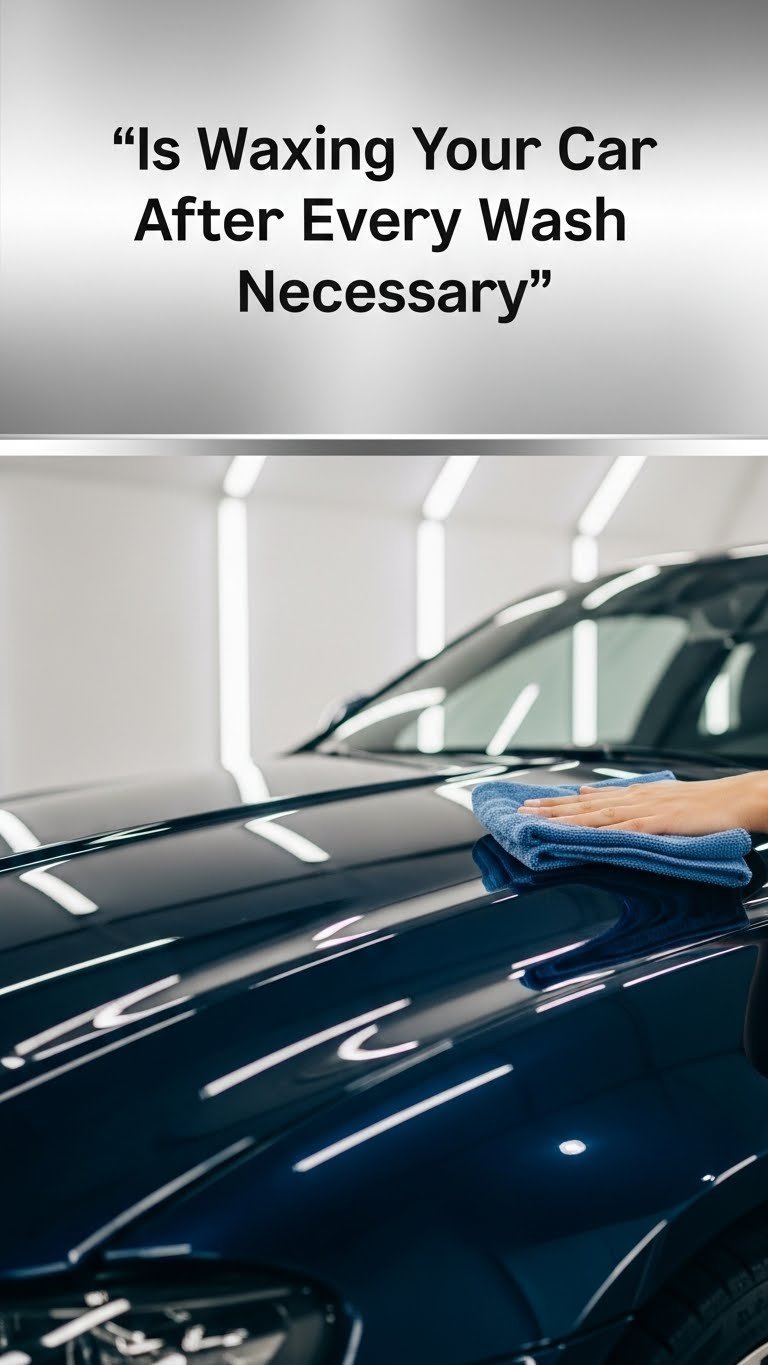
This rule has one major exception: spray waxes. These products are designed for quick application and are perfect for use as a “booster” after a wash to enhance gloss and hydrophobic properties between full waxing sessions. However, for your primary protective layer, a less frequent schedule is far more effective. The optimal car wax frequency depends on the type of protection you use—whether it’s a natural carnauba wax or a more durable synthetic paint sealant—and the environmental conditions your vehicle faces.
A better approach than a rigid schedule is to learn how to identify when your car actually needs protection. By understanding the signs of a worn-out wax layer, you can apply a fresh coat precisely when it’s needed, ensuring continuous car paint protection without unnecessary work.
What Happens if You Wax Your Car Too Much?
Waxing your car too much does not damage the paint, but it leads to a point of diminishing returns where you are simply wasting product and effort. The common misconception is that each new coat of wax builds upon the last, creating an ever-thicker shield. In reality, the chemistry of most car waxes prevents this from happening effectively.
From our hands-on testing and understanding of product formulation, the main consequences of over-waxing are:
- Waste of Product: You use more expensive wax than necessary to achieve the desired protection.
- Waste of Time: The application and buffing process takes significant effort for little to no additional benefit.
- Potential for a Hazy Finish: Applying wax too thickly or in too many layers can make it difficult to buff off completely, sometimes resulting in a hazy or streaky finish.
- No Added Protection: After one or two thin layers, you are not adding any meaningful durability or UV protection. You are simply replacing the existing layer.
The key is to understand that a thin, even coat is all that’s required for a wax to perform its job. More isn’t better; it’s just more. This is especially true for “cleaner waxes,” which contain mild abrasives. Using them too frequently can unnecessarily wear down your car’s clear coat over time.
What Is the Law of Diminishing Returns for Car Wax?
The law of diminishing returns for car wax dictates that after one to two thin applications, each subsequent layer provides progressively less (or no) benefit. This happens because most liquid and paste waxes contain mild solvents and carriers—the liquids that make the wax easy to spread. These very solvents prevent infinite layering.
Here is the process explained simply:
1. First Coat Application: You apply a thin layer of wax to the clean paint surface. It cures and bonds, forming a protective barrier.
2. Second Coat Application: As you apply a second coat, the solvents in the new wax slightly soften and reactivate the first layer.
3. Buffing Process: When you buff off the excess, you are essentially leveling the two layers into a single, renewed coat. You are not creating a distinct second layer on top of a solid first one.
It’s like trying to paint over wet paint; you end up mixing them together rather than creating two separate coats. For this reason, professional detailers know that you cannot build more than two effective layers of most traditional waxes or sealants. After that, you are simply removing the old wax with the new wax application. This is why a seasonal waxing schedule is more effective than waxing after every wash.
How Can You Tell if Your Car Needs a New Coat of Wax?
You can tell if your car needs a new coat of wax by performing simple, hands-on tests that assess its hydrophobic (water-fearing) properties and surface smoothness. Instead of guessing or sticking to a rigid calendar, let the condition of your car’s paint guide your car detailing schedule. Here are two expert-recommended methods.
The Water Beading Test
This is the most common and reliable method. It visually shows you how well the wax is repelling water.
- ✅ Good Sign (Protection is Active): Spray some water on a clean, flat panel like the hood or roof. If the water forms into tight, tall, round beads that roll off easily, your wax or sealant is still working effectively. The contact angle of the water droplets is high.
- ❌ Bad Sign (Protection is Gone): If the water spreads out into large, flat puddles or “sheets” off slowly, the protective layer has worn down. The low surface tension indicates the paint is no longer hydrophobic, and it’s time to apply a new coat of wax.
The Plastic Baggie Test
This test assesses the smoothness of the surface, which indicates whether contaminants have bonded to the paint, a sign that the protective wax layer is gone.
- ✅ Good Sign (Protection is Active): After washing and drying your car, place your hand inside a thin sandwich bag and gently glide your fingertips over the paint. If the surface feels perfectly smooth, like glass, your wax layer is intact and preventing contaminants from sticking.
- ❌ Bad Sign (Protection is Gone): If you feel gritty bumps or a rough texture through the bag, it means contaminants like industrial fallout and road grime have bonded to your clear coat. This is a clear signal that the wax barrier has failed and a full decontamination (with a clay bar) and a new coat of wax are needed.
What Is the Expert-Recommended Car Waxing Frequency?
As a rule of thumb, professional detailers recommend waxing your car with a traditional carnauba paste or liquid wax every 3 to 4 months. For vehicles protected with a more durable synthetic paint sealant, the recommended frequency extends to every 6 to 12 months. This schedule provides a consistent protective barrier against UV rays, oxidation, and environmental contaminants.
However, the ideal car wax frequency is not one-size-fits-all. It’s influenced by several key factors:
* Product Type: As shown below, spray waxes last weeks, carnauba waxes last months, and ceramic coatings can last years.
* Climate: Cars in regions with intense sun, heavy rain, snow, and road salt will need more frequent protection.
* Storage: A car that is garaged daily is shielded from the elements and will retain its wax layer far longer than one parked outside 24/7.
* Washing Habits: Using harsh soaps or frequent automatic car washes can degrade wax protection more quickly.
For a more personalized schedule, here is a detailed breakdown based on product type and conditions.
| Protection Type | Average Durability | Recommended Frequency (Normal Conditions) | Recommended Frequency (Harsh Climate) |
|---|---|---|---|
| Spray Wax | 2-4 Weeks | After every few washes (maintenance) | After every wash |
| Carnauba Paste/Liquid Wax | 2-4 Months | Every 3 months (seasonal) | Every 2 months |
| Synthetic Paint Sealant | 6-12 Months | Every 6 months | Every 4-5 months |
| Ceramic Coating | 2-5 Years | N/A (requires professional maintenance) | N/A |
What Are the Differences Between Waxes, Sealants, and Coatings?
Understanding the difference between waxes, sealants, and coatings is crucial for choosing the right car paint protection for your needs. The main differences lie in their chemical composition, durability, and the way they bond to your car’s clear coat.
Carnauba Wax
Carnauba wax is a natural product derived from the leaves of a Brazilian palm tree. It’s loved by enthusiasts for the deep, warm, wet-look shine it provides. It sits on top of the paint surface to create a protective layer.
- ✅ Pros: Unmatched depth and gloss, easy to apply, pleasant smell.
- ❌ Cons: Lower durability (2-4 months), lower melting point, less chemical resistance.
- Best For: Show cars or enthusiasts who enjoy the process of waxing frequently and prioritize maximum aesthetic warmth over longevity.
Paint Sealant
A paint sealant is a fully synthetic, man-made product. It’s composed of cross-linking polymers that chemically bond to the paint surface, creating a much more durable and resistant barrier than natural wax.
- ✅ Pros: Excellent durability (6-12 months), high resistance to heat and chemicals, provides a slick, glassy shine.
- ❌ Cons: The shine can be seen as more sterile or reflective than the warmth of carnauba.
- Best For: Daily drivers and owners who want long-lasting, low-maintenance protection.
Spray Wax
Spray waxes are typically a blend of carnauba, synthetic polymers, or SiO2 (silicon dioxide) in a liquid carrier. They are designed for speed and ease of use, not primary protection.
- ✅ Pros: Extremely fast to apply, boosts gloss and water beading, extends the life of a base coat.
- ❌ Cons: Very low durability (2-4 weeks), offers minimal real protection on its own.
- Best For: Use after every few washes as a “maintenance topper” to refresh the look and feel of your existing wax or sealant.
Ceramic Coating
A ceramic coating is a liquid polymer containing silicon dioxide (SiO2) that, when applied, undergoes a chemical reaction to form a semi-permanent, glass-like layer that bonds with the paint. This is the highest level of protection available.
- ✅ Pros: Extreme durability (2-5 years), superior chemical and UV resistance, intense water beading, makes washing much easier.
- ❌ Cons: Expensive, requires meticulous surface prep and is less forgiving to apply than waxes.
- Best For: New cars or owners seeking the ultimate long-term protection and willing to invest in professional application or a more involved DIY process.
How Do You Properly Apply Car Wax After Washing?
To properly apply car wax, you must start with a perfectly clean and dry vehicle, work in the shade on a cool surface, and apply the product in a thin, even coat. Following these steps ensures the wax bonds correctly and buffs off easily for a streak-free, lustrous shine.
Here is a step-by-step guide for applying a traditional paste or liquid car wax:
1. Wash and Dry: Begin with a thoroughly washed vehicle using the two-bucket method and a quality car shampoo. Dry it completely with a plush microfiber towel.
2. Work in the Shade: Always park the car out of direct sunlight. A hot surface will cause the wax to dry too quickly, making it difficult to spread and buff off.
3. Apply Thinly: Put a small, pea-sized amount of wax onto a foam applicator pad. Remember, less is more. A thin coat is more effective and easier to remove than a thick one.
4. One Panel at a Time: Gently spread the wax over a small 2×2 ft section using overlapping motions. This ensures even coverage.
5. Let it Haze (Cure): Allow the wax to dry to a light haze. This typically takes 5-10 minutes, but always check the manufacturer’s guidelines. You can perform the “swipe test”: gently swipe your finger across the waxed area. If it swipes clean, it’s ready. If it smears, it needs more time.
6. Buff Off: Using a separate, clean microfiber towel, gently buff away the wax residue to reveal the shine. Flip the towel to a clean side frequently to avoid re-depositing wax.
Pro Tip: For the absolute best results, consider using a clay bar on your car after washing but before waxing. A clay bar treatment removes embedded surface contaminants that washing leaves behind, creating an ultra-smooth surface that allows your wax to bond better and last longer.
FAQs About should i wax my car after every wash
Can I use a spray wax after every wash?
Yes, using a spray wax after every wash is an excellent practice for maintaining your car’s shine. Unlike traditional waxes, these are designed as “booster” products. They quickly add a layer of gloss and hydrophobic properties, extending the life of your primary wax or sealant coat without causing wasteful product buildup.
Does washing the car remove the wax?
A proper car wash using a pH-neutral car shampoo will not significantly remove a healthy coat of wax. However, harsh detergents like dish soap, aggressive traffic film removers, or even just the cumulative effect of many washes will gradually degrade the wax layer over time. This is considered normal wear and tear.
Should you wax a brand new car?
Yes, it is highly recommended to wax a brand new car. The paint is pristine, but it often has little to no protection from its journey through the supply chain. Applying a quality wax or, even better, a durable paint sealant right away protects the finish from UV rays, bird droppings, and oxidation from day one.
What’s the difference between car wax and polish?
Polish is a corrective abrasive, while wax is a non-abrasive protective layer. You use a polish before waxing to remove paint defects like swirl marks, fine scratches, and oxidation. This creates a smooth, highly reflective surface. You then apply wax on top of the corrected paint to protect that finish and add shine.
Can I wax my car in the sun?
No, you should never wax your car in direct sunlight or when the paint surface is hot. The heat causes the wax to dry almost instantly, making it impossible to apply evenly and extremely difficult to buff off. This leads directly to streaks, high spots, and a frustrating experience. Always work in the shade on a cool panel.
Do you have to dry your car before waxing?
Yes, it is absolutely critical that your car is completely dry before applying a traditional paste or liquid wax. Any trapped water will interfere with the wax’s ability to bond to the paint surface. This will result in a streaky, hazy finish that is very difficult to correct without starting over.
How long should you wait to wash a car after waxing?
You should ideally wait at least 24 hours to wash your car after applying a new coat of wax or sealant. This waiting period allows the product to fully cure and harden, forming its strongest possible bond with the paint. Washing the vehicle too soon can weaken this new protective layer before it’s fully effective.
Is cleaner wax safe for every wash?
No, a cleaner wax should not be used after every wash. These products contain mild abrasives designed to remove light oxidation and embedded grime. Using them too frequently can unnecessarily abrade your car’s clear coat over time. Cleaner waxes are best used once or twice a 2026 as a one-step paint preparation product.
Can you wax over old wax?
Yes, you can and typically do wax over an old layer of wax during routine maintenance. As explained by the law of diminishing returns, you are mostly just renewing the top layer rather than building significant thickness. For optimal results, many detailers recommend chemically stripping the old layers of wax once a year before starting fresh.
Do I need to wax my car if it has a ceramic coating?
No, you should not apply a traditional carnauba wax over a ceramic coating. A ceramic coating is chemically resistant and extremely hydrophobic on its own. Applying a wax on top will not bond properly and will simply mask the superior properties of the coating. Instead, use a dedicated SiO2-infused “booster” spray designed for coating maintenance.
Key Takeaways: Car Waxing Frequency
- Waxing After Every Wash is Unnecessary: For traditional paste or liquid waxes, this is wasteful due to the law of diminishing returns. The exception is using a “spray wax” as a maintenance booster.
- The 3-Month Rule is a Good Start: Professional detailers recommend waxing with a quality carnauba wax every 3-4 months and with a synthetic sealant every 6-12 months as a baseline.
- Let Your Car Tell You When: The best way to know if you need to wax is to perform the Water Test. If water forms tight beads, you’re protected. If it sheets and spreads out, it’s time to re-wax.
- Product Choice Matters Most: The durability of your protection is determined by the product. Natural Carnauba Wax offers great shine but less durability, while Synthetic Sealants and Ceramic Coatings offer longer-lasting protection.
- Polish Corrects, Wax Protects: Remember that polish is an abrasive used to fix paint defects before you wax. Wax is a non-abrasive final layer that provides protection and shine.
- Preparation is Key to Success: For a lasting, even finish, always apply wax to a completely clean, dry vehicle in the shade, never in direct sunlight on a hot panel.
- Over-Waxing Isn’t Harmful, Just Inefficient: Applying too much wax won’t damage your paint, but it’s a waste of product and effort as new applications often remove the old layer rather than building on top of it.
Final Thoughts on Your Car Waxing Schedule
Ultimately, the smartest approach to car paint protection is to move away from a rigid, frequent schedule and adopt a more intelligent, condition-based strategy. By understanding that waxing after every wash is unnecessary, you’ve already taken the first step toward a more efficient car care routine.
You now have the knowledge to save time, money, and product. Instead of blindly waxing, you can now choose the right product for your needs—whether it’s a long-lasting paint sealant for your daily driver or a rich carnauba wax for a weekend show car. Most importantly, you know how to perform simple tests to let your car tell you exactly when it needs that protective layer renewed. This empowers you to achieve better, more consistent results with less effort.
Last update on 2026-01-25 / Affiliate links / Images from Amazon Product Advertising API


