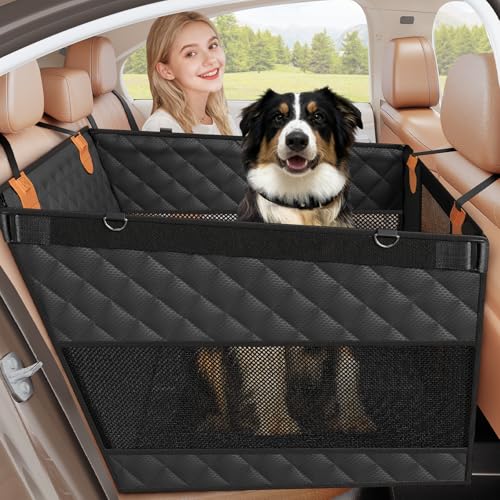
Worried about leaving your dog in the car, even for a minute? You’re right to be concerned about the complex web of laws and the serious safety risks involved. Many owners struggle to understand where the legal line is drawn.
In the United States, leaving a dog unattended in a car is illegal in at least 31 states when conditions endanger the animal’s health or safety. Legality is not a simple “yes” or “no”; it is contingent on state and local laws, the weather, and the condition of the animal. In all states, this act can be prosecuted under general animal cruelty statutes if the pet is in distress.
Based on an in-depth analysis of current statutes and veterinary data, this guide clarifies the specific laws you must follow. You will learn to recognize the life-threatening dangers that can arise in minutes. This will equip you to act responsibly and legally, whether as a pet owner or a concerned bystander.
Key Facts
- Rapid Temperature Rise: A car’s internal temperature can increase by 20 degrees Fahrenheit in just 10 minutes, creating a deadly environment even on a mild day.
- State-Specific Laws: As of 2026, 31 states have specific laws addressing animals left in vehicles, but all 50 states can prosecute the act under broader animal cruelty statutes.
- Cracked Windows are Ineffective: Studies show that cracking a window has a negligible effect on preventing a car’s interior from reaching dangerous temperatures.
- Universal Cruelty Laws: Even without a specific “hot car” law, leaving a pet in a situation that causes distress or harm can lead to animal cruelty charges in any state.
- “Good Samaritan” Immunity is Limited: Only a minority of states offer legal protection to citizens who break into a car to save an animal; your first call should always be to 911 or local authorities.
Is It Legal To Leave Your Dog In The Car?
The legality of leaving your dog in a car is not about the act itself but whether the situation creates endangerment. While 31 states have specific statutes as of 2026, every state can prosecute under general animal cruelty laws if a pet’s health or safety is at risk. This means that even if your state doesn’t have a “dog in hot car” law, you can still face serious charges. The core legal issue is preventing unnecessary suffering, which can happen rapidly inside a vehicle.

The determination of whether an animal is endangered is based on several key factors. Understanding these elements is crucial for any responsible pet owner. Authorities will assess the specific circumstances to decide if a law has been broken. These considerations move beyond a simple clock-watching exercise and focus on the real-time welfare of the animal.
Key factors that determine legality include:
* State and Local Law: The primary factor is whether a specific statute exists. These laws, often called “hot car laws,” explicitly outline what is prohibited.
* External Temperature and Weather: The law is most often applied in extreme heat, but it can also cover extreme cold. Conditions like direct sunlight versus cloud cover also play a role.
* The Animal’s Condition: Authorities will look for visible signs of distress, such as heavy panting, lethargy, or vomiting. The animal’s age, breed, and health status are also considered.
* Ventilation and Confinement: While cracking a window is insufficient, the level of ventilation will be noted. The size of the confinement space is also relevant.
These laws introduce complex concepts like “animal cruelty statutes” and “Good Samaritan laws.” We will explore these in greater detail to give you a full understanding of your rights and responsibilities.
Why Is Leaving a Dog in a Car So Dangerous?
The primary danger is rapid hyperthermia, more commonly known as heatstroke. A car acts like a greenhouse, trapping solar radiation and causing the internal temperature to skyrocket. On a seemingly mild 75°F day, a car’s interior can soar to 94°F within just 10 minutes and reach a deadly 109°F within 30 minutes. A dog’s normal body temperature is around 101.5°F; they can suffer brain damage or death once their body temperature reaches 106°F.
A car’s interior heats up at an alarming rate, a fact supported by extensive research. A study by San Francisco State University demonstrated that this temperature rise occurs regardless of whether the windows are cracked. The science is clear: a parked car is an oven.
A vehicle’s temperature can increase by an average of 40 degrees Fahrenheit within one hour, with 80% of that increase happening in the first 30 minutes.
Dogs cannot cool themselves efficiently in this environment. They rely on panting to regulate their body temperature. In the hot, humid air of an enclosed car, panting is ineffective; the dog is simply breathing in super-heated air, which can accelerate heatstroke. This leads to a cascade of catastrophic physiological events, including organ failure, brain damage, and ultimately, a painful death. Brachycephalic (short-nosed) breeds like Pugs and Bulldogs are at an even higher risk due to their compromised respiratory systems.
What Are the Signs of Heatstroke in a Dog?
Recognizing the symptoms of heatstroke is critical for anyone who owns a dog or might encounter one in distress. Acting quickly can be the difference between life and death. The signs can progress rapidly from mild to severe.
✅ Early Signs:
* Excessive and heavy panting
* Restlessness or agitation
* A very dark red or even purple tongue and gums
* Thick, sticky saliva or drooling
❌ Advanced/Critical Signs:
* Dizziness, stumbling, or lack of coordination (ataxia)
* Vomiting or diarrhea (sometimes with blood)
* Lethargy or unwillingness to move
* Seizures
* Loss of consciousness or collapse
If you observe any of these signs, it is a medical emergency. The dog needs to be removed from the hot environment immediately and receive veterinary care.
Which States Have Laws Against Leaving a Dog in a Car?
As of 2026, 31 states have enacted specific laws that address leaving an animal unattended in a vehicle under dangerous conditions. However, the specifics of these laws vary significantly. It is crucial to understand the distinction between laws that only empower law enforcement and “Good Samaritan” laws that offer legal protection to citizens who intervene.
Civil Immunity, or a “Good Samaritan” provision, is a critical component of some state laws. It grants legal protection (from lawsuits for property damage) to a private citizen who breaks a car window to rescue an animal they reasonably believe is in imminent danger. States without this provision typically only authorize law enforcement, humane officers, or other officials to use force. In those states, a citizen who breaks a window may be liable for damages.
The following table provides a breakdown of the laws in several key states to illustrate these differences. This is not an exhaustive list, and you should always verify the current statutes in your local jurisdiction.
| State | Statute Reference | Key Provisions | Who is Authorized to Rescue (Civil Immunity)? |
|---|---|---|---|
| California | Cal. Penal Code § 597.7 | Prohibits leaving an animal in a vehicle under conditions that endanger its health (heat, cold, lack of ventilation). | Law enforcement, humane officers, AND citizens (Good Samaritan immunity). |
| Florida | Fla. Stat. § 828.13 | Prohibits leaving an animal in a vehicle without sufficient ventilation in a way that risks injury or death from heat. | Law enforcement, humane officers, AND citizens (Good Samaritan immunity). |
| New York | N.Y. Agric. & Mkts. Law § 353-d | Prohibits confining a companion animal in a vehicle in extreme heat or cold without proper ventilation. | Law enforcement, humane officers. (No citizen immunity). |
| Texas | (No specific statute) | Can be prosecuted under the general animal cruelty law (Tex. Health & Safety Code § 821.021). | Law enforcement. (No specific “hot car” statute or immunity). |
| Minnesota | Minn. Stat. § 346.57 | Prohibits leaving a dog or cat in a vehicle in a manner that endangers the animal’s health or safety. | Peace officers, humane agents, dog wardens, fire/rescue members. (No citizen immunity). |
FAQs About is it legal to leave your dog in the car
Can I legally break a car window to save a dog?
It depends entirely on your state’s “Good Samaritan” laws. In states like California and Florida, you may be granted civil immunity if you follow a strict procedure (like first calling 911). In most states, however, only law enforcement or humane officers can legally break a window. Acting on your own in those states could expose you to liability for damages. Always call 911 first.
Is it safe to leave my dog in the car with the air conditioning on?
No, this is not a safe or foolproof solution. The primary risk is mechanical failure. The car’s engine could shut off, or the AC system could fail, causing the interior temperature to rise rapidly. Many modern cars have engine-off features that can deactivate the AC without warning. It is never a substitute for supervision.
What about leaving my dog in the car in the winter?
Cold weather poses a significant risk of hypothermia. A car’s interior acts like a refrigerator, losing heat quickly and trapping cold air. A dog left in a freezing car for a prolonged period can suffer from hypothermia, which can be just as fatal as heatstroke. The law in many states covers endangerment in extreme heat or cold.
How long is too long to leave a dog in the car?
There is no “safe” amount of time. Data shows a car’s temperature can become dangerous in as little as 10 minutes, even on a mild day. A quick errand can easily be delayed unexpectedly. The safest and only recommended duration is zero minutes.
Does cracking the windows make it safe for my dog?
No, studies have proven that cracking the windows has a minimal effect on the internal temperature of a car. The amount of heat build-up from the sun far outweighs the cooling effect of a small opening. It does not provide adequate ventilation to prevent heatstroke and is not a valid safety measure.
Are certain dog breeds more at risk in a hot car?
Yes, brachycephalic (short-nosed) breeds are at a much higher risk. Breeds like Pugs, Bulldogs, Boxers, and Shih Tzus have compromised airways and cannot pant efficiently to cool themselves. Additionally, very young, elderly, overweight, or dark-colored dogs are more susceptible to heatstroke.
What should my first step be if I see a dog in a car that seems okay?
Assess the situation and be proactive. Note the car’s make, model, and license plate. Check the weather—if it’s warm or getting warmer, time is critical. Go to the nearest stores and ask a manager to make an announcement to find the owner immediately. If the owner isn’t found within a few minutes, call the non-emergency line of the local police or animal control.
Can I be charged with animal cruelty for leaving my dog in the car?
Yes. Even in states without a specific “hot car” law, you can be prosecuted under general animal cruelty statutes. If leaving your pet in the car leads to distress, injury, or death, it can be considered a criminal act of negligence, often resulting in much more severe penalties than a simple “hot car” violation.
Do these laws also apply to cats?
Yes, in many states, the laws are written to protect “animals” or specifically include cats. For example, Minnesota’s law explicitly names both dogs and cats. The health risks associated with being left in a car in extreme temperatures are the same for felines.
If my car has a “Dog Mode” feature, is it legal and safe?
Features like Tesla’s “Dog Mode” are a significant safety improvement, but do not guarantee legality or complete safety. This feature maintains cabin temperature and displays a message for passersby. While it drastically reduces the risk of heatstroke, it doesn’t override state or local laws that may prohibit leaving an animal unattended. Furthermore, it relies on battery power and could fail. Always check local ordinances.
Final Thoughts
Navigating the laws and risks of leaving a dog in a car requires a clear understanding of one core principle: safety first. The legal landscape is complex, but the science of heatstroke is brutally simple. As we’ve explored, the difference between a quick errand and a tragedy can be measured in minutes. By internalizing these key takeaways, you can ensure you are always acting in the best interest of your pet and within the bounds of the law.
- Legality is Tied to Endangerment: Remember, a violation occurs when the conditions endanger the animal, a standard that can be met even on a mild day.
- A Car is a Death Trap: Scientific data confirms a car’s interior can heat up by 20°F in just 10 minutes, and cracking a window provides no meaningful protection.
- “Good Samaritan” Laws Are Not Universal: Your first and most important action upon seeing a distressed animal is to call 911. Only intervene directly if your state’s laws explicitly provide you with civil immunity.
- There is No “Safe” Amount of Time: The only truly safe duration to leave a dog in an unattended car is zero minutes. The risks are too high and the timing too unpredictable.
- Technology is Not Foolproof: Relying on air conditioning or “Dog Mode” features introduces a risk of mechanical or electrical failure that can have fatal consequences.
Ultimately, responsible pet ownership means preventing dangerous situations before they begin. The safest choice is always to leave your beloved companion at home or take them with you only to places where they are welcome to come inside.