
Have you ever wondered why the part that powers your car is called an “alternator,” yet everything runs on a DC battery? It’s a common point of confusion.
Your car’s entire electrical system relies on Direct Current (DC), a type of power that flows in one single direction. This is the only kind of electricity that a car battery can store. The confusion arises from a key component designed for efficiency.
The simple answer is that your car’s battery and all its electronics operate on Direct Current (DC). While the alternator generates Alternating Current (AC) internally for efficiency, it instantly converts it to DC before it’s used. This guide explains this entire system, clearing up the confusion for good.
Key Facts
- Definitive Answer is DC: Standard passenger vehicles operate on a nominal 12-volt Direct Current (DC) electrical system.
- Healthy Battery Voltage: A fully charged car battery should have a resting voltage of about 12.6 volts DC, according to battery manufacturer specifications.
- The Alternator’s Role: The alternator generates three-phase Alternating Current (AC) for efficiency but uses an internal rectifier to convert it to DC to charge the battery and power the car.
- High Current Demand: The starter motor requires a massive amount of DC power, drawing over 200 amps from the battery for a few seconds to start the engine.
- EVs are Also DC-Based: Electric vehicles use high-voltage DC battery packs, typically 400V or 800V, as their primary power source.
What Is the Definitive Answer: Does a Car Use AC or DC Current?
A car’s battery and entire electrical system operate on Direct Current (DC). All components, from the starter motor to the radio and headlights, are designed for DC power. The common confusion arises because the alternator generates Alternating Current (AC), but it is instantly converted to DC before powering the vehicle. This design provides the best of both worlds: the efficient power generation of AC and the stable, storable power of DC that a vehicle requires.

Think of the car’s electrical system as a small, self-contained power grid. The battery is the storage tank, and it can only store and deliver one type of power—DC. Every light, sensor, and computer in your vehicle is built to “drink” from this DC power source. The alternator’s job is simply to keep this storage tank full while the engine is running, and it has a clever internal process to do so.
What Is the Fundamental Difference Between AC and DC?
The main difference between AC and DC is the direction of the current’s flow. Direct Current (DC) flows in one constant, unidirectional path, while Alternating Current (AC) rapidly reverses its direction back and forth. This fundamental difference determines how each type of current can be used and stored.
To make it simple, think of electricity like water in a pipe.
* Direct Current (DC) is like water flowing steadily from a full tank through a hose. It moves in one direction with constant pressure (voltage). This is why it can be stored in a battery, which acts like the water tank.
* Alternating Current (AC) is like the water in that same pipe being pushed and pulled by a piston. The water moves back and forth but doesn’t have a constant direction of flow. This is great for transmitting power over long distances (like from a power plant), but you can’t store it in a simple tank.
This table breaks down the key distinctions for easy comparison.
| Feature | Alternating Current (AC) | Direct Current (DC) |
|---|---|---|
| Direction of Flow | Reverses direction periodically | Flows in one single direction |
| Can it be Stored? | No (not easily) | Yes (in batteries) |
| Common Source | Power plants, wall outlets | Batteries, solar cells |
| Use in Cars | Generated by alternator (internally) | Stored in battery, powers all components |
| Analogy | Piston pushing water back and forth | Water flowing steadily from a tank |
Why Is a Car’s Electrical System Designed to Use DC Power?
Cars use DC power for three primary reasons: batteries are inherently DC devices, sensitive electronics require stable voltage, and a low-voltage DC system is simpler and safer for a vehicle’s compact environment. The entire automotive industry was built around these practical engineering principles.
Let’s break down these core reasons:
- Batteries Only Store and Deliver DC: This is the most important factor. A car battery [an electrochemical storage device] works by a chemical reaction that creates a one-way flow of electrons. It simply cannot store or deliver the back-and-forth flow of AC. Since a car needs a battery to start the engine and power things when the engine is off, the entire system must be based on the battery’s DC nature.
- Electronics Demand Stable Power: Modern vehicles are packed with sensitive automotive electronics, from the Engine Control Unit (ECU) that manages performance to the infotainment system on your dashboard. These components require a stable, constant voltage to operate correctly. DC provides this steady power, whereas the fluctuating nature of AC would require complex and bulky conversion equipment at every component.
- Simplicity and Safety: A standard 12-volt DC system is relatively simple and safer than a high-voltage AC system would be in the tight, vibrating, and often wet environment of a car. A healthy, resting car battery provides about 12.6 volts DC, which isn’t enough to cause a harmful electric shock.
How Does the Alternator Solve the Main Point of Confusion?
A car’s alternator generates Alternating Current (AC) for efficiency, but it contains a built-in device called a rectifier. This rectifier, made of diodes, acts as a series of one-way gates, converting the AC’s back-and-forth flow into the one-way Direct Current (DC) the car needs to charge the battery and run the electrical system. This is the crucial step that resolves the entire AC/DC paradox in a car.
This process happens instantly and entirely within the alternator’s housing. The rest of your car’s electrical system never sees the AC power; it only receives the final, usable DC output.
Why Does an Alternator Generate AC in the First Place?
Alternators generate AC because the design is more mechanically robust and electrically efficient than old DC generators. They can produce significant charging power even when the engine is idling, which is crucial for modern cars with high electrical demands from features like heated seats, large infotainment screens, and numerous computers.
Older cars (pre-1960s) used DC generators, but they were less reliable and didn’t produce much power at low engine speeds, often causing lights to dim at a stoplight. The switch to the AC-generating alternator was a major technological improvement in vehicle reliability and electrical capacity.
How Is the Alternator’s AC Converted to DC?
The alternator’s AC is converted to DC by a component called a rectifier, made of several diodes. Each diode acts as a one-way electrical gate. By arranging them in a specific way (often called a diode bridge), the rectifier redirects the back-and-forth flow of AC, forcing it into a single, one-way path, creating the DC voltage your car can use.
Think of it like a series of one-way check valves in a plumbing system. No matter which way the water tries to flow, the valves redirect it so that it only comes out of one pipe, always moving in the same direction. The rectifier does the exact same thing with electricity, turning the alternating current into a direct current that charges the battery.
What Is the Modern Twist: Do Electric Vehicles (EVs) Use AC or DC?
Electric vehicles (EVs), like gasoline cars, are built around a high-voltage Direct Current (DC) battery pack. However, the terms AC and DC are most often discussed in the context of charging, which is where the main difference lies. The distinction comes down to where the conversion from grid AC power to battery DC power happens.
Here’s the simple breakdown:
- AC Charging (Level 1 & 2): When you charge an EV at home or at most public chargers, you are supplying AC power from the grid to the car. The car then uses its own onboard charger (which is essentially an AC-to-DC converter) to turn that AC power into DC power to fill the battery. The speed is limited by the size of this internal converter.
- DC Fast Charging (Level 3): At a dedicated DC fast charging station, the story changes. These stations have massive AC-to-DC converters outside the car. They feed high-voltage DC power directly to the car’s battery, bypassing the smaller onboard charger completely. This is why it’s so much faster.
This table clarifies the differences between the two main charging methods.
| Charging Type | AC Charging (Level 1 & 2) | DC Fast Charging (Level 3) |
|---|---|---|
| Location | Home, workplaces, public chargers | Public charging stations, highways |
| Speed | Slow (adds 4-30 miles of range/hr) | Very Fast (adds 100+ miles in ~30 min) |
| Conversion | Grid AC -> Car’s Onboard Charger -> DC Battery | Station’s External Converter -> DC Battery |
| Best For | Overnight charging, daily top-ups | Long-distance travel, quick top-ups |
How Can You Get AC Power From Your DC Car System?
To get standard household AC power from a car’s DC system, you need a device called a power inverter. An inverter is an accessory that performs the exact opposite function of a rectifier. It takes the car’s 12V DC input and converts it into 120V Alternating Current (AC) output, allowing you to power devices that use a standard wall plug.
Power inverters plug into your car’s 12V accessory port (cigarette lighter) or, for more powerful models, connect directly to the battery terminals. They are commonly used for practical applications like:
- Charging a laptop or camera batteries on the go.
- Powering small tools at a remote job site.
- Running small appliances like a fan or a small TV while camping.
When choosing an inverter, the most important specification is its wattage rating. You must select an inverter that can handle the power demands of the device you want to run. For example, a small 150-watt inverter is fine for a laptop, but you would need a 1000-watt inverter or larger for a small power tool.
FAQs About is a car ac or dc current
Is 12-volt DC from a car battery dangerous?
The 12 volts are not enough to cause a harmful electric shock, but the high current (amperage) is very dangerous. Short-circuiting the terminals with a metal tool can create violent sparks, melt the tool, and potentially cause the battery to explode. Always handle with care and disconnect the negative terminal first.
Do car headlights and radios run on AC or DC?
All standard factory-installed electronics, including headlights, taillights, interior lights, and the audio system, run on the car’s 12V DC power. While the audio signal sent from an amplifier to the speakers is technically a form of AC, the amplifier itself is powered by the car’s DC system.
What are the symptoms of a bad rectifier in an alternator?
A failing rectifier can cause a dimming of lights, a battery that won’t stay charged, a “battery” warning light, or a strange whining noise. Because the rectifier is responsible for producing the DC power, its failure means the battery is not being charged properly, leading to a dead battery.
Can a modern car run without a battery?
No, it is not recommended to run a modern car without a battery. While the alternator provides power once the engine is running, the battery acts as a crucial voltage stabilizer. Removing it can cause voltage spikes that can permanently damage sensitive electronics like the engine control unit (ECU).
When I test my battery, should I use the AC or DC setting on my multimeter?
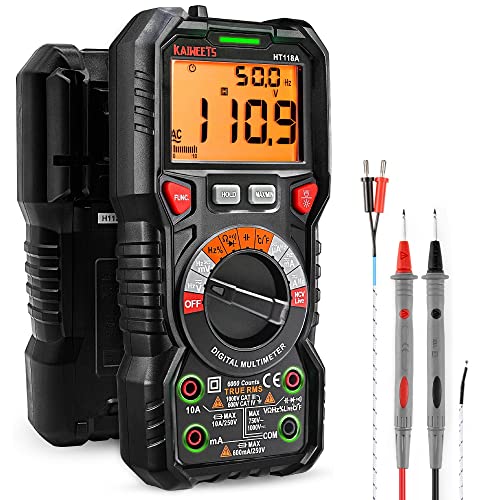
You must always use the DC Voltage (VDC or V⎓) setting on your multimeter when testing a car battery. A correct reading for a healthy, resting battery is around 12.6 volts DC. Using the AC setting will give you a meaningless reading and is the incorrect procedure.
Final Thoughts on Your Car’s Electrical System
Understanding your car’s electrical system doesn’t have to be complicated. Once you grasp the core concepts, most of the common questions and mysteries surrounding it become clear. Knowing that your car runs on DC and how the alternator cleverly fits into that system demystifies everything from battery testing to jump-starting.
Here are the five essential points to remember:
- The Definitive Answer is DC: Your car’s battery and all of its electrical components operate on Direct Current (DC).
- The Alternator is the Source of Confusion: The alternator generates efficient Alternating Current (AC) but uses an internal rectifier to immediately convert it to the DC power your car needs.
- Batteries Can Only Store DC: The fundamental reason for a DC system is that batteries, by their chemical nature, can only store and deliver DC power.
- EVs Are Also Fundamentally DC: Electric vehicles use high-voltage DC battery packs. The AC/DC distinction in EVs primarily relates to how they are charged, not how they run.
- Use an Inverter for AC Power: If you need to power a household (AC) device in your car, you must use an accessory called a power inverter to convert the car’s DC to AC.
With this knowledge, you’re better equipped to understand how your vehicle works, troubleshoot basic issues, and use accessories like multimeters and inverters safely and correctly.
Last update on 2026-03-08 / Affiliate links / Images from Amazon Product Advertising API


