
Dreaming of a BMW as your first car? It’s a powerful image: the iconic badge, the promise of performance, and turning heads wherever you go.
This desire often clashes with the reality of a first-time car owner’s budget. You’re trying to balance an emotional want with logical concerns about cost and reliability. You need an honest guide, not a sales pitch.
A BMW can be a rewarding first car for an enthusiast with a dedicated budget for maintenance, but it is a poor choice for someone seeking low-cost, reliable transportation. This guide breaks down the true costs, best models, and essential checks to help you make a smart, informed decision.
Key Facts
- High Ownership Costs: The total cost of ownership for a used BMW is typically 2-3 times higher than a comparable Japanese economy car, according to industry analysis.
- Maintenance is Key: The reliability of a used BMW is almost entirely dependent on its history of preventative maintenance, with neglected cars being prone to cascading failures.
- Average Repair Bills: According to automotive data from RepairPal, the average annual repair cost for a BMW is $968, significantly higher than the industry average of around $650.
- Insurance Premiums: New drivers, especially teenagers, can expect to pay 25-50% more to insure a 10-year-old BMW 3-Series compared to a similar vintage Honda Civic, based on insurance industry data.
- Inspection is Non-Negotiable: Experts across the automotive industry agree that a pre-purchase inspection (PPI) by a specialist is the single most important step to avoid buying a “money pit” German car.
So, You Want a BMW as Your First Car? Here’s the Honest Truth
Let’s be clear: a BMW is an appealing choice for a first car, and it’s easy to see why. The allure of a premium brand, superior driving dynamics, and an affordable purchase price on the used market create a tempting combination. But that affordable sticker price is often just the down payment on an expensive ownership journey. This guide is designed to give you the full picture—the good, the bad, and the expensive—so you can decide if this is the right path for you. We will be brutally honest because making a mistake on your first car can be a major financial setback.

To satisfy your core question right away, here is our quick verdict.
Quick Verdict: Is a BMW a Good First Car?
- ✅ YES, if: You are a car enthusiast, have a separate and healthy budget ($2,000+/year) for maintenance and repairs, and are willing to learn about your car or work with a specialist mechanic. The driving experience is truly rewarding.
- ❌ NO, if: You need simple, reliable, and low-cost transportation to get from A to B. If an unexpected $1,500 repair bill would cause a financial crisis, you should look at more traditional first-car options.
Why Is a BMW Such a Tempting First Car? The Pros
The primary advantages of a BMW as a first car include its superior driving dynamics and handling, a premium interior feel even in older models, and the prestige associated with the brand. Before we dive into the costs, it’s important to validate why you want one in the first place. These aren’t just cars; they’re engineered for a specific experience.
- Unmatched Driving Dynamics: BMWs are famous for how they feel on the road. This isn’t just marketing hype. Most models feature a near 50/50 weight distribution and rear-wheel drive (RWD), creating a balanced and engaging handling experience that is rare in typical first cars. The steering is often praised for its direct feedback, making you feel more connected to the road.
- Affordable Luxury and Quality: For the price of a used economy car, you can often get a BMW with a high-quality interior, comfortable seats, and a solid, premium feel. The materials and build quality, even on a 10-year-old model, are typically a class above other vehicles in the same price range.
- Smooth and Powerful Engines: Many classic used BMWs are known for their incredibly smooth inline-6 engines. These powerplants, like the N52 engine, are known for their linear power delivery and satisfying sound, providing a more refined and exciting driving experience.
- Brand Prestige and Community: There’s no denying the social status that comes with the BMW roundel. Beyond that, there is a massive global community of owners and enthusiasts. This means endless resources for DIY repairs, a wealth of online knowledge in forums, and local clubs to join.
What Are the True Costs of Owning a BMW? The Financial Reality Check
You should budget at least $2,000-$3,000 per year for maintenance, insurance, and repairs on a used BMW, not including fuel. This is often 2-3 times higher than the annual running cost of a comparable Honda or Toyota. The true cost of owning a used BMW goes far beyond the purchase price, encompassing high maintenance needs, expensive insurance premiums for new drivers, and the high probability of a major repair bill exceeding $1,000.
To put it in perspective, here’s a stark comparison of estimated first-year costs.
| Cost Factor | Used BMW 328i (~2026) | Used Honda Civic (~2026) |
|---|---|---|
| Avg. Purchase Price | $7,000 – $10,000 | $8,000 – $11,000 |
| Avg. Annual Insurance (18 y/o) | $3,500 – $6,000+ | $2,000 – $3,500 |
| Avg. Annual Repair Cost | $968 (RepairPal Data) | $368 (RepairPal Data) |
| Example Common Repair (Water Pump) | ~$1,000 | ~$450 |
| Recommended Annual Repair Fund | $1,500 – $2,000 | $500 |
| Estimated First-Year Cost (Excl. Fuel) | $5,000 – $8,000+ | $2,500 – $4,000 |
How Expensive is Routine BMW Maintenance?
A standard oil change for a BMW at an independent specialist costs between $120 and $200, compared to $50-$80 for an economy car, due to the requirement for expensive synthetic oil and a larger oil capacity. BMWs, as German-engineered performance vehicles, cannot be maintained like a typical commuter car.
Even routine services are more expensive for specific reasons. They require high-quality European-formula synthetic oil (like LL-01 certified oil), their engines often hold more oil (6-7 quarts vs. 4-5), and parts like filters are more costly. While a good independent specialist is cheaper than a dealership, their labor rates are still higher than a general mechanic due to the specialized knowledge required.
Why is BMW Insurance So High for a New Driver?
Insurance for a new driver on a BMW is expensive because it combines three high-risk factors: a high-risk driver (teenager), a high-performance vehicle (statistical crash risk), and a car with high repair costs. Insurance companies set their rates based on statistical data, and this combination is a recipe for high premiums.
- High-Risk Driver: Young and inexperienced drivers have the highest accident rates, according to data from organizations like the Insurance Institute for Highway Safety (IIHS).
- Performance Vehicle: A BMW is classified as a performance vehicle. Statistically, these cars are driven more aggressively and are involved in more frequent and severe accidents.
- High Repair Costs: Insurers know that if you get into even a minor accident, the cost to repair a BMW with its expensive parts and specialized labor will be much higher than for a Honda or Toyota.
What Are The Most Common (And Expensive) BMW Repairs?
The most common expensive repairs on used BMWs include cooling system overhauls ($1000-$1500), oil leaks from the valve cover and oil filter housing gaskets ($600-$1000), and electrical sensor failures. These are not possibilities; they are eventual certainties on many popular used models.
- Cooling System: BMWs from the mid-2000s to early-2010s notoriously used a lot of plastic components in their cooling systems, including the water pump, thermostat, and expansion tank. These become brittle with age and are prone to sudden failure, which can cause engine overheating and catastrophic damage if not addressed immediately.
- Oil Leaks: Two of the most common oil leaks are from the Oil Filter Housing Gasket (OFHG) and the Valve Cover Gasket (VCG). While the parts themselves are cheap, the labor to replace them can be several hundred dollars. An ignored oil leak can lead to the destruction of other expensive parts, like the serpentine belt.
- Electrical Systems: Modern BMWs are packed with complex electronics and sensors. The failure of a single wheel speed sensor or camshaft position sensor can disable safety systems or cause poor running, and diagnosis can be time-consuming.
Which Used BMW Models Are the Best (and Worst) for a First Car?
The best used BMW for a first car is widely considered to be a 2006-2011 328i (E90) with the naturally aspirated N52 engine due to its relative reliability. Choosing the right model is the most critical decision you will make. It’s the difference between a rewarding experience and a financial disaster. Using chassis codes (like E90) and engine codes (like N52) is how enthusiasts identify specific generations and their characteristics.
Recommended: The Smart Choice
- BMW 328i (2006-2011, Chassis Code: E90): This is the sweet spot. The N52 inline-6 engine is one of the most reliable modern engines BMW has ever made. It’s naturally aspirated, meaning it doesn’t have the expensive, high-stress turbochargers of other models. It provides a great balance of power, handling, and significantly lower maintenance costs compared to its turbocharged siblings. Look for a well-maintained, rear-wheel-drive sedan.
To Approach with Caution
- BMW 128i (2008-2013): A great option that is slightly smaller and lighter than the 328i. It uses the same reliable N52 engine, making it a fun and dependable choice if you can find a clean example.
- BMW 325i/330i (2002-2005, Chassis Code: E46): A beloved classic and a fantastic driver’s car. They are simpler mechanically, but they are also much older now. Finding one that hasn’t been neglected or heavily modified is very difficult. This is a good choice only if you are mechanically inclined.
Avoid at All Costs
- Any model with the N54 Engine (e.g., 335i, 135i from 2007-2010): While incredibly powerful and popular with tuners, the N54 twin-turbo engine is a maintenance nightmare. It’s known for very expensive and common failures of its high-pressure fuel pump, turbochargers, and fuel injectors. This is an expert-level car and a terrible choice for a first-time owner.
- Any 7-Series, 6-Series, or M Car: These are flagship models with flagship complexity and costs. Air suspension, complex electronics, and high-strung performance engines mean repair bills can easily reach five figures. Stay far away.
How Do You Avoid Buying a Money Pit? The 5-Step BMW Buyer’s Checklist
To avoid buying a bad used BMW, follow five steps: 1. Budget for the total cost of ownership, not just the price. 2. Prioritize cars with complete service histories. 3. Run a vehicle history report. 4. Get a pre-purchase inspection (PPI) from a BMW specialist. 5. Keep an emergency repair fund. This checklist is your shield. Skipping any of these steps, especially the PPI, is a massive gamble.
- Budget for Total Cost of Ownership (TCO): Before you even start looking, calculate your first-year TCO. Add the purchase price, sales tax, insurance premium, and a dedicated $2,000+ repair fund. If that number makes you uncomfortable, this is not the right car for you.
- Demand a Full Service History: Service records are more important than mileage. A car with 120,000 miles and a folder full of receipts for preventative maintenance is a far better bet than one with 80,000 miles and no proof of care. Walk away from any seller who says, “I don’t have the records.”
- Run a Vehicle History Report: Use services like CarFax or AutoCheck to check for reported accidents, title issues (like a salvage title), and odometer discrepancies. This is a low-cost way to screen out cars with a troubled past.
- Pay for a Pre-Purchase Inspection (PPI): This is the most important step. Pay an independent mechanic who specializes in BMWs $200-$300 to put the car on a lift and inspect it thoroughly. They know exactly where to look for common leaks, suspension wear, and hidden problems. This inspection can save you thousands of dollars.
- Set Aside Your Repair Fund Immediately: Once you buy the car, take at least $2,000 and put it into a separate savings account. This is not your “if” fund; it’s your “when” fund. Having this money ready will turn a stressful breakdown into a manageable inconvenience.
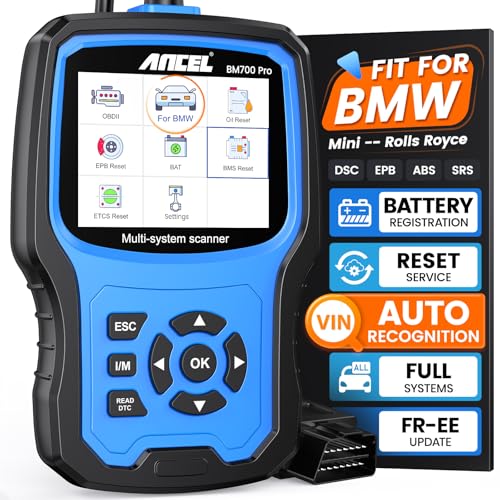
A useful tool for any prospective owner is a good OBD2 scanner, which can help you read diagnostic codes from the car’s computer.
What Are Some Smart Alternatives to a BMW?
Smart alternatives to a BMW for a first car include the Mazda 3 for handling and style, the Honda Civic Si for a reliable and engaging manual transmission experience, and the Volkswagen GTI for a blend of performance and practicality. If the financial reality of BMW ownership seems too daunting, don’t worry. There are several other cars that offer a fun driving experience with much lower financial risk.
- Mazda 3: Often called the “BMW of economy cars,” the Mazda 3 offers fantastic handling, a stylish interior, and a premium feel, all backed by Japanese reliability and low running costs.
- Honda Civic Si: For decades, the Civic Si has been the benchmark for a fun, affordable, and incredibly reliable performance car. It offers a high-revving engine and one of the best manual transmissions available at any price.
- Volkswagen GTI: The GTI practically invented the “hot hatch” category. It provides a great mix of turbocharged power, sophisticated handling, and hatchback practicality, with running costs that are more manageable than a BMW’s.
- Acura TSX / Infiniti G35: If you still want a premium brand, these are excellent choices. The Acura TSX is essentially a more luxurious and reliable Honda, while the Infiniti G35 offers powerful RWD performance with better Japanese dependability.
FAQs About is a bmw a good first car
Is a rear-wheel-drive (RWD) BMW safe for a new driver in the snow?
It can be safe, but it requires the right tires and more careful driving. Modern BMWs have excellent electronic stability control. However, a RWD car with all-season tires will struggle in snow. For winter safety, a dedicated set of snow tires is non-negotiable and transforms the car’s handling and safety.
Is 100,000 miles too many for a used BMW?
No, service history is far more important than mileage. A BMW with 120,000 miles and a perfect, documented maintenance history is a much safer purchase than one with 80,000 miles and no records. Many well-cared-for BMWs can easily exceed 200,000 miles.
Can I do my own repairs to save money on a BMW?
Yes, for basic tasks, but be prepared for a learning curve. Simple jobs like oil changes, filters, and brake pads are achievable for a novice with YouTube guides and the right tools. However, most complex engine and electronic diagnostic work should be left to a specialist.
What’s the difference between a BMW 328i and 335i?
The main difference is the engine: the 328i has a more reliable non-turbo engine, while the 335i has a powerful but notoriously unreliable twin-turbo engine. For a first-time owner, the 328i is the significantly safer and more financially sensible choice, while the 335i is an expert-level car with very high maintenance demands.
Should I buy a modified BMW as a first car?
It is strongly recommended to avoid modified cars. Modifications, especially to the engine or suspension, can seriously compromise the car’s reliability and may have been installed improperly. For your first BMW, a completely stock, well-maintained example is always the best choice.
Key Takeaways: BMW as a First Car Summary
- Ownership Cost is the #1 Factor: A BMW’s cheap purchase price is deceptive. The Total Cost of Ownership (maintenance, insurance, repairs) is 2-3x higher than a typical first car. Budget accordingly.
- The Right Model is Crucial: Choose a model known for reliability, like an E90 328i with the N52 engine. Avoid complex, high-performance models like the 335i, which can lead to financial ruin.
- Service History is More Important Than Mileage: A well-documented history of preventative maintenance is the best indicator of a healthy used BMW. Walk away from cars with no records.
- A Pre-Purchase Inspection (PPI) is Non-Negotiable: Paying a specialist $200-$300 to inspect a car before you buy it is the best investment you can make. It can save you thousands of dollars in hidden problems.
- It’s a Car for an Enthusiast, Not a Commuter: A BMW makes a great first car for a young enthusiast who enjoys working on cars and has a dedicated budget. It is a poor choice for someone who just needs a reliable A-to-B appliance.
- Be Prepared for an Unexpected Repair: You will have a repair bill that is higher than you expect. Having a dedicated $2,000+ repair fund is essential for stress-free ownership.
Final Thoughts on Your First BMW
Ultimately, choosing a BMW as a first car isn’t a “good” or “bad” decision—it’s a choice between two very different ownership paths. The first path is the practical, low-stress, and financially predictable route offered by a traditional first car. The second is the enthusiast path: more expensive, more demanding, but also potentially more rewarding and educational if you’re passionate about driving and mechanics.
If you’ve read this guide and feel prepared for the financial responsibilities, excited by the prospect of learning about your car, and have a solid plan to find a well-maintained example, then a BMW can be an incredibly fun and memorable first car. If you felt anxiety reading about the potential costs and complexities, that’s a clear sign that a smarter, more reliable alternative is the right choice for you right now. Make your decision with your eyes wide open, and you’ll end up with a car you truly enjoy.
Last update on 2026-03-07 / Affiliate links / Images from Amazon Product Advertising API


