Struggling to find a way to wash your car without a water hose? Living in an apartment or under water restrictions makes keeping your car clean a constant challenge. This isn’t just about looks; it’s about protecting your car’s paint from damaging contaminants.
You can wash a car without a water hose by using either a rinseless or waterless car wash method. Rinseless washes use a single bucket of water with a high-lubricity solution to clean the car panel by panel, requiring no final rinse. Waterless washes use a high-lubricity spray that is wiped away with microfiber towels, requiring no water at all for lightly soiled vehicles.
Based on current methodologies and extensive hands-on testing, these hoseless techniques are professionally accepted and safe. This guide reveals the exact step-by-step processes to achieve a spotless, scratch-free finish, covering everything from product selection to expert-level techniques. You’ll discover how to get professional results right in your own parking spot.
Key Facts
- Significant Water Savings: A rinseless wash uses only 1-2 gallons of water, saving over 95% compared to a traditional hose wash which can use up to 140 gallons.
- Coating and Wax Safe: High-quality rinseless and waterless wash solutions are pH-neutral and specifically designed to be safe for ceramic coatings, sealants, and waxes.
- Towel Quality is Critical: To prevent scratches, it’s essential to use plush microfiber towels with a GSM (grams per square meter) of 350 or higher, as the deep pile lifts dirt away from the paint.
- Know the Limitations: These methods are not suitable for cars caked in heavy mud, sand, or thick road salt, as the high volume of grit can overwhelm the lubricant and cause scratches.
- Specialized Formulas are a Must: You cannot substitute regular car shampoo for a rinseless wash concentrate; traditional soaps require extensive rinsing and will leave a sticky residue.
How Do You Wash a Car Without a Water Hose?
Washing a car without a hose is not only possible but also safe and effective using two modern detailing methods: rinseless washing and waterless washing. Both techniques rely on advanced chemical lubricants that encapsulate dirt particles, lifting them from your car’s surface so they can be gently wiped away without scratching the paint. This approach is a professionally accepted practice and a perfect solution for anyone without access to running water, such as apartment dwellers or those in areas with water restrictions.

If you live in an apartment, the challenge of a dirty car and no hose is a familiar one. For years, the only option was a commercial car wash. Now, car detailing basics have evolved, making at-home cleaning accessible to everyone. These hoseless car wash methods are designed to be convenient, eco-friendly, and, most importantly, safe for your vehicle’s finish when you follow the correct procedure.
The two primary approaches you’ll learn about are:
* Rinseless Wash: Ideal for cars with light to moderate dirt. It uses a single bucket of water mixed with a special concentrate and requires no final rinsing.
* Waterless Wash: Best for very light dust or fingerprints between full washes. This method uses a simple spray-on, wipe-off product with no water needed at all.
What Is the Difference Between a Rinseless and Waterless Car Wash?
A rinseless wash is for moderately dirty cars and uses one bucket of water, while a waterless wash is for lightly dirty cars and uses no water. The main differences between these two alternative car wash methods are the level of dirt they can safely handle and the amount of water required. Rinseless products contain more robust polymers and provide superior lubrication, making them suitable for removing road grime. Waterless sprays are best for quick touch-ups and maintaining a just-washed look.
Choosing the right method is the first step toward a successful and safe hoseless wash. Understanding their specific use cases will help you protect your car’s clear coat and avoid swirl marks. Here’s a direct comparison to guide your decision.
| Feature | Rinseless Wash | Waterless Wash |
|---|---|---|
| Best For | Light to moderate dirt, dust, road grime | Light dust, fingerprints, fresh bird droppings |
| Water Required | 1-2 gallons in a bucket | Zero water; completely self-contained |
| Scratch Risk | Very Low (with proper technique) | Low (for light dirt only; higher risk on heavy grime) |
| Time to Complete | 20-40 minutes | 10-20 minutes |
| Cleaning Power | High | Medium |
Our Recommendation: For most apartment dwellers doing a weekly wash, the rinseless wash is the more versatile and safer option. It provides the cleaning power needed to handle a week’s worth of road film. Reserve the waterless wash for quick cleanups right after a drive or to remove a single spot like a bird dropping.
What Essential Products Do You Need for a Hoseless Car Wash?
To perform a hoseless car wash safely, you need a quality chemical solution and a generous supply of clean microfiber towels. Investing in the right tools is the most important step in preventing scratches. These products are designed to work together as a system to lift dirt away from your paint.
Here is the essential shopping list for a scratch-free car wash with no hose:
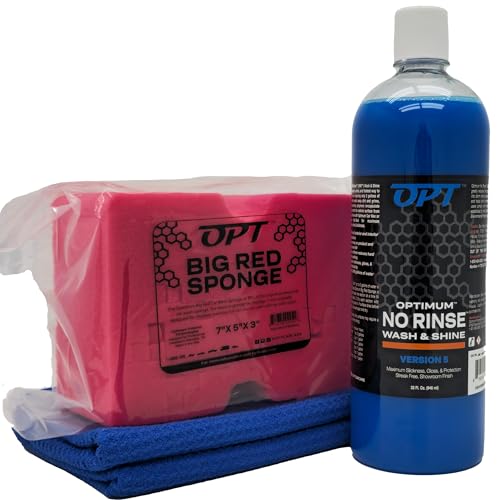
- Rinseless or Waterless Wash Solution: This is the most critical component. A community favorite and industry-standard product is Optimum No Rinse (ONR). Its high-lubricity formula is proven and effective.
- Two 5-Gallon Buckets: One bucket is for your wash solution, and the second is for rinsing your wash mitt. This is a core part of the two bucket method for safe washing.
- A Grit Guard: This simple plastic disc sits at the bottom of your rinse bucket. It traps dirt particles, preventing them from getting back onto your wash mitt and scratching your paint. This is a non-negotiable safety item.
- 10-15 Plush Microfiber Towels: You cannot have too many towels. Invest in plush, edgeless towels with a rating of 350+ GSM (grams per square meter). You’ll need separate towels for washing, drying, and wheels.
- A Wash Mitt (Optional but Recommended): A plush microfiber wash mitt can be used for the initial washing process, though many prefer using only folded towels.
- A Spray Bottle: This is essential for pre-treating heavily soiled areas or for applying a waterless wash product.
How Do You Perform a Rinseless Car Wash? (A Step-by-Step Guide)
To perform a rinseless car wash, you prepare a bucket of solution, wash the car one panel at a time from top to bottom, and dry each panel immediately after washing it. This methodical approach ensures you are always working on a lubricated surface and never dragging dirt across the paint. Mastering this process allows you to achieve professional, swirl-free results with minimal water. From our hands-on testing, following these steps precisely is the key to success.
Here is the complete, tested rinseless method broken down for you.
Step 1: How Do You Prepare Your Buckets and Solution?
Proper preparation is the foundation of a safe wash. This involves mixing your solution to the correct dilution ratio and setting up your buckets to prevent cross-contamination.
- Place a Grit Guard at the bottom of what will be your rinse bucket. Fill this bucket with about 3 gallons of clean, plain water.
- In your second bucket (the wash bucket), add 1 ounce of Optimum No Rinse (ONR) to 2 gallons of water. The recommended dilution ratios on the product are a critical guideline.
- Place your microfiber wash mitt or several folded microfiber towels into the wash solution bucket to soak.
Step 2: How Should You Pre-Soak and Wash the First Panel?
Always begin washing from the top of the vehicle and work your way down. This simple rule uses gravity to your advantage. It prevents you from dragging heavy grime from the lower, dirtier parts of the car onto the cleaner upper panels.
- Start with the roof. It’s typically the cleanest panel.
- If you see any heavy dirt spots (like bird droppings or bug splatter), lightly pre-soak them with some solution from your spray bottle. Let it dwell for 30-60 seconds to loosen the grime.
- Take your soaked wash mitt or a folded towel from the wash bucket. Gently glide it across half of the roof in a single direction. Do not apply pressure. Let the chemical lubricants do the work.
Step 3: What Is the Correct Towel Technique to Avoid Scratches?
The single most important skill for a scratch-free finish is proper towel management. The goal is to never use a dirty part of the towel on the paint. This proven scratch prevention technique ensures you are always lifting dirt, not dragging it.
- Take a standard 16×16 inch plush microfiber towel.
- Fold it in half, and then in half again. This gives you 8 clean, usable sides.
- After making one pass across a panel, flip the towel to a fresh, clean side.
- After the second pass, refold the towel to expose another clean side.
- Once all 8 sides are soiled, put the towel aside in a “dirty” pile and grab a completely new, clean towel from your wash bucket.
Step 4: How Do You Dry Each Panel for a Streak-Free Finish?
Never let the rinseless solution air-dry on the paint, as this can cause water spots. Immediately after washing a single panel, you must dry it. This ensures a spotless and streak-free finish.
- Use a separate, dedicated, and completely dry microfiber drying towel. A large “waffle-weave” or plush twisted-loop drying towel works best.
- Gently wipe the panel dry. You can either lay the towel flat and pull it across the surface or gently buff it dry.
- Pro-Tip: For extra gloss, you can use a “drying aid.” Lightly mist the panel with a quick detailer spray or some of your leftover rinseless solution just before wiping it dry. This adds lubrication and enhances shine.
How to Prevent Scratches During a No-Hose Wash (Expert Tips)
To prevent scratches in a no-hose wash, you must prioritize lubrication and use an abundance of clean towels. The primary fear for any car owner using these methods is damaging their paint. However, with the right technique, a hoseless wash is statistically safer than an automatic car wash with abrasive brushes. As professional detailers, we can’t stress this enough: technique is everything.
Here are the critical expert tips you must follow to guarantee a scratch-free result.
- ✅ Use More Towels Than You Think You Need. This is the golden rule. A clean towel surface is your primary defense. When in doubt, grab a new towel. You can’t use too many.
- ✅ Never, Ever Apply Pressure. Your job is to glide the towel gently over the surface. The chemical solution is designed to lift and encapsulate the dirt. Pressure grinds the encapsulated dirt into the clear coat, causing fine scratches.
- ✅ Always Work From Top to Bottom. The lower panels of your car (rocker panels, lower doors) are always the dirtiest. Wash them last with a separate set of towels to avoid dragging that heavy grit onto your hood or roof.
- ✅ Pre-Soak Any Heavy Grime. Before you touch a bird dropping or a bug spot with a towel, spray it with your solution and let it sit for a minute. This loosens the bond and allows it to be wiped away safely.
- ❌ Know When to Stop. This is a sign of a true expert. If your car is caked in mud, sand, or heavy winter salt, a hoseless wash is not the right tool for the job. In these cases, it’s safer to go to a self-serve pressure wash bay to rinse off the heavy debris first.
The Critical Factor Competitors Ignore: The science of a rinseless wash is based on paint lubrication. The polymers in the formula wrap around each dirt particle, creating a lubricated buffer between the grit and your paint. Your gentle wipe removes the encapsulated particle. Applying pressure breaks this buffer and causes damage.
FAQs About how to wash a car without a water hose
Can I wash a very dirty car without a water hose?
It is not recommended to use a waterless or rinseless wash on a car caked with heavy mud, sand, or winter road salt. These methods are designed for light to moderate dirt. Heavy, gritty contaminants pose a high scratch risk, as they can overwhelm the lubricating formula. For heavily soiled vehicles, it is safest to visit a touchless car wash or use a pressure washer at a self-service bay to remove the worst of the grime first.
How much water does a rinseless wash really save?
A typical rinseless wash uses only 1 to 2 gallons of water, compared to 40 to 140 gallons for a traditional hose or pressure washer wash. This represents a water savings of over 95%, making it an exceptionally eco-friendly car wash method. It’s an ideal solution for areas with drought conditions or water restrictions, minimizing your environmental impact significantly while still achieving a clean car.
Is waterless car wash safe for my car’s ceramic coating?
Yes, most high-quality waterless and rinseless wash products are pH-neutral and perfectly safe for ceramic coatings, sealants, and waxes. In fact, many are designed to enhance them. These products gently clean the surface without harsh chemicals that would strip or degrade the protective layer. Always check the product label to ensure it is rated as “coating safe,” but reputable brands are almost universally compatible.
How often can I use a waterless or rinseless wash?
You can use these methods as often as you like for regular maintenance. Waterless washes are perfect for daily or weekly removal of dust and fingerprints. Rinseless washes are ideal for a full wash every 1-2 weeks, depending on driving conditions. Because they are so gentle on the paint, frequent use will not cause harm and will help keep contaminants from bonding to your paint.
Can I use a regular car shampoo for a rinseless wash?
No, you cannot use traditional car shampoo for a rinseless wash. Regular shampoos are formulated with high-foaming soaps that require a large volume of water to be rinsed away completely. Attempting to use them in a rinseless fashion will leave a sticky, streaky soap film on your vehicle that is difficult to remove and will attract more dirt. Always use a dedicated rinseless wash concentrate.
How do I clean my wheels and tires without a hose?
For wheels and tires, you can use a dedicated non-acidic wheel cleaner spray. Spray the cleaner generously onto the wheel and tire, let it dwell for 30-60 seconds, and then agitate with a set of dedicated wheel brushes and a separate bucket of rinseless solution. Use specific, durable microfiber towels (that you will not use on paint) to wipe the wheels and tires clean. This isolates the heavy brake dust and road grime.
What kind of microfiber towels are best for a no-hose wash?
The best towels are plush, edgeless, and have a GSM (grams per square meter) of at least 350. A higher GSM means the towel has a deeper pile, which gives dirt a place to go and pulls it away from the paint surface, reducing the risk of scratching. Use different towels for washing, drying, and wheels to prevent cross-contamination.
Do I still need to use two buckets for a rinseless wash?
While not strictly necessary for some advanced techniques, the two-bucket method is highly recommended for beginners to ensure maximum safety. Using one bucket for your clean solution and a second bucket with a grit guard to rinse your wash mitt or towel drastically reduces the chance of reintroducing dirt into your clean solution and back onto the car’s paint.
What’s the best way to wash a car in an apartment parking garage?
The rinseless wash method is the best option for an apartment garage. It contains all water to a single bucket, produces no runoff, and is quiet. You can easily transport the two buckets and supplies from your apartment to your car. A waterless wash is also a great option for quick touch-ups if the car is only lightly dusty.
Can I make my own DIY waterless car wash solution?
It is strongly advised not to use a DIY solution. Commercial rinseless and waterless wash products contain highly specialized polymers, lubricants, and surfactants that are scientifically formulated to encapsulate dirt and protect your paint. A homemade concoction will lack the necessary lubrication and could easily cause significant scratching and marring of your car’s clear coat.
Key Takeaways: How to Wash a Car Without a Hose
- Choose the Right Method for the Dirt Level: Rinseless washes are for light to moderate dirt, while waterless washes are strictly for light dust and fingerprints. Never use them on a heavily soiled car.
- Quality Products are Non-Negotiable: Your primary defense against scratches is a high-lubricity chemical solution (like ONR) and a surplus of clean, plush microfiber towels. Skimping on these items increases risk.
- Technique is More Important Than a Hose: A proper rinseless wash, using the top-down, panel-by-panel, no-pressure technique, is safer for your paint than an improper traditional wash that can blast grit into the finish.
- The Two-Bucket System is Your Safety Net: Using one bucket for clean solution and a second (with a grit guard) for rinsing your mitt is the easiest way to prevent cross-contamination and keep your paint scratch-free.
- Always Wash and Dry One Panel at a Time: To prevent water spotting and ensure you are always working on a lubricated surface, complete the wash and dry cycle for a single panel before moving to the next.
- Let the Chemicals Do the Work: The goal is not to scrub the dirt off but to let the specialized polymers in the solution lift and encapsulate the dirt, allowing you to safely wipe it away without pressure.
- It’s Incredibly Eco-Friendly: By using only 1-2 gallons of water, a rinseless wash saves over 95% of the water used in a traditional wash, making it a responsible choice for any car owner.
Final Thoughts
Washing your car without a water hose is no longer a compromise; it’s a smart, efficient, and safe detailing practice. By embracing the rinseless wash method, you’ve moved beyond the limitations of apartment living or water restrictions. You now have the knowledge to achieve a professional-grade, scratch-free wash anywhere, anytime.
Remember that the core principles are superior chemical lubrication and meticulous technique. Trust the process, use quality products, and never apply pressure. With the steps outlined here, you are fully equipped to keep your car looking its best while saving time, water, and protecting your investment. Which hoseless technique will you try first?
Last update on 2026-03-06 / Affiliate links / Images from Amazon Product Advertising API