Struggling to wash your car without a hose? Living in an apartment or facing water restrictions shouldn’t mean you have to drive a dirty car. This common frustration leads many to believe a proper wash is impossible without running water.
To wash a car without a hose, you can use a rinseless or waterless wash system. These methods use a specialized, high-lubricity spray or a bucket solution with microfiber towels to safely clean the vehicle. The key is to use a product that encapsulates dirt, allowing it to be wiped away without scratching the paint, making it a perfect solution for those without hose access.
Based on tested methods and professional detailer tips, this guide reveals how modern chemical engineering makes a safe, scratch-free wash possible anywhere. You will discover the exact tools, techniques, and scientific principles required to achieve a flawless finish, even on sensitive surfaces like ceramic coatings.
Key Facts
- Water Conservation: A rinseless car wash uses only 2-3 gallons of water, compared to the 40-100 gallons used in a traditional hose wash, demonstrating a massive environmental benefit.
- Advanced Chemistry Prevents Scratches: Rinseless wash solutions use advanced polymers and surfactants to encapsulate dirt particles, lifting them from the paint and wrapping them in a lubricated layer to prevent scratches during removal.
- The Two-Bucket Method is Essential: Using a separate rinse bucket with a grit guard is a non-negotiable step that prevents reintroducing abrasive dirt into the clean wash solution, a core principle of a safe, scratch-free car wash.
- Industry-Standard Products: Products like Optimum No Rinse (ONR) and McKee’s 37 N-914 are recognized as industry-leading rinseless wash concentrates, demonstrating the method’s professional acceptance.
- Ideal for Modern Finishes: Due to their pH-neutral and high-lubricity formulas, rinseless washes are considered one of the safest and most effective methods for maintaining delicate surfaces like ceramic coatings and paint protection films.
How to Wash a Car Without a Hose: A Step-by-Step Guide
Washing a car without a hose is safely and effectively achieved using either a rinseless or waterless wash method. These techniques rely on high-lubricity chemical solutions to encapsulate and lift dirt without scratching the paint. They are the ideal solution for apartment dwellers, those with water restrictions, or anyone looking for a more efficient car wash basics routine. Modern chemistry makes this process not just possible, but completely safe for all vehicles.

Unlike traditional car soaps that require a forceful rinse, rinseless and waterless wash formulas are engineered with advanced lubricants and polymers. These chemicals bond to dirt and grime, lifting them from the surface and wrapping them in a slippery, protective layer. This process, known as encapsulation, is the secret to a scratch-free finish. It allows you to gently wipe the dirt away with a soft microfiber towel, leaving behind nothing but a clean, shining surface. This is a fundamental shift from using water pressure to blast dirt away.
The beauty of this approach is its versatility and minimal resource use. You can achieve a professional-level clean in a parking garage, a small driveway, or anywhere you can carry two buckets of water. It’s not a compromise; for many detailing professionals, it’s the preferred method for maintaining a vehicle’s paint protection and value. This guide will walk you through the exact process, ensuring you have the confidence to get it right the first time.
What Equipment Do You Need for a Hoseless Car Wash?
For a hoseless car wash, you will need two buckets (one with a grit guard), a quality rinseless wash concentrate like Optimum No Rinse, 8-10 plush microfiber towels, and a dedicated wash mitt. A pump sprayer is also highly recommended for pre-soaking heavily soiled areas. This simple kit replaces an entire arsenal of hoses and nozzles.
Gathering the right tools is the first step toward a successful and safe hoseless wash. Here’s a breakdown of what you’ll need, separated into essentials and recommended upgrades for the best possible results.
Essential Equipment
- Two 5-Gallon Buckets: One bucket holds your rinseless wash solution, and the other holds plain rinse water. This is the foundation of the two-bucket method.
- One Grit Guard: This plastic screen sits at the bottom of your rinse bucket. It scrapes dirt off your wash mitt, allowing the contaminants to fall to the bottom where they can’t be picked up again.
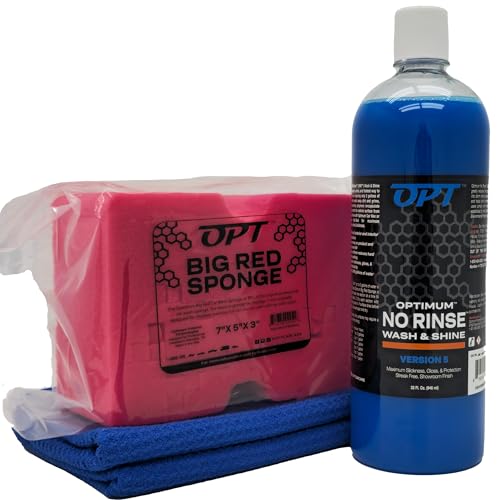
- Rinseless Wash Concentrate: This is the most important product. Industry-leading options like Optimum No Rinse (ONR) or McKee’s 37 N-914 are designed specifically for safe, high-lubricity cleaning.
- Plush Microfiber Towels (8-10): You can never have too many. These are used for drying and for the “Garry Dean Method” (an advanced technique). Their soft fibers lift dirt without marring the clear coat.
- High-Quality Wash Mitt: A plush microfiber or wool wash mitt holds a large amount of solution, delivering essential lubrication to the paint surface.
Optional Upgrades for Best Results
- Pump Sprayer: A 1-2 gallon garden sprayer is perfect for pre-soaking heavily soiled panels with your rinseless solution. This helps loosen and lift dirt before you even touch the car.
- Large Waffle-Weave Drying Towel: These towels are incredibly absorbent and designed to dry an entire vehicle without leaving streaks or lint behind.
- Wheel Brushes: A set of dedicated brushes for your wheels and tires is crucial to prevent cross-contamination.
Pro-Tip: For a truly perfect, spot-free finish, consider using distilled water for your final rinseless wash solution. Tap water contains minerals that can leave behind water spots as it evaporates, but distilled water is 100% pure.
What Is The Rinseless Wash Method and How Does It Work?
A rinseless wash works by replacing high-pressure water with advanced chemical lubrication. The solution contains polymers that bond to dirt particles, lifting them from the paint and wrapping them in a slippery coating. This process, called encapsulation, prevents the dirt from scratching the clear coat as it’s gently wiped away with a microfiber towel. It’s a wash and a rinse in one step.
The chemical engineering behind this is fascinating and what makes it completely different from a traditional car soap. A rinseless wash solution [a type of automotive cleaning product] is a complex blend of several key components:
- High-Lubricity Surfactants: These are the primary cleaning agents. Unlike harsh detergents, these surfactants reduce the friction between your wash mitt and the paint to almost zero. They get underneath dirt and begin to lift it from the surface.
- Encapsulating Polymers: This is the magic. Once the surfactants lift the dirt, specialized, cross-linked polymers immediately surround the abrasive particles. Cationic surfactants, which are positively charged molecules, are excellent at attracting and lifting negatively charged dirt and dust particles.
- Water Softeners: Many rinseless wash products also contain agents that soften the water, which helps prevent mineral deposits (water spots) from forming as the surface dries.
Think of it like this: trying to slide a block of sandpaper across a dry table will cause a lot of damage. But if you first wrap that sandpaper in a thick layer of bubble wrap, you can slide it across the table without leaving a mark. The polymers in a rinseless wash are the “bubble wrap” for every spec of dirt on your car.
This method is so effective and safe that it has become the gold standard for maintaining vehicles with delicate finishes, including expensive ceramic coatings. Because the formula is pH-neutral and relies on lubrication instead of brute force, it cleans the coating without stripping its hydrophobic properties or causing any chemical damage.
How Do You Perform a Step-by-Step Rinseless Wash?
To perform a rinseless wash, first prepare two buckets: one with your diluted rinseless solution and another with plain water and a grit guard. Pre-soak one panel at a time, wash with a soaked mitt in straight lines, then immediately dry with a clean microfiber towel. After each panel, rinse the mitt thoroughly in the plain water bucket before reloading it in the solution bucket.
Following a systematic process is key to a perfect, scratch-free finish. Here’s how to do it like a pro.
Step 1: How Do You Prepare Your Buckets and Solution?
To prepare for a rinseless wash, add one grit guard to a 5-gallon bucket and fill it with 3-4 gallons of plain water. In a second bucket, mix your rinseless wash concentrate, typically 1 ounce per 2 gallons of water, following the product’s directions. This setup is the foundation of your safety system.
- Set Up the Rinse Bucket: Place your grit guard at the bottom of your first bucket. Fill it about three-quarters full with clean, plain water. This is your “Rinse” bucket.
- Mix the Wash Solution: In your second bucket, add the correct amount of rinseless wash concentrate. The standard dilution for a product like Optimum No Rinse is 1 ounce of concentrate for every 2 gallons of water.
- Add Water and Towels: Add 2-3 gallons of lukewarm water to your “Wash” bucket and mix thoroughly. Drop your wash mitt or 5-10 folded microfiber towels directly into this solution to become fully saturated.
Pro Tip: Using distilled water in your “Wash” bucket is an expert-level move that completely eliminates the risk of water spots, especially if you live in an area with hard water.
Step 2: How Do You Safely Wash and Dry Each Panel?
To safely wash a panel, take a soaked wash mitt and gently wipe in straight, overlapping lines from top to bottom. Do not apply pressure. Immediately follow with a plush, dry microfiber towel to remove any remaining moisture and buff to a shine.
This is the core action of the wash. Follow these rules for a perfect result:
- Work Top-Down: Always start with the cleanest parts of the car (roof) and work your way down to the dirtiest (lower rocker panels). Gravity is your friend.
- One Panel at a Time: Wash and dry a single panel (e.g., half the hood, one door) completely before moving on. This prevents the solution from drying on the surface.
- Use Straight Lines: Wash in straight, overlapping lines, not circles. This minimizes the appearance of any potential micro-marring. Let the lubricity of the solution do the work; no scrubbing is needed.
- Rinse Your Mitt Often: After washing a single panel, dunk your dirty wash mitt into the “Rinse” bucket and scrub it vigorously against the grit guard. You will see the dirt release from the mitt and fall to the bottom.
- Reload and Repeat: After rinsing, wring out the mitt and reload it with fresh solution from the “Wash” bucket before moving to the next panel.
- Dry Immediately: Use a clean, plush drying towel to gently wipe the just-washed panel dry. Fold your drying towel into fourths. This gives you 8 clean, dry sides to work with, preventing streaks and ensuring you’re always using a dry surface.
Expert-Level Alternative: The Garry Dean Method
For maximum safety, especially on dark or soft paint, use multiple towels instead of one mitt. Pre-soak 8-10 folded microfiber towels in your wash solution. Use one clean, folded towel per panel. Once a towel touches the car, it goes into a “dirty” pile and is never returned to the wash bucket. This completely eliminates any risk of cross-contamination.
Rinseless vs. Waterless Wash: Which Method Is Right for Your Car?
The primary difference between a rinseless and waterless wash is the level of dirt each can safely handle. A rinseless wash uses more water and lubrication, making it safe for cars with moderate dirt. A waterless wash uses very little liquid and is only safe for cars with very light dust or for spot cleaning.
Choosing the right method depends entirely on how dirty your vehicle is. Both are excellent alternatives to a garden hose, but they serve different purposes. This table breaks down the key differences to help you decide.
| Feature | Rinseless Wash | Waterless Wash |
|---|---|---|
| Best For | Moderately dirty cars (road film, light mud) | Lightly dusty cars, fingerprints, spot cleaning |
| Water Usage | 1-3 Gallons | 8-16 Ounces |
| Safety Level | ✅ Very High | ✅ High (on light dust only) |
| Time Required | 30-60 Minutes | 15-20 Minutes |
A rinseless wash is a true car wash replacement. It has enough lubrication and cleaning power to safely remove a week’s worth of road film, dust, and light grime. It’s the method you’ll use for your regular “weekend wash.”
A waterless wash, on the other hand, is best thought of as a heavy-duty quick detailer. It’s perfect for removing a light layer of dust from a car that was washed a day or two ago, or for cleaning up bird droppings or fingerprints. Using a waterless wash on a heavily soiled car is a recipe for scratches because there simply isn’t enough liquid to safely encapsulate and lift a large volume of dirt.
Our Verdict: For most apartment dwellers or those looking for a primary hoseless washing solution, we recommend starting with the Rinseless Wash method. It’s safer, more versatile, and capable of handling the dirt levels of a daily driven vehicle. Keep a bottle of waterless wash in your trunk for quick touch-ups between washes.
FAQs About how to wash a car without a hose
Is waterless or rinseless washing safe for my car’s paint?
Yes, both methods are extremely safe for your car’s paint when done correctly and used in the appropriate situation. The key is the high-lubricity formula that encapsulates dirt, lifting it from the surface to be gently wiped away. A rinseless wash is safer for heavier dirt, while a waterless wash is only for light dust. Always use clean, plush microfiber towels.
What if my car is extremely muddy?
You should not use a rinseless or waterless wash on a car covered in heavy mud or caked-on dirt. These methods are not designed for heavy-duty cleaning. In this case, it is safest to take the vehicle to a coin-op car wash to pressure wash the heavy contaminants off first. You can then perform a rinseless wash at home for a perfect finish.
Can I wash my car in direct sunlight without a hose?
It is strongly recommended to wash your car in the shade, but some rinseless washes are formulated to work in the sun. Products like Optimum No Rinse (ONR) have polymers that slow evaporation. However, working in the shade is always better as it prevents the solution from drying prematurely, which can lead to water spots and make the process more difficult.
How many microfiber towels do I really need?
For a standard sedan, you should have a minimum of 8-10 plush microfiber towels. This allows you to use a fresh, clean side of a towel for each small section of the car, which is critical for preventing scratches. For drying, one or two large waffle-weave towels are ideal. You can never have too many clean towels.
Can I use a regular car soap for a rinseless wash?
No, you must never use traditional car soap for a rinseless or waterless wash. Regular soaps are designed to be rinsed off with a large volume of water. They lack the specific encapsulating polymers and high-lubricity agents of a dedicated rinseless product, meaning you will almost certainly scratch your paint and leave behind a sticky soap film.
How do I clean my wheels and tires without a hose?
You can effectively clean wheels and tires using a spray-on wheel cleaner and a pump sprayer filled with water. Spray the cleaner on the wheel, agitate with various brushes (a stiff one for tires, softer ones for the wheel face and barrel), and then “rinse” using the pump sprayer. Use separate, dedicated towels to dry the wheels.
Is a hoseless wash environmentally friendly?
Yes, rinseless and waterless washing are significantly more eco-friendly than traditional hose washing. A traditional wash can use 40-100 gallons of water. A rinseless wash uses only 2-3 gallons, and a waterless wash uses less than a gallon. This massive water savings is a primary benefit of the method.
How do I wash my towels after a rinseless wash?
Wash your microfiber towels separately from other laundry. Use a dedicated microfiber detergent and wash in warm water. Do not use fabric softener, as it clogs the fibers and ruins their absorbency and cleaning ability. Tumble dry on low heat or hang to air dry. Proper care is essential for keeping them safe for your paint.
What is the “Garry Dean Method”?
The Garry Dean Method is an advanced rinseless wash technique for maximum safety. Instead of using a wash mitt, you pre-soak 8-10 folded microfiber towels in your rinseless solution. You use one towel, folded into eighths, to wipe one small section of the car, then immediately place it in a separate “dirty” bucket. You never re-introduce a dirty towel to your clean solution.
Can you use a rinseless wash on a ceramic coated car?
Yes, rinseless washes are one of the best ways to maintain a ceramic coated car. Their pH-neutral formulas and high-lubricity agents safely clean the surface without degrading the coating. Since coatings are hydrophobic, rinseless washing is often faster and easier than on an uncoated car, and it helps preserve the coating’s longevity.
Key Takeaways: How to Wash a Car Without a Hose
- Safety Comes from Lubrication, Not Water Pressure: The core principle of hoseless washing is using a high-lubricity chemical solution to encapsulate dirt and prevent scratches, a process far safer than improper traditional washing.
- Choose Your Method Based on Dirt Level: Use a Rinseless Wash (with 2-3 gallons of water) for moderately dirty cars. Use a Waterless Wash (spray bottle) only for light dust, fingerprints, or as a quick detailer. Never use a waterless method on a truly dirty car.
- The Two-Bucket Method is Non-Negotiable: Always use one bucket for your wash solution and a separate bucket with a grit guard for rinsing your mitt. This prevents you from re-introducing abrasive dirt back onto the car’s paint.
- Microfiber is Your Most Important Tool: Use plenty of high-quality, clean microfiber towels for washing and drying. Never reuse a dirty towel on the paint. The quality and cleanliness of your towels are paramount to a scratch-free finish.
- Work Top-Down, One Panel at a Time: Always start with the cleanest parts of the car (the roof) and work your way down to the dirtiest (lower panels). Wash and dry a single, small section completely before moving to the next to prevent water spots.
- Never Use Dish Soap or Regular Car Soap: Only use a dedicated rinseless or waterless wash product. Traditional soaps lack the necessary encapsulating polymers and will strip wax protection, leaving a film and causing scratches.
- Pre-Rinse Heavy Grime if Necessary: For heavily soiled vehicles (caked-on mud, thick road salt), the safest action is to use a coin-op pressure washer for an initial rinse before performing a meticulous rinseless wash at home.
Final Thoughts on Washing Your Car Without a Hose
Washing a car without a hose is not a compromise; it’s a smart, modern, and highly effective detailing method that saves water and can be performed virtually anywhere. By understanding the science of lubrication and encapsulation, and by following the systematic steps outlined in this guide, you can achieve results that rival or even surpass a traditional hose wash. Forget the limitations of your living situation. You now have the knowledge and technique to keep your car looking its absolute best, ensuring a safe, scratch-free finish every single time.
Last update on 2026-03-06 / Affiliate links / Images from Amazon Product Advertising API