
Wondering how to transport a kayak in a car for the first time? You’re not alone. Many kayakers struggle with finding a safe, easy, and secure method to get their boat to the water without damaging their car or the kayak itself.
To transport a kayak in a car, you can use a roof rack system for maximum security or foam blocks as a rack-free alternative. The process involves loading the kayak onto the roof, securing it with tie-down straps across the body, and stabilizing it with bow and stern lines attached to the front and rear of the vehicle.
Based on an analysis of current methodologies and real-world experience, this guide covers every secure method available. You will discover exactly how to transport your kayak safely, whether you have a large SUV with a full rack system or a small sedan with nothing on the roof.
Key Facts
- The 3-Point System is Critical: Industry analysis reveals that a secure system always uses two body straps plus bow and stern lines. The bow and stern lines are essential for preventing aerodynamic lift at highway speeds, a primary cause of transport failure.
- Cam Buckles Protect Your Kayak: Proven kayak securing methods show that cam buckle straps are superior to ratchet straps. Overtightening with a ratchet strap can easily crack a plastic or composite kayak hull, while cam buckles tighten snugly without causing damage.
- Foam Blocks Have Speed Limits: While an effective and inexpensive kayak transport solution, foam block systems are not designed for high-speed, long-distance travel. Experienced kayaker recommendations suggest keeping speeds under 55 mph.
- Overhang Requires a Flag: Traffic regulations in most states require a red or orange flag on any load that extends more than 3-4 feet beyond a vehicle’s rear bumper. This is a critical legal and safety requirement for visibility.
- The “Shove Test” is Mandatory: Before every trip, you must perform a “shove test.” Firmly pushing on the kayak should make the entire car move with it; if the kayak shifts independently, it is not secure enough for travel.
How to Transport a Kayak in a Car Safely and Securely?
The best way to transport a kayak by car involves securing it at multiple points to prevent movement and ensuring it doesn’t exceed your vehicle’s load limits. This process prioritizes safety for you, your gear, and other drivers on the road. The core principles of safe kayak car methods are universal, regardless of your specific setup.
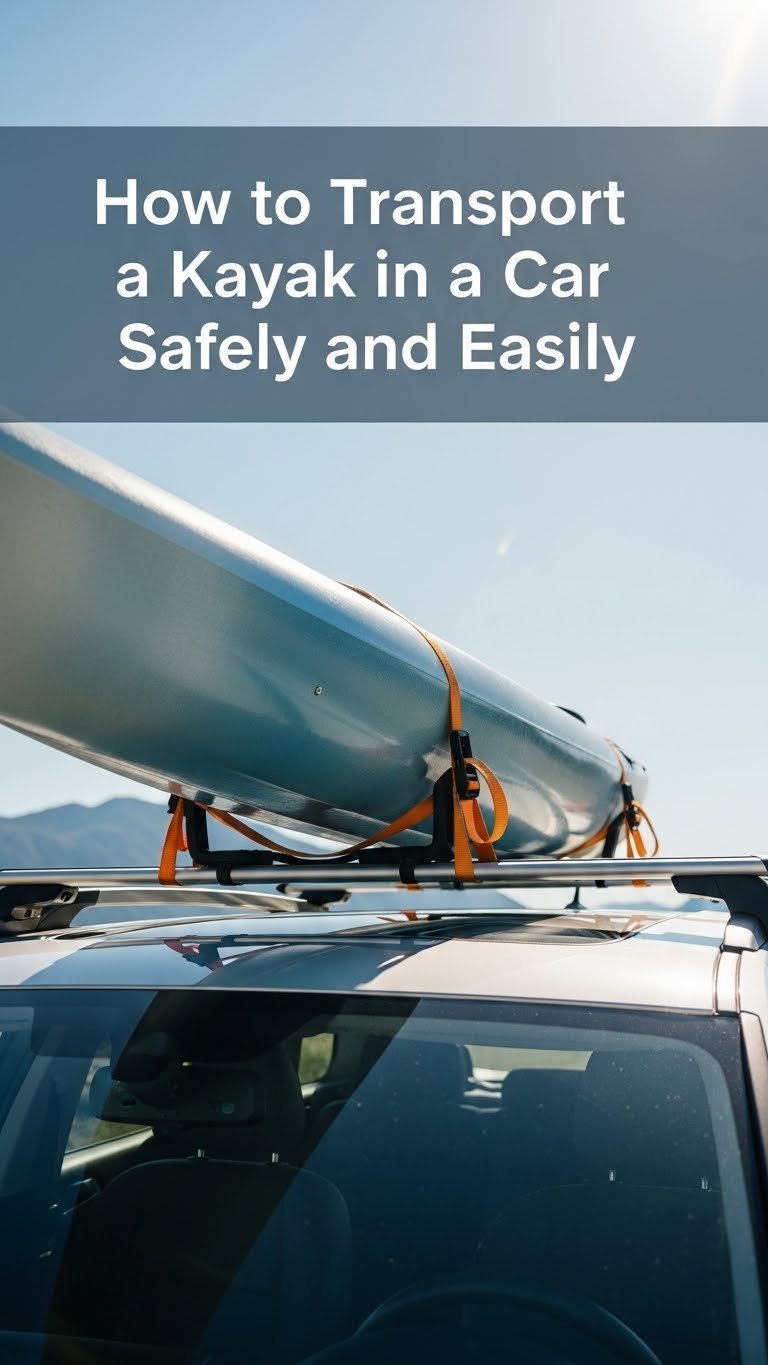
From years of working with different vehicles and kayaks, we’ve found that success comes down to three key principles. Understanding these will help you make the right choices for your equipment and trips. Worried you can’t transport a kayak without a roof rack? We have a solution for that, and it still follows these essential rules.
Key Principles of Safe Kayak Transport:
* Secure Attachment: The kayak must be attached to the car so it becomes one with the vehicle. This involves using quality straps and a reliable system (rack or blocks) to eliminate any front-to-back or side-to-side motion.
* Aerodynamic Stability: A kayak on a roof acts like a wing. At speed, airflow can create lift, wanting to pull the kayak off the car. Bow and stern lines are essential to counteract this force and ensure stability, especially on the highway.
* Protection: The goal is to prevent damage to both the kayak and the car. This means using padding where necessary, not overtightening straps, and ensuring all metal buckles are kept away from paint and glass surfaces.
In this guide, you will learn everything needed for a safe car top kayak transport. We will cover the essential equipment, step-by-step instructions for different methods, and the final safety checks you must perform before you drive.
What Equipment Do You Need to Transport a Kayak?
To transport a kayak, you need a roof system (either a roof rack or foam blocks), two tie-down straps, and two bow and stern lines. This core equipment ensures your kayak is secured according to safety best practices. Optional accessories like padding or a kayak cart can make the process even easier.
Here’s the deal: your equipment choice is the biggest factor in how secure and easy your transport will be. We can break down the options into a “Good, Better, Best” framework to help you decide.
* Good: A foam block kit is a great starting point for infrequent, local trips.
* Better: A basic roof rack with crossbars provides a much more secure base for any trip.
* Best: A roof rack with specialized J-cradles or saddles offers the ultimate security and protection for frequent transport and long distances.
Let’s look at the two primary systems side-by-side.
| Feature | Roof Rack System | Foam Block Kit |
|---|---|---|
| Cost | Higher (from $200+) | Lower (from $30) |
| Security | Very High | Moderate to High |
| Max Speed | Highway speeds | Lower speeds recommended (under 65 mph) |
| Car Protection | Excellent | Good (risk of scuffing if dirty) |
| Best For | Frequent use, long distance, multiple kayaks | Infrequent use, short trips, budget-conscious users |
Pro Tip: When choosing straps, always opt for cam buckle straps. Ratchet straps are designed for heavy, non-fragile cargo and can easily generate enough force to crack or deform your kayak’s hull. Cam buckles are hand-tightened and prevent this common and costly mistake.
How Do You Choose the Right Tie-Down Straps?
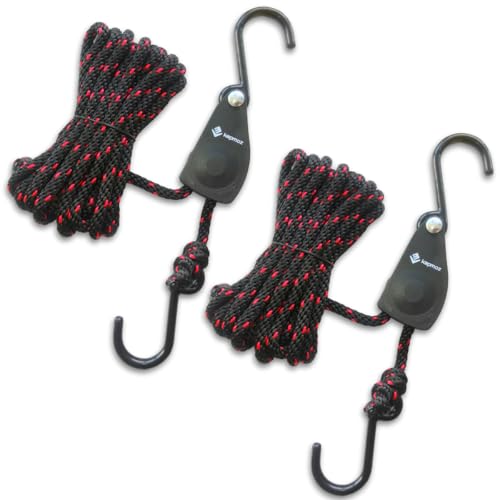
The best kayak tie-down straps are cam buckle straps, 12 to 15 feet long, with a padded or coated buckle to protect your vehicle. Avoid ratchet straps, as they can easily damage your kayak. Ropes are a poor substitute unless you are an expert in secure knot tying.
A cam buckle is like the strap on a backpack—it holds tight but won’t crush what’s inside. A ratchet strap is like a car jack—it’s designed for immense pressure and can easily damage a hollow kayak. This makes cam buckles the universally recommended choice by experienced kayakers. When selecting your straps, look for these features.
Key Features to Look For in Kayak Straps:
* ✅ Buckle Type: Always choose a cam buckle.
* ✅ Length: 12 to 15 feet is versatile enough for most cars and kayaks.
* ✅ Width: 1 to 1.5 inches provides a good balance of strength and low wind profile.
* ✅ Buckle Protection: Look for a rubber, silicone, or neoprene cover over the metal buckle to prevent it from scratching your car’s paint or your kayak.
* ✅ Webbing Material: Most straps use polypropylene, which is strong but can suffer from UV degradation over time. Store your straps out of the sun to prolong their life.
Common Mistake: Never use old, frayed straps or simple bungee cords for kayak transport. Bungee cords stretch and do not provide the static security needed to hold a kayak. The small cost of new, quality straps is nothing compared to the cost of an accident or a lost kayak.
How Do You Transport a Kayak with a Roof Rack?
To transport a kayak with a roof rack, you load the kayak onto the carriers, secure its body to the crossbars with two cam straps, and then stabilize it with bow and stern lines attached to the vehicle’s frame. This 3-point system is the gold standard for safe and secure kayak transport.
Using a dedicated kayak roof rack, such as a J-cradle or saddle system, is the most secure method for traveling at highway speeds or for long distances. The process is straightforward and can be broken down into a few key steps.
Step 1: How Do You Load the Kayak onto the Rack?
Loading a kayak involves lifting it onto the roof rack, either with a partner or using a solo technique to avoid injury and vehicle damage. The best method depends on the kayak’s weight and your physical ability.
Two-Person Lift
This is the easiest and safest method. One person grabs the bow handle and the other grabs the stern handle. On the count of three, lift the kayak together, walk it to the side of the car, and place it gently onto the rack carriers (crossbars, J-cradles, or saddles).
Solo Loading Technique
In our testing, the “pivot and slide” is the most effective solo method.
1. Place a thick blanket or a dedicated loading mat on the rear of your car’s roof and over the back edge to protect the paint.
2. Stand at the stern of the kayak. Lift the bow and place it onto the blanket on the car’s roof. The kayak is now resting at an angle.
3. Walk back to the stern, lift it, and simply slide the kayak forward onto the roof rack.
4. Center the kayak on the rack and remove the blanket.
Safety First: Never try to lift a kayak that is too heavy for you to manage alone. Ask for help or invest in a mechanical loading assist tool to prevent serious back injury.
Step 2: How Do You Secure the Kayak with Straps?
Secure the kayak by looping two cam straps around the crossbars and over the kayak’s body, tightening them until the kayak cannot shift. Proper strap placement and tension are crucial for a secure hold.
- Take your first cam strap. To prevent annoying strap vibration and wind noise at speed, add one or two twists to the long, flat part of the strap.
- Throw the buckle-free end of the strap over the top of the kayak.
- Loop the plain end of the strap under the roof rack crossbar, on the inside of the rack’s support tower. Bring it back up.
- Pass the plain end through the cam buckle and pull down to tighten. The strap should be snug, but not so tight that it deforms the kayak’s hull. You should not be able to easily shift the kayak side-to-side on the rack.
- Repeat this entire process for the rear crossbar.
- Securely tie up any loose strap ends so they don’t flap in the wind.
How Can You Transport a Kayak Without a Roof Rack?
Yes, you can transport a kayak without a roof rack by using a kit of high-density foam blocks placed directly on your car’s clean roof. Straps are then run over the kayak and through the car’s interior to hold everything in place. This is a great, affordable kayak solution for local trips.
This method is perfect for the occasional paddler or someone who doesn’t want to invest in a permanent rack. However, it requires extra care and has limitations.
⚠ CRITICAL SAFETY WARNING: The foam block method is not recommended for highway speeds, long distances, or windy conditions. It is less secure than a dedicated rack system. Always drive with extra caution, reduce your speed, and use bow and stern lines.
Here’s how to do it safely:
1. Clean Your Roof: Wipe down the areas of your car’s roof where the foam blocks will sit. Any dirt or grit will act like sandpaper and scratch your paint.
2. Position the Blocks: Place the foam blocks on the roof, spaced apart similarly to how crossbars would be.
3. Load the Kayak: Carefully lift the kayak and place it onto the foam blocks, centered on the car.
4. Strap Through the Car: Open all four doors of your car (for a 4-door vehicle). Run a strap over the front section of the kayak, and pass the ends through the open front door frames. Do not run straps through open windows. Buckle the strap inside the car and tighten. Repeat for the rear section of the kayak through the back doors.
5. Attach Bow and Stern Lines: This is not optional with this method. Securely attach bow and stern lines from the kayak’s grab handles to solid points on the front and rear of your car (like tow hooks or under-bumper frame points).
6. Close Doors: Gently close the car doors onto the straps. The weather-stripping will compress around them.
For a 2-door car, you must run both straps through the single open door frame, which is less ideal but possible for short, slow trips.
What Are the Key Safety Checks Before Driving?
Before driving, you must perform a “shove test” by trying to move the kayak; it should be solid and move with the car. You also need to check all straps and lines for tightness and tie up any loose ends. This pre-flight checklist is the most important step for safe travel.
You’ve done all the work to secure the kayak; this final check gives you peace of mind. Here is the checklist every experienced kayaker runs through.
- ✅ The Shove Test: This is the most critical check. Grab the kayak by the bow, stern, and sides and try to push and pull it. It should not shift, wiggle, or rock on the rack or blocks. The entire car should move with your effort. If the kayak moves, your straps are too loose.
- ✅ Strap Check: Visually and physically confirm that all cam buckles are fully closed and that the straps are snug.
- ✅ Line Check: Ensure your bow and stern lines are taut. They shouldn’t have significant slack.
- ✅ Tail Tidy: Make sure all loose ends of your straps and ropes are tied up and secured. A flapping strap can damage your paint and make a lot of noise.
- ✅ The First 15-Minute Stop: After you start driving, pull over safely after 15-20 minutes of travel. Straps can settle, and this is your chance to re-check everything and re-tighten if necessary.
Expert Insight: Nylon straps, often used for bow and stern lines, can stretch up to 10% when they get wet. If you are transporting your kayak in the rain, be prepared to check and tighten your lines more frequently.
FAQs About How to Transport a Kayak in a Car
Should a kayak be transported upside down or right side up?
It depends on the rack system, but upside down is often preferred for flat crossbars. Transporting a kayak upside down (hull up) places the stronger, flatter deck and cockpit rim on the bars, distributing pressure evenly. It’s also more aerodynamic. For J-cradles or saddles, you must transport it right side up as the carrier is designed to fit the hull shape.
What is the maximum speed you should drive with a kayak on the roof?
You should always drive at or below the posted speed limit, but extra caution is required. With a proper roof rack and bow/stern lines, highway speeds (65-70 mph) are generally acceptable. When using foam blocks, it is highly recommended to stay on local roads and keep speeds below 55 mph. Always reduce speed in high winds or bad weather.
Do I really need bow and stern lines for my kayak?
Yes, you absolutely need bow and stern lines for safe transport. These lines are not for holding the kayak down; they are for preventing the kayak from lifting up at the front due to aerodynamic forces (lift) and from shifting side-to-side. They are the most critical safety feature preventing a catastrophic failure on the highway.
How do you transport a kayak with a 2-door car?
Transporting a kayak on a 2-door car is possible but requires care. If you have a roof rack, the process is the same as a 4-door. If using foam blocks without a rack, you must run the straps through the open side windows. This is less secure than running them through door frames and can damage window seals over time. Drive slowly and for short distances only.
How to transport two kayaks on one car?
To transport two kayaks, you will need a proper roof rack with sufficient width or specialized carriers. You can place them side-by-side, hull-down, on wide crossbars. A better method is to use J-cradles, which carry the kayaks on their sides, allowing two to fit on most standard crossbars. Some stacker-style carriers can even hold up to four kayaks.
How long can a kayak legally hang off the back of a car?
Regulations vary by state, but a common rule is that a load can’t extend more than 3-4 feet beyond the rear bumper without a red or orange flag. For any overhang beyond that, or for nighttime driving, you may need a red light. Always check your local state’s Department of Transportation (DOT) regulations for specific overhang limits and flag/light requirements.
What’s the cheapest way to transport a kayak?
The cheapest method is using a foam block car-top carrier kit. These kits are inexpensive (often under $50) and include the necessary foam blocks and straps. The DIY “pool noodle” method is even cheaper but is not recommended as pool noodles compress easily and offer poor security and protection compared to high-density foam blocks.
How can I prevent my car’s paint from getting scratched?
Always ensure your car’s roof is clean before placing foam blocks or blankets on it. Dirt and grit trapped underneath will act like sandpaper. Use high-quality rack systems with rubber or padded feet. For straps, choose ones with rubber-coated buckles. When loading, use a blanket or a dedicated mat on the edge of your roof to protect it.
Can you transport a kayak inside a car or SUV?
Yes, but only if it’s a small kayak and you have a large vehicle like an SUV, minivan, or truck with a cap. You must be able to close the rear hatch or door completely. A kayak inside a vehicle can become a dangerous projectile in a sudden stop. This method is only suitable for small recreational or whitewater kayaks (typically 8-10 feet long).
How do you secure a kayak in a pickup truck bed?
Place the kayak in the truck bed with the tailgate down, letting the rear of the kayak rest on the tailgate. The majority of the kayak’s weight should be inside the bed. Use cam straps to secure the kayak to the truck’s anchor points so it cannot slide out. Attach a red flag to the end of the kayak for visibility. For longer kayaks, a truck bed extender is the safest option.
Key Takeaways: How to Transport a Kayak in a Car Summary
- Safety is a 3-Point System: A secure setup always involves two main body straps plus two essential
bow and stern lines. The body straps hold the kayak down, while the bow and stern lines prevent aerodynamic lift and side-to-side shifting. -
Choose the Right Equipment for Your Needs: A full
roof racksystem is the safest and most secure method for highway speeds and frequent use. For infrequent, low-speed local trips, afoam blockkit is a viable,inexpensive kayak transportalternative. -
Cam Straps are the Professional Standard: Always use cam buckle straps to
tie down kayak. They are easy to tighten securely without applying excessive force, preventing hull damage that can be caused by overtightening with ratchet straps. -
The “Shove Test” is Non-Negotiable: Before you drive, always perform a final safety check. Grab the kayak firmly and try to shake it. It should feel like part of the car and not shift or wobble independently.
-
No Roof Rack Has Limitations: While you can transport a kayak
without roof rackusing foam blocks, this method is not recommended for highway speeds or windy conditions. Straps must run through the car’s door frames, not the windows. -
Legal and Safety Awareness is Crucial: Always be aware of your vehicle’s load limit and your state’s regulations on vehicle overhang. A red flag is required for any significant overhang from the rear of your vehicle.
-
Proper Loading Prevents Damage and Injury: Whether lifting with a partner or using a solo-loading technique, always lift with your legs and protect your car’s paint with a blanket or mat during the
load a kayakprocess.
Final Thoughts on Transporting Your Kayak
Learning how to transport a kayak in a car safely is a fundamental skill that unlocks countless adventures. By understanding the principles of a secure 3-point system, choosing the right equipment for your vehicle and needs, and never skipping the final safety checks, you can travel with confidence. Whether you invest in a permanent roof rack or start with a simple foam block kit, the focus remains the same: ensuring your kayak, your car, and everyone on the road stays safe.
Now that you have the knowledge, you can eliminate the anxiety that often comes with moving your boat. You are equipped to handle different scenarios, from solo loading to securing the kayak for highway travel. The next step is to put this into practice. Which transport method will you try first for your next trip to the water?
Last update on 2026-01-10 / Affiliate links / Images from Amazon Product Advertising API


![What Car Is Chevy Bringing Back in [year]? New Lineup Revealed](https://carxplorer.com/wp-content/uploads/2026/01/What-Car-Is-Chevy-Bringing-Back-in-year-New-Lineup-Revealed-1-1-60x60.jpg "What Car Is Chevy Bringing Back in [year]? New Lineup Revealed 10")
