
Wondering how to transport a fish in the car without turning a simple trip into a tragedy? You’re not alone; many owners worry about stressing their aquatic pets during a move. This process requires careful control over the fish’s environment to ensure a safe journey.
To transport a fish safely in a car, you must place it in a suitable container like a double-layered fish bag or a lidded bucket with water from its original tank. The key is to maintain a stable temperature, ensure a constant oxygen supply using a battery-powered air pump for long trips, and secure the container to prevent sloshing. This method minimizes stress and ensures the fish’s survival.
Based on proven techniques and biological requirements, this guide breaks down the entire process. You will discover the exact steps for preparation, packing, and acclimation. This systematic approach ensures your fish arrives at its new home healthy and stress-free.
Key Facts
- Withholding Food is Crucial: Research indicates you should stop feeding fish 24-48 hours before transport. This minimizes waste production, which is the primary cause of toxic ammonia buildup in the small, unfiltered transport container.
- Oxygen is the Limiting Factor: For trips over 60 minutes, a battery-powered air pump is essential. Studies show that dissolved oxygen is depleted quickly in a sealed container, and a lack of oxygen is a leading cause of transport mortality.
- Temperature Stability is Non-Negotiable: A rapid change of just a few degrees can cause thermal shock. Using an insulated cooler is a best practice to maintain a stable water temperature, shielding the fish from the car’s fluctuating environment.
- The Container Itself is Not Enough: A fish bag or bucket should always be placed inside a secondary container, like a dark, rigid cooler. This provides insulation, prevents light-induced stress, and contains any potential leaks.
- Acclimation Prevents Shock: Industry standards show that simply dumping the fish into its new tank can be fatal. A slow acclimation process over 30-60 minutes is required to allow the fish to adjust to the new water’s temperature and chemistry, preventing osmotic shock.
How Do You Transport a Fish in a Car Safely and Securely?
The safest way to transport fish in a car involves using a secure, insulated container, maintaining stable water temperature, and ensuring adequate oxygenation. Success depends on minimizing stress by controlling the fish’s environment throughout the journey. Whether you’re bringing a new Betta home from the store or moving your entire 55-gallon tank across the state, these principles apply. The entire process can be broken down into four key stages that ensure safe handling protocols are met.

Following these tested methods, which are based on the biological requirements of fish, is the best way to mitigate stress and ensure their health. The journey’s success hinges on preparing correctly, packing securely, driving smoothly, and acclimating patiently. Understanding the importance of water quality parameters and the fish acclimation process, which we will cover in detail, is fundamental.
Here is the four-stage framework for a successful transport:
- Preparation: Gather the necessary equipment and prepare both the fish and the transport water.
- Packing: Securely place the fish in its transport container and position it safely in your vehicle.
- The Drive: Manage the car’s environment to minimize physical and temperature-related stress.
- Acclimation: Slowly and safely introduce the fish to its new home.
What Equipment Do You Need to Transport Fish Safely?
Essential equipment for transporting fish includes a leak-proof container (fish bags or a bucket with a lid), water from the original aquarium, and an insulated box or cooler. The specific items you need depend on the duration of your trip. Gathering everything beforehand makes the process smooth and reduces stress on both you and your fish. Explaining why each piece of equipment is needed is key; for example, an insulated cooler prevents rapid temperature changes, a major source of thermal shock.
For All Trips
- Transport Container: Your primary choice between a plastic fish bag or a bucket.
- Insulated Cooler or Styrofoam Box: This is non-negotiable. The container holding the fish goes inside this box to maintain temperature and keep the fish in the dark, which reduces stress.
- Original Tank Water: Never use fresh tap water. Use water directly from the aquarium the fish is coming from.
- Fish Net: To gently catch and transfer the fish.
- Duct Tape or Rubber Bands: For securely sealing the container.
- Towels: For wedging the container in place and cleaning up any spills.
For Long-Distance Trips (>1 Hour)
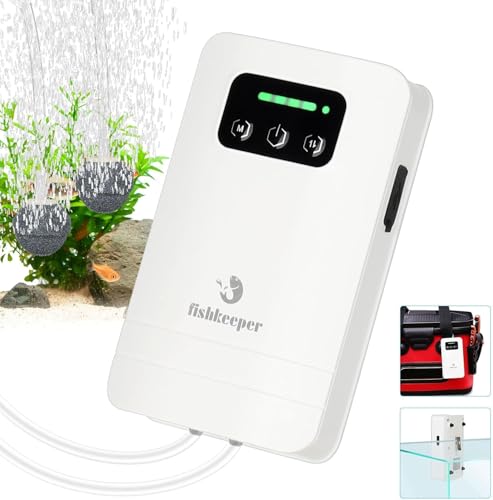
- Battery-Powered Air Pump: This is the most critical piece of equipment for long journeys. It provides a constant supply of oxygen.
- Air Stone and Airline Tubing: The air stone connects to the pump and creates small bubbles, which efficiently dissolves oxygen into the water.
- 5-Gallon Bucket with a Lid: For trips over an hour, a sturdy bucket is superior to a bag.
- Portable Thermometer: Allows you to check the water temperature during stops to ensure it remains stable.
- Water Conditioner: A few drops of a product that detoxifies ammonia can provide an extra layer of safety.
How Do You Choose the Right Container: Bags vs. Buckets?
Use plastic fish bags for short trips (<1 hour) and for single, small fish. For longer trips, larger fish, or groups of fish, a 5-gallon bucket with a secure lid is the superior and safer option as it is more durable and allows for active aeration. Your choice between fish transport bags and a five-gallon bucket depends on travel duration and the size of your fish. Each has distinct advantages. Bags, for example, allow for a higher surface-area-to-water-volume ratio, facilitating better passive gas exchange on short trips.
| Feature/Aspect | Plastic Fish Bags | 5-Gallon Buckets |
|---|---|---|
| Best Use Case | Short trips (< 1 hour), single small fish | Long trips (> 1 hour), larger fish, groups |
| Oxygenation | Excellent for passive gas exchange; can be filled with pure oxygen | Requires a battery-powered air pump for active aeration |
| Durability | Prone to punctures; always double-bag | Highly durable and structurally rigid |
| Temperature Control | Poor; requires placement in an insulated cooler | Good; water volume provides some thermal stability |
| Security | Must be sealed with rubber bands and secured upright | Requires a tight-fitting lid to prevent jumping/sloshing |
The verdict is clear: for a quick trip from the local fish store, quality plastic fish bags are sufficient. For the serious task of moving house, a bucket is the professional standard and the safest choice for your aquatic pet.
How Do You Prepare Your Fish and the Water for Transport?
To prepare for transport, stop feeding your fish 24 hours beforehand, and prepare the transport container using water taken directly from the fish’s current tank. These two steps are the most critical actions you can take to prevent the leading causes of transport mortality: ammonia poisoning and temperature shock.
- Stop Feeding 24-48 Hours Before the Move. This is the single most important preparatory step. An unfed fish produces significantly less waste. In a small, unfiltered transport container, fish waste quickly breaks down into ammonia, a substance highly toxic to fish. This buildup is a primary cause of death during and after transport. For a single betta, a 24-hour fast is sufficient. For larger, messier fish like Oscars or Koi, aim for closer to 48 hours.
- Prepare the Transport Water. The best water to use is water taken directly from the fish’s current aquarium. This ensures the water parameters (pH, hardness, temperature) are identical, minimizing shock. Fill your transport container—bag or bucket—about 50-70% full with this water. This leaves enough room for air and prevents excessive sloshing.
- Match the Temperature Exactly. Before you catch the fish, ensure the transport water temperature is exactly the same as the tank water. You can use a thermometer to confirm. Even a small difference can be stressful.
- Add a Protective Water Conditioner (Optional). As a precautionary measure, you can add a few drops of a water conditioner that specifically detoxifies ammonia. This can provide a safety buffer in case of unexpected delays.
How Do You Pack and Secure Your Fish for the Drive?
To pack a fish, gently net it and place it in your prepared container with minimal air exposure, then secure the container on the floor of the car, wedged with towels to prevent any movement. The physical packing process is where your preparation pays off. The goal is a firm, leak-proof package that feels like part of the car, not a loose object.
Packing with Bags (Short Trips)
- Catch the Fish: Gently corner and net the fish. Try to do this in one swift, calm motion to minimize stress. Keep the net submerged as you move it to the bag to reduce air exposure.
- Fill the Bag Correctly: The ideal ratio is one-third water to two-thirds air. This large air pocket provides the oxygen supply for the journey. Submerge the bag slightly to fill it, then lift it out.
- Seal and Double-Bag: Gather the top of the bag, twist it several times, fold the twisted part over into a loop, and secure it tightly with 2-3 rubber bands. The bag should be firm. For safety against leaks, always place the sealed bag (upside down is best) into a second bag and seal that one as well.
- Place in Cooler: Put the double-bagged fish into your dark, insulated cooler. The bag should fit snugly.
Packing with Buckets (Long Trips)
- Transfer the Fish: Gently net the fish and place it in the bucket, which should be about 70% full of tank water.
- Install the Air Pump: If the lid doesn’t have a hole for airline tubing, drill a small one. Run the airline from your battery-powered pump through the hole and attach the air stone. Place the air stone at the bottom of the bucket and turn the pump on.
- Secure the Lid: Make sure the lid is tight. If it feels loose, run a strip of duct tape around the edge to prevent both spills and potential jumping.
- Place in Car: The bucket should be placed on a flat, level surface on the car floor, ideally behind the driver or passenger seat.
How Should You Manage the Car Environment During the Drive?
During the drive, you must maintain a stable cabin temperature, drive smoothly, and keep the container out of direct sunlight. Your goal is to make the car’s interior an extension of the stable environment you created in the cooler. The fish can’t see the road, but it can feel every bump and temperature swing.
- 🌡 Maintain a Stable Temperature: Keep your car’s climate control set to a consistent room temperature, aiming for 70-75°F (21-24°C). In summer, run the AC for 10 minutes before putting the fish in the car. In winter, do the same with the heat. This prevents an initial temperature shock.
- 🚗 Drive Smoothly: Pretend you have a full, open-topped pot of soup in the passenger seat. Avoid sudden stops, rapid acceleration, and sharp turns. Plan your route to avoid bumpy roads if possible. Gentle driving minimizes water sloshing, which is extremely stressful for fish.
- 🌐 Avoid Direct Sunlight: Never let the sun beat down on the cooler. Even in an insulated box, direct sunlight can rapidly overheat the water. Covering the cooler with a blanket provides an extra layer of protection.
- ⏱ Check on Long Trips: For drives longer than 4-5 hours, it’s wise to pull over at a rest stop to quickly check your equipment. Open the cooler for a moment to ensure the air pump is still bubbling and there are no leaks. Do this quickly to minimize temperature changes.
What Are the Final Steps After Arriving at Your Destination?
After arriving, you must acclimate your fish to its new home by slowly equalizing the temperature and water chemistry before release. This is the final and most important step. Tossing a fish directly into a new tank after a stressful journey is a recipe for disaster and can cause fatal thermal or osmotic shock. Industry standard is to use a quarantine tank first to prevent introducing potential diseases into a main display tank.
The Floating Bag Method (For Short Trips & Hardy Fish)
- Turn Off Tank Lights: Dim the lights in the room and turn off the aquarium light to keep the environment calm.
- Float the Bag: Float the sealed transport bag on the surface of the new aquarium for 20-30 minutes. This allows the water temperature inside the bag to slowly match the tank’s temperature.
- Add Tank Water: Open the bag and roll down the sides to create a floating collar. Add about a half-cup of the new tank water to the bag.
- Repeat: Continue adding a half-cup of tank water every 10 minutes for the next 30-40 minutes. This slowly acclimates the fish to the new water’s pH and hardness.
- Release the Fish: Gently net the fish out of the bag and release it into its new home. Important: Discard the transport water; do not add it to your tank.
The Drip Acclimation Method (For Long Trips & Sensitive Fish)
This is the gold standard for sensitive species or any fish that has been in transit for more than an hour.
- Set Up the Bucket: Place the fish and its transport water into a small, clean bucket. Position the bucket on the floor next to the new aquarium (the tank must be higher than the bucket).
- Start the Siphon: Use a piece of airline tubing to start a slow siphon from the new aquarium into the bucket.
- Control the Flow: Tie a loose knot in the airline tubing or use a small valve to restrict the flow to a slow drip, about 2-3 drips per second.
- Wait: Let the water drip until the volume of water in the bucket has at least doubled. This usually takes about an hour. This process slowly and gently replaces the old water with the new water.
- Net and Release: Once acclimated, gently net the fish and move it to its new tank. Discard all the water in the acclimation bucket.
FAQs About how to transport a fish in the car
How long can fish safely travel in a car?
Most fish can safely travel for 6-8 hours if the container is properly prepared with adequate oxygen and stable temperature. For trips longer than this, a more robust setup with continuous aeration and potential water changes becomes necessary. The key limiting factors are oxygen depletion and ammonia buildup from fish waste.
Can you transport fish in their tank?
No, you should never transport fish in their tank. The water will slosh violently, stressing or injuring the fish. The tank itself, especially if it is glass, is not designed to handle the torsion and vibration of a moving vehicle and is at high risk of cracking, leaking, or breaking completely.
Do fish need an air pump during transport?
For trips under 60 minutes, an air pump is not strictly necessary if you leave plenty of air in the bag (2/3 air to 1/3 water). For any trip longer than one hour, a battery-powered air pump is essential. It actively replenishes the dissolved oxygen in the water, preventing the fish from suffocating as it consumes the available supply.
How do you transport a betta fish specifically?
Transport a betta fish in a small, individual container like a travel cup or a small, double-bagged fish bag. Since they are labyrinth fish and can breathe from the surface, a pump is less critical for short trips. However, the container must be kept warm (75-80°F), dark, and secure to prevent stress. Never transport them in the tiny retail cup for more than an hour.
Should you keep the container in the dark?
Yes, keeping the fish’s container dark is highly recommended as it has a proven calming effect and reduces stress. A dark environment mimics nighttime and can prevent the fish from being startled by passing lights and shadows. Placing your bag or bucket inside a cooler or covering it with a light blanket easily achieves this.
How do you keep fish warm in the car in winter?
To keep fish warm, pre-heat your car to room temperature before placing the fish inside and use a high-quality insulated cooler. For very long trips with sensitive tropical fish, you can activate a 24-hour disposable heat pack (designed for shipping) and place it inside the cooler, ensuring it is not in direct contact with the water container itself.
How do you transport fish in hot weather?
To transport fish in summer, pre-cool your car with the AC and keep the fish container out of direct sunlight at all times. You can place a small, frozen water bottle inside the insulated cooler—but not in the transport water itself—to act as a cold pack. This helps maintain a stable, cool temperature and prevents dangerous overheating.
Is it better to transport fish during the day or at night?
Transporting fish at night can be advantageous as the ambient temperature is typically cooler and more stable, and the darkness naturally helps keep the fish calm. This can be particularly beneficial for long-distance moves during the summer months. However, safe driving should always be your top priority, regardless of the time.
Can I use a Ziploc bag or trash bag to transport fish?
No, absolutely not. Ziploc bags are not watertight at the seal and will leak, while most trash bags are treated with chemicals or perfumes that are toxic to fish. You must use dedicated, waterproof plastic fish bags obtained from a pet store. These are made from fish-safe polyethylene and are designed for this purpose.
What do I do with the transport water after acclimation?
Always discard the transport water; never add it to your aquarium. After a journey, this water will be low in oxygen and high in accumulated waste products like ammonia and cortisol (stress hormones). Adding this “dirty” water to your clean tank can introduce these pollutants and potentially cause a dangerous ammonia spike or spread disease.
Key Takeaways: How to Transport a Fish in the Car Summary
- Preparation is Paramount: Always withhold food for 24 hours before transport to minimize toxic ammonia buildup. Use water from the original tank to prevent initial shock.
- Container Choice Matters: Use double-layered plastic fish bags for short trips (<1 hour). A lidded 5-gallon bucket is the superior choice for long-distance moves, larger fish, or groups.
- Oxygen is Non-Negotiable for Long Trips: For any journey over 60 minutes, a battery-powered air pump is the most critical piece of equipment to prevent suffocation.
- Maintain a Stable, Dark Environment: Use an insulated cooler and keep the container covered to maintain a stable temperature and keep the fish calm. Avoid direct sunlight and drive smoothly to prevent sloshing.
- Acclimation is the Most Critical Final Step: Never dump the fish directly into its new home. Slowly acclimate it over 30-60 minutes by equalizing the temperature and gradually introducing new tank water to prevent fatal shock.
- Never Transport Fish in the Aquarium: This is extremely dangerous for both the fish and the tank. They must always be transported in separate, appropriate containers.
- Discard the Transport Water: The water used for the journey is full of stress hormones and waste. Always net the fish out of it and discard the water rather than adding it to your clean aquarium.
Final Thoughts on Transporting Fish in a Car
Successfully transporting a fish in a car is a manageable process that relies on controlling three key factors: temperature, oxygen, and stress. It is not a matter of luck but of method. By following this systematic approach to preparation, packing, driving, and acclimation, you transform a potentially hazardous event into a controlled and safe procedure. You now have the knowledge to protect your aquatic pets, ensuring they arrive at their destination not just alive, but healthy and ready to thrive in their new environment.
Last update on 2026-03-05 / Affiliate links / Images from Amazon Product Advertising API


