Seeing your car’s perfect finish marred by stubborn water spots is frustrating. You’ve washed it, but those annoying rings and splotches remain, dulling the shine. This isn’t just a simple cleaning issue; it’s a battle against mineral deposits that can harm your paint.
The safest way to remove water spots from car paint is to first identify their severity. For light surface spots (Type I), a simple 50/50 solution of white distilled vinegar and distilled water can dissolve the mineral deposits. For more severe, etched spots (Type II), mechanical abrasion with a polishing compound is required to level the clear coat. This process ensures you use the right method for the problem without causing unnecessary paint damage.
This professional detailing guide is built on tested methods for paint safety. You will learn to distinguish between different types of water spots, a critical step most guides miss. This reveals exactly how to choose the right technique to restore your car’s flawless shine safely.
Key Facts
- Two Distinct Types Exist: Water spots are not all the same. They are classified as Type I (surface mineral deposits) and Type II (etched damage), each requiring a completely different removal method.
- Etching is Permanent Damage: Untreated water spots, particularly from hard water or acid rain, can etch into the car’s clear coat. This creates a physical depression in the paint that cannot be simply washed away.
- Prevention is the Best Strategy: Applying a protective layer like a wax, sealant, or ceramic coating is the most effective way to prevent water spots from forming, as it creates a hydrophobic surface.
- Vinegar is a Chemical Solution: A 50/50 mix of distilled white vinegar and water works by using mild acid to chemically dissolve the calcium and mineral deposits of Type I spots without abrading the paint.
- Polishing is a Mechanical Solution: Removing Type II etched spots requires polishing, which mechanically abrades a microscopic layer of the clear coat to level the surface, an advanced technique that permanently removes paint.
How To Remove Water Spots From Car Paint Safely?
Removing water spots from a car’s paint involves identifying the type of spot—either a surface mineral deposit or a more serious etched mark—and then using the appropriate chemical or mechanical removal method. This diagnostic-first approach is the core of professional detailing and the key to achieving a perfect finish without causing harm. The goal is always to start with the least aggressive method possible to preserve the integrity of your automotive clear coat, which is the paint’s primary protective layer.

Water spots form when water droplets evaporate from your car’s surface, leaving behind any minerals they contained, such as calcium and magnesium. This is common when washing a car in direct sunlight or after parking near sprinklers that use hard water. While some spots are just a surface-level annoyance, others can cause permanent paint etching, a form of damage that requires more intensive paint correction to fix.
But did you know not all water spots are the same? Before you grab any chemical or tool, understanding the enemy is your first and most important step. This guide will walk you through identifying the specific type of water spot you’re dealing with, because using a heavy-handed approach on a light problem can create more issues than it solves.
What Are The Different Types of Water Spots on Car Paint?
There are two main types of water spots on car paint. Type I spots are mineral deposits sitting on top of the clear coat and feel like a slightly raised bump. Type II spots are etched into the paint, creating a small crater that feels indented or can’t be felt at all. You can often feel a Type I spot with your fingernail, but a Type II spot cannot be “caught” with your nail because it’s a depression in the paint.
Understanding this distinction is the most critical part of safe water spot removal. It’s the difference between a simple 10-minute fix and a more involved paint correction process. The science is simple: all water contains some level of total dissolved solids (TDS). When the water evaporates, those minerals are left behind. Think of it like the ring of minerals left in a pot after water boils away.
Type I spots are just that—a shell of minerals sitting on the paintwork. Type II spots occur when the water is acidic (like acid rain) or the mineral deposits from hard water are left to bake in the sun. The heat and chemical reaction cause the minerals to eat into the clear coat, creating a tiny, shallow crater. Now, go to your car and gently run your fingernail over a spot. What do you feel? The table below will help you diagnose the problem.
| Feature | Type I Water Spots (Surface Deposits) | Type II Water Spots (Etched) |
|---|---|---|
| Appearance | White or light-colored mineral rings | Faint, semi-transparent outlines or craters |
| Feel (Fingernail Test) | Can feel a slightly raised deposit | Smooth or slightly concave; nail won’t catch |
| Cause | Evaporation of any water (tap, rain) | Acid rain or hard water minerals dwelling on the surface |
| Required Removal | Chemical (Vinegar, Water Spot Remover) | Mechanical (Polishing, Compounding) |
How Do You Safely Remove Light Surface Water Spots (Type I)?
To remove light surface water spots, you can use a simple chemical solution to dissolve the mineral deposits without harming the paint. The most common and effective DIY method involves a mixture of vinegar and water. For those who prefer a dedicated product, commercial water spot removers offer a pH-balanced and tested alternative. Both methods are safe for your clear coat when performed correctly.
⚠️ SAFETY FIRST: Paint Protection Protocol
Always work in the shade on a cool surface. Never allow acidic solutions like vinegar to dry on your paint, as this can cause its own etching. After treatment, thoroughly rinse the area with water or a pH-neutralizing detail spray to prevent any long-term effects on your clear coat. NEVER use household cleaners or harsh acids like hydrochloric acid on your paint.
Here is the tested, step-by-step process using a DIY vinegar solution:
- Mix a 50/50 solution of white distilled vinegar and distilled water in a spray bottle. Using distilled water is important as it contains no minerals of its own.
- Ensure the car panel is clean and cool to the touch. Spray the solution onto a clean microfiber towel, not directly onto the paint. This gives you more control.
- Gently wipe the area with the water spots. Let the towel sit on stubborn spots for 30-60 seconds to give the acid time to soften mineral deposits. Do not scrub.
- Rinse the area thoroughly with plain water. This step is crucial to neutralize the acid and wash away any loosened minerals.
- Dry the panel completely with a separate, clean microfiber towel to prevent new water spots from forming.
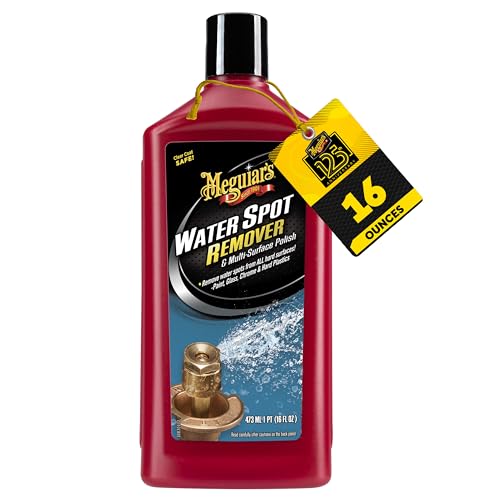
If the spots remain, you can repeat the process or consider using a dedicated water spot remover spray. These products are formulated by chemists to be highly effective and are often safe on waxes and sealants, offering a great balance of power and safety.

How Do You Remove Etched Water Spots (Type II) with Polishing?
To remove etched water spots, you must perform paint correction via polishing. This process involves using a dual-action polisher, a foam polishing pad, and a fine-cut polishing compound. By working the polish over the affected area, you are safely removing a microscopic layer of the clear coat until the surface is level with the bottom of the etch, restoring a perfectly smooth and reflective finish.
When a water spot has etched the paint, no amount of chemical cleaning will remove it because it’s no longer a deposit on the surface—it’s damage in the surface. The only solution is to mechanically abrade the surrounding clear coat until it is level with the deepest part of the crater. Think of it like very, very fine sandpaper that smooths the surface without leaving deep scratches.
❗ Advanced Method: Proceed with Caution
Paint polishing permanently removes a layer of your clear coat. This is an effective but advanced technique. If you are inexperienced, practice on a test spot first. For deep etching or if you are not comfortable, we strongly recommend consulting a professional detailer to avoid irreversible clear coat failure.
For DIYers, using a dual action polisher is much safer than a professional rotary polisher, as its oscillating motion generates less heat and reduces the risk of burning through the paint.
Here is a simplified overview of the polishing process:
- Prep the Surface: Wash and dry the car completely. Use a clay bar to remove any bonded contaminants that could interfere with the polish.
- Apply Polish: Apply 3-4 pea-sized drops of a fine polishing compound to a foam polishing pad attached to your dual action polisher.
- Polish the Area: Work in a small 2×2 ft section. Spread the polish on low speed, then increase the speed and move the polisher in slow, overlapping passes.
- Wipe and Inspect: After a few passes, wipe the residue with a clean microfiber towel and inspect your work with a good light source. The etching should be gone. If it’s still visible, repeat with a few more passes.
How Can You Prevent Future Water Spots On Your Car’s Paint?
To prevent water spots, you must create a barrier that stops water from sitting on your paint and evaporating. Applying a layer of protection like a wax, sealant, or ceramic coating creates a hydrophobic surface that repels water, significantly reducing the chance of water spots forming on your paint. Proper car care techniques are equally important.
After going through the effort of removing water spots, the last thing you want is for them to come right back. Prevention is a two-part strategy: proper technique and robust protection. Here are the most effective ways to keep your car’s finish spotless:
- 🔵 Apply Protection: This is the most crucial step. A quality carnauba wax, a durable paint sealant, or a long-lasting ceramic coating acts as a sacrificial layer. Their hydrophobic (water-fearing) properties cause water to bead up and roll off the surface instead of sitting flat and evaporating.
- 🔵 Dry Promptly and Properly: Never let your car air-dry, especially in the sun. After washing, use a plush microfiber drying towel or an electric car dryer to safely remove all water before minerals can be left behind.
- 🔵 Wash in the Shade: Washing in direct sunlight is a primary cause of water spots. The heat rapidly evaporates water and soap, leaving residue behind before you have a chance to rinse and dry.
- 🔵 Use Filtered Water: If you have hard water, investing in a simple deionization water filter for your hose can make a massive difference. It removes the minerals from the water, meaning there is nothing to leave behind if a drop evaporates.
- 🔵 Park Smart: Be mindful of your surroundings. Avoid parking next to lawn sprinklers, which often use untreated well or city water that is high in minerals.
FAQs About how to remove water spots from paint on car
Will a car wash remove water spots?
A standard car wash will likely not remove existing water spots, especially if they are Type II (etched). Car wash soaps are designed to remove loose dirt and grime, not bonded mineral deposits. While a wash is a crucial first step to clean the surface, you will need to follow it with a dedicated chemical or mechanical removal process.
How do you remove hard water spots from a black car?
Removing hard water spots from a black car uses the same methods, but requires extra care as black paint shows every imperfection. Start with a vinegar solution or chemical remover. If polishing is needed, use a fine polish and a soft foam pad, ensuring your lighting is excellent so you can see the results and avoid creating swirl marks.
Does a clay bar remove water spots?
A clay bar can remove Type I water spots that are heavily bonded to the surface. The clay abrades and pulls the raised mineral deposit off the paint. However, a clay bar will not remove Type II etched water spots, as it cannot level the clear coat. It’s an effective step between chemical cleaning and polishing.
Can water spots be permanent?
Yes, if water spots are left untreated, they can cause permanent etching (Type II spots) in the clear coat. While this etching can often be removed by polishing, if the etch is deeper than the clear coat layer, it would require repainting the panel. This is why prompt removal and prevention are so important.
Is it safe to use baking soda to remove water spots from car paint?
It is not recommended to use baking soda on car paint. Baking soda is a mild abrasive, but its particle shape and size are not designed for automotive clear coats. Using it can easily cause micro-scratches and swirl marks, leading to a duller finish that is more difficult to fix than the original water spots.
How do you remove sprinkler water spots from car paint?
Sprinkler water spots are a common form of hard water spots and should be treated starting with the least aggressive method. Begin with a 50/50 vinegar and water solution. Because sprinkler water is often very high in minerals, you may need to move on to a dedicated water spot remover or even light polishing if etching has occurred.
Does wax or sealant cover up water spots?
No, applying wax or sealant over existing water spots will not hide them and may even make them more difficult to remove. The wax will seal the mineral deposits onto the paint. You must always completely remove any surface imperfections like water spots before applying any protective layer.
What is the best water spot remover for cars?
The best water spot remover is typically a dedicated, pH-balanced chemical spray designed for automotive use. These products are formulated to effectively dissolve minerals without harming your existing wax or sealant. While a vinegar solution is a great DIY option, commercial removers offer a faster, often more effective, and professionally tested solution.
How long can you leave water spots on a car?
You should remove water spots as soon as possible, especially in sunny or hot conditions. In direct sunlight, a water droplet can cause etching in a matter of hours. In cooler, overcast conditions, you may have a few days. The longer the minerals sit, the higher the risk of them bonding to or etching the clear coat.
Can you use Windex or glass cleaner on car paint for water spots?
No, you should never use Windex or other ammonia-based glass cleaners on your car’s paint. Ammonia can be very harsh and can strip waxes and sealants. Over time, it can even potentially damage the clear coat itself. Always use products specifically designed and tested for automotive paint.
Key Takeaways: How to Remove Water Spots From Car Paint
- Diagnosis is Critical: Always identify if you have surface-level Type I spots or indented Type II etched spots before starting. Using the wrong method can be ineffective or cause damage.
- Start with the Least Aggressive Method: For Type I spots, always begin with a chemical approach like a 50/50 white distilled vinegar and water solution or a dedicated water spot remover spray.
- Polishing is for Etching Only: Paint correction via polishing is the only way to remove Type II etched spots. This is an advanced technique that mechanically abrades the paint and should be done with caution.
- Safety is Paramount: Never work in direct sunlight, never let acidic solutions dry on the paint, and always use clean microfiber towels to avoid clear coat failure.
- Prevention is the Best Cure: The most effective way to fight water spots is to prevent them. Applying a ceramic coating, sealant, or wax and always drying your car thoroughly after washing are the best long-term strategies.
Final Thoughts on Removing Water Spots
Tackling water spots on your car’s paint is more about strategy than scrubbing. By understanding the difference between simple mineral deposits and true paint etching, you are now equipped with the knowledge to address the problem correctly. This diagnostic-led approach ensures you use the right tool for the job, protecting your vehicle’s finish and preserving its value.
Remember to always start with the least aggressive method, like a simple vinegar solution, before considering more advanced techniques like polishing. More importantly, embrace prevention. A good layer of paint protection and proper drying habits are your best defense against future water spots. You now have a complete, professional-grade process to not only fix the current issue but to keep your car looking spotless for years to come.
Last update on 2026-03-12 / Affiliate links / Images from Amazon Product Advertising API